Loading...
Done
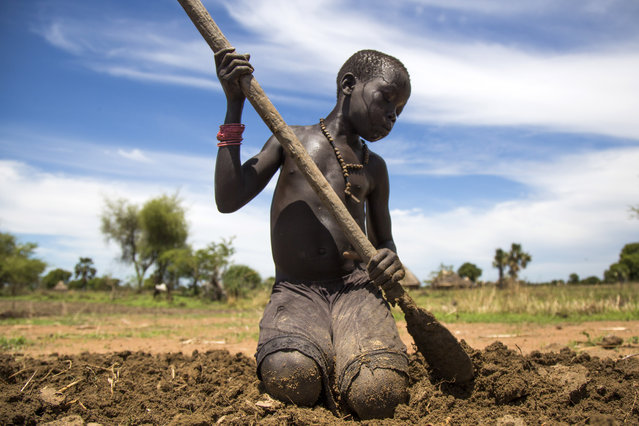
Nyibol Lual, 13 years old, helps her family to prepare the land for cultivation on May 31, 2017, in Panthau, Northern Bahr al Ghazal, South Sudan. The family has a small land where they cultivate sorghum. An estimated 63 per cent of the population in Northern Bahr al Ghazal is experiencing severe food insecurity, according to the latest Integrated Food Security Phase Classification (IPC) report. The situation is particularly bad in Aweil West and Aweil South counties, where the exhaustion of household food stocks and growing dependence on financially inaccessible markets have left the population facing Emergency levels of food insecurity. (Photo by Albert Gonzalez Farran/AFP Photo)

Nyibol Lual, 13 years old, helps her family to prepare the land for cultivation on May 31, 2017, in Panthau, Northern Bahr al Ghazal, South Sudan. The family has a small land where they cultivate sorghum. An estimated 63 per cent of the population in Northern Bahr al Ghazal is experiencing severe food insecurity, according to the latest Integrated Food Security Phase Classification (IPC) report. The situation is particularly bad in Aweil West and Aweil South counties, where the exhaustion of household food stocks and growing dependence on financially inaccessible markets have left the population facing Emergency levels of food insecurity. (Photo by Albert Gonzalez Farran/AFP Photo)
Details
01 Jun 2017 10:10:00
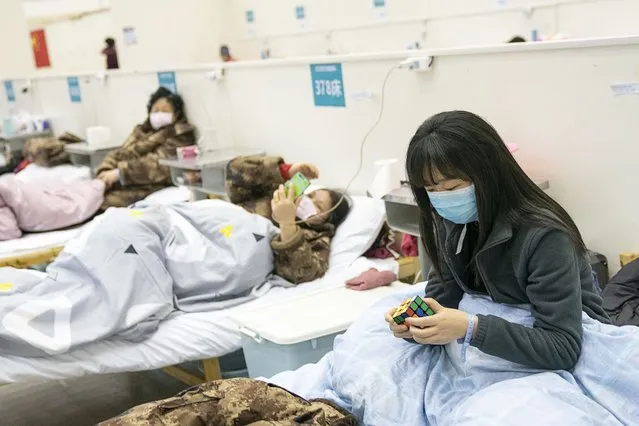
A patient solves a rubik's cube at a temporary hospital converted from “Wuhan Livingroom” in central China's Hubei Province on February 10, 2020. In face of the outbreak of the novel coronavirus pneumonia epidemic, Wuhan authorities have transformed public venues such as exhibition centers and gymnasiums into temporary hospitals. The hospitals have a large capacity of treating patients with mild symptoms and play an important role in isolating the source of infection and cutting off the routes of infection during epidemic prevention. The first batch of patients was hospitalized on Feb. 5. (Photo by Chine Nouvelle/SIPA Press/Rex Features/Shutterstock)

A patient solves a rubik's cube at a temporary hospital converted from “Wuhan Livingroom” in central China's Hubei Province on February 10, 2020. In face of the outbreak of the novel coronavirus pneumonia epidemic, Wuhan authorities have transformed public venues such as exhibition centers and gymnasiums into temporary hospitals. The hospitals have a large capacity of treating patients with mild symptoms and play an important role in isolating the source of infection and cutting off the routes of infection during epidemic prevention. The first batch of patients was hospitalized on Feb. 5. (Photo by Chine Nouvelle/SIPA Press/Rex Features/Shutterstock)
Details
17 Feb 2020 00:07:00
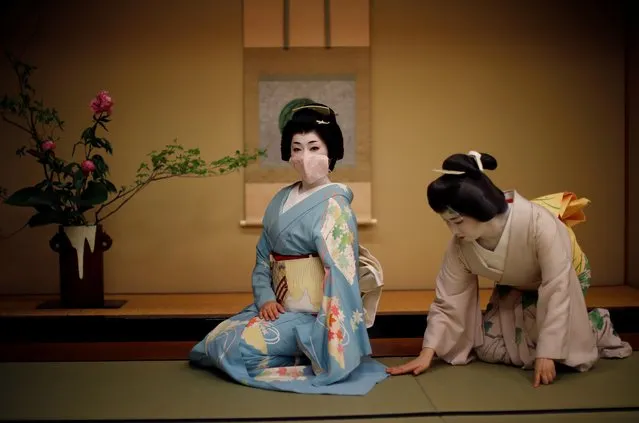
Mayu adjusts Koiku’s kimono, as Koiku wears a protective face mask while posing for a photograph, before they work at a party where they will entertain with other geisha at Japanese luxury restaurant Asada in Tokyo, Japan, June 23, 2020. The coronavirus pandemic has made Tokyo's geisha fear for their centuries-old profession as never before. Though the number of geisha - famed for their witty conversation, beauty and skill at traditional arts - has been falling for years, they were without work for months due to Japan's state of emergency and now operate under awkward social distancing rules. Engagements are down 95 percent, and come with new rules: no pouring drinks for customers or touching them even to shake hands, and sitting 2 meters apart. Masks are hard to wear with their elaborate wigs, so they mostly don't. “I was just full of anxiety”, said Mayu, 47. “I went through my photos, sorted my kimonos ... The thought of a second wave is terrifying”. (Photo by Kim Kyung-Hoon/Reuters)

Mayu adjusts Koiku’s kimono, as Koiku wears a protective face mask while posing for a photograph, before they work at a party where they will entertain with other geisha at Japanese luxury restaurant Asada in Tokyo, Japan, June 23, 2020. (Photo by Kim Kyung-Hoon/Reuters)
Details
23 Jul 2020 00:03:00
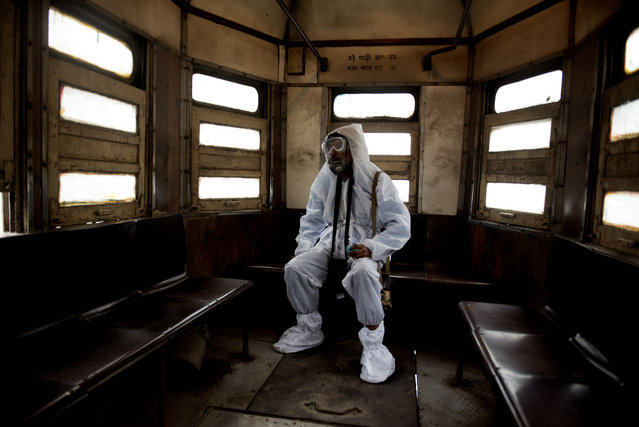
Fighting Infections (single image) | Fighting Pandemic by Sudipto Das. “It’s exhausting. A tram conductor in Kolkata, India, wears protective clothing from head to toe even in the heat of a summer afternoon. This was when restrictions were easing after India’s first Covid-19 lockdown – public transport was running, but staff were advised to suit up like this. We’ve all grown used to saluting the efforts of healthcare workers, but plenty of other people in public-facing jobs have performed gruelling duties too to keep people safe”. (Photo by Sudipto Das/Wellcome Photography Prize 2021)

Fighting Infections (single image) | Fighting Pandemic by Sudipto Das. “It’s exhausting. A tram conductor in Kolkata, India, wears protective clothing from head to toe even in the heat of a summer afternoon. This was when restrictions were easing after India’s first Covid-19 lockdown – public transport was running, but staff were advised to suit up like this. We’ve all grown used to saluting the efforts of healthcare workers, but plenty of other people in public-facing jobs have performed gruelling duties too to keep people safe”. (Photo by Sudipto Das/Wellcome Photography Prize 2021)
Details
29 Jun 2021 09:49:00
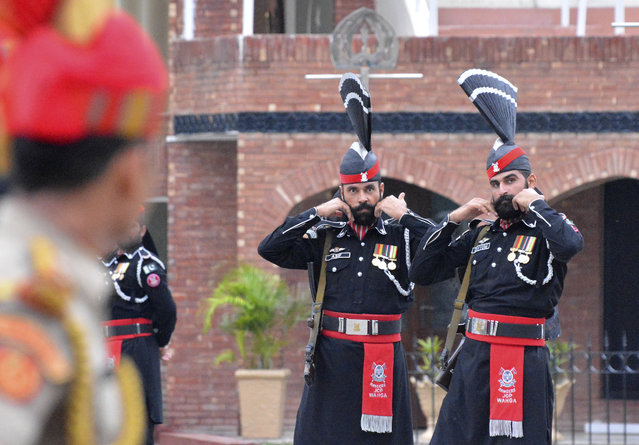
In this Friday, August 9, 2019, file photo, Pakistan Rangers soldiers face Indian Border Security Force soldiers at a daily closing ceremony on the Indian side of the Attari-Wagah border. India's recent clampdown has a long history in Kashmir and the conflict has existed since the late 1940s, when India and Pakistan won independence from the British empire and began fighting over rival claims to the Muslim-majority territory. India and Pakistan have fought two of their three subsequent wars over Kashmir, and each administers a portion of the region. India has long seen the Kashmiri struggle for self-determination as Islamabad's proxy war against New Delhi. (Photo by Prabhjot Gill/AP Photo/File)

In this Friday, August 9, 2019, file photo, Pakistan Rangers soldiers face Indian Border Security Force soldiers at a daily closing ceremony on the Indian side of the Attari-Wagah border. India's recent clampdown has a long history in Kashmir and the conflict has existed since the late 1940s, when India and Pakistan won independence from the British empire and began fighting over rival claims to the Muslim-majority territory. India and Pakistan have fought two of their three subsequent wars over Kashmir, and each administers a portion of the region. India has long seen the Kashmiri struggle for self-determination as Islamabad's proxy war against New Delhi. (Photo by Prabhjot Gill/AP Photo/File)
Details
02 Oct 2019 00:01:00
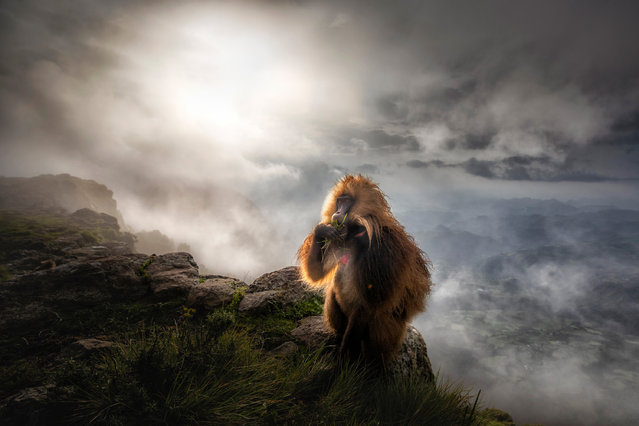
Highly commended, mammals: Gelada after the storm – Marco Gaiotti (Italy). “Gelada baboons are the only monkey species in the world that feed on grasses. They are native to the tableland of Ethiopia. Every morning large family groups wander from their sleeping places in the steep rock face, up to 1,000 metres high, to the feeding grounds at the tablelands. This image clearly depicts their feeding strategy: they pull out bunches of grass, sort the stalks and then lift them to their mouth. This shot was taken towards the end of the rainy season after a heavy storm”. (Photo by Marco Gaiotti/2019 GDT European Wildlife Photographer of the Year)

Highly commended, mammals: Gelada after the storm – Marco Gaiotti (Italy). “Gelada baboons are the only monkey species in the world that feed on grasses. They are native to the tableland of Ethiopia. Every morning large family groups wander from their sleeping places in the steep rock face, up to 1,000 metres high, to the feeding grounds at the tablelands. This image clearly depicts their feeding strategy: they pull out bunches of grass, sort the stalks and then lift them to their mouth. This shot was taken towards the end of the rainy season after a heavy storm”. (Photo by Marco Gaiotti/2019 GDT European Wildlife Photographer of the Year)
Details
31 Oct 2019 00:03:00


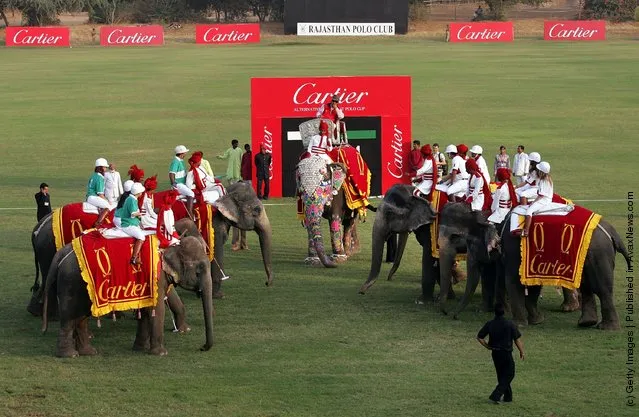
Teams face off in the Cartier Elephant Polo Cup November 18, 2006 in Jaipur, in the Indin state of Rajasthan. Cartier hosted the event which was held to highlight the plight of the dwindling numbers of Asian elephants. Indian and international celebrities flew in the India's “Pink City” for the high society event held by the global watch and jewelry giant. The animal rights organization, People for the Ethical Treatment of Animals, “PETA” had planned to protest the match, saying that elephants should not be used for sport. Elephants in Jaipur are commonly used for carrying tourists at historic sites. (Photo by John Moore/Getty Images)
Details
25 Mar 2011 09:17:00


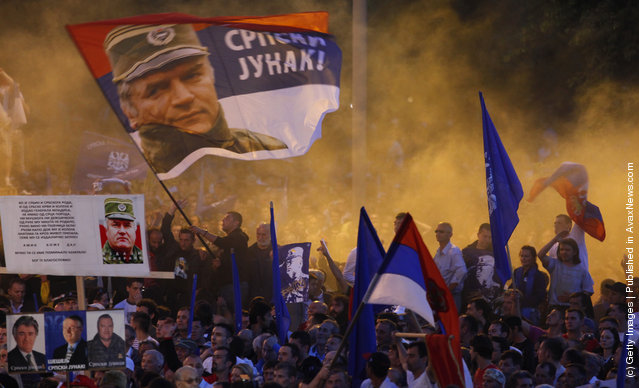
Supporters of Ratko Mladic wave flags with his picture and reading in Serbian “Serbian hero” during a rally organized by the ultra nationalist Serbian Radical Party in front of the Parliament building on May 29, 2011 in Belgrade, Serbia. Some 7,000 supporters of the former Bosnian Serb army chief Ratko Mladic, who was arrested on Thursday in a village in Serbia after 16 years on the run, took to the streets of Belgrade, to hear speeches and protest Mladic's arrest. Mladic, who is facing extradition to the The Hague, is accused of war crimes, including the 1995 massacre of 7,500 Muslin men and boys in Srebrenica. (Photo by Srdjan Stevanovic/Getty Images)
Details
30 May 2011 08:02:00