Loading...
Done
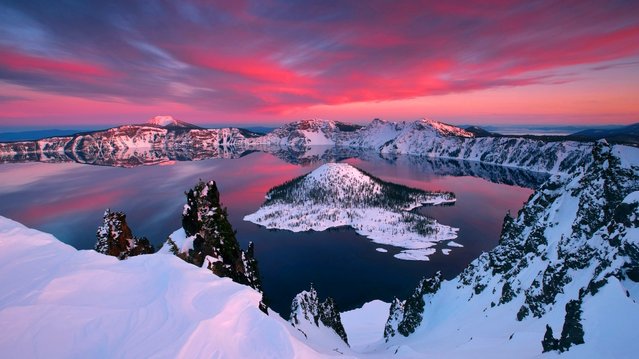
Crater Lake In Oregon

As you look at the majestic Crater Lake, located in south-central Oregon, United States, it is hard to imagine that thousands of years ago this place was one giant crater with scorching hot lava spilling over the sides. Those were the times of turmoil. Now, however, this place is the essence of tranquility. The lake that was formed, after the volcano died down, is amazingly clear due to the fact that the water isn’t moving at all. No rivers go in or out of the Crater Lake, and the water lost through evaporation is compensated by the rain and snowfall. This lake is also frighteningly deep – 1,943 feet (592 m) at its deepest point – making it the deepest lake in the United States. If you love nature and if you ever come to Oregon, this is truly a sight to behold.
Details
19 Nov 2014 14:14:00
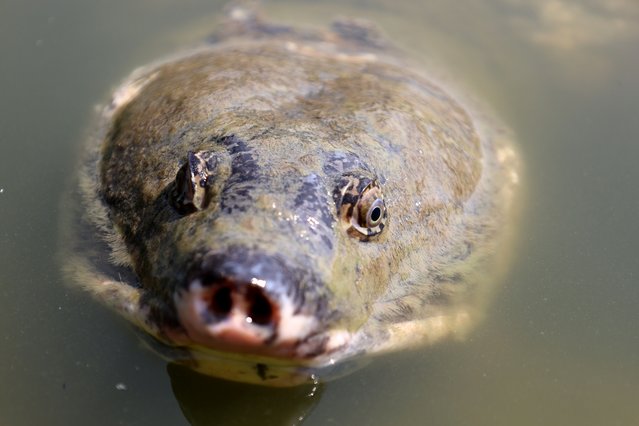
Black softshell turtle or Bostami turtle (Nilssonia nigricans), extremely rare and critically endangered species of tortoise is seen in a pond in Chittagong, Bangladesh on March 1, 2022. For decades, the breeding grounds have shrunk and their habitat has been threatened by habitat pollution. Through conservation methods and protection of the species, some of these turtles can be found today throughout the wild, and scientists and environmental biologists are continuing to work hard to preserve this endangered species and their natural habitat. (Photo by Mohammad Shajahan/Anadolu Agency via Getty Images)

Black softshell turtle or Bostami turtle (Nilssonia nigricans), extremely rare and critically endangered species of tortoise is seen in a pond in Chittagong, Bangladesh on March 1, 2022. For decades, the breeding grounds have shrunk and their habitat has been threatened by habitat pollution. (Photo by Mohammad Shajahan/Anadolu Agency via Getty Images)
Details
26 May 2024 04:02:00
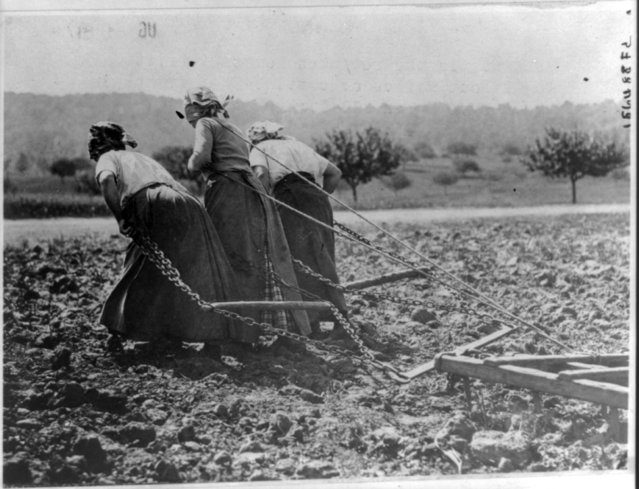
Peasants in the re-taken Somme District work in the fields, circa 1916- 1917, in this Library of Congress handout photo. (Photo by Reuters/Bain Collection/Library of Congress)

Peasants in the re-taken Somme District work in the fields, circa 1916- 1917, in this Library of Congress handout photo. For women 100 years ago, opportunities to work beyond the home and take part in political life were very limited. As the 20th century progressed, hard-won progress included gradually improved voting rights, while the upheaval of war pushed doors ajar as women worked as part of the war effort. U.S. Library of Congress archive photos show women's workplaces ranging from a flour mill in England to a coal mine in Belgium or Lincoln Motor Co.'s welding department in Detroit. International Women's Day is celebrated on March 8. (Photo by Reuters/Bain Collection/Library of Congress)
Details
03 Mar 2016 11:39:00
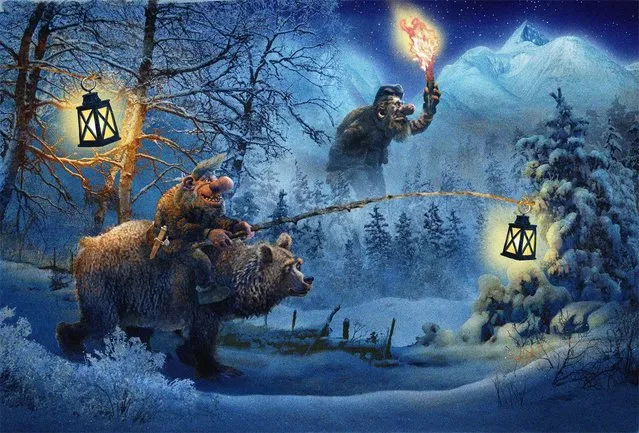
Norwegian Trolls By Ivar Rodningen Part 2

Some people think of trolls as nothing but savage beast, yet others realize that beneath their rock-hard skin hides a gentle kind heart. Ivar Rodningem is one of the people who knows the true nature of trolls. Though these creatures look unruly, it is just the way they were born. Trolls come in all shapes and sizes. Some are small, some are large, and some are simply enormous. They help each other out, though elders tend to be loners, preferring the company of their own thoughts to anybody else. You shouldn’t run for your life if you ever meet a troll, though we wouldn’t recommend pestering them, as they are mighty strong, even the little ones.


See also:Part 1
Details
07 Mar 2015 12:05:00
Part Time Job By Chow Hon Lam

What would superheroes do if they had a part time job? Well… besides fighting crime, the powers of most superheroes aren’t exactly very useful. Sure, Flash would make a great delivery boy, delivering the freshest pizza in the world, while Thor might turn out to be a great smith (though judging by the way he handles his mallet, it is very unlikely), but in the end of the day, all these things are pretty useless. It sure is hard being a superhero when you have no villains to catch; especially if the only superpower that you have is lighting yourself on fire. Reducing you to a mere job of being used as fuel for cooking grilled chicken. Besides, it’s not exactly useful for catching villains either, if you don't plan on burning them alive… (Photo by Chow Hon Lam)
Details
08 Dec 2014 11:44:00
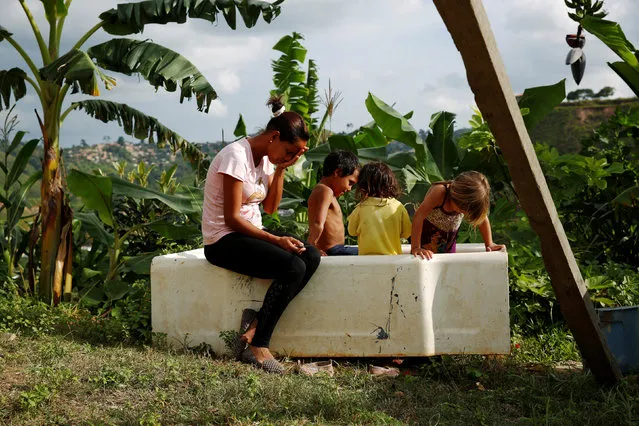
Lisibeht Martinez (L), 30, who was sterilized one year ago, sits next to her children while they play in a bathtub in the backyard of their house in Los Teques, Venezuela July 19, 2016. (Photo by Carlos Garcia Rawlins/Reuters)

Venezuela's food shortages, inflation and crumbling medical sector have become such a source of anguish that a growing number of young women are reluctantly opting for sterilizations rather than face the hardship of pregnancy and child-rearing. Traditional contraceptives like condoms or birth control pills have virtually vanished from store shelves, pushing women towards the hard-to-reverse surgery. While no recent national statistics on sterilizations are available, doctors and health workers say demand for the procedure is growing. (Photo by Carlos Garcia Rawlins/Reuters)
Details
04 Aug 2016 12:22:00
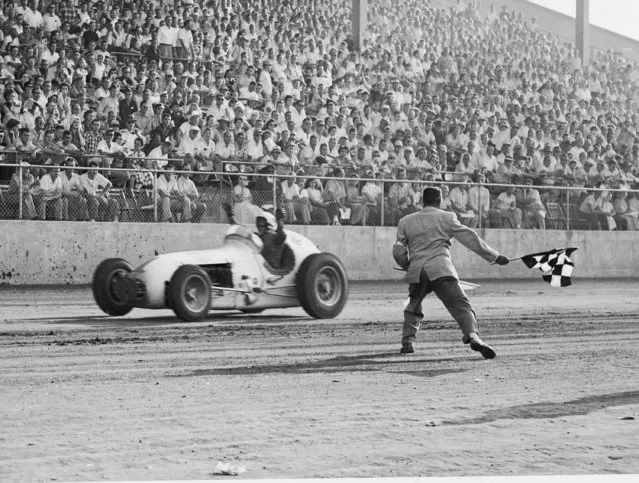
Jimmy Bryan of Phoenix, Ariz., gets the checkered victory flag at the Indiana State Fairgrounds September 17, 1955 as he wins the “Hoosier Hundred” for the second consecutive year. Bryan averaged 83.98 miles an hour for the 100-lap, 100-mile AAA big car race. (Photo by AP Photo)

Jimmy Bryan of Phoenix, Ariz., gets the checkered victory flag at the Indiana State Fairgrounds September 17, 1955 as he wins the “Hoosier Hundred” for the second consecutive year. Bryan averaged 83.98 miles an hour for the 100-lap, 100-mile AAA big car race. (Photo by AP Photo)
Details
18 Sep 2015 15:12:00
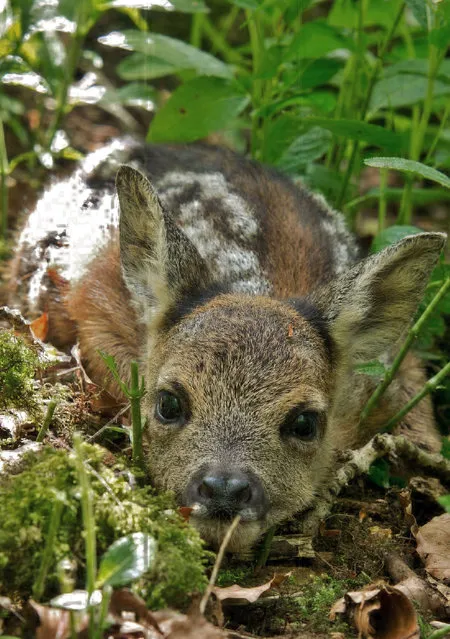
Young fawn shelters in the wood. He is so at one with nature that he knows how to call animals to him, and often gets within 30ft of them. (Photo by Adam Tatlow/BNPS)

Cotswold gamekeeper shoots amazing pictures of British wildlife – without the aid of long lenses and elaborate techniques. The photos may look like they have been shot from miles away – but amazingly Adam Tatlow is actually just feet away from his wild subjects. Photo: Young fawn shelters in the wood. He is so at one with nature that he knows how to call animals to him, and often gets within 30ft of them. (Photo by Adam Tatlow/BNPS)
Details
24 Sep 2013 08:31:00