Loading...
Done
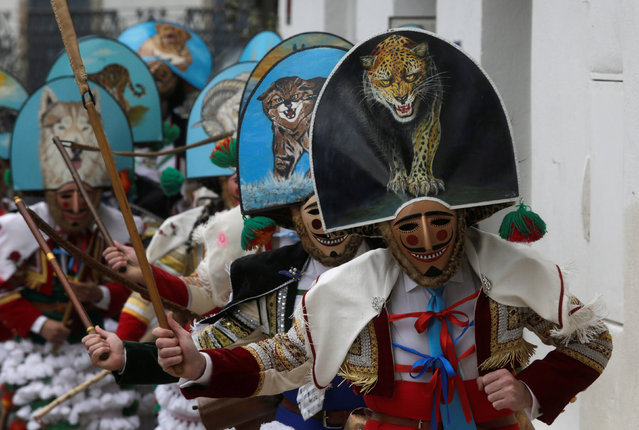
Carnival revellers dressed as “Peliqueiros” run along a street in the village of Laza, Spain February 26, 2017. “Peliqueiros”, or ancient tax collectors, pursued villagers through the streets ringing their cowbells and hitting villagers with their sticks. (Photo by Miguel Vidal/Reuters)

Carnival revellers dressed as “Peliqueiros” run along a street in the village of Laza, Spain February 26, 2017. “Peliqueiros”, or ancient tax collectors, pursued villagers through the streets ringing their cowbells and hitting villagers with their sticks. (Photo by Miguel Vidal/Reuters)
Details
28 Feb 2017 00:02:00
A Catholic faithful fancy dressed as a “talciguin” -character of the local folklore- takes part in the celebration of an ancient local tradition that marks the start of Holy Week, in Texistepeque, some 80 km west of San Salvador, on April 15, 2019. Talciguines are devils who “lash” Catholic faithfuls to cleanse their sins. (Photo by Marvin Recinos/AFP Photo)

A Catholic faithful fancy dressed as a “talciguin” -character of the local folklore- takes part in the celebration of an ancient local tradition that marks the start of Holy Week, in Texistepeque, some 80 km west of San Salvador, on April 15, 2019. Talciguines are devils who “lash” Catholic faithfuls to cleanse their sins. (Photo by Marvin Recinos/AFP Photo)
Details
18 Apr 2019 00:07:00
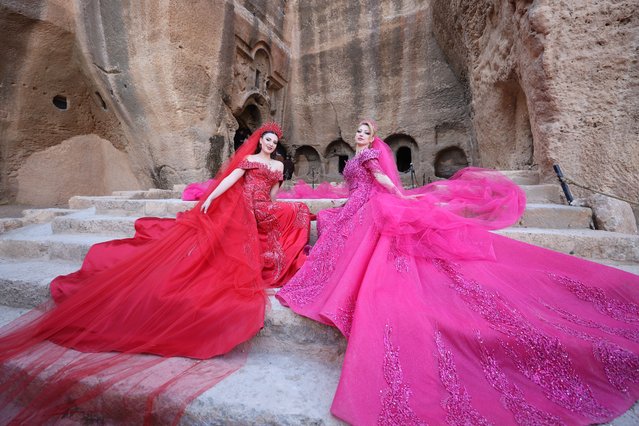
The company selling wedding dresses with designs made of local and wild grass, exhibited its new collection with local and foreign models consisting of Mesopotamian motifs by organizing a fashion show at Dara Ancient City in Mardin, Turkiye on February 26, 2025. (Photo by Halil Ibrahim Sincar/Anadolu via Getty Images)

The company selling wedding dresses with designs made of local and wild grass, exhibited its new collection with local and foreign models consisting of Mesopotamian motifs by organizing a fashion show at Dara Ancient City in Mardin, Turkiye on February 26, 2025. (Photo by Halil Ibrahim Sincar/Anadolu via Getty Images)
Details
04 Mar 2025 04:15:00
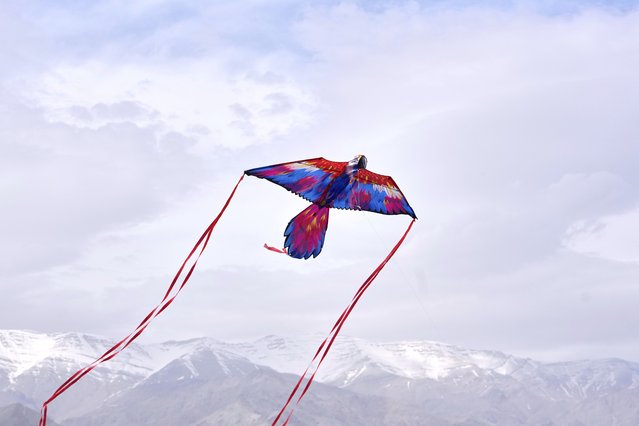
A kite is flown at a park during the ancient annual public picnic day, called Sizdeh Bedar, on the 13th and last day of Nowruz, the Iranian New Year holiday, in Tehran, Iran, Wednesday, April 2, 2025. (Photo by Vahid Salemi/AP Photo)

A kite is flown at a park during the ancient annual public picnic day, called Sizdeh Bedar, on the 13th and last day of Nowruz, the Iranian New Year holiday, in Tehran, Iran, Wednesday, April 2, 2025. (Photo by Vahid Salemi/AP Photo)
Details
18 Jun 2025 03:36:00
People dressed in Hanfu robes take a boat parade during the Xitang Hanfu Culture Week in the ancient town of Xitang on November 1, 2025 in Jiaixng, Zhejiang Province of China. (Photo by Wang Gang/China News Service/VCG via Getty Images)

People dressed in Hanfu robes take a boat parade during the Xitang Hanfu Culture Week in the ancient town of Xitang on November 1, 2025 in Jiaixng, Zhejiang Province of China. (Photo by Wang Gang/China News Service/VCG via Getty Images)
Details
22 Nov 2025 05:41:00
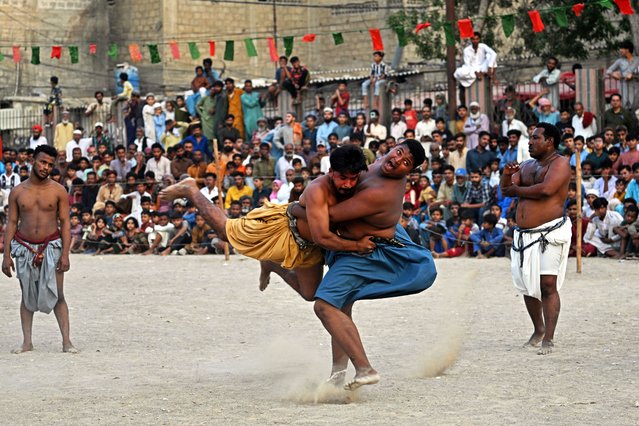
Wrestlers compete in a 'Sindhi Malakhra' wrestling match, an ancient form of wrestling that originated in Pakistan's Sindh region, during a local tournament in Karachi on October 21, 2025. (Photo by Asif Hassan/AFP Photo)

Wrestlers compete in a 'Sindhi Malakhra' wrestling match, an ancient form of wrestling that originated in Pakistan's Sindh region, during a local tournament in Karachi on October 21, 2025. (Photo by Asif Hassan/AFP Photo)
Details
24 Dec 2025 10:10:00
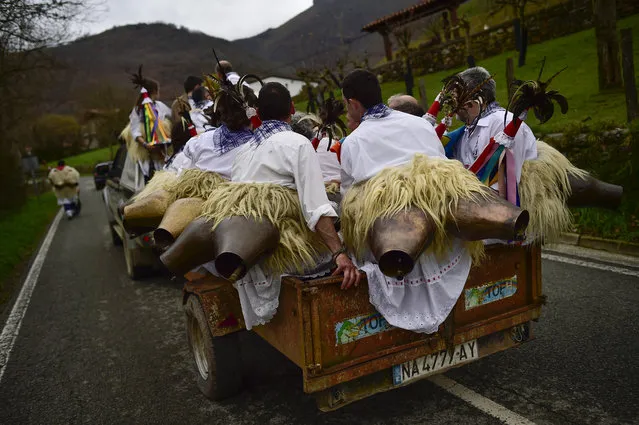
Joaldunaks return in a trailer to their town at the end of Carnival between of the Pyrenees villages of Ituren and Zubieta, northern Spain, Monday, February 1, 2016. In one of the most ancient carnivals in Europe, dating from before the Roman empire, companies of Joaldunak (cowbells) made up of residents of two towns, Ituren and Zubieta, parade the streets costumed in sandals, lace petticoats, sheepskins around the waist and shoulders, coloured neckerchiefs, conical caps with ribbons and a hyssop of horsehair in their right hands and cowbells hung across their lower back. (Photo by Alvaro Barrientos/AP Photo)

Joaldunaks return in a trailer to their town at the end of Carnival between of the Pyrenees villages of Ituren and Zubieta, northern Spain, Monday, February 1, 2016. In one of the most ancient carnivals in Europe, dating from before the Roman empire, companies of Joaldunak (cowbells) made up of residents of two towns, Ituren and Zubieta, parade the streets costumed in sandals, lace petticoats, sheepskins around the waist and shoulders, coloured neckerchiefs, conical caps with ribbons and a hyssop of horsehair in their right hands and cowbells hung across their lower back. (Photo by Alvaro Barrientos/AP Photo)
Details
02 Feb 2016 13:07:00
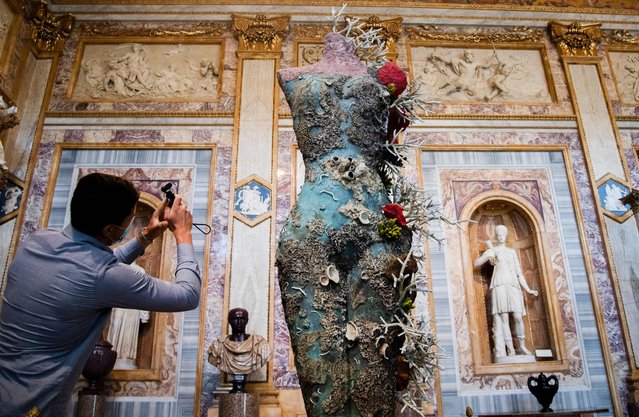
A visitor takes photos of “Grecian Nude” by British artist Damien Hirst, as part of the exhibition “Archaeology Now” at Galleria Borghese in Rome on June 07, 2021. The exhibition, running through June 08 – November 07, 2021, features over 80 works from Hirst’s Treasures from the Wreck of the Unbelievable series, displayed throughout the museum alongside ancient masterpieces. (Photo by Tiziana Fabi/AFP Photo)

A visitor takes photos of “Grecian Nude” by British artist Damien Hirst, as part of the exhibition “Archaeology Now” at Galleria Borghese in Rome on June 07, 2021. The exhibition, running through June 08 – November 07, 2021, features over 80 works from Hirst’s Treasures from the Wreck of the Unbelievable series, displayed throughout the museum alongside ancient masterpieces. (Photo by Tiziana Fabi/AFP Photo)
Details
13 Jun 2021 07:32:00