Loading...
Done
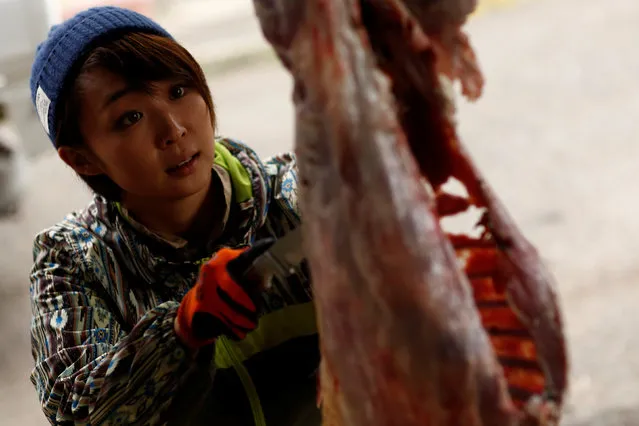
Hunter Chiaki Kodama guts a deer in a shed in Oi, Fukui Prefecture, Japan, November 17, 2016. (Photo by Thomas Peter/Reuters)

Hunter Chiaki Kodama guts a deer in a shed in Oi, Fukui Prefecture, Japan, November 17, 2016. A small but growing number of Japanese women enter the male-dominated world of hunting, where it was once taboo for men to even speak to a woman before going on a hunt. (Photo by Thomas Peter/Reuters)
Details
24 Dec 2016 09:55:00
Urban Explorer Abandoned Southeast: “The place is pretty amazing, but I think my favorite part would be the upstairs storage area, where dozens of photos and books from the early 20th century were left behind”. (Photo by Abandoned Southeast/Caters News Agency)

The abandoned Moulton and Kyle Funeral Home in Jacksonville, Fla., which is more than 150 years old, was left to rot, with the premises eerily strewn with open caskets, a hearse and embalming chemicals. Much like the corpses that were laid to rest, the remains of this building too are slowly decomposing and decaying. Black mold has engulfed the walls, and chipped tiles from the collapsed ceilings cover many of the floors. (Photo by Abandoned Southeast/Caters News Agency)
Details
03 Apr 2018 00:03:00
Canadian singer Avril Lavigne leaves little to the imagination wearing a see-through top as she and boyfriend Mod Sun arrive at a friend's house in Calabasas, CA. with Avril's dog on July 14, 2021. (Photo by Backgrid USA)

Canadian singer Avril Lavigne leaves little to the imagination wearing a see-through top as she and boyfriend Mod Sun arrive at a friend's house in Calabasas, CA. with Avril's dog on July 14, 2021. (Photo by Backgrid USA)
Details
01 Aug 2021 04:53:00
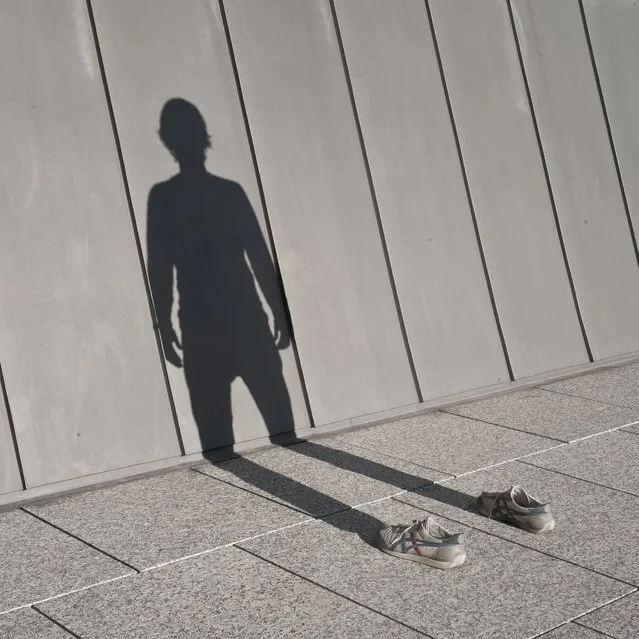
I’m Not There by Pol Ubeda Hervas

Photographer’s Pol Ubeda Hervas perspective in his “I’m not There” series, is going against the flow. While the focus of modern photography is set on the human interaction with his surroundings, Hervas changes thing up by capturing the human absence from said surroundings. The concept behind the series is deeply metaphorical, visual food for though reflecting the situations where the change is irreversible and we cannot even recognize ourselves.
Details
04 Oct 2013 11:58:00
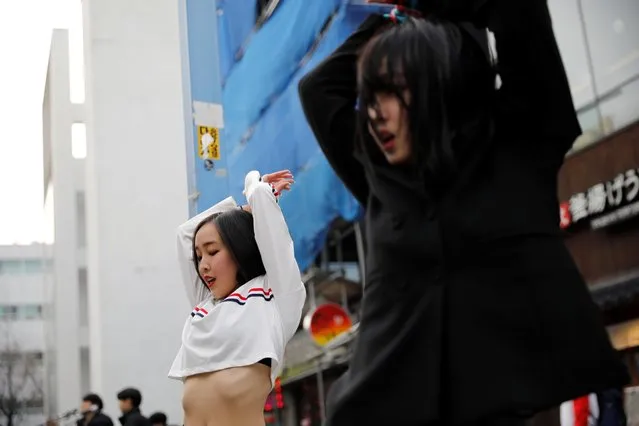
Japanese Yuuka Hasumi, 17, and Ibuki Ito, 17, also from Japan, who want to become K-pop stars, perform during their street performance in Hongdae area of Seoul, South Korea, March 21, 2019. Hasumi put high school in Japan on hold and flew to South Korea in February to try her chances at becoming a K-pop star, even if that means long hours of vocal and dance training, no privacy, no boyfriend, and even no phone. “It is tough”, Hasumi said. “Going through a strict training and taking my skill to a higher level to a perfect stage, I think that's when it is good to make a debut”. (Photo by Kim Hong-Ji/Reuters)

Japanese Yuuka Hasumi, 17, and Ibuki Ito, 17, also from Japan, who want to become K-pop stars, perform during their street performance in Hongdae area of Seoul, South Korea, March 21, 2019. (Photo by Kim Hong-Ji/Reuters)
Details
28 Feb 2021 10:09:00
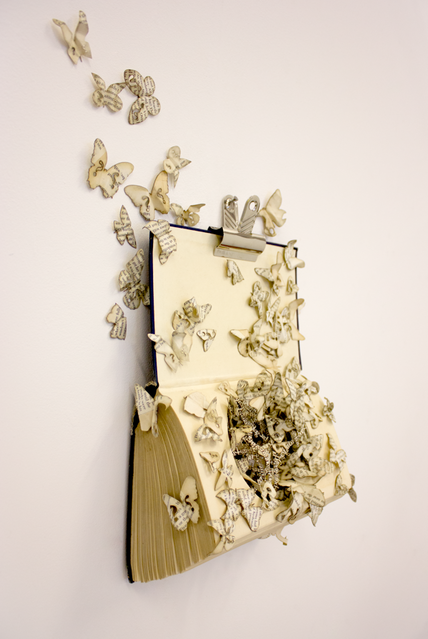
Plagued by Doubt By Thomas Wightman

Thoughts. They fly through the broad expenses of our mind, floating gracefully in midair, going into the clouds, and then reemerging once again. Some are quick and furtive, others are grand and majestic. We reflect upon them as they enter our minds, and once they leave, they are usually gone for good. However, some thoughts are different. These thoughts resemble a flock of angry birds or a swarm of hungry moths that invade your mind, slowly eating away at your sanity, strength, and desire to live. Such thoughts often plague that minds of people with Obsessive Compulsive disorder. They completely occupy their time; constantly there; ever-present. With his book sculpture, Thomas Wightman was able to accurately convey the way these thoughts consume the mind, slowly building a nest within it, resisting all attempts to drive them away.

Thomas Wightman


See Also: Derailing My Train of Thought

Details
19 Mar 2015 09:11:00
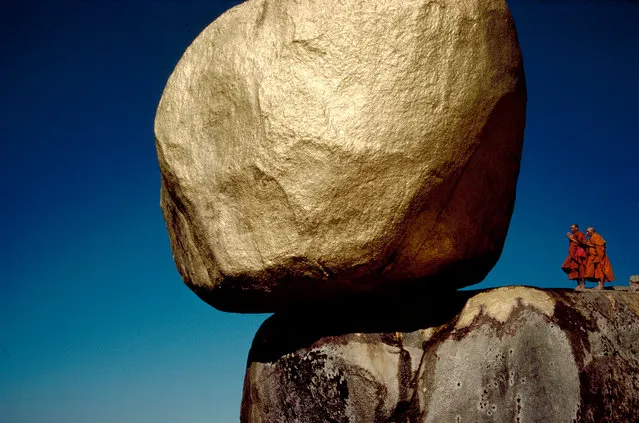
Kyaiktiyo, Burma, 1978. The Golden Rock at Shwe Pyi Daw (the Golden Country), the Buddhist holy place. Hiroji Kubota writes: “I was desperate to keep a distance from America for a while; luckily, I found Burma and its gentle and compassionate people. In the spring of 1978, on the top of the hill where I took this photo, I had two Leica bodies: the one with Tri-X and the other with Kodachrome 64. Soon after, I realised that the colour one looked very colourful and was more powerful. That was my decisive moment, to become a colour photographer”. (Photo by Hiroji Kubota/Magnum Photos)

Kyaiktiyo, Burma, 1978. The Golden Rock at Shwe Pyi Daw (the Golden Country), the Buddhist holy place. Hiroji Kubota writes: “I was desperate to keep a distance from America for a while; luckily, I found Burma and its gentle and compassionate people. In the spring of 1978, on the top of the hill where I took this photo, I had two Leica bodies: the one with Tri-X and the other with Kodachrome 64. Soon after, I realised that the colour one looked very colourful and was more powerful. That was my decisive moment, to become a colour photographer”. (Photo by Hiroji Kubota/Magnum Photos)
Details
10 Jun 2016 13:30:00
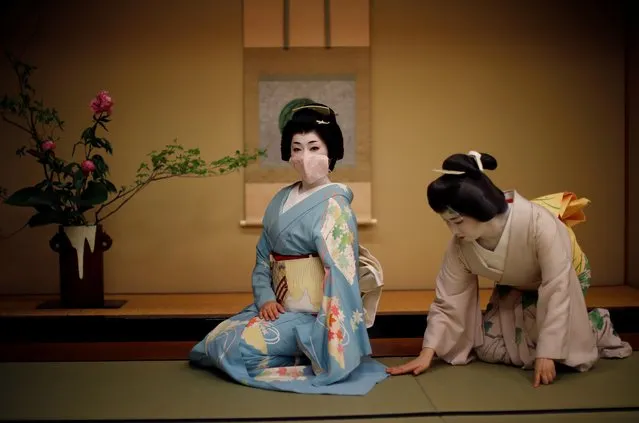
Mayu adjusts Koiku’s kimono, as Koiku wears a protective face mask while posing for a photograph, before they work at a party where they will entertain with other geisha at Japanese luxury restaurant Asada in Tokyo, Japan, June 23, 2020. The coronavirus pandemic has made Tokyo's geisha fear for their centuries-old profession as never before. Though the number of geisha - famed for their witty conversation, beauty and skill at traditional arts - has been falling for years, they were without work for months due to Japan's state of emergency and now operate under awkward social distancing rules. Engagements are down 95 percent, and come with new rules: no pouring drinks for customers or touching them even to shake hands, and sitting 2 meters apart. Masks are hard to wear with their elaborate wigs, so they mostly don't. “I was just full of anxiety”, said Mayu, 47. “I went through my photos, sorted my kimonos ... The thought of a second wave is terrifying”. (Photo by Kim Kyung-Hoon/Reuters)

Mayu adjusts Koiku’s kimono, as Koiku wears a protective face mask while posing for a photograph, before they work at a party where they will entertain with other geisha at Japanese luxury restaurant Asada in Tokyo, Japan, June 23, 2020. (Photo by Kim Kyung-Hoon/Reuters)
Details
23 Jul 2020 00:03:00