Loading...
Done
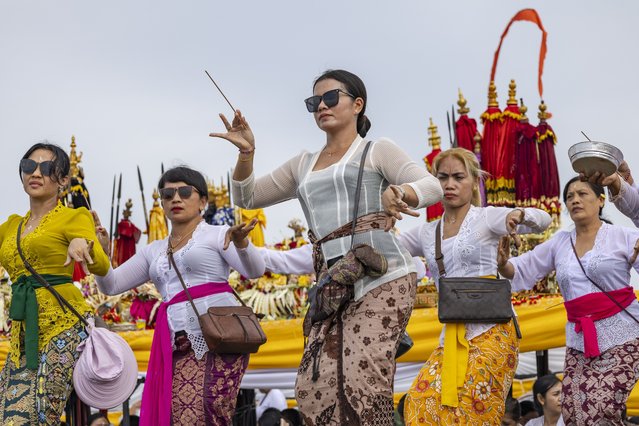
Balinese Hindu people take part in a cleansing ceremony called 'Melasti', in Denpasar, Bali, Indonesia, 25 March 2025. Melasti is a purification ritual where Balinese Hindus cleanse themselves and their sacred objects in the ocean to purify and renew spiritually, symbolizing the washing away of impurities and starting anew. It typically precedes Nyepi, the Day of Silence, marking the Balinese New Year. Balinese will celebrate Nyepi Day on 29 March 2025, during which Hindus on the island of Bali are not allowed to travel, work, light lamps, cook, or do any other activities. (Photo by Made Nagi/EPA)

Balinese Hindu people take part in a cleansing ceremony called “Melasti”, in Denpasar, Bali, Indonesia, 25 March 2025. Melasti is a purification ritual where Balinese Hindus cleanse themselves and their sacred objects in the ocean to purify and renew spiritually, symbolizing the washing away of impurities and starting anew. It typically precedes Nyepi, the Day of Silence, marking the Balinese New Year. Balinese will celebrate Nyepi Day on 29 March 2025, during which Hindus on the island of Bali are not allowed to travel, work, light lamps, cook, or do any other activities. (Photo by Made Nagi/EPA)
Details
07 Apr 2025 02:47:00
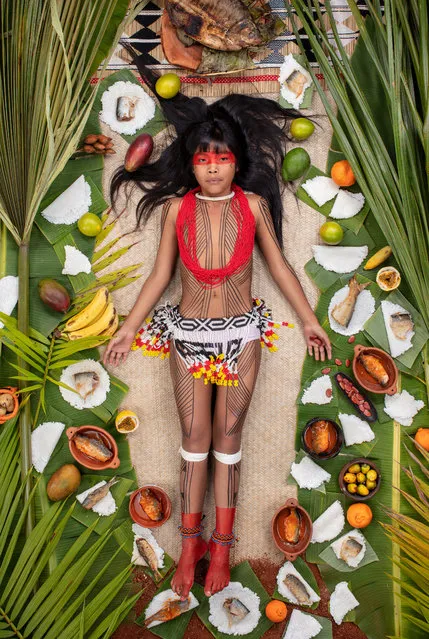
Kawakanih Yawalapiti, 9, Upper Xingu region of Mato Grosso, Brazil, 2018: Kawakanih lives with her tribe, the Yawalapiti, in Xingu national park, a preserve in the Amazon basin of Brazil. The Yawalapiti collect seeds to preserve species unique to their ecosystem, which lies between the rain forest and savannah. Kawakanih’s diet is simple, consisting mainly of fish, cassava, porridge, fruit and nuts. “It takes five minutes to catch dinner”, says Kawakanih. “When you’re hungry, you just go to the river with your net”. (Photo by Gregg Segal/The Guardian)

Photographer Gregg Segal travelled the world to document children and the food they eat in a week. Partly inspired by the increasing problems of childhood obesity, he tracked traditional regional diets as yet unaffected by globalisation, and ironically, found that the healthiest diets were often eaten by the least well off. (Photo by Gregg Segal/The Guardian)
Details
03 Jul 2019 00:03:00


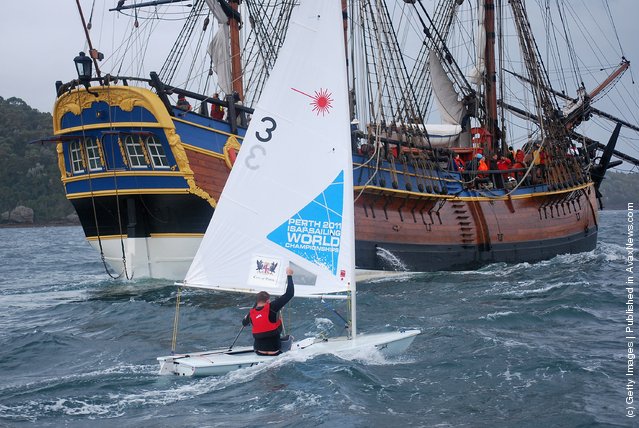
In this handout image provided by Perth 2011, HMB Endeavour, the replica of Captain James Cook's ship, is farewelled from Sydney Harbour accompanied by three Olympic class Laser yachts on April 16, 2011 in Sydney, Australia. The ship was farewelled from Sydney to start her circumnavigation of Australia, ending up in Freemantle where she will play a role in the Perth 2011 ISAF Sailing World Championships in December. (Photo by Richard Palfreyman/Perth 2011 via Getty Images)
Details
16 Apr 2011 11:12:00
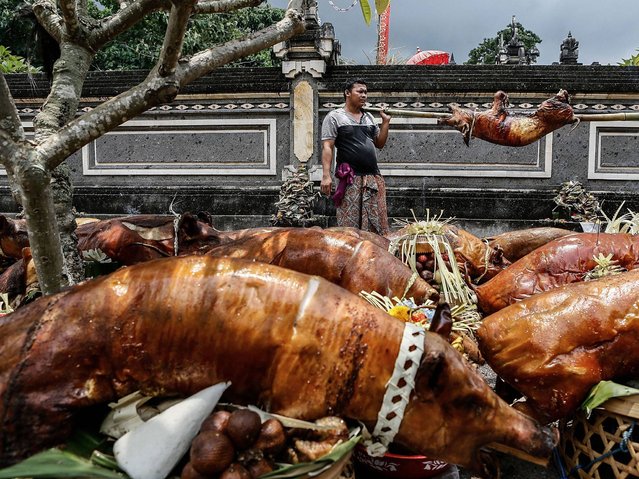
Villager searches for a place for the roasted pigs in Dalem Temple at Timbrah Village in Karangasem. (Photo by Putu Sayoga/Getty Images)

Villager search for a place for the roasted pigs in Dalem Temple at Timbrah Village on February 27, 2014 in Karangasem, Bali, Indonesia. Usaba Dalem is an annual ritual held by the people of Timbrah Village, during this ritual all the villagers will cook roasted pigs and carry them to Dalem Temple as an offering to God and an expression of gratitude for a successful harvest. (Photo by Putu Sayoga/Getty Images)
Details
28 Feb 2014 07:28:00
She wowed judges and competitors at the NPC Junior USA Bodybuilding Championships. (Photo by Incredible Features/Barcroft Media)

Meet Barbie Thomas the incredible armless female body builder who is inspiring America. The 37-year-old lost both her arms during a horrific electrical accident as a toddler – but that hasn't stopped her from pursuing her bodybuilding dream.Barbie says she can do anything an average person can do – except she uses her feet. That includes brushing her teeth, making dinner, taking milk out of the fridge, texting, shopping, putting on makeup and even driving. Photo: Barbie Thomas cooks up meals with her feet. (Photo by Incredible Features/Barcroft Media)
Details
27 May 2014 10:55:00
Part Time Job By Chow Hon Lam

What would superheroes do if they had a part time job? Well… besides fighting crime, the powers of most superheroes aren’t exactly very useful. Sure, Flash would make a great delivery boy, delivering the freshest pizza in the world, while Thor might turn out to be a great smith (though judging by the way he handles his mallet, it is very unlikely), but in the end of the day, all these things are pretty useless. It sure is hard being a superhero when you have no villains to catch; especially if the only superpower that you have is lighting yourself on fire. Reducing you to a mere job of being used as fuel for cooking grilled chicken. Besides, it’s not exactly useful for catching villains either, if you don't plan on burning them alive… (Photo by Chow Hon Lam)
Details
08 Dec 2014 11:44:00


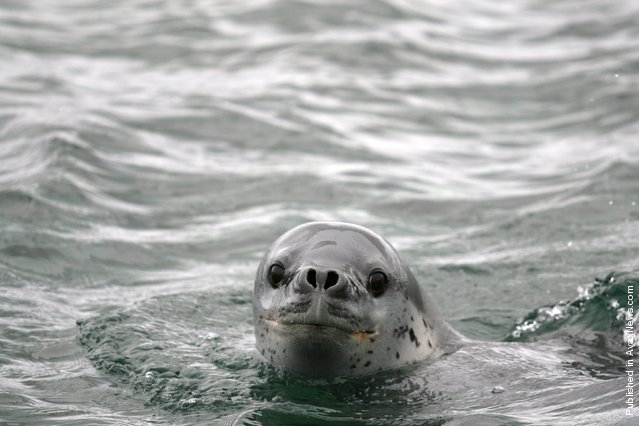
“The leopard seal (Hydrurga leptonyx), also referred to as the sea leopard, is the second largest species of seal in the Antarctic (after the southern elephant seal). It is most common in the southern hemisphere along the coast of Antarctica and on most sub-Antarctic islands, but can also be found on the coasts of southern Australia, Tasmania, South Africa, New Zealand, Lord Howe Island, Tierra del Fuego, the Cook Islands, and the Atlantic coast of South America. It can live twenty-six years, possibly more. Orcas and large sharks are the only natural predators of leopard seals”. – Wikipedia

Photo by: Gilad Rom; Source: Flickr
Details
13 Nov 2011 11:24:00
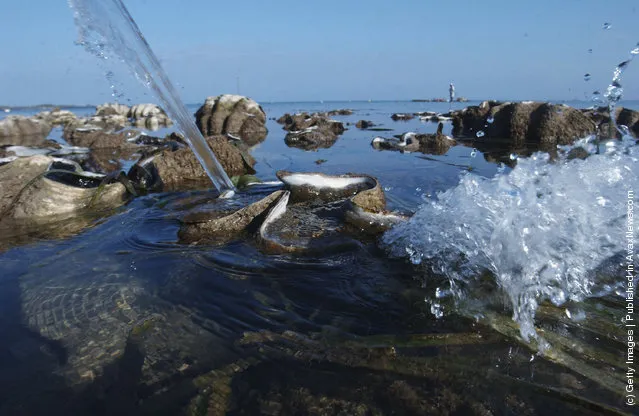
Tridacna Gigas, or Giant Clams

“The giant clam, Tridacna gigas (known as pā’ua in Cook Islands Māori), is the largest living bivalve mollusc. T. gigas is one of the most endangered clam species. It was mentioned as early as 1825 in scientific reports. One of a number of large clam species native to the shallow coral reefs of the South Pacific and Indian oceans, they can weigh more than 200 kilograms (440 lb) measure as much as 120 cm (47 in) across, and have an average lifespan in the wild of 100 years or more”. – Wikipedia

Photo: Tridacna Gigas, or Giant Clams spew water as a traditional fisherman passes by a small sanctuary on January 23, 2004 near Bolinao in the Northern Philippines. The clams, prime builders for coral reefs and providing shelter for spawning fish and other marine life, are exposed by low tides in the sanctuary. Overfishing and pollution throughout the country are not only threatening food security, but are also starting to choke one of the few working clam sanctuaries in the world. (Photo by David Greedy/Getty Images)
Details
01 Oct 2011 13:10:00