Loading...
Done
Dream Chaser

“The Dream Chaser is a planned crewed suborbital and orbital vertical-takeoff, horizontal-landing (VTHL) lifting-body spaceplane being developed by SpaceDev, a wholly owned subsidiary of Sierra Nevada Corporation (SNC). The Dream Chaser design is planned to carry seven people to and from low earth orbit. The vehicle would launch vertically on an Atlas V and land horizontally on conventional runways”. – Wikipedia

Photo: NASA Deputy Administrator Lori Garver talks during a press conference with Sierra Nevada's Dream Chaser spacecraft in the background at the University of Colorado at Boulder on February 5, 2011 in Boulder, Colorado. Sierra Nevada's Dream Chaser spacecraft is under development with support from NASA's Commercial Crew Development Program to provide crew transportation to and from low Earth orbit. NASA is helping private companies develop innovative technologies to ensure that the U.S. remains competitive in future space endeavors. (Photo by Bill Ingalls/NASA via Getty Images)
Details
12 Aug 2011 14:16:00
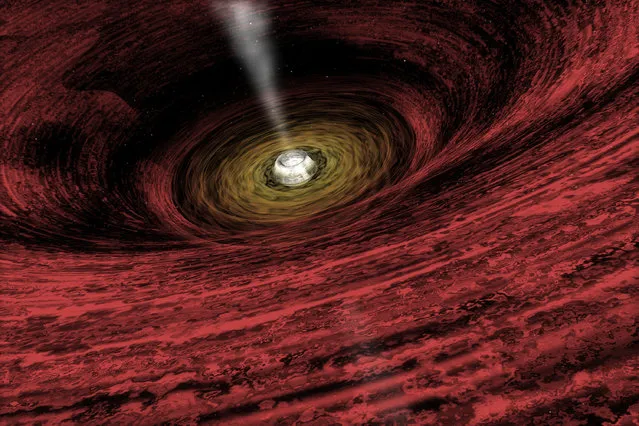
An artist's impression of a growing supermassive black hole located in the early Universe is seen in this NASA handout illustration released on June 15, 2011. Using the deepest X-ray image ever taken, astronomers found the first direct evidence that massive black holes were common in the early universe. This discovery from NASA's Chandra X-Ray Observatory shows that very young black holes grew more aggressively than previously thought, in tandem with the growth of their host galaxies. (Photo by Reuters/NASA/Chandra X-Ray Observatory/A.Hobart)

An artist's impression of a growing supermassive black hole located in the early Universe is seen in this NASA handout illustration released on June 15, 2011. Using the deepest X-ray image ever taken, astronomers found the first direct evidence that massive black holes were common in the early universe. This discovery from NASA's Chandra X-Ray Observatory shows that very young black holes grew more aggressively than previously thought, in tandem with the growth of their host galaxies. (Photo by Reuters/NASA/Chandra X-Ray Observatory/A.Hobart)
Details
11 Feb 2016 12:57:00
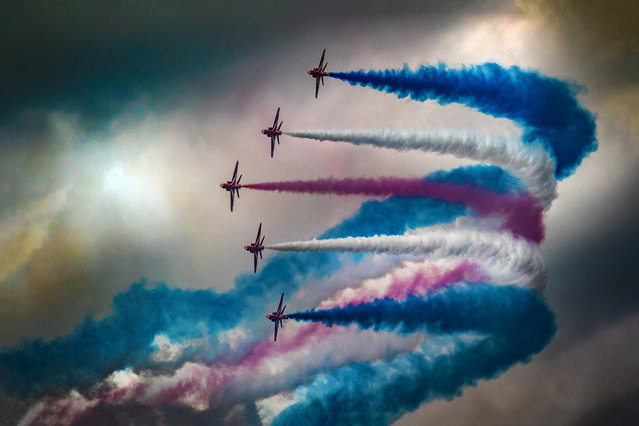
“Red Arrows” at the 2016 royal air tattoo, RAF Fairford, UK. By Jonny Williams, finalist: action. (Photo by Jonny Williams/UK National Geographic Traveller Photography Competition 2018)

“Red Arrows” at the 2016 royal air tattoo, RAF Fairford, UK. By Jonny Williams, finalist: action. (Photo by Jonny Williams/UK National Geographic Traveller Photography Competition 2018)
Details
02 Mar 2018 00:01:00
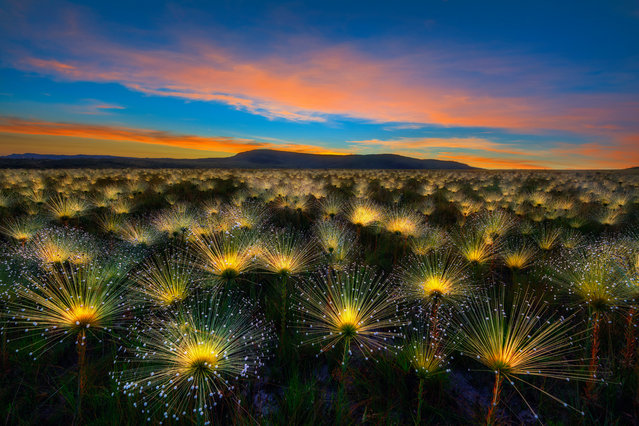
Winner, Wildflower Landscapes category. Alto Paraíso de Goiás, Goiás, Brazil. (Photo by Marcio Cabral/The Guardian)

The International Garden Photographer of the Year is one of the world’s premier competitions specialising in botanical photography. There are 11 main categories and numerous special awards including Young Garden Photographer of the Year, and the mobile-only category Gardens on the Go. Here: Winner, Wildflower Landscapes category. Alto Paraíso de Goiás, Goiás, Brazil. (Photo by Marcio Cabral/The Guardian)
Details
17 Feb 2018 00:02:00
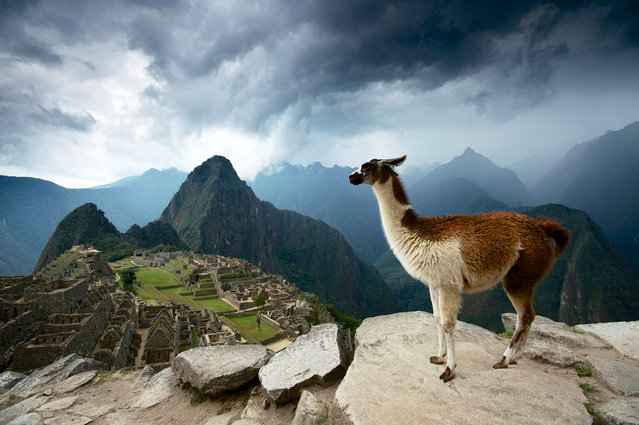
Machu Picchu, Peru. A llama’s-eye view of the legendary Inca settlement at Machu Picchu, isolated high in the Peruvian Andes. (Photo by Jim Turner/National Geographic)

Machu Picchu, Peru. A llama’s-eye view of the legendary Inca settlement at Machu Picchu, isolated high in the Peruvian Andes. (Photo by Jim Turner/National Geographic)
Details
16 Nov 2015 08:13:00
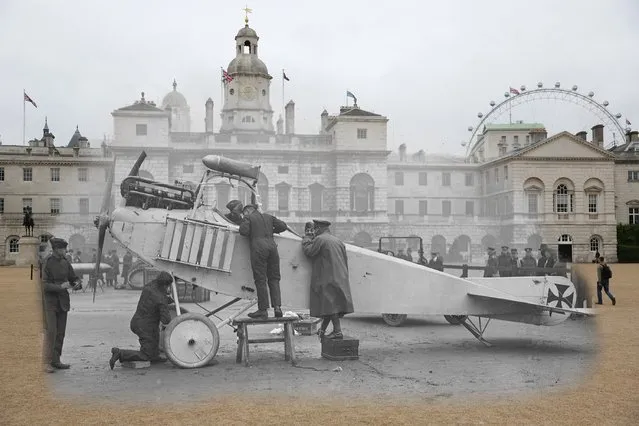
British soldiers inspect a captured German place in the Horseguards' Parade, London during World War I in November 1914, with the London Eye in the background as a reminder of just how much has changed in the last 100 years. (Photo by Peter Macdiarmid/Getty Images)

British soldiers inspect a captured German place in the Horseguards' Parade, London during World War I in November 1914, with the London Eye in the background as a reminder of just how much has changed in the last 100 years. (Photo by Peter Macdiarmid/Getty Images)
Details
29 Jul 2014 12:09:00
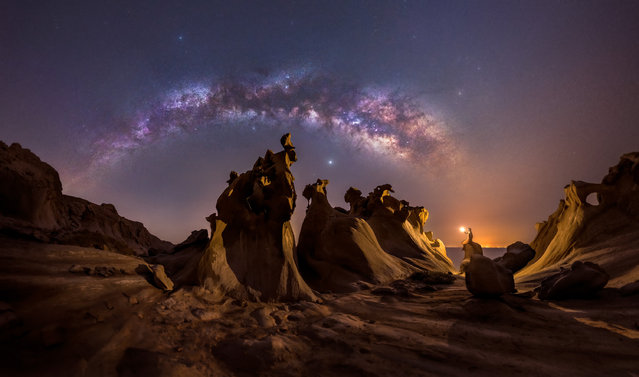
Night lovers; Hormozgan province, Iran. “In this picture, you can see the Milky Way rising on a fascinating spring night on the Persian Gulf coast. The stunning cliffs of this area make every viewer imagine and even talk to them! The light pollution from a faraway city was quite strong, so it was a challenging post-processing process. I’m a nightscaper who tries to achieve an artistic look in my images, and in this image, I tried to convey and capture the magic of this location”. (Photo by Mohammad Hayati/Milky Way Photographer of the Year)

Night lovers; Hormozgan province, Iran. “In this picture, you can see the Milky Way rising on a fascinating spring night on the Persian Gulf coast. The stunning cliffs of this area make every viewer imagine and even talk to them! The light pollution from a faraway city was quite strong, so it was a challenging post-processing process. I’m a nightscaper who tries to achieve an artistic look in my images, and in this image, I tried to convey and capture the magic of this location”. (Photo by Mohammad Hayati/Milky Way Photographer of the Year)
Details
01 Jun 2021 09:42:00
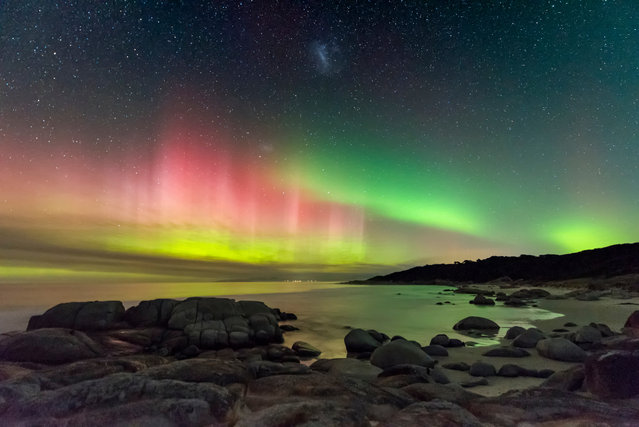
Aurora Australis from Beerbarrel Beach, by James Stone. Runner Up: Aurorae. (Photo by James Stone/Astronomy Photographer of the Year)

Aurora Australis from Beerbarrel Beach, by James Stone. Runner Up: Aurorae. (Photo by James Stone/Astronomy Photographer of the Year)
Details
14 Sep 2019 00:05:00