Loading...
Done
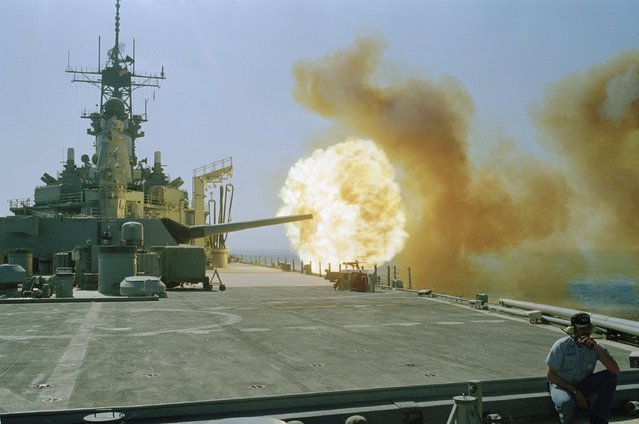
A fireball erupts from a 16-inch gun on the battleship USS Wisconsin during a live fire exercise in the Persian Gulf, October 13, 1990. The ship is in the Gulf as part of Operation Desert Shield. (Photo by John Gaps III/AP Photo)

A fireball erupts from a 16-inch gun on the battleship USS Wisconsin during a live fire exercise in the Persian Gulf, October 13, 1990. The ship is in the Gulf as part of Operation Desert Shield. (Photo by John Gaps III/AP Photo)
Details
15 Oct 2015 08:04:00
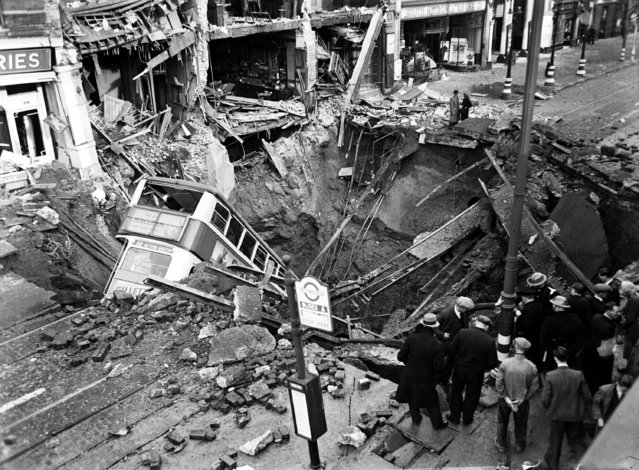
Following a large air raid by German bombers, local people, coming out of their air raid shelters found a bus standing on end in a large crater, in Balham, London, October 15, 1940. (Photo by AP Photo)

Following a large air raid by German bombers, local people, coming out of their air raid shelters found a bus standing on end in a large crater, in Balham, London, October 15, 1940. (Photo by AP Photo)
Details
17 Oct 2015 08:04:00
“Natural History”: Tiger. (Photo by Traer Scott)

“Natural History” is a series of completely candid single exposure images that merge the living and the dead to create allegorical narratives of our troubled co-existence with nature. Ghost-like reflections of modern visitors viewing wildlife dioramas are juxtaposed against the antique taxidermied subjects housed behind thick glass, their faces molded into permanent expressions of fear, aggression or fleeting passivity. After decades of over-hunting, climate change, poaching and destruction of habitat, many of these long dead diorama specimens now represent endangered or completely extinct species”. – Traer Scott. (Photo by Traer Scott)
Details
27 Oct 2014 11:39:00
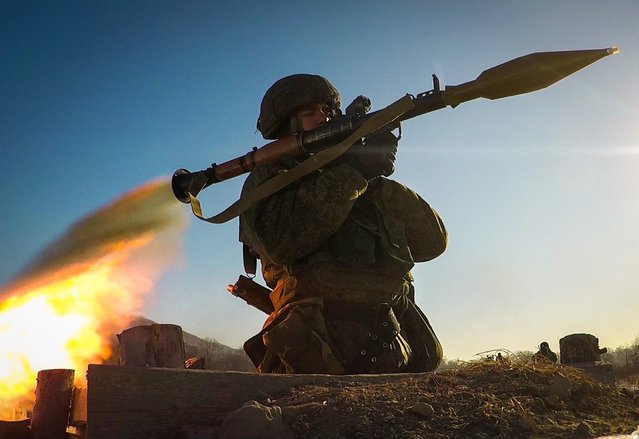
A marine aims an RPG-7, a portable rocket- propelled grenade launcher, during military exercises conducted by the Russian Pacific Fleet' s naval infantry unit at the Bamburovo firing range on February 2, 2017. (Photo by Yuri Smityuk/TASS)

A marine aims an RPG-7, a portable rocket- propelled grenade launcher, during military exercises conducted by the Russian Pacific Fleet' s naval infantry unit at the Bamburovo firing range on February 2, 2017. The drills are a part of preparations for the Suvorov Attack and Sniper Line army competitions. (Photo by Yuri Smityuk/TASS)
Details
04 Feb 2017 01:00:00
An Iraqi Kurdish Peshmerga takes part in a graduation ceremony at the Zakho military academy in the Iraqi Kurdish town of Zakho, some 500 kilometres north of Baghdad, on January 30, 2018. (Photo by Safin Hamed/AFP Photo)

An Iraqi Kurdish Peshmerga takes part in a graduation ceremony at the Zakho military academy in the Iraqi Kurdish town of Zakho, some 500 kilometres north of Baghdad, on January 30, 2018. (Photo by Safin Hamed/AFP Photo)
Details
01 Feb 2018 07:12:00
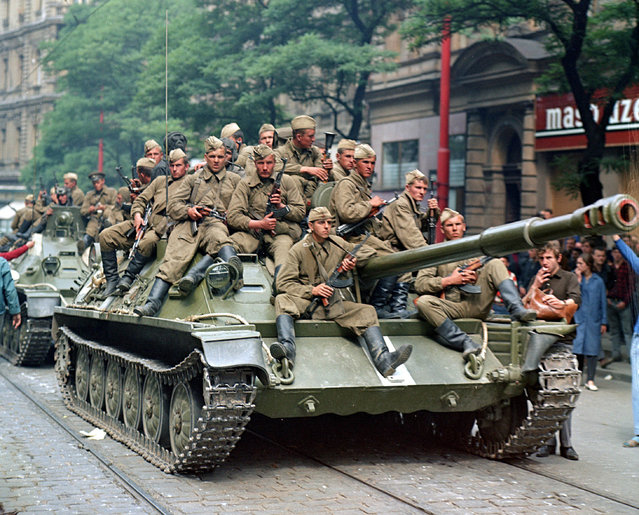
Soviet Army soldiers sit on their tanks in front of the Czechoslovak Radio station building in central Prague during the first day of Soviet-led invasion to then Czechoslovakia on August 21, 1968. (Photo by Libor Hajsky/Reuters)

Soviet Army soldiers sit on their tanks in front of the Czechoslovak Radio station building in central Prague during the first day of Soviet-led invasion to then Czechoslovakia on August 21, 1968. (Photo by Libor Hajsky/Reuters)
Details
16 Mar 2014 07:44:00
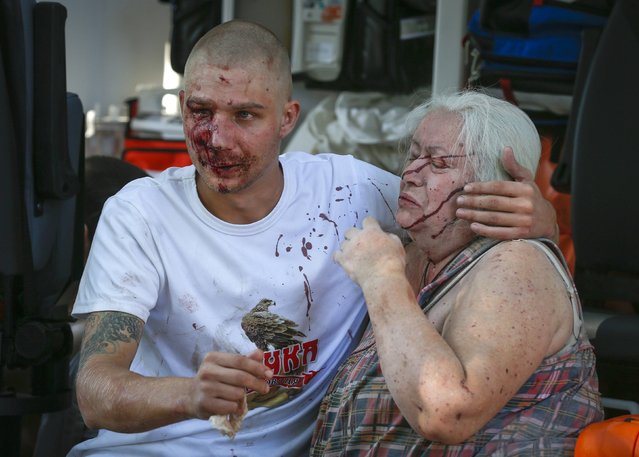
A man and a woman both wounded by what locals say was recent shelling by Ukrainian forces, react as they sit in an ambulance in Donetsk August 23, 2014. (Photo by Maxim Shemetov/Reuters)

A man and a woman both wounded by what locals say was recent shelling by Ukrainian forces, react as they sit in an ambulance in Donetsk August 23, 2014. (Photo by Maxim Shemetov/Reuters)
Details
26 Aug 2014 10:21:00
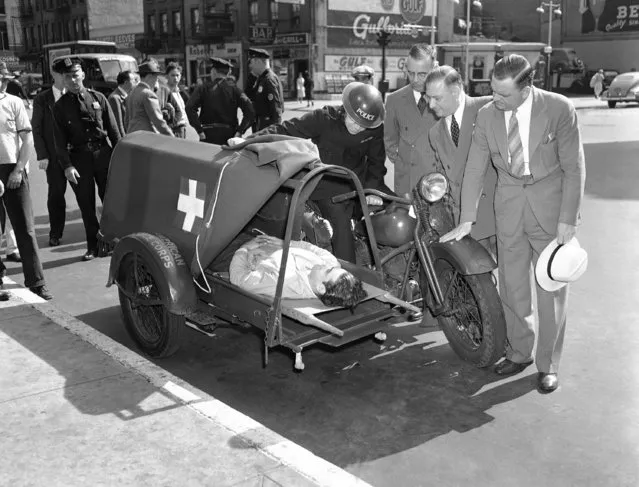
Developed for the British American Ambulance Corps, this new motorcycle ambulance is capable of speeding wounded soldiers 90 miles an hour from the front lines to field hospitals. Its springs are synchronized with the patient?s heartbeat to avoid increasing fever when traveling over various Terrain. Viewing it in New York  August 27, 1941, are left to right: constable Herbert Scott of England, driver; William E. Detlor, whose firm developed the vehicle; M. W. Stand, inspector-general of Civilian Defense, and Maj. Edward Riekert, also. (Photo by AP Photo)

Developed for the British American Ambulance Corps, this new motorcycle ambulance is capable of speeding wounded soldiers 90 miles an hour from the front lines to field hospitals. Its springs are synchronized with the patient's heartbeat to avoid increasing fever when traveling over various Terrain. Viewing it in New York August 27, 1941, are left to right: constable Herbert Scott of England, driver; William E. Detlor, whose firm developed the vehicle; M. W. Stand, inspector-general of Civilian Defense, and Maj. Edward Riekert, also. (Photo by AP Photo)
Details
28 Aug 2015 11:51:00