Loading...
Done
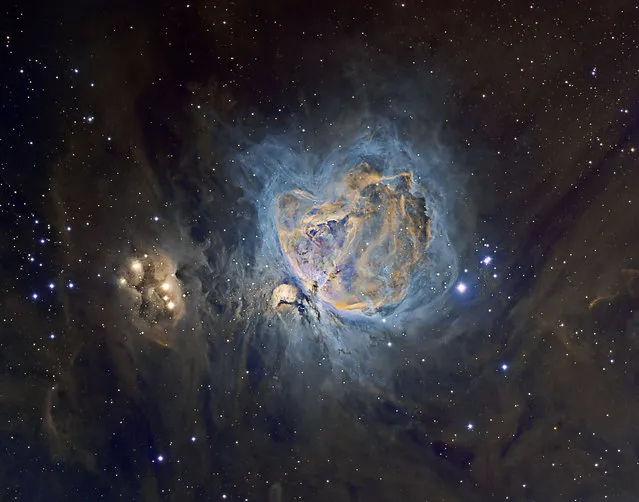
M42 Subtle V1 cropped. One of the most well-known astronomical objects in our universe is the Orion Nebula and this image depicts the wider region of the Orion Molecular Cloud Complex that is its home. This complex also includes another popular target for astrophotographers, the Horsehead Nebula, as well as Barnard’s Loop and the Running Man Nebula, which can be seen to the left of this photograph. (Photo by Patrick Gilliland)

M42 Subtle V1 cropped. One of the most well-known astronomical objects in our universe is the Orion Nebula and this image depicts the wider region of the Orion Molecular Cloud Complex that is its home. This complex also includes another popular target for astrophotographers, the Horsehead Nebula, as well as Barnard’s Loop and the Running Man Nebula, which can be seen to the left of this photograph. (Photo by Patrick Gilliland)
Details
17 Nov 2015 08:05:00
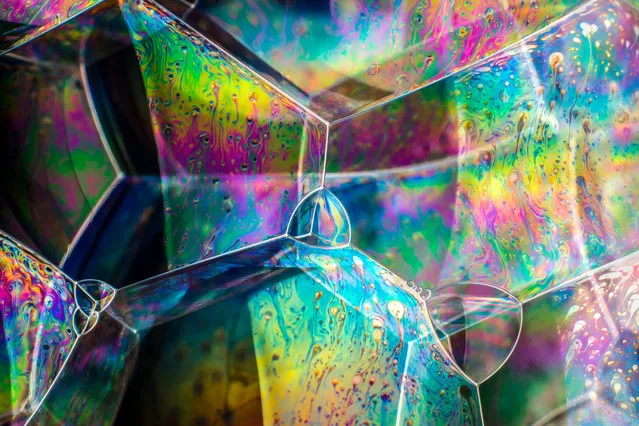
Soap Bubble Structures by Kym Cox. Bubbles optimise space and minimise their surface area for a given volume of air. This phenomenon makes them a useful tool in many areas of research, in particular, materials science and ‘packing’ – how things fit together. Bubble walls drain under gravity, thin at the top, thick at the bottom, which interferes with travelling lightwaves to create bands of colour. Black spots show the wall is too thin for interference colours, indicating the bubble is about to burst. (Photo by Kym Cox/2019 Science Photographer of the Year/RPS)

Soap Bubble Structures by Kym Cox. Bubbles optimise space and minimise their surface area for a given volume of air. This phenomenon makes them a useful tool in many areas of research, in particular, materials science and “packing” – how things fit together. Bubble walls drain under gravity, thin at the top, thick at the bottom, which interferes with travelling lightwaves to create bands of colour. Black spots show the wall is too thin for interference colours, indicating the bubble is about to burst. (Photo by Kym Cox/2019 Science Photographer of the Year/RPS)
Details
15 Aug 2019 00:03:00
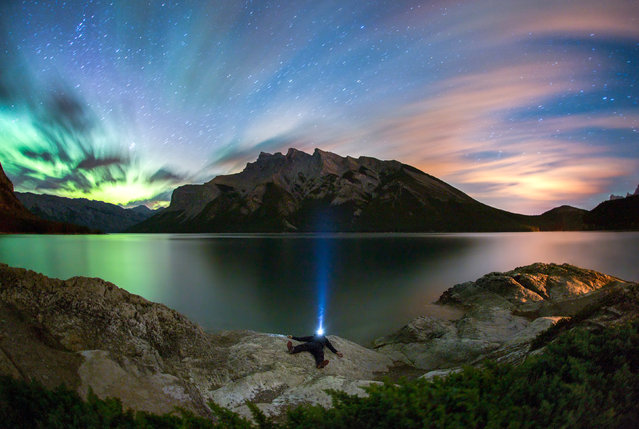
Lake Minnewanka, Banff National Park, Alberta, Canada. (Photo by Paul Zizka/Caters News Agency)

A landscape photographer turned the camera on himself to take a set of incredible selfie while visiting some of the world's most beautiful destinations. Paul Zizka, 39, from Alberta, Canada, has been a photographer for nine years, and thought that featuring in his own pictures would emphasize the nature surrounding him and create a more unique shot. Here: Lake Minnewanka, Banff National Park, Alberta, Canada. (Photo by Paul Zizka/Caters News Agency)
Details
03 Sep 2019 00:03:00
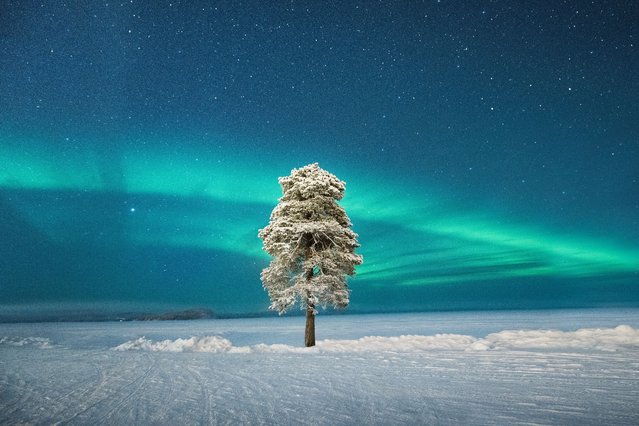
Aurorae category runner-up: Lone Tree under a Scandinavian Aurora by Tom Archer (UK). The photographer decided to explore the area around the hotel on a very crisp -35C evening in Finnish Lapland. When he found this tree, he decided to wait for the misty conditions to change and could not believe his luck when the sky cleared and the aurora came out in the perfect spot. Archer spent about an hour photographing it before his camera started to lock up because of the harsh conditions, but by then he was happy to call it a night. (Photo by Tom Archer/2020 Astronomy Photographer of the Year)

Aurorae category runner-up: Lone Tree under a Scandinavian Aurora by Tom Archer (UK). The photographer decided to explore the area around the hotel on a very crisp -35C evening in Finnish Lapland. When he found this tree, he decided to wait for the misty conditions to change and could not believe his luck when the sky cleared and the aurora came out in the perfect spot. Archer spent about an hour photographing it before his camera started to lock up because of the harsh conditions, but by then he was happy to call it a night. (Photo by Tom Archer/2020 Astronomy Photographer of the Year)
Details
17 Sep 2020 00:03:00
“Hard for Life”. (Photo by Theo Vu Xuan/Sony World Photography Awards/WENN.com)

“Hard for Life”. (Photo by Theo Vu Xuan/Sony World Photography Awards/WENN.com)
Details
19 Mar 2015 13:49:00
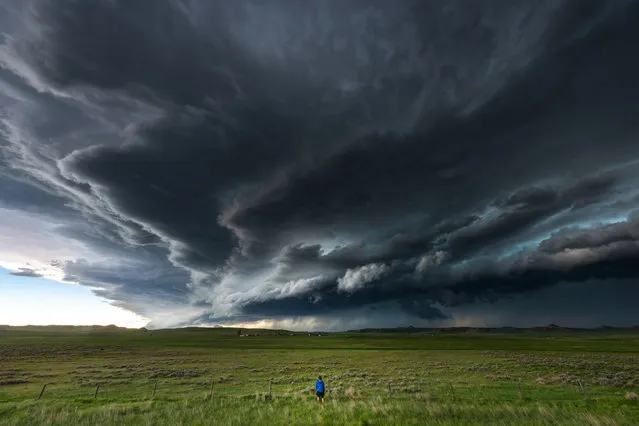
A photographer has weathered some of America's most violent storms to capture these stunning snaps. Storm chaser Mike Mezeul II, 30, has traveled all over the US to shoot the likes of mammoth thunderstorms and surreal cloud patterns. His incredible collection of storm images are the result of more than 15 years of photography and thousands of miles of travel. (Photo by Mike Mezeul II/Caters News)

A photographer has weathered some of America's most violent storms to capture these stunning snaps. Storm chaser Mike Mezeul II, 30, has traveled all over the US to shoot the likes of mammoth thunderstorms and surreal cloud patterns. His incredible collection of storm images are the result of more than 15 years of photography and thousands of miles of travel. Here: Mike waiting for the storm at Cheyenne, Wyoming, June 2014. (Photo by Mike Mezeul II/Caters News)
Details
07 Dec 2014 11:21:00
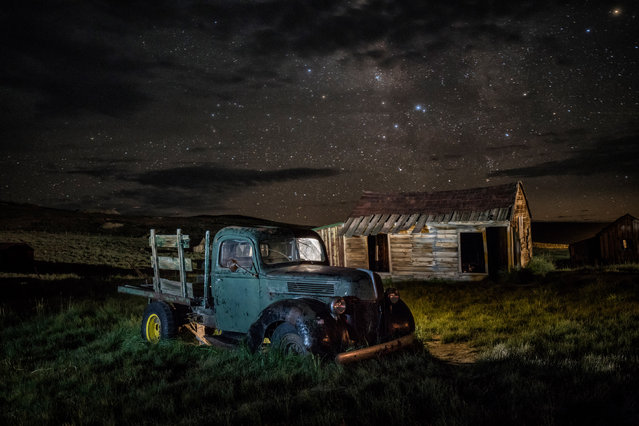
Bodie, California, a real-life ghost town. (Photo by Matthew Christopher/Caters News Agency)

In the build-up to Halloween those hunting for a real-life ghost town need look no further than this haunting spot. Bodie, California, USA – which requires special access to photograph at night – is one of the best preserved ghost towns in America, still featuring the abodes of the former miners who inhabited it more than 100 years ago. Here: Bodie, California, a real-life ghost town. (Photo by Matthew Christopher/Caters News Agency)
Details
28 Oct 2017 07:15:00
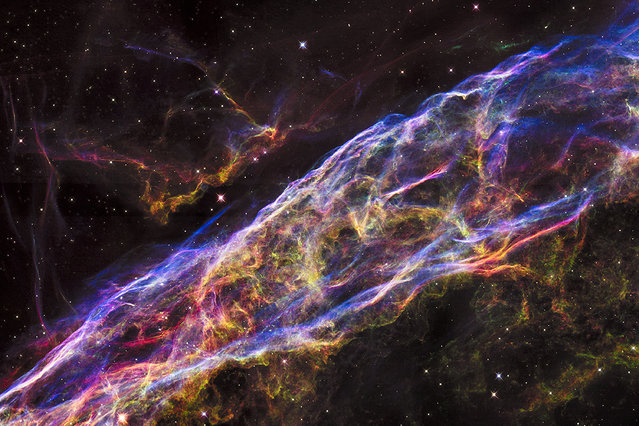
A small section of the expanding remains of the Veil Nebula, a massive star that exploded about 8,000 years ago. The entire nebula is 110 light-years across, covering six full moons on the sky as seen from Earth, and resides about 2,100 light-years away in the constellation Cygnus, the Swan. Image taken by NASA's Hubble Space Telescope. Released September 24, 2015. (Photo by Reuters/NASA/ESA/Hubble Heritage Team)

A small section of the expanding remains of the Veil Nebula, a massive star that exploded about 8,000 years ago. The entire nebula is 110 light-years across, covering six full moons on the sky as seen from Earth, and resides about 2,100 light-years away in the constellation Cygnus, the Swan. Image taken by NASA's Hubble Space Telescope. Released September 24, 2015. (Photo by Reuters/NASA/ESA/Hubble Heritage Team)
Details
10 Dec 2015 08:01:00