Loading...
Done
Members of the South Korean Confederation of Trade Unions (KCTU) perform with traditional Korean masks during a rally against the government's Labor Policy in Seoul, South Korea, 06 July 2023. South Korean Confederation of Trade Unions (KCTU) begen a general strike on a national scale from 03 July against the South Korean government's labor policy and against Japan's disposal of treated radioactive water from the Fukushima nuclear power plant into the sea. (Photo by Jeon Heon-Kyun/EPA)

Members of the South Korean Confederation of Trade Unions (KCTU) perform with traditional Korean masks during a rally against the government's Labor Policy in Seoul, South Korea, 06 July 2023. South Korean Confederation of Trade Unions (KCTU) begen a general strike on a national scale from 03 July against the South Korean government's labor policy and against Japan's disposal of treated radioactive water from the Fukushima nuclear power plant into the sea. (Photo by Jeon Heon-Kyun/EPA)
Details
20 Jul 2023 04:01:00
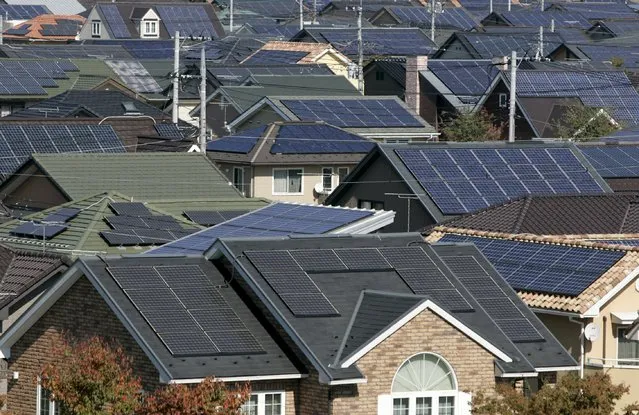
Rooftops of solar powered houses are pictured in Ota, 80 km northwest of Tokyo in this October 28, 2008 file photo. One by one, Japan is turning off the lights at the giant oil-fired power plants that propelled it to the ranks of the world's top industrialised nations. With nuclear power in the doldrums after the Fukushima disaster, it's solar energy that is becoming the alternative. (Photo by Yuriko Nakao/Reuters)

Rooftops of solar powered houses are pictured in Ota, 80 km northwest of Tokyo in this October 28, 2008 file photo. One by one, Japan is turning off the lights at the giant oil-fired power plants that propelled it to the ranks of the world's top industrialised nations. With nuclear power in the doldrums after the Fukushima disaster, it's solar energy that is becoming the alternative. Solar power is set to become profitable in Japan as early as this quarter, according to the Japan Renewable Energy Foundation (JREF), freeing it from the need for government subsidies and making it the last of the G7 economies where the technology has become economically viable. (Photo by Yuriko Nakao/Reuters)
Details
24 Nov 2015 08:04:00


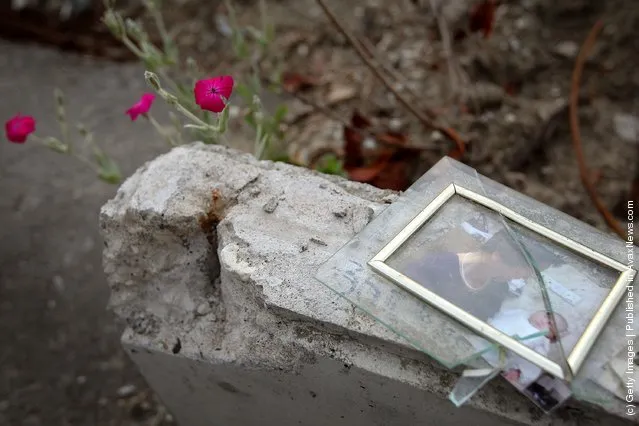
A broken picture frame is left in the tsunami-hit Arahama area, three months and two days after the magnitude 9.0 earthquake and subsequent tsunami on June 13, 2011 in Sendai, Miyagi, Japan. Japanese government has been struggling to deal with the earthquake and tsunami as well as the troubled Fukushima Daiichi Nuclear Power Plant. The fear on outbreak of virus infectious disease are mounting due to the humid rainy season on the corner and delay of the clearing the debris. (Photo by Kiyoshi Ota/Getty Images)
Details
14 Jun 2011 09:23:00


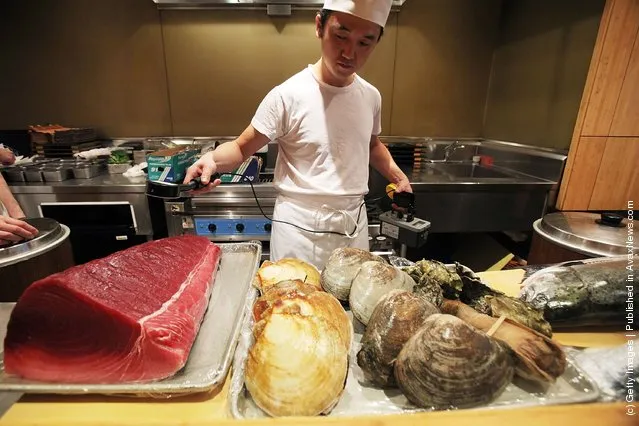
Sushi chef Mitsuru Tamura uses a radiation detector on seafood before it is prepared in Manhattan's Sushi Yasuda restaurant April 8, 2011 in New York City. The restaurant has begun using the detector as a precautionary measure due to consumer concerns over possible radiation contamination in seafood from the nuclear emergency in Japan. Health officials believe contamination is unlikely to threaten the food supply chain and none has been found in this restaurant. (Photo by Mario Tama/Getty Images)
Details
09 Apr 2011 08:52:00
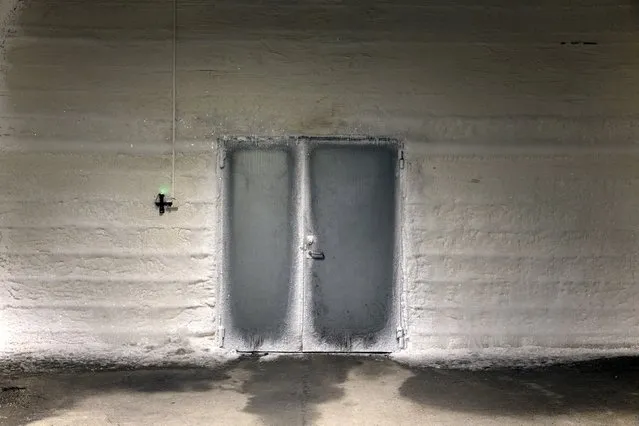
An ice covered entrance door to the international gene bank Svalbard Global Seed Vault (SGSV) near Longyearbyen on Spitsbergen, Norway, October 20, 2015. (Photo by Anna Filipova/Reuters)

An ice covered entrance door to the international gene bank Svalbard Global Seed Vault (SGSV) near Longyearbyen on Spitsbergen, Norway, October 20, 2015. Two consignments of crop seeds will be deposited next year in a “doomsday vault” built in an Arctic mountainside to safeguard global supplies. The vault, which opened on the Svalbard archipelago in 2008, is designed to protect crop seeds, such as beans, rice and wheat against the worst cataclysms of nuclear war or disease. (Photo by Anna Filipova/Reuters)
Details
17 Dec 2015 08:01:00
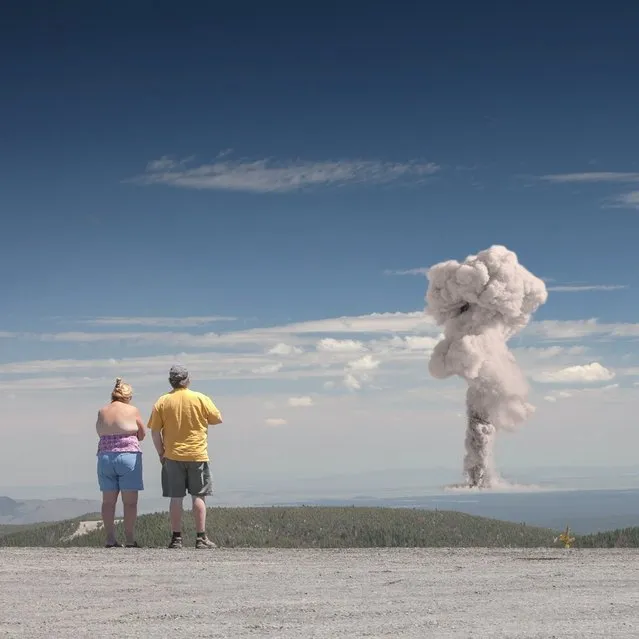
Atomic Overlook by Clay Lipsky

Clay Lipsky has created a great series called Atomic Overlook. The project takes terribly boring scenic shots and combines them with some exciting nuclear testing. “Tourists will line up for anything and I always found humor in vacation destinations that are nothing but a bunch of people looking into a great abyss”, he says. “I understand the allure of a beautiful landscape, but as the world’s population grows so do the lines to view the “nothingness”. Atomic Overlook flips the script on that and gives new purpose to those suntanned masses”. (Photo by Clay Lipsky)
Details
29 Sep 2012 08:27:00
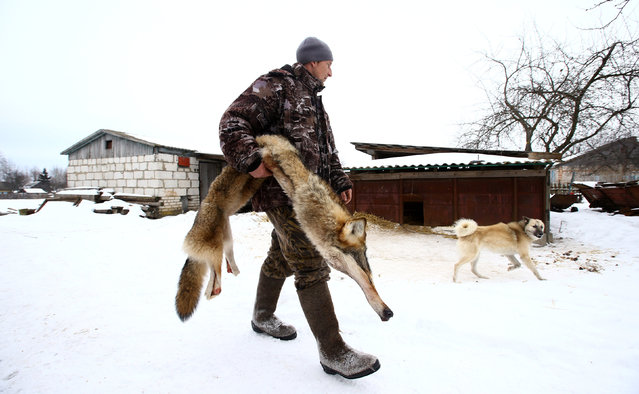
Nikolay Skidan, a hunter, carries the skin of a wolf in the village of Khrapkovo, Belarus February 1, 2017. (Photo by Vasily Fedosenko/Reuters)

Nikolay Skidan, a hunter, carries the skin of a wolf in the village of Khrapkovo, Belarus February 1, 2017. Wolf fur grows thickest in winter, so Belarussian hunter Vladimir Krivenchik only sets his traps once snow is on the ground. He and his wife live on the edge of the Chernobyl exclusion zone – 2,600 square km of land on the Belarus-Ukraine border that was contaminated by a nuclear disaster in 1986. (Photo by Vasily Fedosenko/Reuters)
Details
16 Feb 2017 00:04:00
Chernobyl

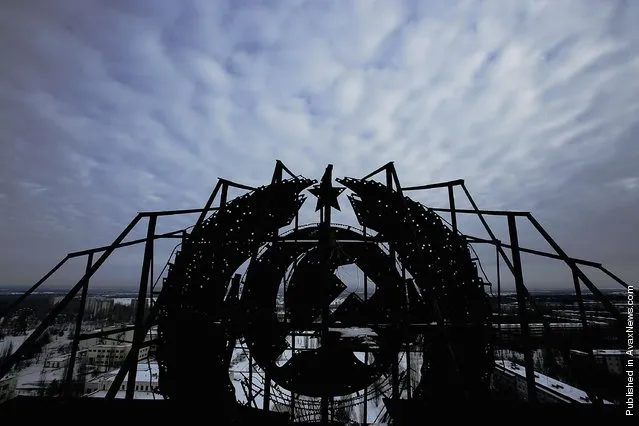
Scaffolding holding a remnant of the Soviet Union, the hammer and sickle, is seen on a rooftop of an abandoned building in the town of Pripyat on January 25, 2006 near Chernobyl, Ukraine. The town of Pripyat, deserted since the 1986 catastrophe, once housed 30,000 people, the majority of being workers from the Chernobyl Nuclear Power Plant. Days after the catastrophe the inhabitants were relocated to other locations in the Soviet Union. The town of Pripyat has remained uninhabited since. Prypyat and the surrounding area will not be safe for human habitation for several centuries. Scientists estimate that the most dangerous radioactive elements will take up to 900 years to decay sufficiently to render the area safe.
Details
14 Mar 2011 10:20:00