Loading...
Done
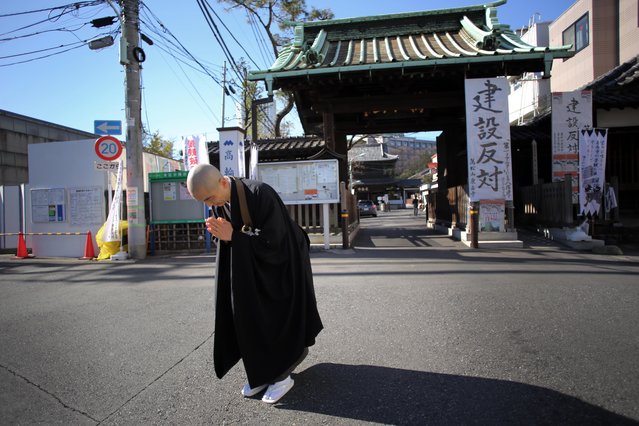
In this January 8, 2015 photo, a monk Kenmyo Muta bows at the condominium construction site and the gate of Sengakuji temple in Tokyo. (Photo by Eugene Hoshiko/AP Photo)

In this January 8, 2015 photo, a monk Kenmyo Muta bows at the condominium construction site and the gate of Sengakuji temple in Tokyo. The “47 ronin” samurai who inspired the long-loved saga of loyalty and honor eulogized in films, books and plays are fighting a new kind of battle in urban Japan. An apartment complex is going up next to the curved tile-roofed Sengakuji temple where the three-century-old graves of the ronin, or masterless samurai, lie. The banner reads: “We only hope to protect landscape of Sengakuji temple”. (Photo by Eugene Hoshiko/AP Photo)
Details
16 Jan 2015 13:01:00
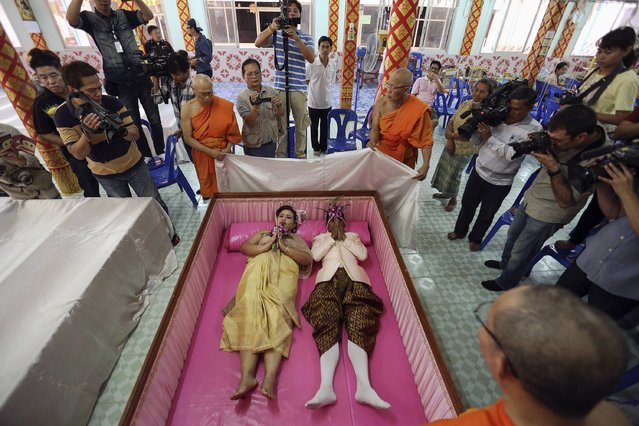
People take pictures and Buddhist monk chants as a groom and a bride lay inside a pink coffin during their wedding ceremony at Wat Takien temple in Nonthaburi province, on the outskirts of Bangkok February 14, 2015. (Photo by Damir Sagolj/Reuters)

People take pictures and Buddhist monk chants as a groom and a bride lay inside a pink coffin during their wedding ceremony at Wat Takien temple in Nonthaburi province, on the outskirts of Bangkok February 14, 2015. Ten Thai couples laid in the pink coffin starting 9:09 AM on Saturday during the wedding ceremony organised by the Buddhist temple on Valentine's Day. Couples believe laying briefly in the coffin will get rid of bad luck and usher happiness into their lives. (Photo by Damir Sagolj/Reuters)
Details
16 Feb 2015 13:36:00
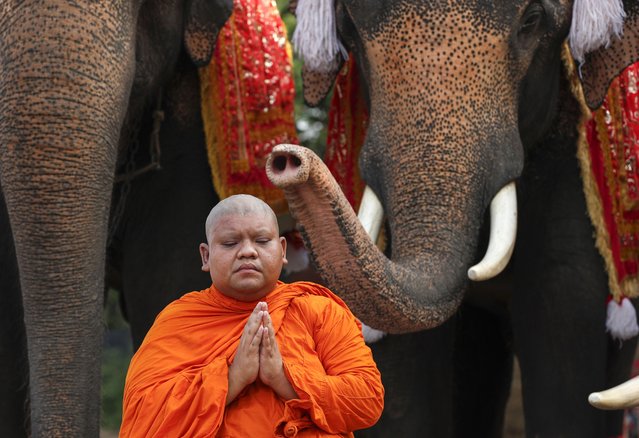
A Thai Buddhist monk performs a religious rite blessing elephants and mahouts to mark the National Elephant Day at the Ayutthaya Elephant Palace and Royal Kraal in the world heritage city of Ayutthaya, Thailand, 13 March 2025. The National Elephant Day has been observed annually on 13 March since 1998 when it was established by the Thai government, in an effort to protect and conserve Thai elephants, who are part of the Asian elephant family classified as an endangered species. (Photo by Rungroj Yongrit/EPA)

A Thai Buddhist monk performs a religious rite blessing elephants and mahouts to mark the National Elephant Day at the Ayutthaya Elephant Palace and Royal Kraal in the world heritage city of Ayutthaya, Thailand, 13 March 2025. The National Elephant Day has been observed annually on 13 March since 1998 when it was established by the Thai government, in an effort to protect and conserve Thai elephants, who are part of the Asian elephant family classified as an endangered species. (Photo by Rungroj Yongrit/EPA)
Details
03 Apr 2025 04:25:00
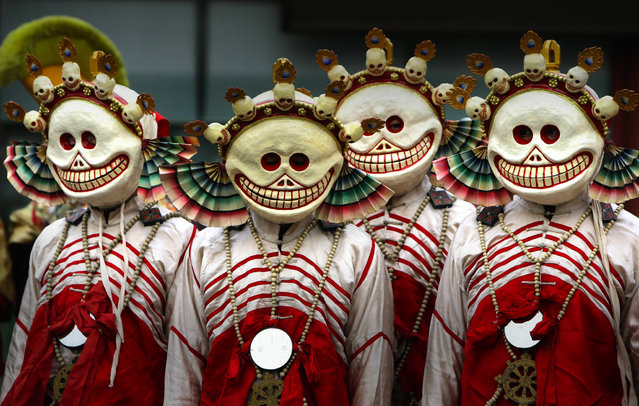
Monks dressed as Tibetan Buddhism characters attend a religious ceremony, known as “Da Gui” or beating ghost, to celebrate the upcoming Tibetan New Year which starts on March 1 at Yonghegong Lama Temple, in Beijing February 28, 2014. This Tibetan ceremony is held annually at the end of the first lunar month with mask dancing to expel ghosts, according to a press release. (Photo by Jason Lee/Reuters)

Monks dressed as Tibetan Buddhism characters attend a religious ceremony, known as “Da Gui” or beating ghost, to celebrate the upcoming Tibetan New Year which starts on March 1 at Yonghegong Lama Temple, in Beijing February 28, 2014. This Tibetan ceremony is held annually at the end of the first lunar month with mask dancing to expel ghosts, according to a press release. (Photo by Jason Lee/Reuters)
Details
01 Mar 2014 13:07:00
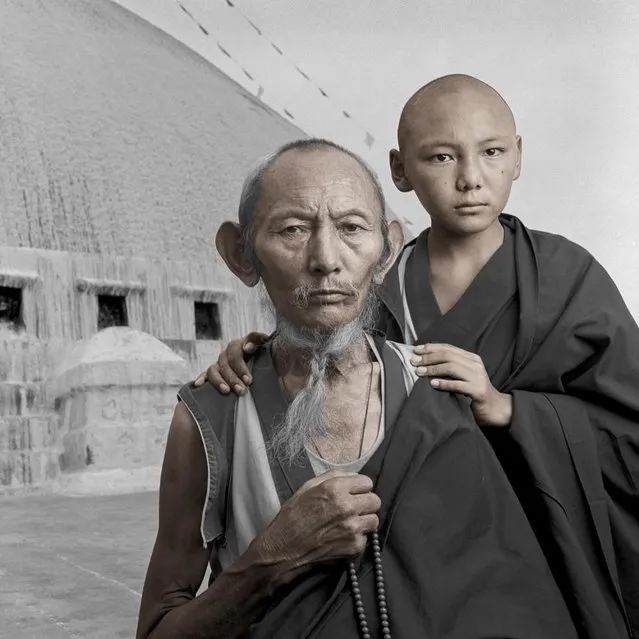
“Lobsang and 66 fellow monks were imprisoned in 1959. When released 21 years later, he was one of only three survivors. While in prison his best friend, a rinpoche, died in his arms. Tensin was later discovered to be the reincarnation of that friend. Lobsang said there are so many characteristics of his old friend in the young boy”. (Phil Borges)

“Lobsang and 66 fellow monks were imprisoned in 1959. When released 21 years later, he was one of only three survivors. While in prison his best friend, a rinpoche, died in his arms. Tensin was later discovered to be the reincarnation of that friend. Lobsang said there are so many characteristics of his old friend in the young boy”. (Photo and caption by Phil Borges)
Details
06 Mar 2014 14:01:00


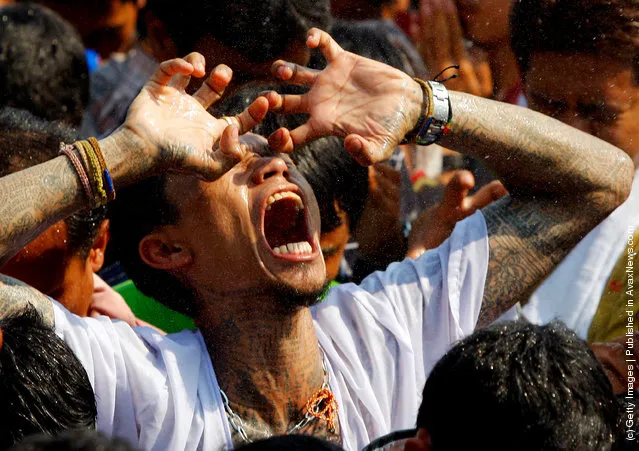
A Thai devotee in a state of trance screams while holy water is sprayed as thousands race towards the edifice of the founder monk during the annual Tattoo fesitval at Wat Bang Phra on March 7, 2009 in Nakhom Pathom, Thailand. Some men take on the characteristics of sacred animals that have been carved onto their skin. Thousands of believers from all over Thailand come to take part in one of the country's most bizarre festivals about 50 miles outside Bangkok to pay respect to the temple's monks who are master tattooist. In Thai culture the tattoo or Thai word sak yant is worn as a symbol of spiritual and physical protection, many believe that the tattoo have mystical powers. Many tattoo fanatics choose to have monkeys and tigers as well as the Khmer/Cambodia ancient script on their bodies. (Photo Paula Bronstein/Getty Images)
Details
27 Jun 2011 10:43:00
Monastic dormitories stand on the hillside at the Serthar Wuming Buddhist Study Institute in Serthar County of Garze Tibetan Autonomous Prefecture, Sichuan Province, China

Monastic dormitories stand on the hillside at the Serthar Wuming Buddhist Study Institute on November 4, 2006 in Serthar County of Garze Tibetan Autonomous Prefecture, Sichuan Province, China. The Wuming Buddhist Study Institute is located in Larung Gar Monastery on an altitude of 3,700 meters (about 12,136 feet). The institute has the largest conglomeration of monks and nuns in Tibetan Areas, with over 40,000 monastics from the Tibet Buddhism Nyingma School, Gelug School, Sakya School and Kagyu School, including more than 10,000 nuns. (Photo by China Photos/Getty Images)
Details
10 Feb 2012 11:39:00
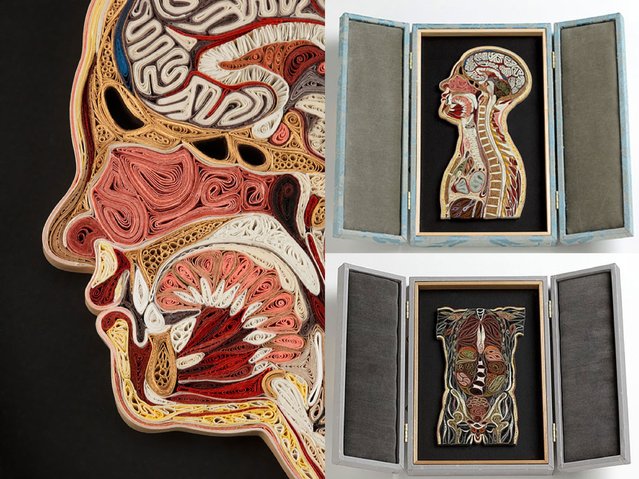
 Paper Anatomy By Lisa Nilsson

These pieces are made of Japanese mulberry paper and the gilded edges of old books. They are constructed by a technique of rolling and shaping narrow strips of paper called quilling or paper filigree. Quilling was first practiced by Renaissance nuns and monks who are said to have made artistic use of the gilded edges of worn out bibles, and later by 18th century ladies who made artistic use of lots of free time. I find quilling exquisitely satisfying for rendering the densely squished and lovely internal landscape of the human body in cross section.
Details
14 Apr 2013 11:07:00