Loading...
Done
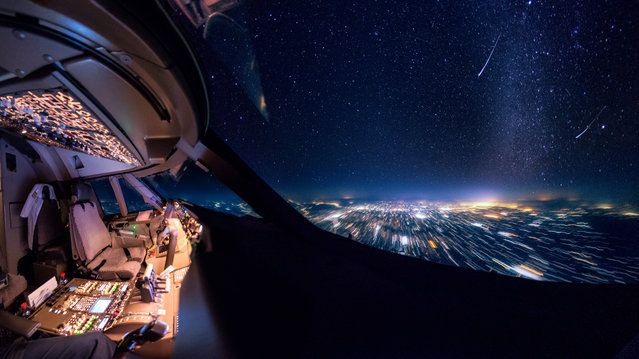
Shooting stars over India. (Photo by Christiaan van Heijst/Caters News Agency)

The Boeing 747-8 cargo plane pilot has seen thunderstorms, shooting stars and sunsets from up above the clouds and has looked down on mountaintops, carpets of cloud and cities lit up at night. The incredible pictures give a glimpse of the view from the pilots are treated to every day. Here: Shooting stars over India. (Photo by Christiaan van Heijst/Caters News Agency)
Details
04 Jan 2018 08:23:00
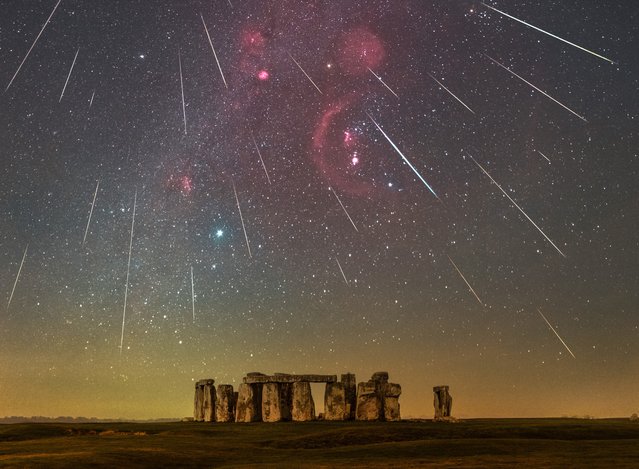
Nick Bull captured the Geminid meteor shower above Stonehenge in Wiltshire, UK on December 14, 2023. (Photo by Nick Bull/Picture Eexclusive)

Nick Bull captured the Geminid meteor shower above Stonehenge in Wiltshire, UK on December 14, 2023. (Photo by Nick Bull/Picture Eexclusive)
Details
19 Aug 2024 04:00:00
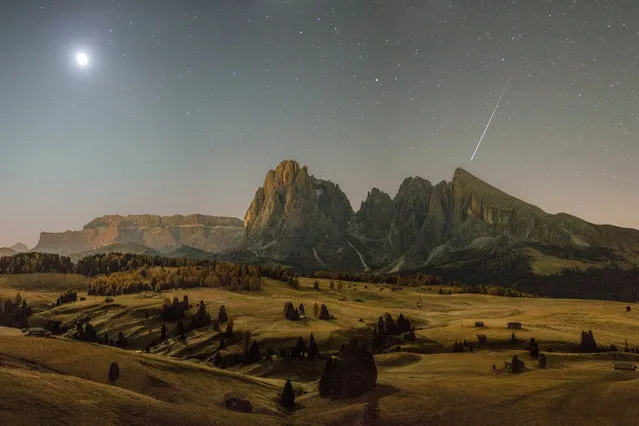
Young category winner. Great autumn morning by Fabian Dalpiaz. (Photo by Fabian Dalpiaz/2018 Astronomy Photographer of the Year)

Young category winner. Great autumn morning by Fabian Dalpiaz. (Photo by Fabian Dalpiaz/2018 Astronomy Photographer of the Year)
Details
26 Oct 2018 00:03:00
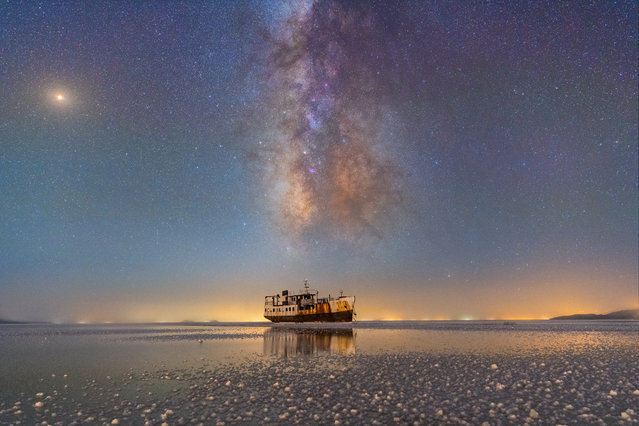
Sharafkhaneh port and lake Urmia. Masoud Ghadiri (Iran). The summer Milky Way is very prominent in this photo. On the galaxy zone, Saturn is located besides the Lagoon nebula. On the right of the horizon, you can see the extreme light pollution of Urmia, which is caused by ever-increasing city development. (Photo by Masoud Ghadiri/National Maritime Museum)

Sharafkhaneh port and lake Urmia. Masoud Ghadiri (Iran). The summer Milky Way is very prominent in this photo. On the galaxy zone, Saturn is located besides the Lagoon nebula. On the right of the horizon, you can see the extreme light pollution of Urmia, which is caused by ever-increasing city development. (Photo by Masoud Ghadiri/National Maritime Museum)
Details
20 Jun 2019 00:01:00
People wade through a flooded street after Typhoon Fung-wong hit Dagupan City, Pangasinan, Philippines, on November 10, 2025. (Photo by Noel Celisn/Reuters)

People wade through a flooded street after Typhoon Fung-wong hit Dagupan City, Pangasinan, Philippines, on November 10, 2025. (Photo by Noel Celisn/Reuters)
Details
11 Dec 2025 06:28:00
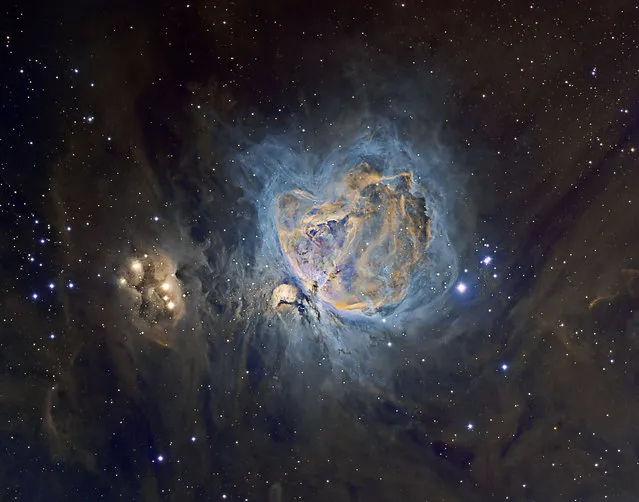
M42 Subtle V1 cropped. One of the most well-known astronomical objects in our universe is the Orion Nebula and this image depicts the wider region of the Orion Molecular Cloud Complex that is its home. This complex also includes another popular target for astrophotographers, the Horsehead Nebula, as well as Barnard’s Loop and the Running Man Nebula, which can be seen to the left of this photograph. (Photo by Patrick Gilliland)

M42 Subtle V1 cropped. One of the most well-known astronomical objects in our universe is the Orion Nebula and this image depicts the wider region of the Orion Molecular Cloud Complex that is its home. This complex also includes another popular target for astrophotographers, the Horsehead Nebula, as well as Barnard’s Loop and the Running Man Nebula, which can be seen to the left of this photograph. (Photo by Patrick Gilliland)
Details
17 Nov 2015 08:05:00
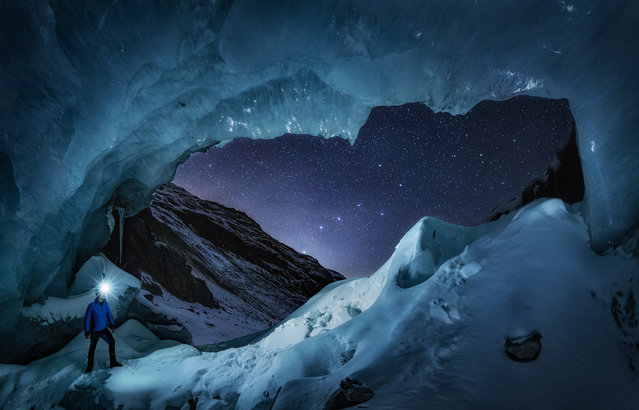
“Mr Big Dipper”, Nicholas Roemmelt (Denmark). A stargazer observes the constellation of the Big Dipper perfectly aligned with the window of the entrance to a large glacier cave in Engadin, Switzerland. This is a panorama of two pictures, and each is a stack of another two pictures: one for the stars and another one for the foreground, but with no composing or time blending. (Photo by Nicholas Roemmelt/National Maritime Museum/The Guardian)

“Mr Big Dipper”, Nicholas Roemmelt (Denmark). A stargazer observes the constellation of the Big Dipper perfectly aligned with the window of the entrance to a large glacier cave in Engadin, Switzerland. This is a panorama of two pictures, and each is a stack of another two pictures: one for the stars and another one for the foreground, but with no composing or time blending. (Photo by Nicholas Roemmelt/National Maritime Museum/The Guardian)
Details
27 Jul 2017 06:50:00
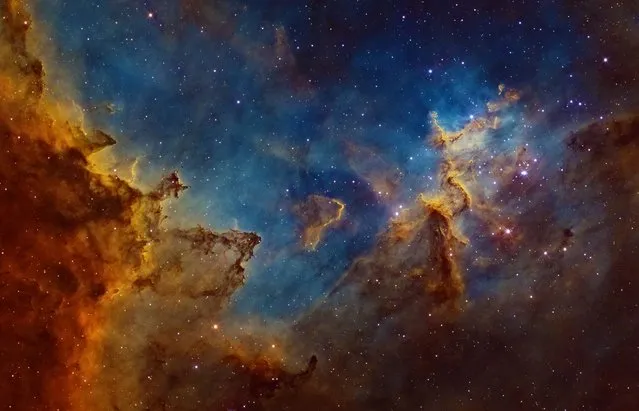
Centre of the Heart Nebula by Ivan Eder (Hungary). Situated 7500 light years away in the ‘W’-shaped constellation of Cassiopeia, the Heart Nebula is a vast region of glowing gas, energized by a cluster of young stars at its centre. The image depicts the central region, where dust clouds are being eroded and moulded into rugged shapes by the searing cosmic radiation. (Photo by Ivan Eder)

The competition, which is run by the Royal Observatory Greenwich in association with BBC Sky at Night Magazine, is now in its sixth year and has received over 2,500 entries. Photo: Centre of the Heart Nebula by Ivan Eder (Hungary). Situated 7500 light years away in the “W”-shaped constellation of Cassiopeia, the Heart Nebula is a vast region of glowing gas, energized by a cluster of young stars at its centre. The image depicts the central region, where dust clouds are being eroded and moulded into rugged shapes by the searing cosmic radiation. (Photo by Ivan Eder)
Details
03 Jul 2014 11:59:00