Loading...
Done
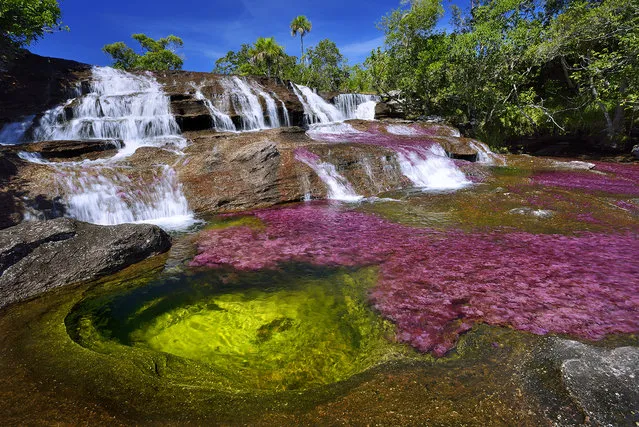
A waterfall is seen at the end of the rainy season, in August, when the water level finally decreases, in the Cano Cristales RIver in the Sierra de la Macarena in Colombia. It has become covered with a bright pink endemic aquatic plant, Macarenia Clavigera. (Photo by Olivier Grunewald)

“El rio mas bonito del Mundo”, the most beautiful river of the world, the “River of five colors”, the “Rainbow River”, or even the “Escaped from Paradise”, are the shimmering appellations that Colombians give to Cano Cristales, a small stream located in the heart of the Macarena National Park, 150 km (93 miles) south of Bogota. Photo: A waterfall is seen at the end of the rainy season, in August, when the water level finally decreases, in the Cano Cristales RIver in the Sierra de la Macarena in Colombia. It has become covered with a bright pink endemic aquatic plant, Macarenia Clavigera. (Photo by Olivier Grunewald)
Details
25 Mar 2014 15:15:00
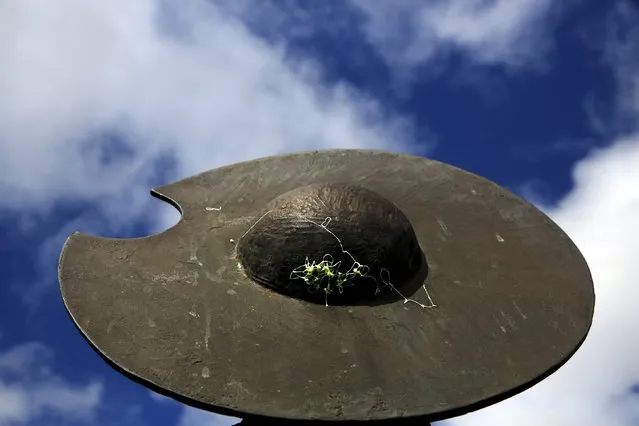
A sculpture of Don Quixote shows him wearing the basin he mistook for the enchanted helmet of the fictional Moorish king Mambrino in Alcazar de San Juan, Spain, April 5, 2016. (Photo by Susana Vera/Reuters)

A sculpture of Don Quixote shows him wearing the basin he mistook for the enchanted helmet of the fictional Moorish king Mambrino in Alcazar de San Juan, Spain, April 5, 2016. The arid central Spanish region of La Mancha is the setting for “Don Quixote”, the seventeenth-century novel by Miguel de Cervantes. Four hundred years after his death, references to the characters of Don Quixote, his loyal squire Sancho Panza and his beautiful lady Dulcinea abound in the surrounding villages from sweet treats to theatre productions involving livestock. Cervantes did not give away the name of the birthplace of Don Quixote, a middle-aged gentleman who becomes obsessed with chivalrous ideals. But many identify the village of Argamasilla de Alba as his hometown. The anniversary of Cervantes’ death is marked on the 23 April. (Photo by Susana Vera/Reuters)
Details
21 Apr 2016 12:32:00
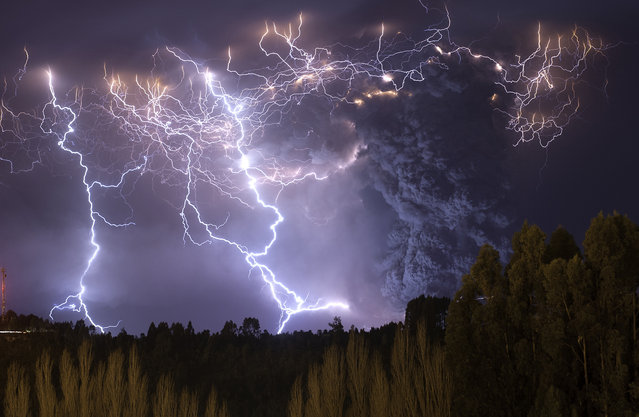
The eruption of Cordon Caulle began on June 4, 2011, located in the Region of Los Rios in Chile. For about 12 months, people and animals became accustomed to living with the daily fall of ash, which also caused problems in the air traffic in South America. The explosions and lightning during first days of the eruption could be seen from hundreds of miles around. This photograph was taken on the second night of eruption from the town of Lago Ranco. (Photo and caption by Francisco Negroni/National Geographic Traveler Photo Contest)

The eruption of Cordon Caulle began on June 4, 2011, located in the Region of Los Rios in Chile. For about 12 months, people and animals became accustomed to living with the daily fall of ash, which also caused problems in the air traffic in South America. The explosions and lightning during first days of the eruption could be seen from hundreds of miles around. This photograph was taken on the second night of eruption from the town of Lago Ranco. (Photo and caption by Francisco Negroni/National Geographic Traveler Photo Contest)

ATTENTION! All pictures are presented in high resolution. To see Hi-Res images – just TWICE click on any picture. In other words, click small picture – opens the BIG picture. Click BIG picture – opens VERY BIG picture.
Details
23 Jun 2013 11:24:00
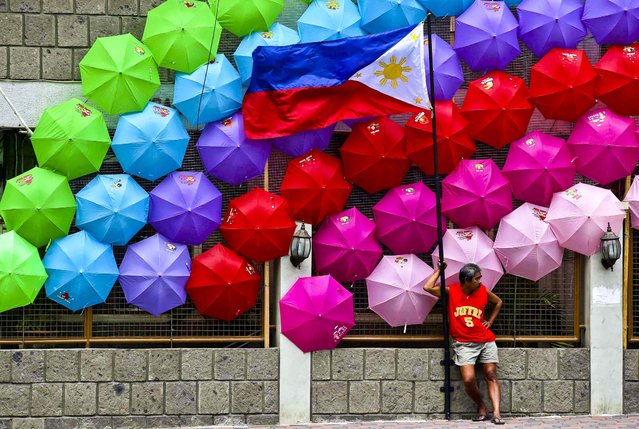
A man stands beside the Philippine flag as colorful umbrellas adorn a village hall in suburban San Juan, east of Manila, Philippines, on June 27, 2013. (Photo by Aaron Favila/Associated Press)

A man stands beside the Philippine flag as colorful umbrellas adorn a village hall in suburban San Juan, east of Manila, Philippines, on June 27, 2013. (Photo by Aaron Favila/Associated Press)
Details
29 Jun 2013 12:02:00
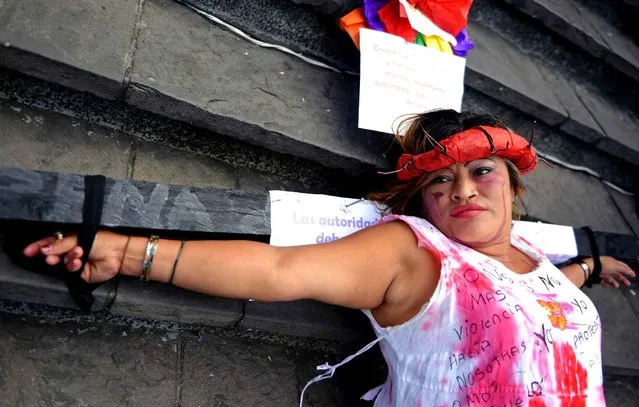
Norma Galicia aka “Pirulina” takes part in a demonstration during the commemoration of the International Day for the Elimination of Violence Against Women, in Guatemala City on November 25, 2013. So far this year, 696 women have died due to violent events in Guatemala. (Photo by Johan Ordonez/AFP Photo)

Norma Galicia aka “Pirulina” takes part in a demonstration during the commemoration of the International Day for the Elimination of Violence Against Women, in Guatemala City on November 25, 2013. So far this year, 696 women have died due to violent events in Guatemala. (Photo by Johan Ordonez/AFP Photo)
Details
30 Nov 2013 13:39:00
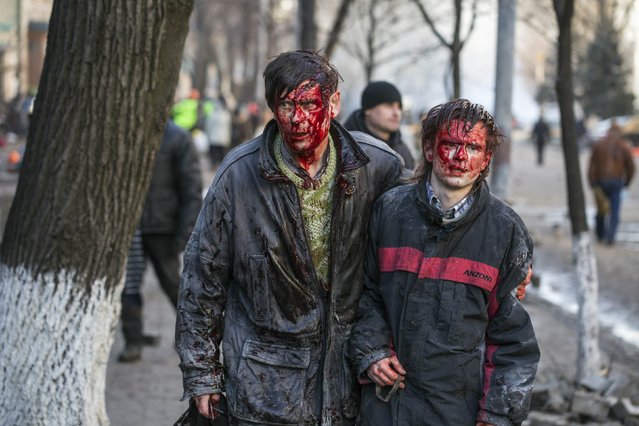
Wounded people walk after clashes with riot police in central Kiev February 18, 2014. Ukrainian riot police advanced on the heart of 12-week-old protests against President Viktor Yanukovich on Tuesday and security forces set a deadline to end disturbances after at least five protesters were reported killed in a day of clashes. (Photo by Vlad Sode/Reuters)

Wounded people walk after clashes with riot police in central Kiev February 18, 2014. Ukrainian riot police advanced on the heart of 12-week-old protests against President Viktor Yanukovich on Tuesday and security forces set a deadline to end disturbances after at least five protesters were reported killed in a day of clashes. (Photo by Vlad Sode/Reuters)
Details
19 Feb 2014 09:14:00
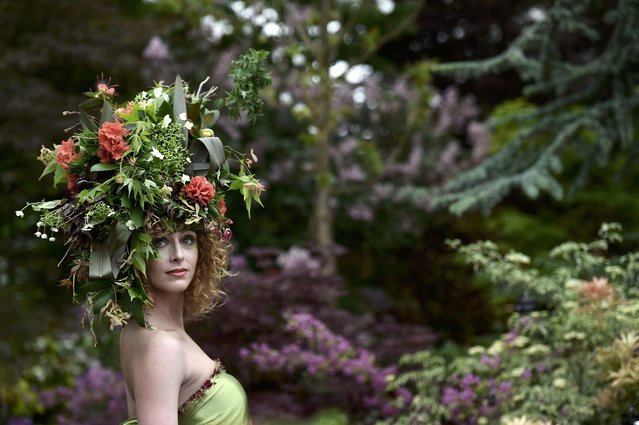
A model wears a floral head dress as she promotes a chain of garden centres at the Royal Horticultural Soceity's Chelsea Flower Show in London, Britain, May 18, 2015. (Photo by Toby Melville/Reuters)

A model wears a floral head dress as she promotes a chain of garden centres at the Royal Horticultural Soceity's Chelsea Flower Show in London, Britain, May 18, 2015. (Photo by Toby Melville/Reuters)
Details
23 May 2015 10:41:00
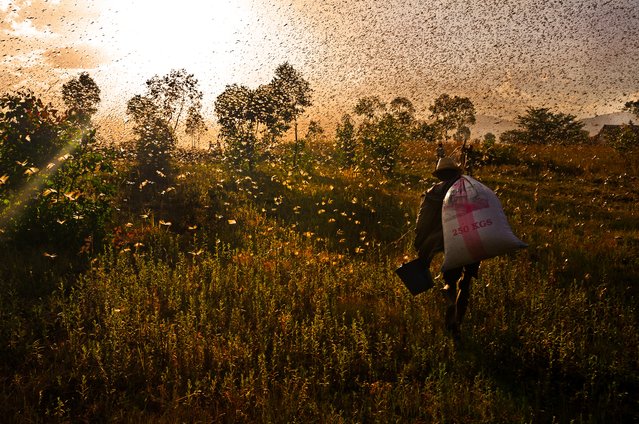
“Locusts & Men”. Oppression, interaction, collaboration. In the life cycle of nature nothing is lost, but the coexistence of different species is sometimes difficult. In Madagascar periodically returns the archaic antagonism between man and the migratory locust, in a circle of life where the two species are looking for space and food for their survival. Photo location: Madagascar, 2013. (Photo and caption by Michele Martinelli/National Geographic Photo Contest)

“Locusts & Men”. Oppression, interaction, collaboration. In the life cycle of nature nothing is lost, but the coexistence of different species is sometimes difficult. In Madagascar periodically returns the archaic antagonism between man and the migratory locust, in a circle of life where the two species are looking for space and food for their survival. At the end of the day a man walks home carrying on his shoulders the heavy bag which contains the locusts captured during the day. The insects provide nutritious meals for the man and his family. Photo location: Madagascar, 2013. (Photo and caption by Michele Martinelli/National Geographic Photo Contest)

ATTENTION! All pictures are presented in high resolution. To see Hi-Res images – just TWICE click on any picture. In other words, click small picture – opens the BIG picture. Click BIG picture – opens VERY BIG picture.
Details
03 Dec 2013 10:59:00