Loading...
Done
Princess Diana relaxes on the sand during a visit to the beach on the Caribbean Island of Nevis January 4, 1993. (Photo by Mark Cardwell/Reuters)

Princess Diana relaxes on the sand during a visit to the beach on the Caribbean Island of Nevis January 4, 1993. (Photo by Mark Cardwell/Reuters)
Details
01 Sep 2017 05:35:00
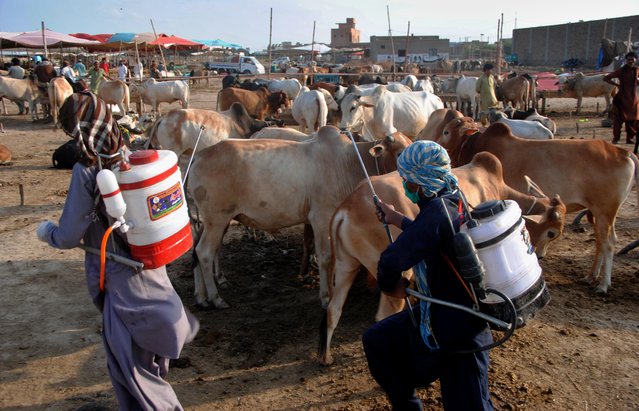
Health workers wearing face masks spray disinfectant liquid on sacrificial animals amid concerns over the spread of the SARS-CoV-2 coronavirus that causes the pandemic COVID-19 disease ahead of the Muslim festival of Eid al-Adha at an animal market in Hyderabad, southern Pakistan, 21 July 2020. Eid al-Adha, also known as the Festival of the Sacrifice, is the second and holiest of the two main Islamic holidays celebrated each year (the other one being Eid al-Fitr). Every year, on the 10th day of the Islamic lunar month of Dhu al-Hijjah, Muslims around the world ritually slaughter a sacrificial animal and split the meat into three parts: one is reserved for the family, another for friends and relatives, and the third is given to the poor and needy. The Saudi Supreme Court has declared that the first day of Eid al-Adha this year falls on 31 July. (Photo by Nadeem Khawar/EPA/EFE)

Health workers wearing face masks spray disinfectant liquid on sacrificial animals amid concerns over the spread of the SARS-CoV-2 coronavirus that causes the pandemic COVID-19 disease ahead of the Muslim festival of Eid al-Adha at an animal market in Hyderabad, southern Pakistan, 21 July 2020. (Photo by Nadeem Khawar/EPA/EFE)
Details
23 Jul 2020 00:07:00
Two young women huddle up in their coats as they brave the cold in Newcastle, England on February 1, 2019. Women in skimpy dresses and men in t-shirts enjoyed a drink and a dance as they celebrated January finally being over. (Photo by Will Walker/North News and Pictures)

Two young women huddle up in their coats as they brave the cold in Newcastle, England on February 1, 2019. Women in skimpy dresses and men in t-shirts enjoyed a drink and a dance as they celebrated January finally being over. (Photo by Will Walker/North News and Pictures)
Details
01 Feb 2019 10:51:00
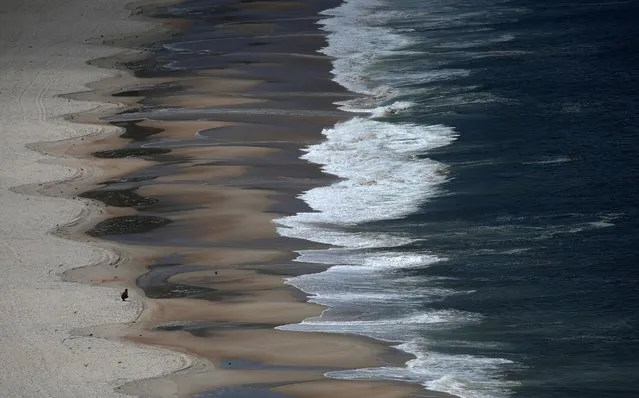
A general view of Copacabana beach during the coronavirus disease (COVID-19) outbreak in Rio de Janeiro, Brazil, March 22, 2020. (Photo by Ricardo Moraes/Reuters)

A general view of Copacabana beach during the coronavirus disease (COVID-19) outbreak in Rio de Janeiro, Brazil, March 22, 2020. (Photo by Ricardo Moraes/Reuters)
Details
31 Mar 2020 00:03:00
Mae Zelinsky, left, and Betty O'Beda test ammunition on a .30 caliber rifle at a Remington Arms plant on April 30, 1943. Many women took over jobs that were left vacant when men went overseas to fight in World War II. (Photo by AP Photo)

Mae Zelinsky, left, and Betty O'Beda test ammunition on a .30 caliber rifle at a Remington Arms plant on April 30, 1943. Many women took over jobs that were left vacant when men went overseas to fight in World War II. (Photo by AP Photo)
Details
09 May 2018 00:05:00
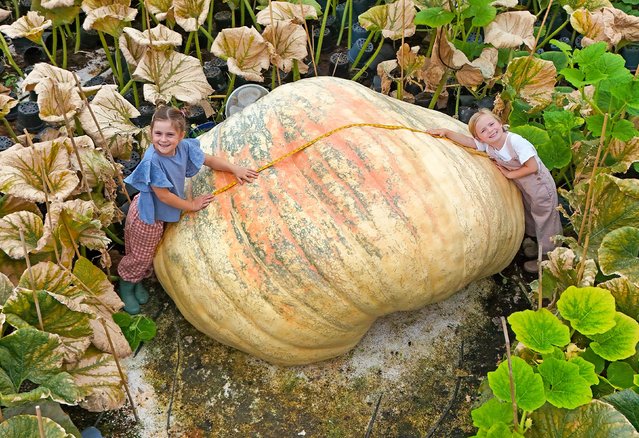
Sisters Martha Syrett, 6, left, and Etta Syrett, 4, right, measure one of Ian Paton's huge pumpkins at Pinetops Nurseries, Lymington, Hants, UK on October 5, 2025. An enormous pumpkin grown by a pair of green-fingered twins has smashed two world records – it is the heaviest and the longest pumpkin on the planet. Ian and Stuart Paton grew the pumpkin which weighed in at 2,819.8 pounds (1,278.8 kg) – the equivalent of about two bulls. (Photo by Ollie Thompson/Solent News & Photo Agency)


Sisters Martha Syrett, 6, left, and Etta Syrett, 4, right, measure one of Ian Paton's huge pumpkins at Pinetops Nurseries, Lymington, Hants, UK on October 5, 2025. An enormous pumpkin grown by a pair of green-fingered twins has smashed two world records – it is the heaviest and the longest pumpkin on the planet. Ian and Stuart Paton grew the pumpkin which weighed in at 2,819.8 pounds (1,278.8 kg) – the equivalent of about two bulls. (Photo by Ollie Thompson/Solent News & Photo Agency)
Details
04 Nov 2025 04:56:00
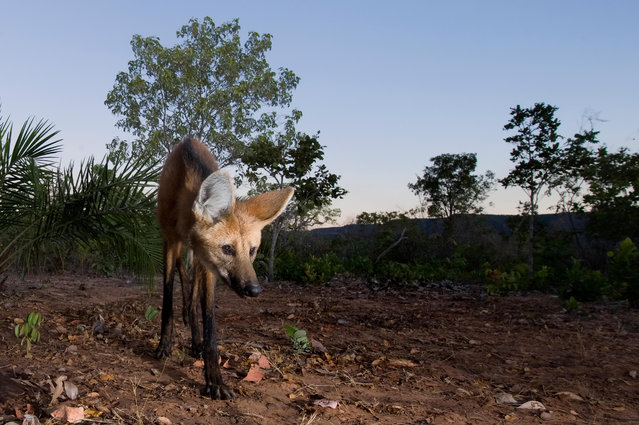
The maned wolf is among the large mammals in the Brazilian Cerrado that are threatened by the increasing conversion of grasslands into farmland for grazing and growing crops. (Photo by Ben Cranke/Nature Picture Library/Alamy Stock Photo)

Global wildlife populations will decline by 67% by 2020 unless urgent action is taken to reduce human impact on species and ecosystems, warns the biennial Living Planet Index report from WWF (World Wide Fund for Nature) and ZSL (Zoological Society of London). From elephants to eels, here are some of the wildlife populations most affected by human activity. Here: The maned wolf is among the large mammals in the Brazilian Cerrado that are threatened by the increasing conversion of grasslands into farmland for grazing and growing crops. (Photo by Ben Cranke/Nature Picture Library/Alamy Stock Photo)
Details
28 Oct 2016 10:47:00
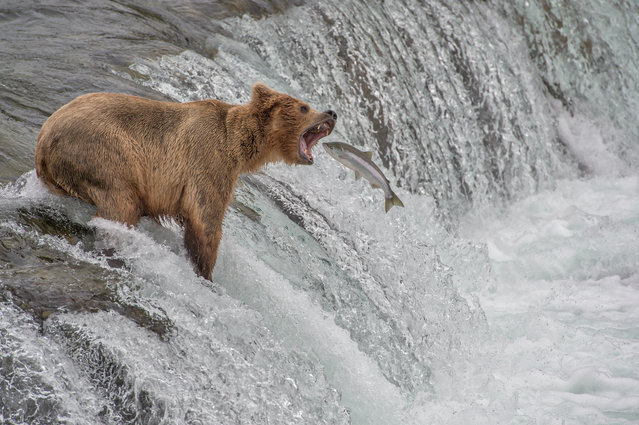
“Catch of the Decade”. Can you guess what happened next? Photo location: Katmai National Park, Alaska, USA. (Photo and caption by Aaron Baggenstos/National Geographic Photo Contest)

“Catch of the Decade”. Can you guess what happened next? Photo location: Katmai National Park, Alaska, USA. (Photo and caption by Aaron Baggenstos/National Geographic Photo Contest)
Details
30 Sep 2014 08:47:00