Loading...
Done
A Hawker Hurricane Mk XIIa 5711 (G-HURI) fighter aircraft prepares to perform an aerobatic display at the IWM Duxford on October 18, 2012 in Duxford, England. The aeroplane, similar to those that defended British shores during the Battle of Britain in World War II, is due to be auctioned by Bonhams in their sale of “Collectors' Motor Cars and Automobilia” at Mercedes-Benz World Brooklands on December 3, 2012. The plane was built in 1942 and joined the Royal Canadian Air Force the following year, where it remained for the duration of the war, it is expected to fetch up to 17 million GBP.  (Photo by Oli Scarff)

A Hawker Hurricane Mk XIIa 5711 (G-HURI) fighter aircraft prepares to perform an aerobatic display at the IWM Duxford on October 18, 2012 in Duxford, England. The aeroplane, similar to those that defended British shores during the Battle of Britain in World War II, is due to be auctioned by Bonhams in their sale of “Collectors' Motor Cars and Automobilia” at Mercedes-Benz World Brooklands on December 3, 2012. The plane was built in 1942 and joined the Royal Canadian Air Force the following year, where it remained for the duration of the war, it is expected to fetch up to 17 million GBP. (Photo by Oli Scarff)
Details
20 Oct 2012 09:11:00
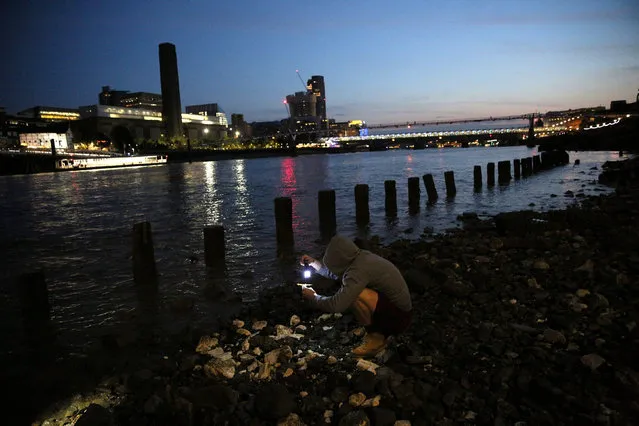
A mudlark uses a torch to look for items on the bank of the River Thames in London, Britain June 06, 2016. Mudlarking is believed to trace its origins to the 18th and 19th century, when scavengers searched the Thames' shores for items to sell. These days, history and archaeology fans are the ones hoping to find old relics such as coins, ceramics, artifacts or everyday items from across centuries. They wait for the low tide and then scour specific areas of exposed shores. "If you're in a field you could be out all day long, with the river you're restricted to about two or three hours," mudlark Nick Stevens said. While many just use the naked eye for their searches, others rely on metal detectors for which a permit from the Port of London Authority is needed. Digging also requires consent. (Photo by Neil Hall/Reuters)

A mudlark uses a torch to look for items on the bank of the River Thames in London, Britain June 06, 2016. Mudlarking is believed to trace its origins to the 18th and 19th century, when scavengers searched the Thames' shores for items to sell. These days, history and archaeology fans are the ones hoping to find old relics such as coins, ceramics, artifacts or everyday items from across centuries. their finds with the Portable Antiquities Scheme. Any item over 300 years old must be recorded. (Photo by Neil Hall/Reuters)
Details
27 Aug 2016 10:43:00
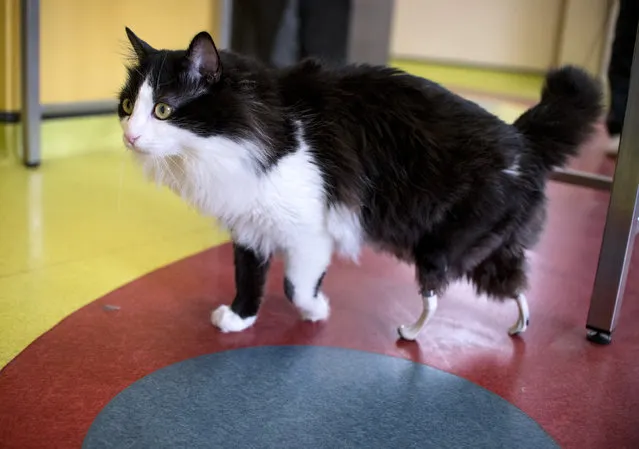
Pooh, a one-year-old cat, who lost his hind legs in an accident and has been given bionic paws, walks in a vet clinic in Sofia on January 31, 2017. Pooh, who is thought to have lost his legs in a car or train accident last April, is back on the prowl thanks to Bulgarian veterinary surgeon Vladislav Zlatinov. He is the first vet in Europe to successfully apply the pioneering method of Irish neuro-orthopaedic surgeon Noel Fitzpatrick, who shot to fame in 2009 when making Oscar the first bionic cat by fitting him with new hind legs in Britain. (Photo by Nikolay Doychinov/AFP Photo)

Pooh, a one-year-old cat, who lost his hind legs in an accident and has been given bionic paws, walks in a vet clinic in Sofia on January 31, 2017. Pooh, who is thought to have lost his legs in a car or train accident last April, is back on the prowl thanks to Bulgarian veterinary surgeon Vladislav Zlatinov. He is the first vet in Europe to successfully apply the pioneering method of Irish neuro-orthopaedic surgeon Noel Fitzpatrick, who shot to fame in 2009 when making Oscar the first bionic cat by fitting him with new hind legs in Britain. (Photo by Nikolay Doychinov/AFP Photo)
Details
03 Feb 2017 07:35:00
From Britain to China to Mali, new maps showing travel times to the nearest urban centre reveal huge differences between countries. Using Open Street Map and Google, a University of Oxford team have created a visual breakdown that suggests major inequalities when it comes to commuting. Here: China. The dataset used for China was unique as it relied solely on Open Street Map, due to restrictions on accessing Google data. The population is densely concentrated in the east and accessibility is increased, whereas rural provinces in the west remain remote. (Photo by Daniel Weiss/Jennifer Rozier/Malaria Atlas Project/University of Oxford )

From Britain to China to Mali, new maps showing travel times to the nearest urban centre reveal huge differences between countries. Using Open Street Map and Google, a University of Oxford team have created a visual breakdown that suggests major inequalities when it comes to commuting. Here: China. The dataset used for China was unique as it relied solely on Open Street Map, due to restrictions on accessing Google data. The population is densely concentrated in the east and accessibility is increased, whereas rural provinces in the west remain remote. (Photo by Daniel Weiss/Jennifer Rozier/Malaria Atlas Project/University of Oxford)
Details
12 Jan 2018 06:43:00


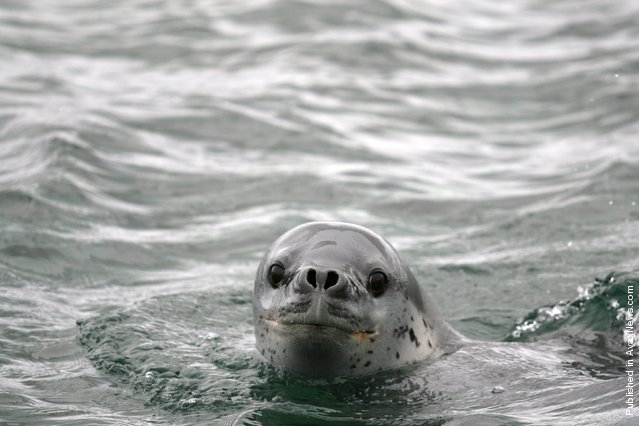
“The leopard seal (Hydrurga leptonyx), also referred to as the sea leopard, is the second largest species of seal in the Antarctic (after the southern elephant seal). It is most common in the southern hemisphere along the coast of Antarctica and on most sub-Antarctic islands, but can also be found on the coasts of southern Australia, Tasmania, South Africa, New Zealand, Lord Howe Island, Tierra del Fuego, the Cook Islands, and the Atlantic coast of South America. It can live twenty-six years, possibly more. Orcas and large sharks are the only natural predators of leopard seals”. – Wikipedia

Photo by: Gilad Rom; Source: Flickr
Details
13 Nov 2011 11:24:00
These stunning photos act as postcards for one photographer, who has traveled all over the globe, braving freezing temperatures to create the ultimate time lapse video. Photographer Dustin Farrell, 36, spent four years perfecting his technique and traveling all over the world in his quest to capture the most beautiful time lapses of nature. (Photo by Dustin Farrell/Caters News)

These stunning photos act as postcards for one photographer, who has traveled all over the globe, braving freezing temperatures to create the ultimate time lapse video. Photographer Dustin Farrell, 36, spent four years perfecting his technique and traveling all over the world in his quest to capture the most beautiful time lapses of nature. (Photo by Dustin Farrell/Caters News)
Details
30 Dec 2014 11:51:00
An Afghan woman fills containers with water near her temporary shelter at an internally displaced person's (IDP) camp on the outskirts of Herat, Afghanistan, January 21, 2015. Dozens of families are living in temporary shelters even in harsh winters and most depend on aid distributions by the United Nations High Commissioner for Refugees (UNHCR). (Photo by Jalil Rezayee/EPA)

An Afghan woman fills containers with water near her temporary shelter at an internally displaced person's (IDP) camp on the outskirts of Herat, Afghanistan, January 21, 2015. Dozens of families are living in temporary shelters even in harsh winters and most depend on aid distributions by the United Nations High Commissioner for Refugees (UNHCR). (Photo by Jalil Rezayee/EPA)
Details
23 Jan 2015 12:35:00
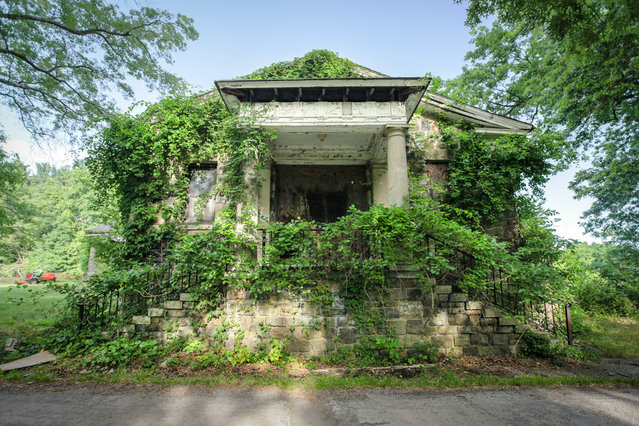
Letchworth Village is located just an hour's drive from NYC in Thiells, NY.  It was founded in 1912 to house the city's developmentally disabled as a ”state institution for the epileptic and feeble-minded”. (Photo by Will Ellis)

From Manhattan and Brooklyn's trendiest neighborhoods to the far-flung edges of theouter boroughs, Will Ellis has spent the last three years photographing and researching the lost and lonely corners of the United States' most populous city. His photo book Abandoned NYC is packed with 150 color images of sixteen of New York's most beautiful and mysterious abandoned spaces, paired with detailed essays on the fascinating history of these forgotten sites. Here: Letchworth Village is located just an hour's drive from NYC in Thiells, NY. It was founded in 1912 to house the city's developmentally disabled as a ”state institution for the epileptic and feeble-minded”. (Photo by Will Ellis)
Details
31 Mar 2015 12:31:00