Loading...
Done


“With the traditional tapping-ritual, the Oktoberfest has been opened on saturday, September 22, 2012. Despite the rather wet weather on saturday, the first weekend was te xpeted sucess: Approximately 850.000 guests from Munich, Bavaria, the rest of Germany and from all over the world came to visit the 179th Oktoberfest on the opening weekend. About one million liters of beer and about nine oxen have already been sold”. – Oktoberfest.de. (Photo by ◊CHЄЄKY◊MINX◊PHOTO◊DIARY◊)

Details
28 Sep 2012 08:39:00
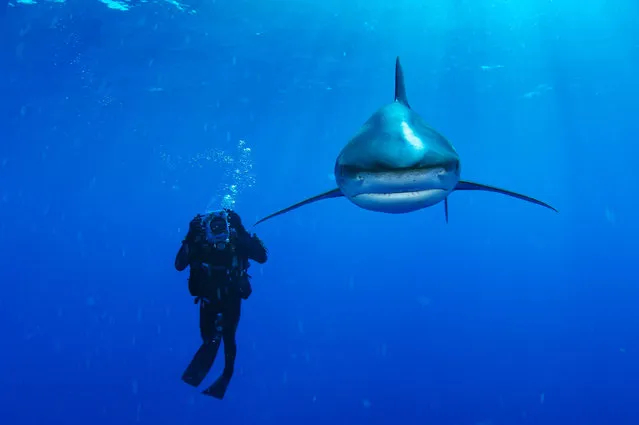
This Bahamian oceanic whitetip shark, known for the distinctive coloring on its white-tipped, rounded extremities, is part of a globally threatened species due to overfishing demands, primarily for its fins. (Photo by Brian Skerry)

Brian Skerry can be called many things – explorer, journalist, conservation advocate – but he is first and foremost a photographer. His journeys to capture amazing underwater photographs have taken him across the world’s oceans. Photo: This Bahamian oceanic whitetip shark, known for the distinctive coloring on its white-tipped, rounded extremities, is part of a globally threatened species due to overfishing demands, primarily for its fins. (Photo by Brian Skerry)
Details
08 Sep 2013 07:26:00
«Photoswapped» By Paul Ripke

“Photoswapped: Mum and dads switch heads with their children in freakiest photos you'll ever see. It is a position that many young children would love to be in. And now these strange and sometimes unnerving images show what it would actually be like if babies swapped roles, and heads, with their mother or father. The photos, created by top advertising photographer Paul Ripke, are so eye-catching that they have swept across the world online”. (Photo by Paul Ripke/Barcroft Media via Fame Pictures)
Details
14 Jan 2012 12:44:00
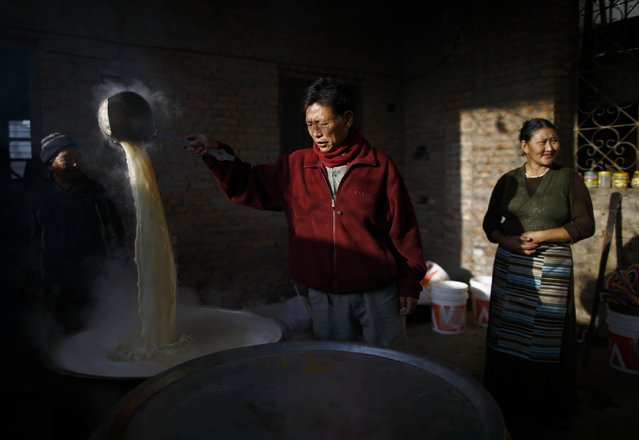
A Tibetan man stirs butter tea made for the arriving guest during the function organised to mark Losar or the Tibetan New Year at a Tibetan Refugee Camp in Lalitpur February 19, 2015. (Photo by Navesh Chitrakar/Reuters)

A Tibetan man stirs butter tea made for the arriving guest during the function organised to mark Losar or the Tibetan New Year at a Tibetan Refugee Camp in Lalitpur February 19, 2015. Tibetans across the world marked the arrival of the New Year with prayers and festivities. (Photo by Niranjan Shrestha/AP Photo)
Details
20 Feb 2015 13:06:00
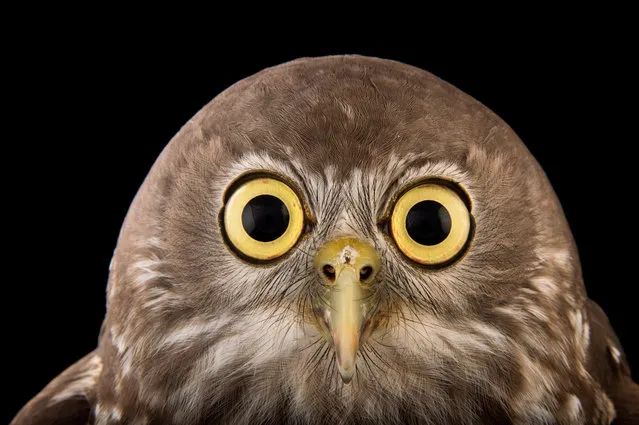
The National Geographic Photo Ark is a travelling exhibition of photographer Joel Sartore’s quest to create a photo archive of biodiversity around the world. So far, Sartore has captured studio portraits of more than 6,000 species – a number that he hopes to double. On 1 July, the ark will open at Melbourne zoo – the first time it has been exhibited in the southern hemisphere. More than 50 portraits will be on display, including many of Australian endangered animals being protected by programs at the zoo itself. These captions have been edited from text supplied by Melbourne zoo. Here: Barking owl. So-named because its call sounds like a barking dog, these birds are native to Australia, Indonesia and Papua New Guinea. In Victoria they are listed as an endangered species, and in 2003 there were estimated to be fewer than 50 breeding pairs. The main threat to the species in Victoria is loss of habitat, especially large trees with hollows in which they can nest and on which many of their prey depend. Apart from a bark, they may utter a chilling scream when they feel threatened. (Photo by Joel Sartore/National Geographic Photo Ark/The Guardian)

The National Geographic Photo Ark is a travelling exhibition of photographer Joel Sartore’s quest to create a photo archive of biodiversity around the world. So far, Sartore has captured studio portraits of more than 6,000 species – a number that he hopes to double. On 1 July, the ark will open at Melbourne zoo – the first time it has been exhibited in the southern hemisphere. More than 50 portraits will be on display, including many of Australian endangered animals being protected by programs at the zoo itself. These captions have been edited from text supplied by Melbourne zoo. Here: Barking owl. (Photo by Joel Sartore/National Geographic Photo Ark/The Guardian)
Details
01 Jul 2017 07:45:00


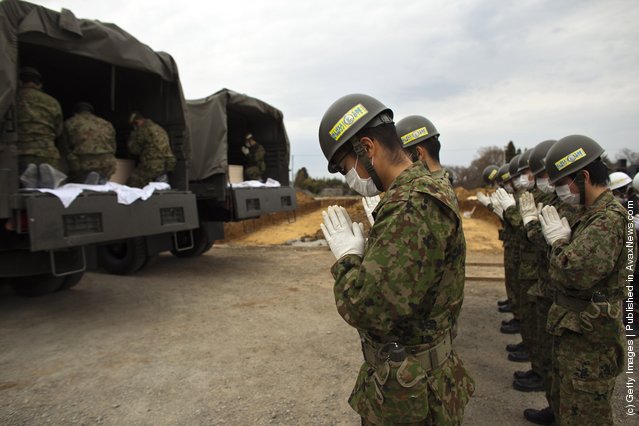
Japan Self-Defense Force members pay their respect to unidentified earthquake victims in vehicles during a mess funeral on April 8, 2011 in Yamamoto, Miyagi Prefecture, Japan. The 9.0 magnitude strong earthquake struck offshore on March 11 at 2:46pm local time, triggering a tsunami wave of up to ten metres which engulfed large parts of north-eastern Japan, and also damaging the Fukushima nuclear plant and threatening a nuclear catastrophe. The death toll continues to rise with numbers of dead and missing exceeding 20,000 in a tragedy not seen since World War II in Japan. (Photo by Athit Perawongmetha/Getty Images)
Details
10 Apr 2011 07:41:00


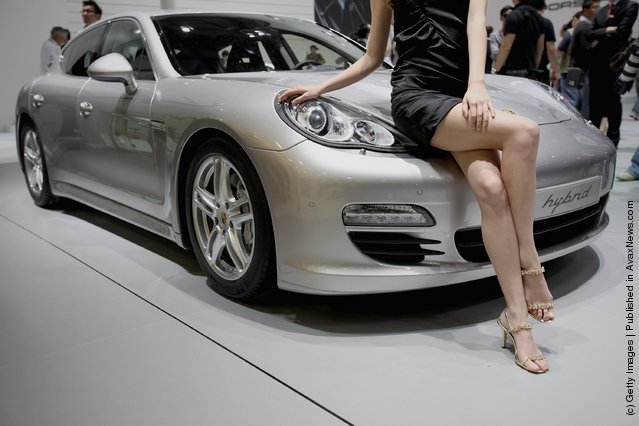
A model poses beside the Porsche Hybrid during the media day of the Shanghai International Automobile Industry Exhibition at Shanghai New International Expo Center on April 19, 2011 in Shanghai, China. The 14th Shanghai International Automobile Industry Exhibition (Auto Shanghai 2011) will be held from April 21 to 28 with the theme of “Innovation For Tomorrow”. About 2,000 carmakers and parts providers from 20 countries are due to showcase 1,100 car models, 75 of which makes their world premieres in the auto show. (Photo by Feng Li/Getty Images)
Details
20 Apr 2011 10:19:00


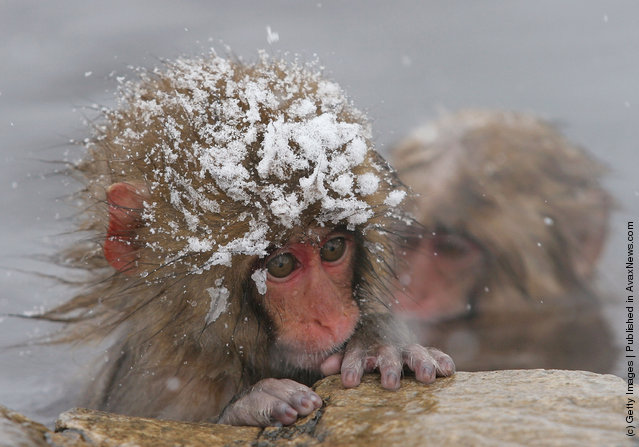
Japanese macaque monkeys enjoy sitting in the hot springs at Jigokudani-Onsen (Hell Valley) on January 23, 2005 in Jigokudani, Nagano-Prefecture, Japan. Japanese Macaques, also known as snow monkeys are the most northerly nonhuman primate in the world. In 1963 a female Macaque ventured into the hot springs to retrieve some soybeans. This behaviour was adopted by other monkeys, and eventually by the entire troop. This Macaque troop regularly visits the Jigokudani-Onsen springs to escape the cold. The hot springs are said to help relieve nerve pain and fatigue. (Photo by Koichi Kamoshida/Getty Images)
Details
20 May 2011 08:04:00