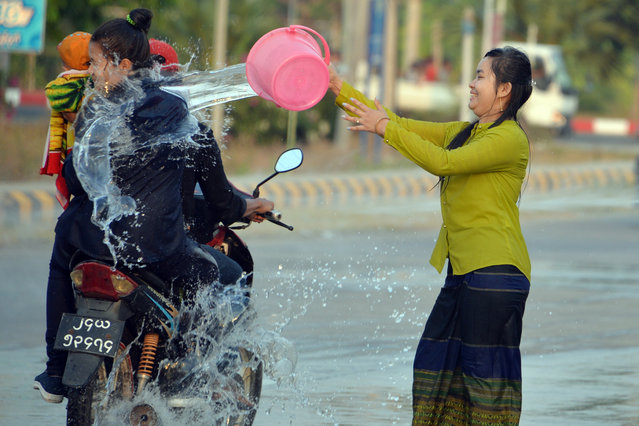
A woman throws water at passing motorists during celebrations for the Thingyan festival, also known as the Buddhist New Year, in Naypyidaw, Myanmar on April 16, 2019. (Photo by Thet Aung/AFP Photo)
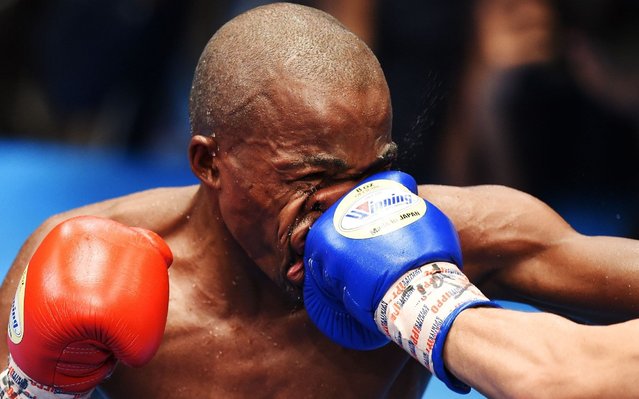
Moruti Mthalane of South Africa is punched by Masayuki Kuroda of Japan during their IBF flyweight title boxing bout in Tokyo on May 13, 2019. (Photo by Charly Triballeau/AFP Photo)
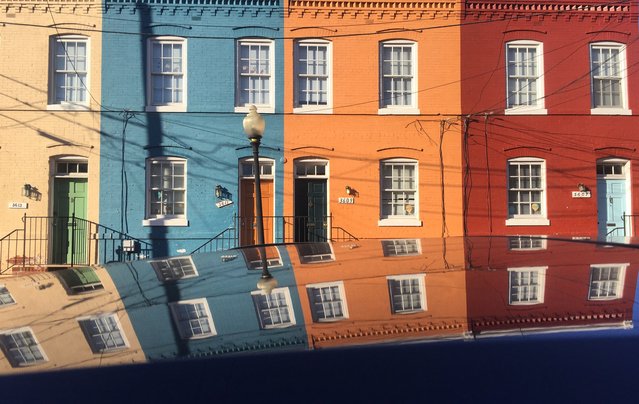
A group of colorful row houses are reflected on to the top of a black car parked on 3600 block of N street in the Georgetown section of Washington DC, February 16, 2017. (Photo by John McDonnell/The Washington Post)
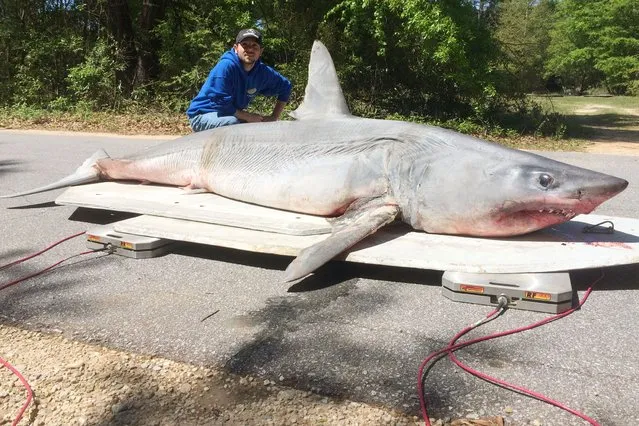
A fisherman caught a record-breaking 805lb Mako shark – and then barbecued and ate it with his friends. Joey Polk, 29, and his two cousins Earnie Polk, 43, and Kenny Peterson, 21, battled the 11ft predator for more than an hour before finally hauling it onto the beach. They normally tag and release their catches for conservation but were unable to resuscitate this one and instead made it the main course at a jumbo-sized family barbecue. (Photo by Joey Polk/Barcroft Media)
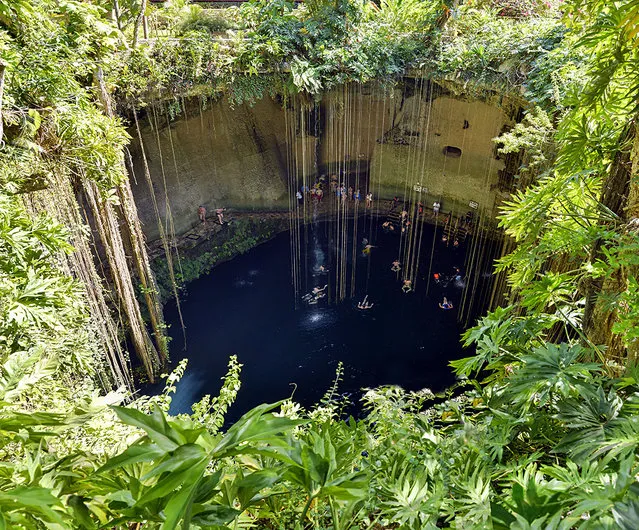
A cenote is a natural phenomenon, a sinkhole in the Earth’s surface. The Yucatan Peninsula in Mexico has an estimated 7,000 cenotes because it is primarily made up of porous limestone. For millions of years, rainfall slowly ate away at the limestone and a huge system of underground caves and caverns was formed. Many filled with water from rain or from the underground water table. When the roof of a water filled cave collapses, a cenote is born. The water found in a cenote may be fresh water, salt water, or both. Structurally it may be completely open, like a lake, almost completely closed with just a small opening at the top, or somewhere in between.
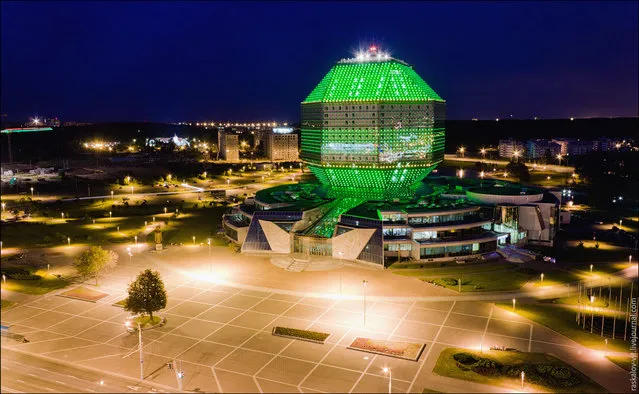
The earliest historic references to Minsk date to the 11th century 1067, when it was noted as a provincial city within the principality of Polotsk. The settlement developed on the rivers. In 1242, Minsk became a part of the Grand Duchy of Lithuania. It received town privileges in 1499.