Loading...
Done
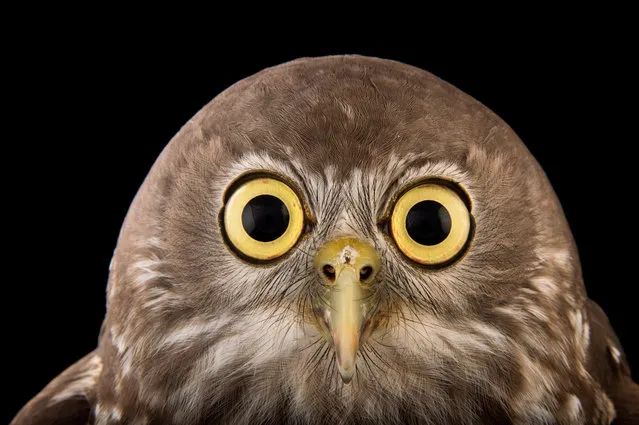
The National Geographic Photo Ark is a travelling exhibition of photographer Joel Sartore’s quest to create a photo archive of biodiversity around the world. So far, Sartore has captured studio portraits of more than 6,000 species – a number that he hopes to double. On 1 July, the ark will open at Melbourne zoo – the first time it has been exhibited in the southern hemisphere. More than 50 portraits will be on display, including many of Australian endangered animals being protected by programs at the zoo itself. These captions have been edited from text supplied by Melbourne zoo. Here: Barking owl. So-named because its call sounds like a barking dog, these birds are native to Australia, Indonesia and Papua New Guinea. In Victoria they are listed as an endangered species, and in 2003 there were estimated to be fewer than 50 breeding pairs. The main threat to the species in Victoria is loss of habitat, especially large trees with hollows in which they can nest and on which many of their prey depend. Apart from a bark, they may utter a chilling scream when they feel threatened. (Photo by Joel Sartore/National Geographic Photo Ark/The Guardian)

The National Geographic Photo Ark is a travelling exhibition of photographer Joel Sartore’s quest to create a photo archive of biodiversity around the world. So far, Sartore has captured studio portraits of more than 6,000 species – a number that he hopes to double. On 1 July, the ark will open at Melbourne zoo – the first time it has been exhibited in the southern hemisphere. More than 50 portraits will be on display, including many of Australian endangered animals being protected by programs at the zoo itself. These captions have been edited from text supplied by Melbourne zoo. Here: Barking owl. (Photo by Joel Sartore/National Geographic Photo Ark/The Guardian)
Details
01 Jul 2017 07:45:00
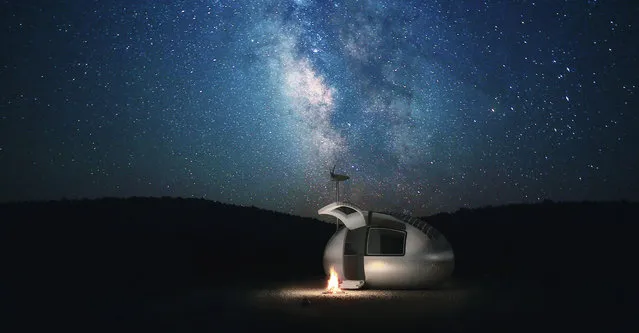
Ecocapsules By Nice Architects

A Slovakian company has designed an egg-shaped and cozy micro-home that should work ideally for anybody who wants to “go off the grid” and “live off the land” – the Ecocapsule.
Details
29 May 2015 11:13:00
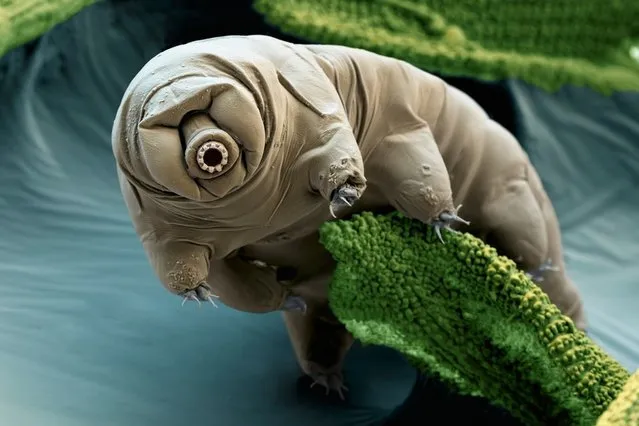
Tardigrades (commonly known as waterbears or moss piglets). (Photo by SPL/East News)

“Tardigrades (commonly known as waterbears or moss piglets) are small, water-dwelling, segmented animals with eight legs. Tardigrades were first discovered in 1773 by Johann August Ephraim Goeze, who called them kleiner Wasserbär, meaning “little water bear” in German. The name Tardigrada means “slow walker” and was given by Lazzaro Spallanzani in 1777. The name water bear comes from the way they walk, reminiscent of a bear's gait. The biggest adults may reach a body length of 1.5 millimetres (0.059 in), the smallest below 0.1 mm. Freshly hatched tardigrades may be smaller than 0.05 mm”. – Wikipedia. Photo: Tardigrades. (Photo by SPL/East News)
Details
26 Sep 2012 09:55:00
A women sits on the south rim of Grand Canyon National Park in northern Arizona, April 12, 2015. (Photo by Jim Urquhart/Reuters)

A women sits on the south rim of Grand Canyon National Park in northern Arizona, April 12, 2015. (Photo by Jim Urquhart/Reuters)
Details
19 Apr 2015 09:15:00
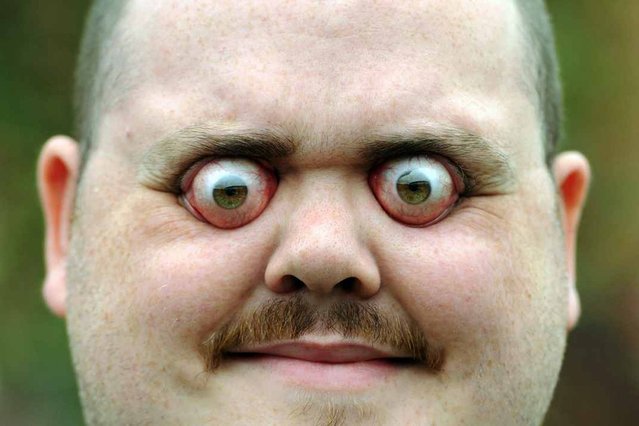
Guiness World Book Of Records: Skull Popping Eyeballs

Liverpool man has shocked people with his party trick of making his eyes bulge out of his head, now he hopes to join the record books. This eye-popping performer is fast becoming a YouTube hit as he tries to claim the official world record.
Details
01 Oct 2014 14:51:00


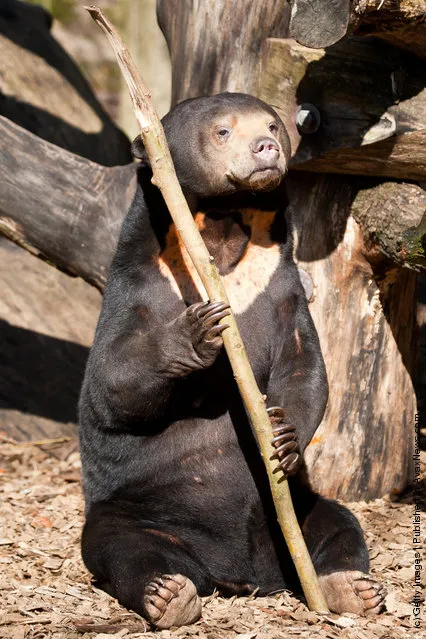
The sun bear (Ursus malayanus), also known as the honey bear, is a bear found primarily in the tropical rainforest (the dense lowland forests) in Southeast Asia; North-East India, Bangladesh, Myanmar, Thailand, Laos, Cambodia, Vietnam, Southern China, Peninsular Malaysia, and the islands of Sumatra and Borneo.
Details
03 May 2012 23:37:00
Humanoid robots compete in a group match of the 20th RoboCup in Leipzig, Germany, June 30, 2016. Thousands of participants from over 40 countries are competing this year in RoboCup 2016 with their humanoid soccer playing robots in Leipzig, Germany. “When established in 1997, the original mission was to field a team of robots capable of winning against the human soccer World Cup champions by 2050”, according to RoboCup. Now participants compete in five different soccer categories as well as RoboCup Rescue, which researches robotic effectiveness and usefulness to first responders. (Photo by Sebastian Willnow/EPA)

Humanoid robots compete in a group match of the 20th RoboCup in Leipzig, Germany, June 30, 2016. About 3,500 participants from 45 countries and regions compete in the robot world championship until 04 July. (Photo by Sebastian Willnow/EPA)
Details
02 Jul 2016 12:39:00
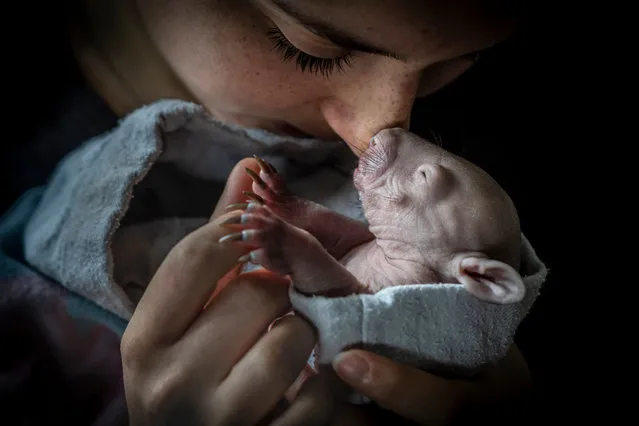
Nose to Nose; Human/Nature winner. “Doug Gimesy was documenting work at the Joey and Bat Sanctuary near Melbourne when he met a wombat (Vombatus ursinus) whose mother had been killed by a car. Gimesy watched as a young veterinary student bottle-fed the orphaned joey, then touched her nose to the joey’s in a tender moment of interspecies bonding”. (Photo by Doug Gimesy/BigPicture)

Nose to Nose; Human/Nature winner. “Doug Gimesy was documenting work at the Joey and Bat Sanctuary near Melbourne when he met a wombat (Vombatus ursinus) whose mother had been killed by a car. Gimesy watched as a young veterinary student bottle-fed the orphaned joey, then touched her nose to the joey’s in a tender moment of interspecies bonding”. (Photo by Doug Gimesy/BigPicture)
Details
25 Jun 2023 05:33:00