A man sits on a park bench in a flooded park as the Cape Fear River rises above its usual height in Wilmington, North Carolina, September 14, 2018. (Photo by Jonathan Drake/Reuters)
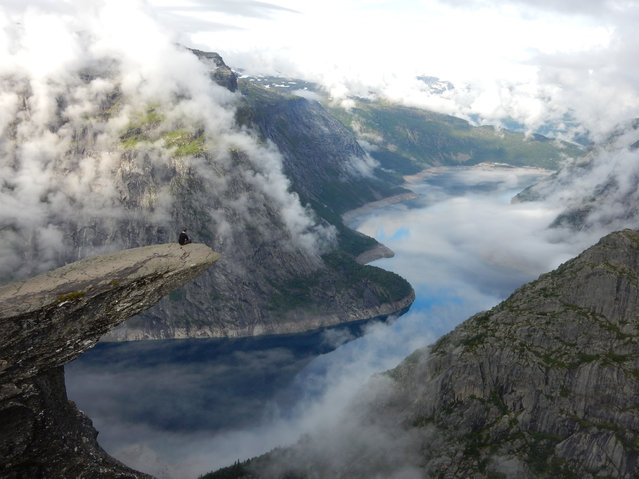
Taking it all in at Trolltunga, a piece of rock which juts horizontally out of a mountain, 700 metres above lake Ringedalsvatnet in Norway. (Photo by Sam Rogers/GuardianWitness)
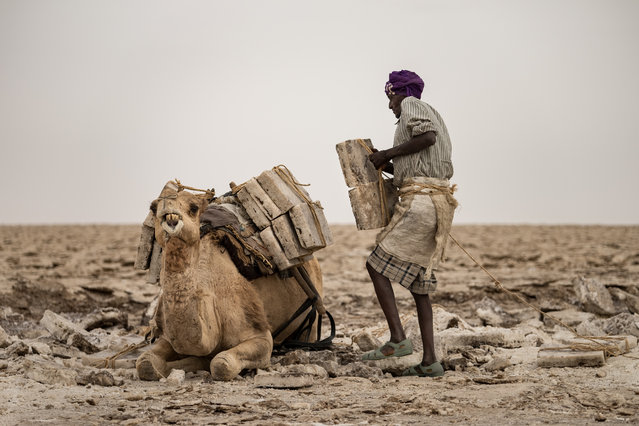
Unforgiving temperatures of up to 60℃ (140℉) beat down on these saltminers on a daily basis. The mines, situated in the Afar Triangle in Ethiopia, stretch across 38,000 sq miles and at their lowest point are more than 300ft below sea level. Joel Santos travelled to capture the area’s dry, brutal beauty. Here: Dromedaries and donkeys are used to transport the salt. (Photo by Joel Santos/Barcroft Images)
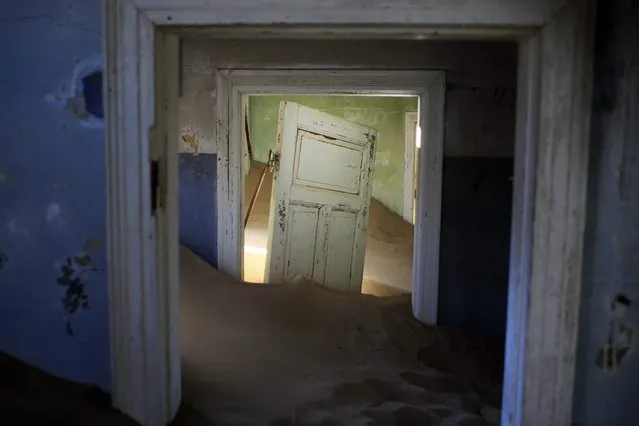
In this July 23, 2013 photo, sand fills an abandoned house in Kolmanskop, Namibia. Kolmanskop, was a diamond mining town south of Namibia, build in 1908 and deserted in 1956. SInce then, the desert slowly reclaims its territory, with sand invading the buildings where 350 German colonists and more than 800 local workers lived during its hay-days of the 1920s. (Photo by Jerome Delay/AP Photo)
Russia-backed separatists stand at the site of the crashed Malaysia Airlines Flight 17 plane, near the village of Hrabove, eastern Ukraine, Thursday, July 16, 2015. The fighters said they have arrived to protect the media and make sure the MH17 crash site is clear of ammunition and mines. A year since a Malaysia Airlines Boeing 777 was blown out of the sky over war-ravaged eastern Ukraine, killing 298 people, there has been little official word of progress in determining what brought down Flight MH17. (Photo by Antoine E. R. Delaunay/AP Photo)
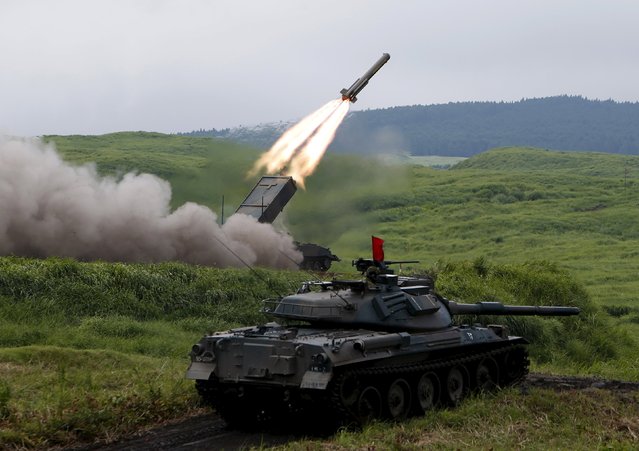
A Japanese Ground Self-Defense Force Type 92 Mine sweeping vehicle fires a rocket behind a Type 74 armoured tank during an annual training session, which is based on a scenario to defend or retake islands in Japanese territory, near Mount Fuji at Higashifuji training field in Gotemba, west of Tokyo, August 18, 2015. (Photo by Yuya Shino/Reuters)
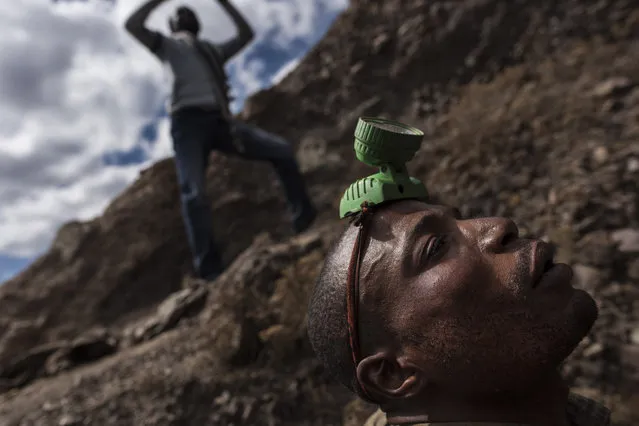
A “creuseur”, or digger, a plastic lantern on his head, readies to enter a copper and cobalt mine in Kawama, Democratic Republic of Congo on June 8, 2016. Cobalt is used in the batteries for electric cars and mobile phones. Working conditions are dangerous, often with no safety equipment or structural support for the tunnels. The diggers say they are paid on average US$2-3/day. (Photo by Michael Robinson Chavez/The Washington Post)
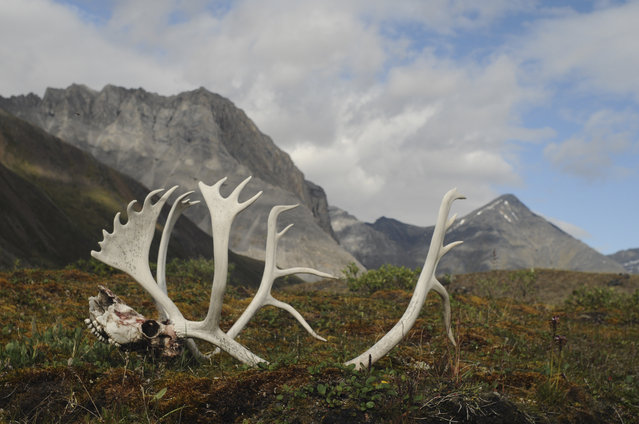
In this August 1, 2014 photo provided by the National Park Service are male caribou antlers in the Oolah Valley, likely the result of a grizzly kill as he migrated south for the winter at the Arctic National Park and Preserve in Alaska. The nation's northernmost national park says its new management plan will have to consider the effects of a new industrial road to the mining district of Ambler, the first road that would be constructed within its Maryland-sized boundaries. (Photo by Cadence Cook/AP Photo/National Park Service)