Loading...
Done
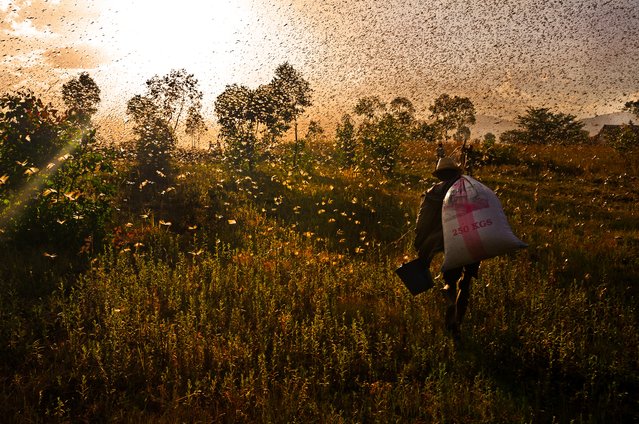
“Locusts & Men”. Oppression, interaction, collaboration. In the life cycle of nature nothing is lost, but the coexistence of different species is sometimes difficult. In Madagascar periodically returns the archaic antagonism between man and the migratory locust, in a circle of life where the two species are looking for space and food for their survival. Photo location: Madagascar, 2013. (Photo and caption by Michele Martinelli/National Geographic Photo Contest)

“Locusts & Men”. Oppression, interaction, collaboration. In the life cycle of nature nothing is lost, but the coexistence of different species is sometimes difficult. In Madagascar periodically returns the archaic antagonism between man and the migratory locust, in a circle of life where the two species are looking for space and food for their survival. At the end of the day a man walks home carrying on his shoulders the heavy bag which contains the locusts captured during the day. The insects provide nutritious meals for the man and his family. Photo location: Madagascar, 2013. (Photo and caption by Michele Martinelli/National Geographic Photo Contest)

ATTENTION! All pictures are presented in high resolution. To see Hi-Res images – just TWICE click on any picture. In other words, click small picture – opens the BIG picture. Click BIG picture – opens VERY BIG picture.
Details
03 Dec 2013 10:59:00
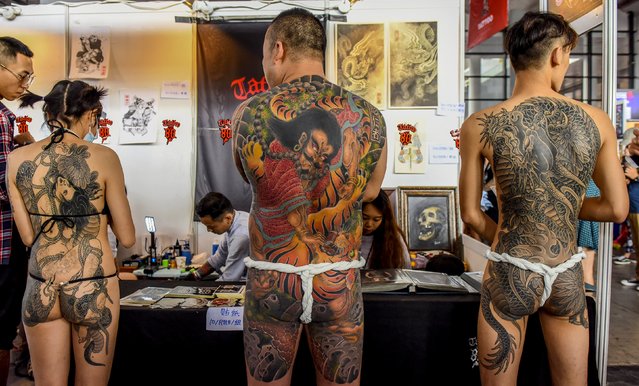
Contestants of a tattoo competition pose for photographs at the China TATTOO convention in Nanning, Guangxi Zhuang Autonomous Region, China, October 24, 2015. (Photo by Reuters/Stringer)

Contestants of a tattoo competition pose for photographs at the China TATTOO convention in Nanning, Guangxi Zhuang Autonomous Region, China, October 24, 2015. The annual convention was held in Nanning from October 23 to 25 this year. (Photo by Reuters/Stringer)
Details
27 Oct 2015 08:07:00
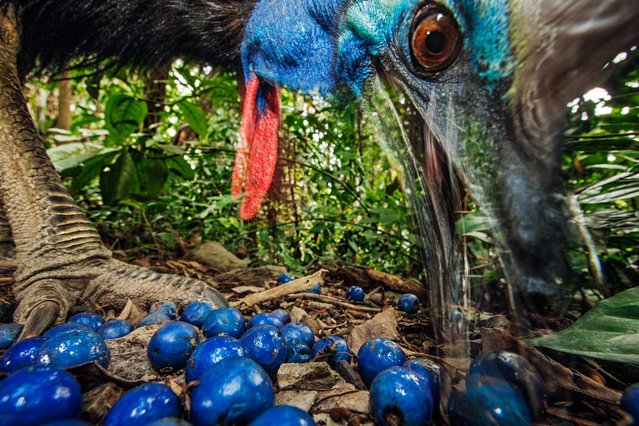
“Cassowaries are large, flightless birds related to emus and (more distantly) to ostriches, rheas, and kiwis”, writes Olivia Judson in the September issue of National Geographic magazine. (Photo by Christian Ziegler/National Geographic)

“Cassowaries are large, flightless birds related to emus and (more distantly) to ostriches, rheas, and kiwis”, writes Olivia Judson in the September issue of National Geographic magazine. How large? People-size: Adult males stand well over five foot five and top 110 pounds. Females are even taller, and can weigh more than 160 pounds. Dangerous when roused, they’re shy and peaceable when left alone. But even birds this big and tough are prey to habitat loss. The dense New Guinea and Australia rain forests where they live have dwindled. Today cassowaries might number 1,500 to 2,000. And because they help shape those same forests – by moving seeds from one place to another – “if they vanish”, Judson writes, “the structure of the forest would gradually change” too. (Photo by Christian Ziegler/National Geographic)
Details
06 Jan 2014 12:21:00
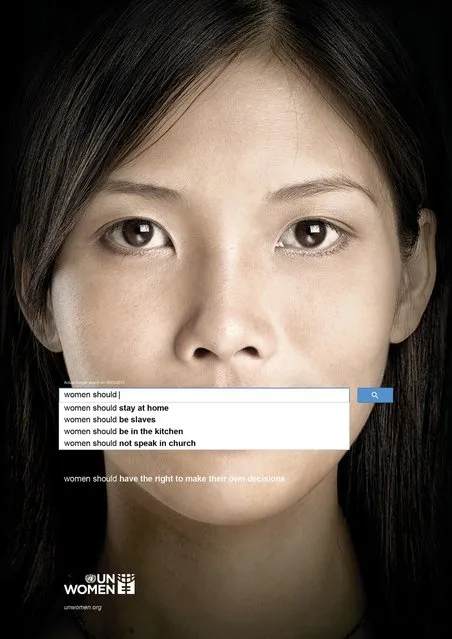
“UN Women”. Advertising Agency: Ogilvy & Mather, Dubai, UAE

“A series of ads, developed as a creative idea for UN Women by Memac Ogilvy & Mather Dubai, uses genuine Google searches to reveal the widespread prevalence of sexism and discrimination against women. Based on searches dated 9 March, 2013 the ads expose negative sentiments ranging from stereotyping as well as outright denial of women’s rights”. – UN Women. (Photo by Ogilvy & Mather, Dubai, UAE/UN Women)
Details
19 Nov 2013 09:02:00
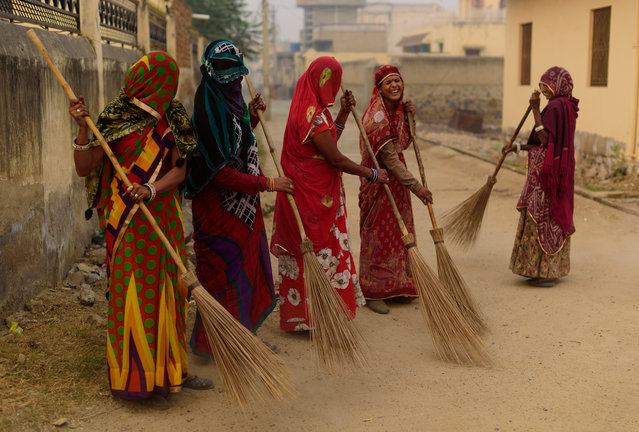
“Early morning in Mandawa, rural Rajasthan: it was the morning of Diwali and the streets were swept by smiling women in brightly coloured sarees as I took an early morning cup of chai. Celebrations started later, when darkness fell”. (Photo by Hamish Scott-Brown/Guardian Witness)

“Early morning in Mandawa, rural Rajasthan: it was the morning of Diwali and the streets were swept by smiling women in brightly coloured sarees as I took an early morning cup of chai. Celebrations started later, when darkness fell”. (Photo by Hamish Scott-Brown/Guardian Witness)
Details
20 Dec 2016 12:57:00
A young woman looks at her smartphone sitting in front of a mannequin use to keep social distancing at a Chinese cuisine restaurant in Tokyo, Japan, 27 July 2020. Japan's total number of COVID-19 cases crossed the 30,000 line showing the new coronavirus pandemic is spreading across the country and not only in Tokyo and Osaka megalopolis. (Photo by Franck Robichon/EPA/EFE)

A young woman looks at her smartphone sitting in front of a mannequin use to keep social distancing at a Chinese cuisine restaurant in Tokyo, Japan, 27 July 2020. Japan's total number of COVID-19 cases crossed the 30,000 line showing the new coronavirus pandemic is spreading across the country and not only in Tokyo and Osaka megalopolis. (Photo by Franck Robichon/EPA/EFE)
Details
21 Aug 2020 00:01:00
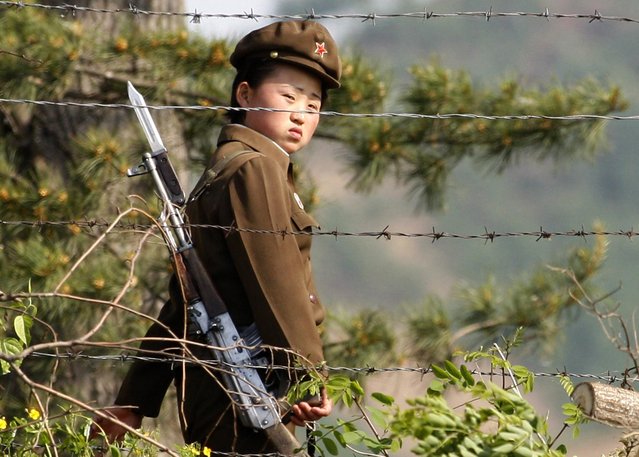
In this photo taken June 3, 2009, a female North Korean soldier looks out from behind a barbed-wire fence around a camp on the North Korean river banks across from Hekou, northeastern China's Liaoning province. North Korea's top court has convicted two U.S. journalists, and sentenced them to 12 years in labor prison, the country's state news agency reported Monday. (Photo by Ng Han Guan/AP Photo)

In this photo taken June 3, 2009, a female North Korean soldier looks out from behind a barbed-wire fence around a camp on the North Korean river banks across from Hekou, northeastern China's Liaoning province. North Korea's top court has convicted two U.S. journalists, and sentenced them to 12 years in labor prison, the country's state news agency reported Monday. (Photo by Ng Han Guan/AP Photo)
Details
13 Sep 2017 07:11:00
Spacewalker Mark Vande Hei took his own photograph during the first spacewalk of 2018,  on January 23, 2018. These sky-high pictures are better known as “space-selfies”. (Photo by Mark Vande Hei/NASA)

Spacewalker Mark Vande Hei took his own photograph during the first spacewalk of 2018, on January 23, 2018. These sky-high pictures are better known as “space-selfies”. (Photo by Mark Vande Hei/NASA)
Details
05 Feb 2018 06:27:00