Loading...
Done
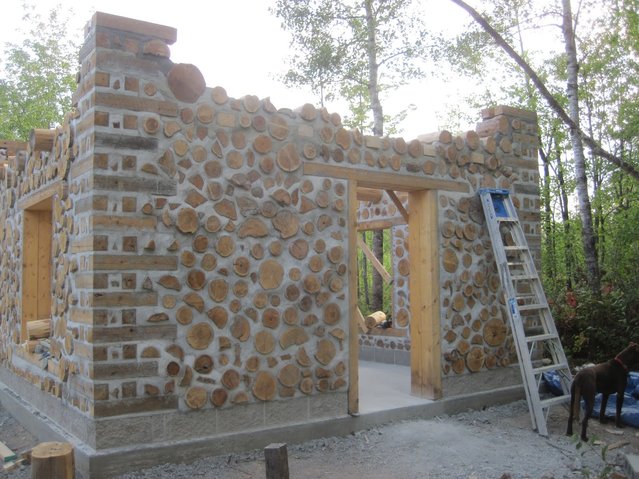
Cordwood Construction - Natural Building

Cordwood construction is a method of natural building that originated roughly one thousand years ago in Greece and Siberia. This method involves using pieces of wood that slightly protrude from the mortar, giving the walls an attractive appearance. Usually, the walls are made 12 to 24 inches thick. However, in some parts of Canada, the walls can be as thick as 36 inches. This method appeals to many people due to its ease of construction economy of resources. Cordwood Construction can be separated into two main types: mortar-insulation-mortar (M-I-M) and Throughwall. M-I-M is a more preferable and widely used choice as it allows for better insulating properties.
Details
27 Nov 2014 15:10:00
All In By Graham MacIndoe

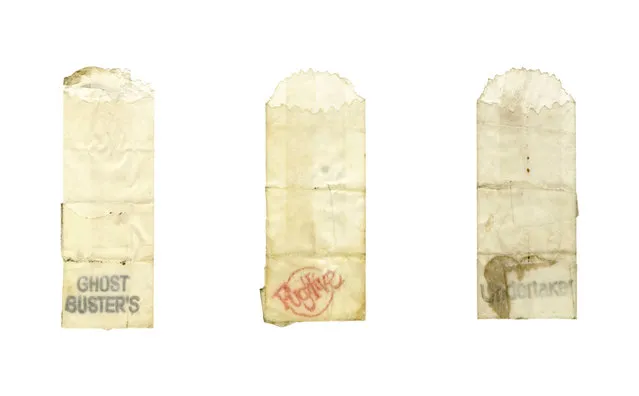
In order to get a glimpse into the visual culture of drug trade in New York City, a British photographer Graham MacIndoe collected more than one hundred bags, which were used to sell heroin. These bags feature references to various movies, fast-food restaurants, and luxury brands. This could be a way to mark various purities of heroin, or maybe different drug dealers use different markers to distinguish between each other. We can only wonder where Graham has acquired all these heroin bags. Hopefully, he picked them up after their contents were emptied. (Photo by Graham MacIndoe)
Details
01 Dec 2014 14:15:00
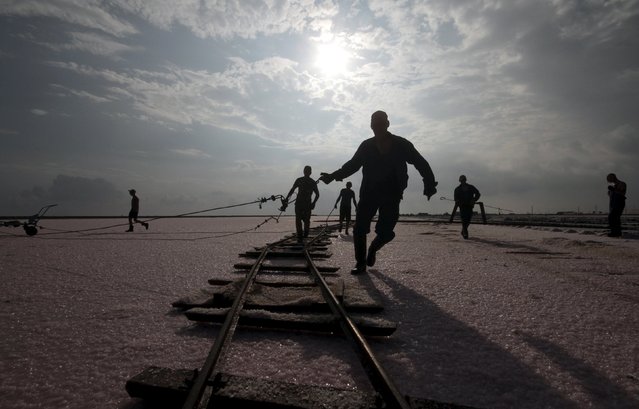
Workers adjust rails at the bed of a drained area of a lake used for the production of salt at the Sasyk-Sivash lake near the city of Yevpatoria, Crimea, September 25, 2015. The area has a long tradition of salt production, prepared from salt flats flooded with water from the Black Sea. (Photo by Pavel Rebrov/Reuters)

Workers adjust rails at the bed of a drained area of a lake used for the production of salt at the Sasyk-Sivash lake near the city of Yevpatoria, Crimea, September 25, 2015. The area has a long tradition of salt production, prepared from salt flats flooded with water from the Black Sea. (Photo by Pavel Rebrov/Reuters)
Details
28 Sep 2015 08:01:00
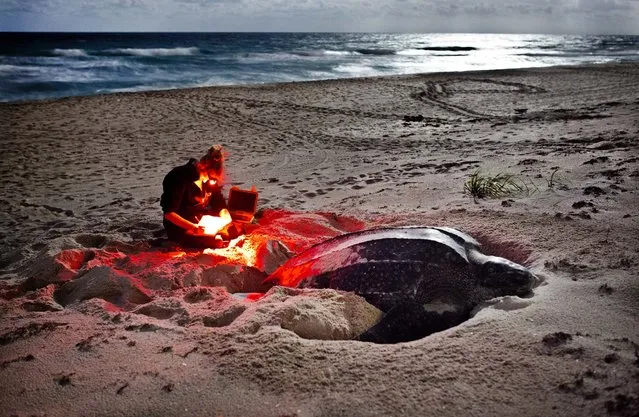
Biologist Kelly Martin records her measurements of Electra, a 5 1/2 foot leatherback turtle nesting on the beach behind the Seminole Golf Club course in Juno Beach. Martin uses a red light which is invisible to turtles. (Photo by Greg Lovett/The Palm Beach Post)

Biologist Kelly Martin records her measurements of Electra, a 5 1/2 foot leatherback turtle nesting on the beach behind the Seminole Golf Club course in Juno Beach. Martin uses a red light which is invisible to turtles. (Photo by Greg Lovett/The Palm Beach Post)
Details
04 Nov 2013 10:17:00
Food In Faces By Victor Nunes

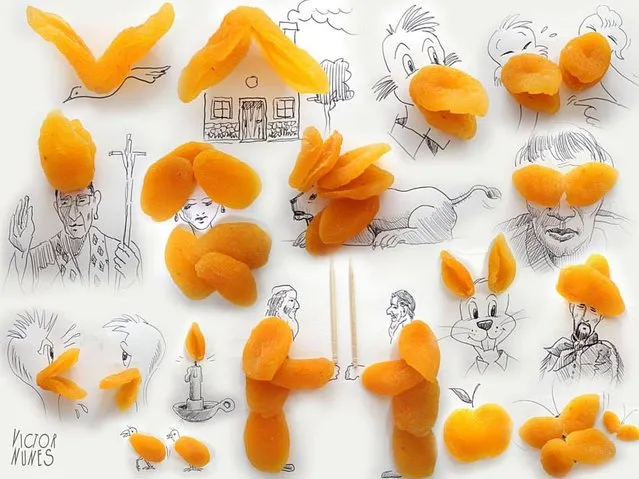
Artist Victor Nunes combines every-day objects with simple illustrations to turn them into pictures of faces, animals and other playful scenes. His images invite us to look at the world differently and find creative images in our surroundings. Nunes’ art is a great example of pareidolia, which is our propensity to give meaning to random objects (like in this post about seeing faces in random objects). It’s the reason why we associate a smiley face with a human face and why some of Nunes’ pieces of popcorn or bread resemble faces to us.
Details
02 Feb 2014 11:58:00
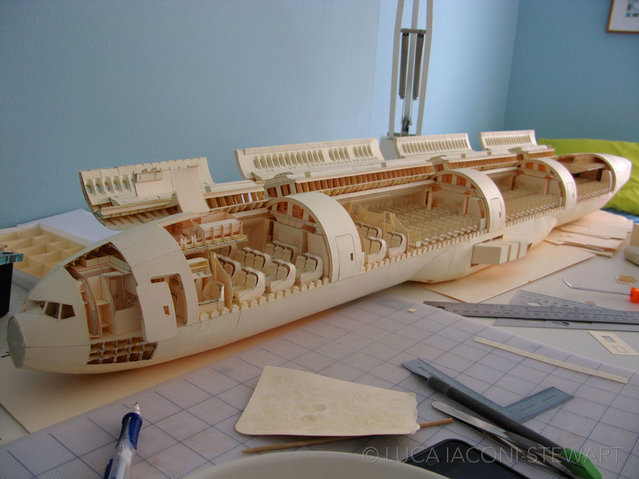
 Realistic Paper Boeing 777 By Luca Laconi Stewart

Inspired by high school architecture class where he was assigned to create simple paper models using cut paper manilla folders, San Francisco-based designer Luca Iaconi-Stewart went home to begin construction on an extremely ambitious project: a 1:60 scale reproduction of a Boeing 777 using some of the techniques he learned in class. That was in 2008, when Iaconi-Stewart was just a junior in high school.
Details
13 Feb 2014 12:29:00
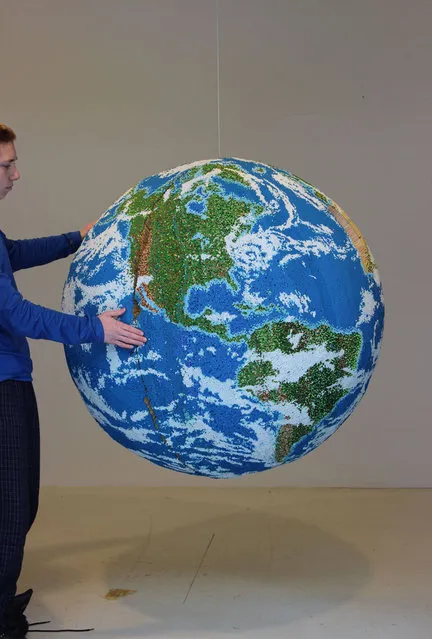
Giant Globe Made From Matches By Andy Yoder

Do you ever get the irresistible urge to light matches on fire, especially if there are many of them in one place? If you do, you shouldn’t come near the giant globe made by an American artist Andy Yoder. The thing is, this 42” globe is made entirely out of matches on the outside, while the center was made using plywood, foam, and cardboard. It took Andy two years to complete his work, finally finishing in 2014. Each of the matches used was hand-painted and then glued in place. Also, in order to prevent his masterpiece from catching fire, Andy Yoder has doused his work with a flame repellant.
Details
27 Feb 2015 03:32:00
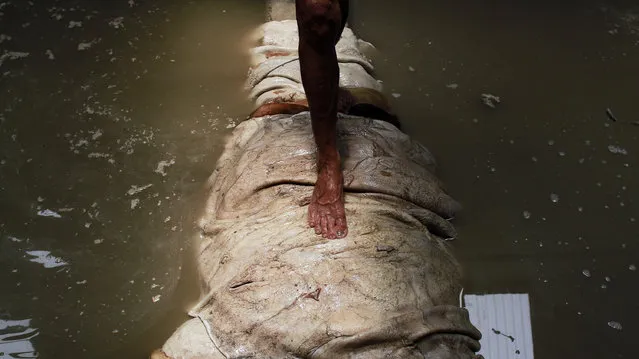
A man walks across a vat of water used to wash the hide. (Photo by Rezza Estily/JG Photo)

Sukaregang in Garut district, West Java, has long been a bustling center for Indonesia's leather trade, with some shops producing and selling various goods – including bags, shoes and jackets – since the 1940s. The industrial area is also a major supplier for high-end brands from across the globe, catering to the fashion, auto and motor-sports industry. Here: a man walks across a vat of water used to wash the hide. (Photo by Rezza Estily/JG Photo)
Details
31 Mar 2015 13:29:00