Loading...
Done
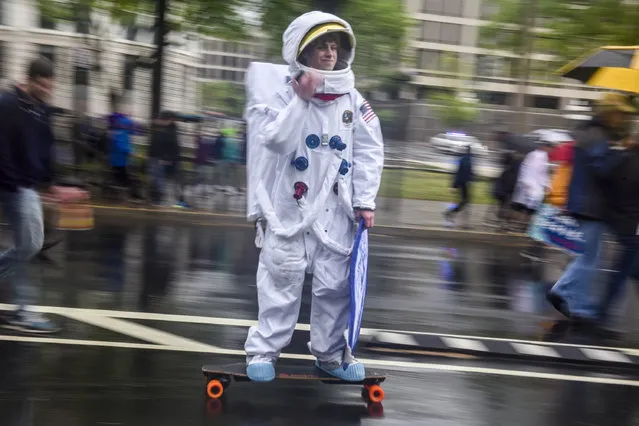
Max Gold, 20, of NYC, cruises on his skateboard as thousands gather on the National Mall for the March for Science on Saturday, April 22, 2017, in Washington, DC.  Activists and scientists descend on the nation's capital to rally for environmental causes and government policies rooted in scientific research as part of the Earth Day and March for Science rallies. (Photo by Jahi Chikwendiu/The Washington Post)

Max Gold, 20, of NYC, cruises on his skateboard as thousands gather on the National Mall for the March for Science on Saturday, April 22, 2017, in Washington, DC. Activists and scientists descend on the nation's capital to rally for environmental causes and government policies rooted in scientific research as part of the Earth Day and March for Science rallies. (Photo by Jahi Chikwendiu/The Washington Post)
Details
22 May 2017 07:38:00
A “colacho” (a person dressed up as a devil) chases people during “El salto del Colacho”, the baby jumping festival in the village of Castrillo de Murcia, near Burgos on June 3, 2018. (Photo by Cesar Manso/AFP Photo)

A “colacho” (a person dressed up as a devil) chases people during “El salto del Colacho”, the baby jumping festival in the village of Castrillo de Murcia, near Burgos on June 3, 2018. (Photo by Cesar Manso/AFP Photo)
Details
05 Jun 2018 10:24:00
Crown line handler Bobby Marie controls 'Chain Gang' as the balloon is inflated during the 43nd Annual Helen to the Atlantic Balloon Race and Festival, in Helen, Georgia, USA, 04 June 2016. The race is the oldest balloon event in the southern USA and United States' only long-distance hot air balloon race, according to the organizers. (Photo by Erik S. Lesser/EPA)

Crown line handler Bobby Marie controls “Chain Gang” as the balloon is inflated during the 43nd Annual Helen to the Atlantic Balloon Race and Festival, in Helen, Georgia, USA, 04 June 2016. The race is the oldest balloon event in the southern USA and United States' only long-distance hot air balloon race, according to the organizers. (Photo by Erik S. Lesser/EPA)
Details
05 Jun 2016 13:37:00
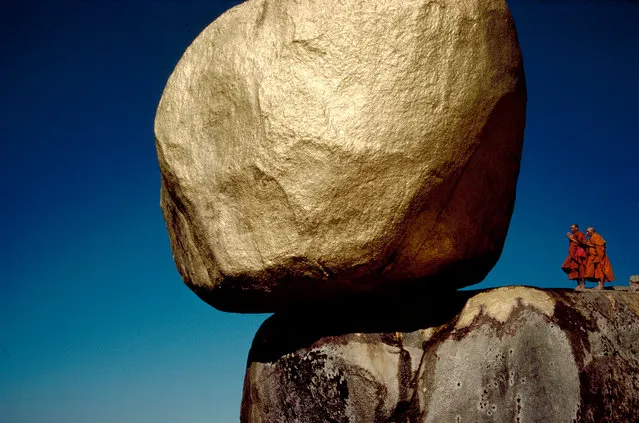
Kyaiktiyo, Burma, 1978. The Golden Rock at Shwe Pyi Daw (the Golden Country), the Buddhist holy place. Hiroji Kubota writes: “I was desperate to keep a distance from America for a while; luckily, I found Burma and its gentle and compassionate people. In the spring of 1978, on the top of the hill where I took this photo, I had two Leica bodies: the one with Tri-X and the other with Kodachrome 64. Soon after, I realised that the colour one looked very colourful and was more powerful. That was my decisive moment, to become a colour photographer”. (Photo by Hiroji Kubota/Magnum Photos)

Kyaiktiyo, Burma, 1978. The Golden Rock at Shwe Pyi Daw (the Golden Country), the Buddhist holy place. Hiroji Kubota writes: “I was desperate to keep a distance from America for a while; luckily, I found Burma and its gentle and compassionate people. In the spring of 1978, on the top of the hill where I took this photo, I had two Leica bodies: the one with Tri-X and the other with Kodachrome 64. Soon after, I realised that the colour one looked very colourful and was more powerful. That was my decisive moment, to become a colour photographer”. (Photo by Hiroji Kubota/Magnum Photos)
Details
10 Jun 2016 13:30:00
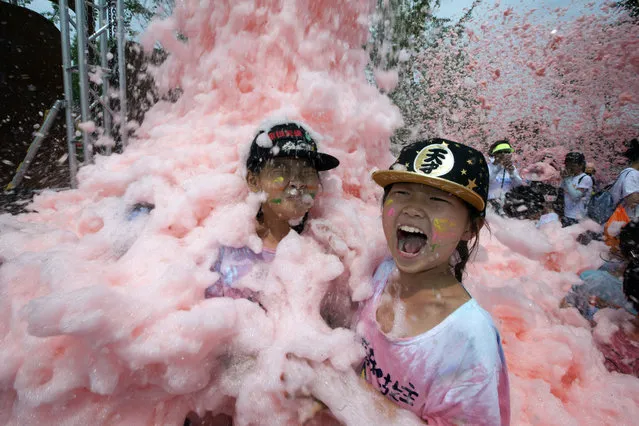
Children are engulfed by foam during the Bubble Show event in Beijing, China, Sunday, June 26, 2016. Thousands of residents enjoy colored foam churned out by machines along a running track at the event designed for children and parents'  interaction. (Photo by Ng Han Guan/AP Photo)

Children are engulfed by foam during the Bubble Show event in Beijing, China, Sunday, June 26, 2016. Thousands of residents enjoy colored foam churned out by machines along a running track at the event designed for children and parents' interaction. (Photo by Ng Han Guan/AP Photo)
Details
27 Jun 2016 12:40:00
A young man, who says he is part of a local criminal gang, poses for a picture holding a gun in the neighbourhood of Korogcho in Nairobi, Kenya, March 19, 2015. (Photo by Siegfried Modola/Reuters)

A young man, who says he is part of a local criminal gang, poses for a picture holding a gun in the neighbourhood of Korogcho in Nairobi, Kenya, March 19, 2015. Around 2 million people live in the shantytowns packed in around Kenya's capital. Crime is high amid chronic unemployment levels, while basic services and sanitation are scarce. Residents try to make the best of things, eking out a living and picking up work where they can. (Photo by Siegfried Modola/Reuters)
Details
27 Nov 2015 04:59:00
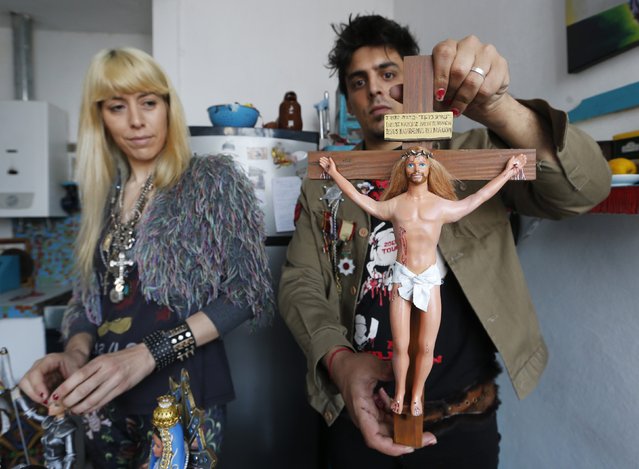
Artist Emiliano Paolini (R), and his partner Marianela Perelli, show their “Ken” doll that they have re-designed into the religious figure of Jesus Christ at their workshop in Rosario, north of Buenos Aires September 23, 2014. (Photo by Enrique Marcarian/Reuters)

Artist Emiliano Paolini (R), and his partner Marianela Perelli, show their “Ken” doll that they have re-designed into the religious figure of Jesus Christ at their workshop in Rosario, north of Buenos Aires September 23, 2014. Paolini and Perelli have adapted religious figures such as Jesus Christ, Moses and the Virgin of Guadalupe to Mattel's line of Barbie and Ken dolls and are working on more religious figures, although they say they will not be using the Prophet Muhammad to avoid controversy. They plan to have a gallery show in Buenos Aires next October. (Photo by Enrique Marcarian/Reuters)
Details
27 Sep 2014 11:47:00
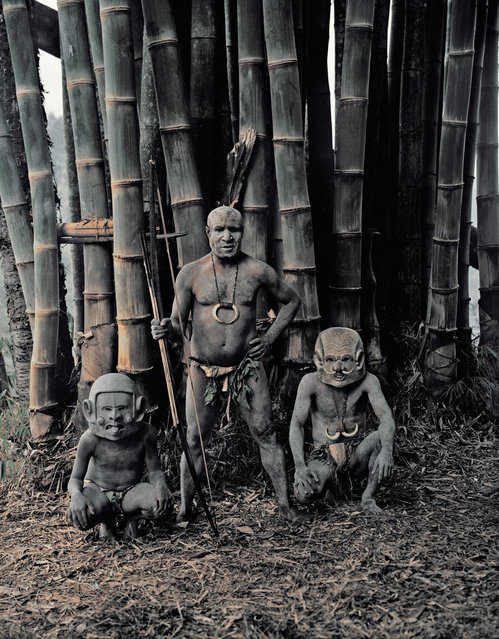
“Asaro from the Eastern Highlands”. The mudmen could not cover their faces with mud because the people of Papua New Guinea thought that the mud from the Asaro river was poisonous. So instead of covering their faces with this alleged poison, they made masks from pebbles that they heated and water from the waterfall, with unusual designs such as long or very short ears either going down to the chin or sticking up at the top, long joined eyebrows attached to the top of the ears, horns and sideways mouths. (Jimmy Nelson)

“Asaro from the Eastern Highlands”. The mudmen could not cover their faces with mud because the people of Papua New Guinea thought that the mud from the Asaro river was poisonous. So instead of covering their faces with this alleged poison, they made masks from pebbles that they heated and water from the waterfall, with unusual designs such as long or very short ears either going down to the chin or sticking up at the top, long joined eyebrows attached to the top of the ears, horns and sideways mouths. (Photo and caption by Jimmy Nelson)
Details
20 Oct 2013 08:54:00