Loading...
Done
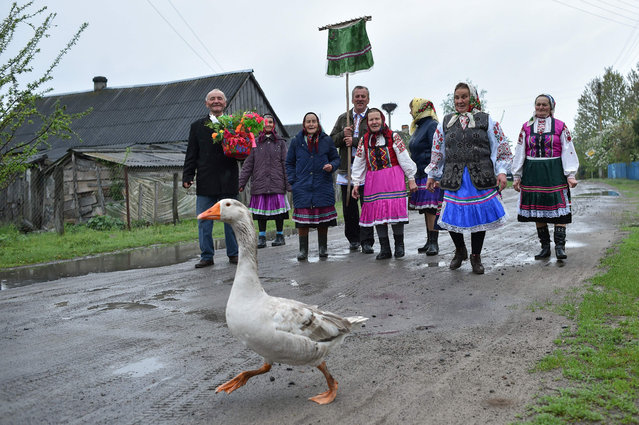
A goose walks on the road as Belarusian villagers take part in the Yurya religious rite to bring a good harvest in the village of Lutki, some 270 km south of Minsk, on May 6, 2019. (Photo by Sergei Gapon/AFP Photo)

A goose walks on the road as Belarusian villagers take part in the Yurya religious rite to bring a good harvest in the village of Lutki, some 270 km south of Minsk, on May 6, 2019. (Photo by Sergei Gapon/AFP Photo)
Details
02 Jan 2020 00:01:00
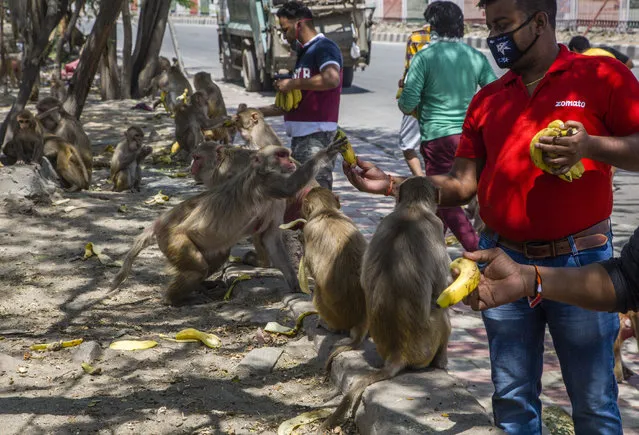
Men give bananas to monkeys gathered on the side of the road as India remains under an unprecedented lockdown over the highly contagious coronavirus (COVID-19) on April 08, 2020 in New Delhi, India. Wild animals, including monkeys, are roaming human settlements in India as people are staying indoors due to the 21-day lockdown. With India's 1.3 billion population and tens of millions of cars off the roads, wildlife is moving towards areas inhabited by humans. Wild animals in many countries have been seen roaming streets. A study says some 60 percent of the new diseases found around the globe every year are zoonotic, meaning they originate in animals and are passed on to humans. COVID-19 is a zoonotic disease that is suspected to have come from the wet markets of Wuhan, China. (Photo by Yawar Nazir/Getty Images)

Men give bananas to monkeys gathered on the side of the road as India remains under an unprecedented lockdown over the highly contagious coronavirus (COVID-19) on April 08, 2020 in New Delhi, India. Wild animals, including monkeys, are roaming human settlements in India as people are staying indoors due to the 21-day lockdown. (Photo by Yawar Nazir/Getty Images)
Details
12 Apr 2020 00:05:00
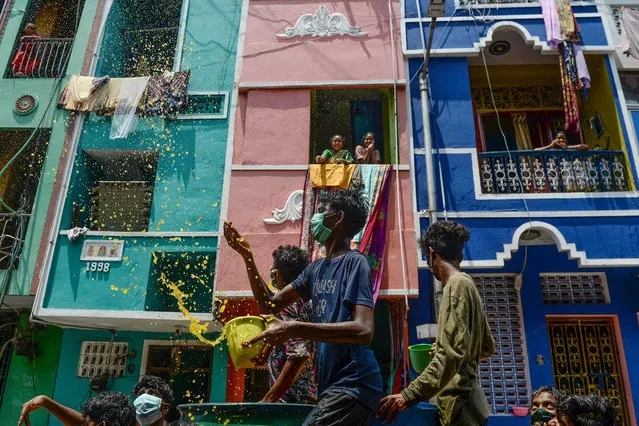
Volunteers throw a mixture of water, neem herb and turmeric as an alleged natural disinfectant on a street in a residential area during a government-imposed nationwide lockdown as a preventive measure against the COVID-19 coronavirus, in Chennai on April 7, 2020. (Photo by Arun Sankar/AFP Photo)

Volunteers throw a mixture of water, neem herb and turmeric as an alleged natural disinfectant on a street in a residential area during a government-imposed nationwide lockdown as a preventive measure against the COVID-19 coronavirus, in Chennai on April 7, 2020. (Photo by Arun Sankar/AFP Photo)
Details
20 Apr 2020 00:03:00
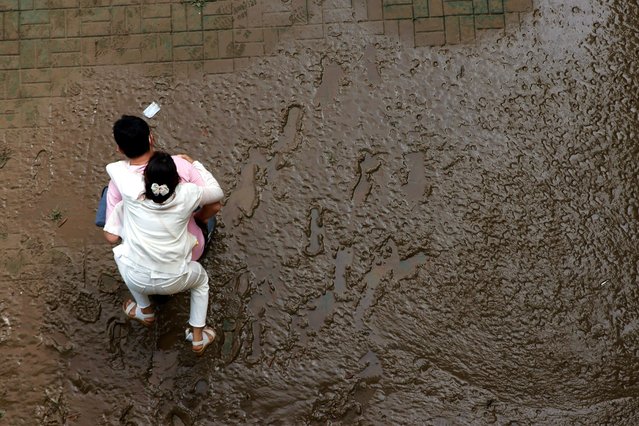
A man crosses a mud-covered trail carrying his wife on his back at a flooded Han River park in Seoul, South Korea, August 4, 2020. (Photo by Kim Hong-Ji/Reuters)

A man crosses a mud-covered trail carrying his wife on his back at a flooded Han River park in Seoul, South Korea, August 4, 2020. (Photo by Kim Hong-Ji/Reuters)
Details
11 Aug 2020 00:03:00
A guest dressed as a zombie attends the Middle East Film & Comic Con (MEFCC) in Gulf emirate of Dubai, United Arab Emirates, 11 April 2019. The event runs until 13 April 2019. (Photo by Ali Haider/EPA/EFE)

A guest dressed as a zombie attends the Middle East Film & Comic Con (MEFCC) in Gulf emirate of Dubai, United Arab Emirates, 11 April 2019. The event runs until 13 April 2019. (Photo by Ali Haider/EPA/EFE)
Details
13 Apr 2019 00:07:00
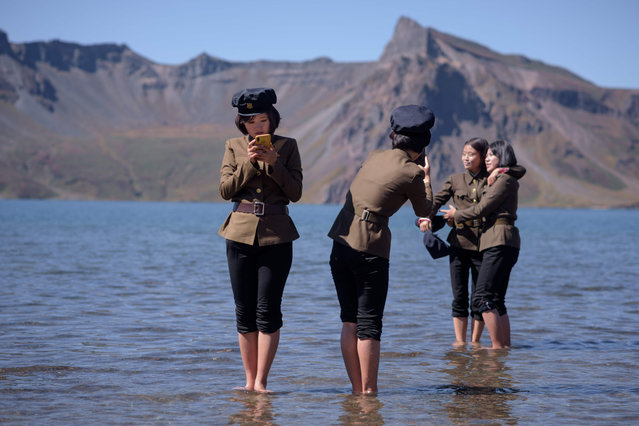
In a photo taken on September 11, 2019, North Korean students pose for photos in Chonji lake, or “Heaven lake”, as they visit the crater of Mount Paektu, near Samjiyon. Mount Paektu has long been considered the spiritual birthplace of the Korean nation and is a place of pilgrimage for tens of thousands of North Koreans every year, who are trained from birth to revere their leaders. Every year 100,000 North Koreans or more are taken on study tours to the camp, the mountain, and nearby revolutionary sites where relics of operations are preserved. Dressing in khaki uniforms said to resemble guerrillas' outfits and carrying red flags, they march to the summit of the volcano. (Photo by Ed Jones/AFP Photo)

In a photo taken on September 11, 2019, North Korean students pose for photos in Chonji lake, or “Heaven lake”, as they visit the crater of Mount Paektu, near Samjiyon. Mount Paektu has long been considered the spiritual birthplace of the Korean nation and is a place of pilgrimage for tens of thousands of North Koreans every year, who are trained from birth to revere their leaders. (Photo by Ed Jones/AFP Photo)
Details
09 Oct 2019 00:03:00
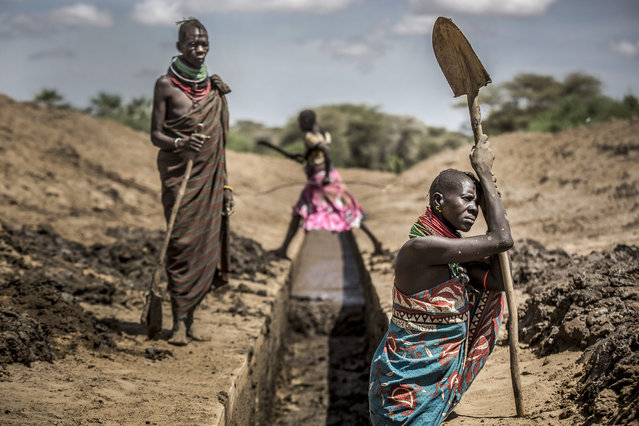
Members of the Turkana community work unblocking an irrigation canal to provide water to their sorghum crops in an arid dry area in Nanyee, near Lodwar, Turkana County, Kenya, on October 1, 2019. Turkana is a vast, dry area in the north-west of Kenya that is on the frontline of climate change. With regular searing temperatures the Turkana people are suffering from recurring and prolonged droughts. (Photo by Luis Tato/AFP Photo)

Members of the Turkana community work unblocking an irrigation canal to provide water to their sorghum crops in an arid dry area in Nanyee, near Lodwar, Turkana County, Kenya, on October 1, 2019. Turkana is a vast, dry area in the north-west of Kenya that is on the frontline of climate change. With regular searing temperatures the Turkana people are suffering from recurring and prolonged droughts. (Photo by Luis Tato/AFP Photo)
Details
28 Oct 2019 00:05:00
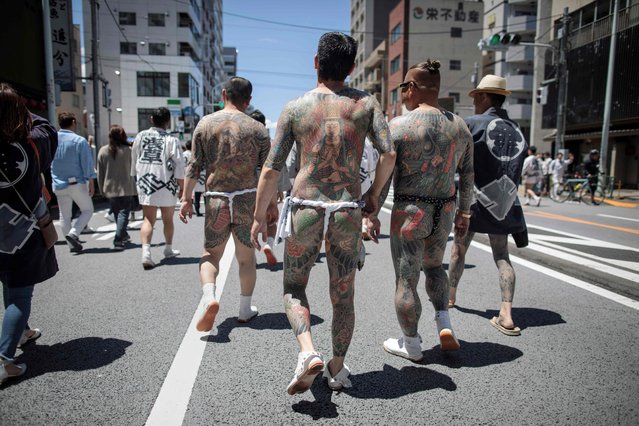
Participants with traditional Japanese tattoos (Irezumi), related to the Yakuza, walk through the Asakusa district during the annual Sanja Matsuri festival in Tokyo on May 20, 2018. Sanja Matsuri festival is a celebration for the three founders of Sensoji Temple in the Asakusa neighbourhood with nearly two million people visiting during the three-day event. (Photo by Behrouz Mehri/AFP Photo)

Participants with traditional Japanese tattoos (Irezumi), related to the Yakuza, walk through the Asakusa district during the annual Sanja Matsuri festival in Tokyo on May 20, 2018. Sanja Matsuri festival is a celebration for the three founders of Sensoji Temple in the Asakusa neighbourhood with nearly two million people visiting during the three-day event. (Photo by Behrouz Mehri/AFP Photo)
Details
17 Jul 2018 00:05:00