Loading...
Done
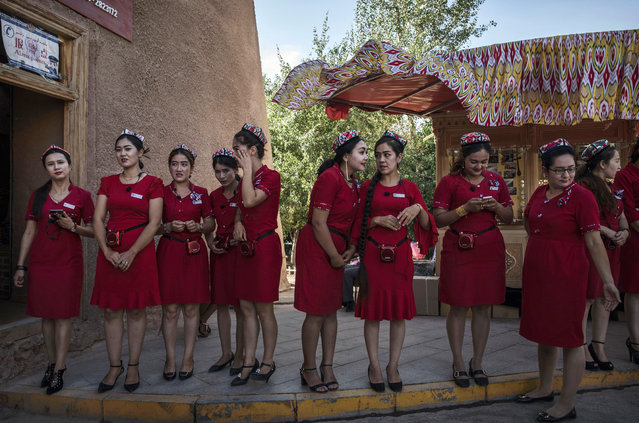
Ethnic Uyghur tourists guides wait to perform in a show for Chinese tourists on June 29, 2017 in the old town of Kashgar, in the far western Xinjiang province, China. (Photo by Kevin Frayer/Getty Images)

Ethnic Uyghur tourists guides wait to perform in a show for Chinese tourists on June 29, 2017 in the old town of Kashgar, in the far western Xinjiang province, China. Kashgar has long been considered the cultural heart of Xinjiang for the province's nearly 10 million Muslim Uyghurs. (Photo by Kevin Frayer/Getty Images)
Details
03 Aug 2017 08:59:00
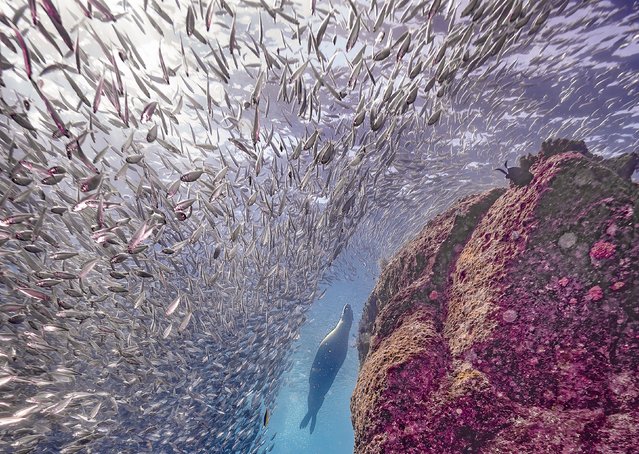
Sea lions make dinner plans in the Gulf of California early July 2024. The gulf is a primary source of sardines and anchovies, two of Mexico’s top marine resources. (Photo by Glenn Ostle/Solent News)

Sea lions make dinner plans in the Gulf of California early July 2024. The gulf is a primary source of sardines and anchovies, two of Mexico’s top marine resources. (Photo by Glenn Ostle/Solent News)
Details
04 Oct 2024 04:04:00
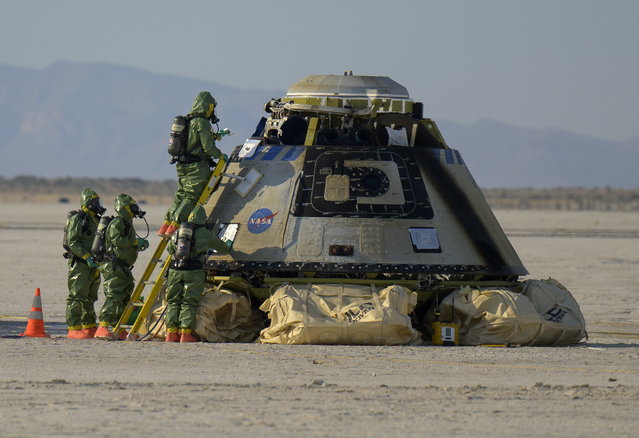
A handout picture made available by the National Aeronautics and Space Administration (NASA) shows, NASA teams working around Boeing’s CST-100 Starliner spacecraft after it landed at White Sands Missile Range’s Space Harbor, in Las Cruces, New Mexico, 25 May 2022. Boeing’s Orbital Flight Test-2 (OFT-2) is Starliner’s second uncrewed flight test to the International Space Station as part of NASA's Commercial Crew Program. OFT-2 serves as an end-to-end test of the system's capabilities. (Photo by Bill Ingalls/NASA/EPA/EFE)

A handout picture made available by the National Aeronautics and Space Administration (NASA) shows, NASA teams working around Boeing’s CST-100 Starliner spacecraft after it landed at White Sands Missile Range’s Space Harbor, in Las Cruces, New Mexico, 25 May 2022. Boeing’s Orbital Flight Test-2 (OFT-2) is Starliner’s second uncrewed flight test to the International Space Station as part of NASA's Commercial Crew Program. OFT-2 serves as an end-to-end test of the system's capabilities. (Photo by Bill Ingalls/NASA/EPA/EFE)
Details
31 May 2022 04:54:00
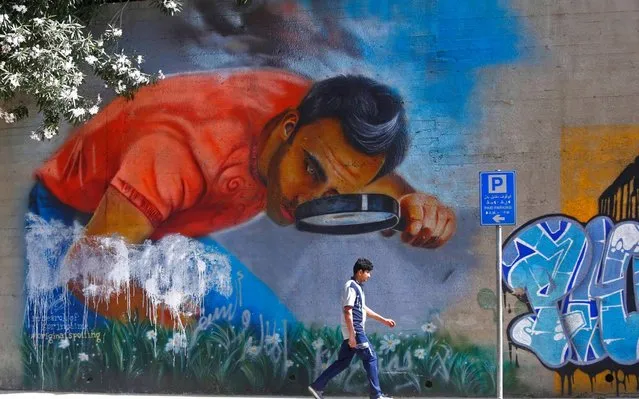
A man passes by a wall with graffiti in Beirut, Lebanon, on May 29, 2019. (Photo by Bilal Jawich/Xinhua News Agency/Alamy Live News)

A man passes by a wall with graffiti in Beirut, Lebanon, on May 29, 2019. (Photo by Bilal Jawich/Xinhua News Agency/Alamy Live News)
Details
27 Jun 2019 00:01:00
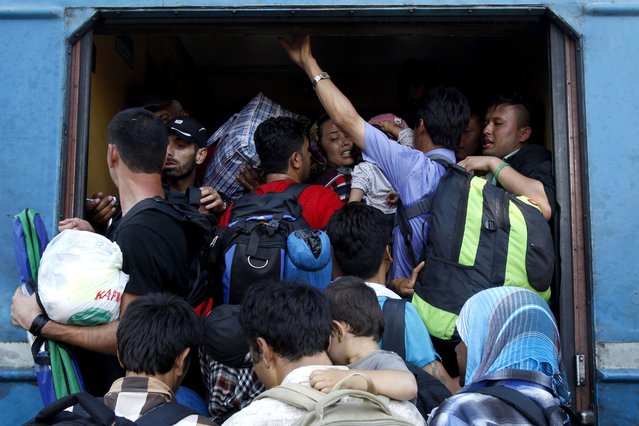
In this photo taken on Thursday, July 23, 2015 migrants  enter a train to Serbia at the railway station in the southern Macedonian town of Gevgelija. (Photo by Boris Grdanoski/AP Photo)

In this photo taken on Thursday, July 23, 2015 migrants enter a train to Serbia at the railway station in the southern Macedonian town of Gevgelija. The country has become a major transit route for thousands of Middle Eastern and African refugees and migrants who cross over from Greece and then continue into Serbia. (Photo by Boris Grdanoski/AP Photo)
Details
25 Jul 2015 12:29:00
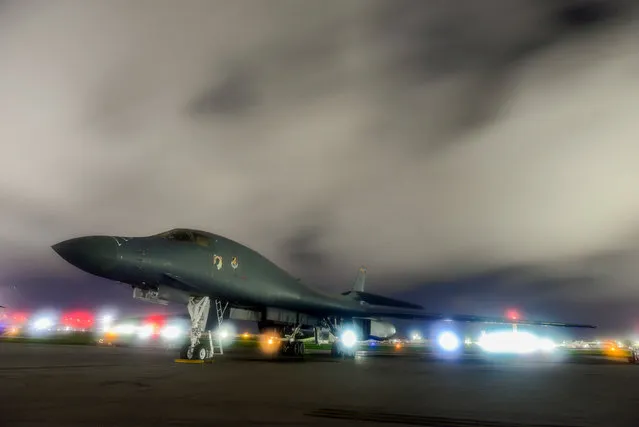
A U.S. Air Force B-1B Lancer bomber sits on the runway at Anderson Air Force Base, Guam July 18, 2017. (Photo by Airman 1st Class Christopher Quail/Reuters/U.S. Air Force)

A U.S. Air Force B-1B Lancer bomber sits on the runway at Anderson Air Force Base, Guam July 18, 2017. (Photo by Airman 1st Class Christopher Quail/Reuters/U.S. Air Force)
Details
23 Aug 2017 08:39:00
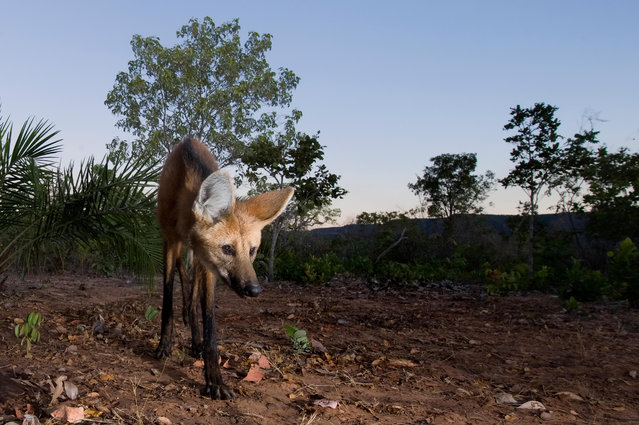
The maned wolf is among the large mammals in the Brazilian Cerrado that are threatened by the increasing conversion of grasslands into farmland for grazing and growing crops. (Photo by Ben Cranke/Nature Picture Library/Alamy Stock Photo)

Global wildlife populations will decline by 67% by 2020 unless urgent action is taken to reduce human impact on species and ecosystems, warns the biennial Living Planet Index report from WWF (World Wide Fund for Nature) and ZSL (Zoological Society of London). From elephants to eels, here are some of the wildlife populations most affected by human activity. Here: The maned wolf is among the large mammals in the Brazilian Cerrado that are threatened by the increasing conversion of grasslands into farmland for grazing and growing crops. (Photo by Ben Cranke/Nature Picture Library/Alamy Stock Photo)
Details
28 Oct 2016 10:47:00
An Iraqi woman and foreigners use  pair of compact discs as a filter to watch the partial solar eclipse in war-torn Baghdad, 29 March 2006. Without access to proper equipment to protect their eyes from the sun's rays, eclipse watchers in Iraq used makeshift filters.  The moon blotted out the sun over northwest Africa early Wednesday, turning day into night in a total solar eclipse as it swept a shadowy path from the outer tip of Brazil to the steppes of Mongolia. (Photo by Hassan Ammar/AFP Photo)

An Iraqi woman and foreigners use pair of compact discs as a filter to watch the partial solar eclipse in war-torn Baghdad, 29 March 2006. Without access to proper equipment to protect their eyes from the sun's rays, eclipse watchers in Iraq used makeshift filters. The moon blotted out the sun over northwest Africa early Wednesday, turning day into night in a total solar eclipse as it swept a shadowy path from the outer tip of Brazil to the steppes of Mongolia. (Photo by Hassan Ammar/AFP Photo)
Details
25 Jul 2017 09:31:00