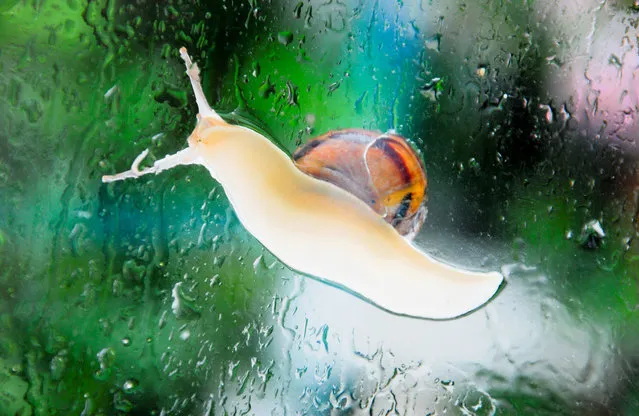
A snail slithers up a rain spattered window during stormy weather on the Isle of Portland, Fortuneswell, England on July 29, 2018. (Photo by Stuart Fretwell/Rex Features/Shutterstock)
Makeup artist He Yuhong, also known as “Yuya”, checks herself in the mirror during a photo shoot following her transformation into the “Girl with a Pearl Earring”, the 17th century oil painting by Dutch painter Johannes Vermeer, at her house in Chongqing, China on August 14, 2018. (Photo by Thomas Suen/Reuters)
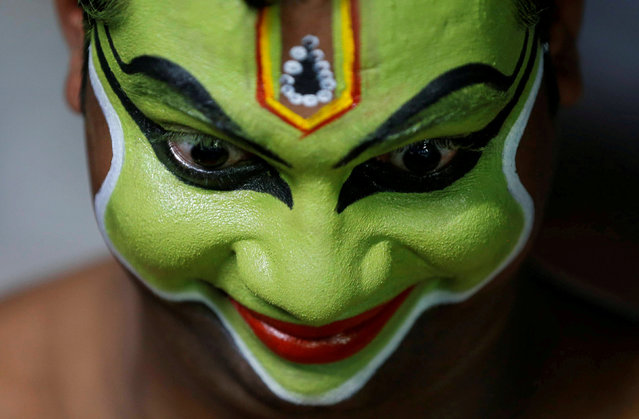
An artist gets ready backstage to perform an Indian art form of dance called “Ottamthullal” at the annual eight-day long Vrischikolsavam festival, which features a colourful procession of decorated elephants along with drum and trumpets concerts, at Sree Poornathrayeesa temple in Kochi, India, December 7, 2018. (Photo by Sivaram V/Reuters)
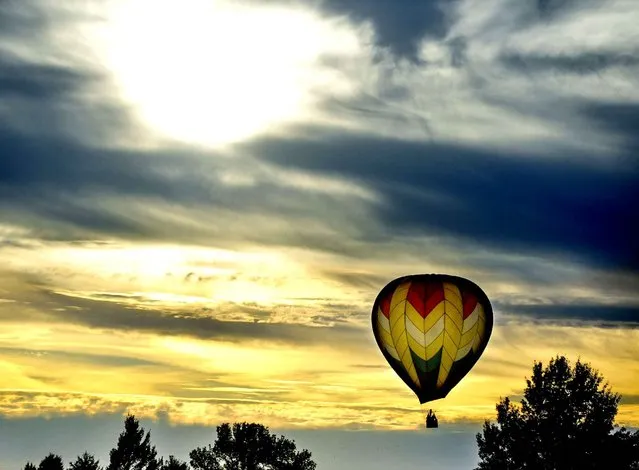
A hot air balloon floats over farm fields south of Washington, Ill., as the sun slips behind clouds on the autumn afternoon of Wednesday, September 24, 2014. (Photo by Ron Johnson/AP Photo/Peoria Journal Star)
A girl jumps to touch cherry blossoms in full bloom in Fussa, outskirts Tokyo, Japan, 05 April 2014. Temperatures being very constant made blossoms to keep full bloom for holiday makers. (Photo by Kimimasa Mayama/EPA)
A tourist jumps inside an upside-down house at Fengjing Ancient Town, Jinshan District, south of Shanghai, May 1, 2014. The upside-down house was built as a tourist attraction using everyday household items and furniture. (Photo by Aly Song/Reuters)
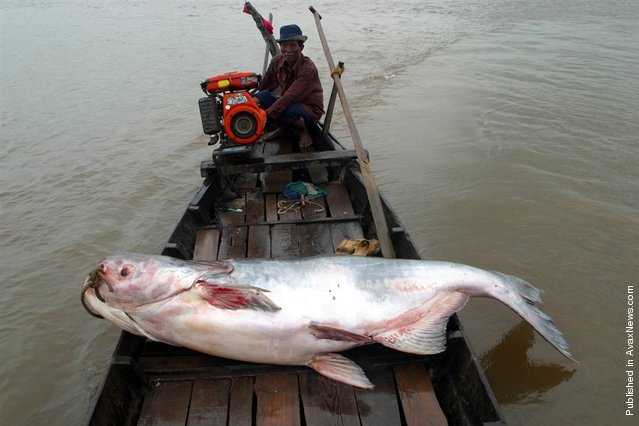
Among the fish populations that could be harmed by the Xayaburi dam in Laos is the critically endangered Mekong giant catfish, considered by the Guinness Book of World Records to be the world’s largest freshwater fish. The fish, which grows to 650 pounds and about 10 feet long, is only found in the Mekong River. It is migratory, moving between downstream habitats in Cambodia upstream to northern Thailand and Laos each year to spawn. Some experts fear the Xayaburi dam could block the migration and drive the giant catfish to extinction. (Photo by Courtesy of Zeb Hogan/University of Nevada, Reno)
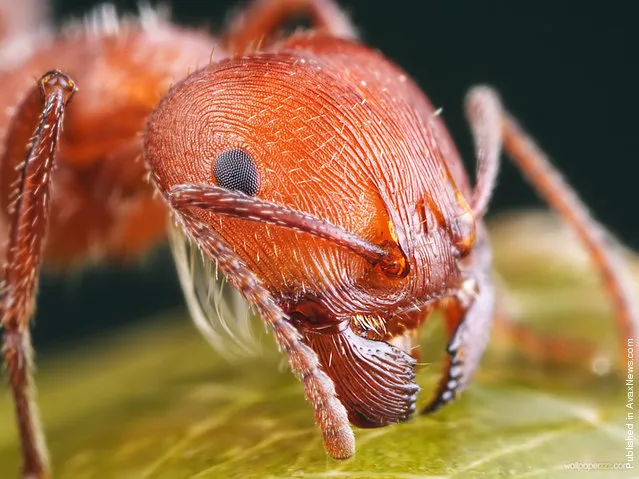
Once upon a time a myth was born that insects, unlike animals, are just a machines that not capable of learning and survive only based on their instincts. That myth has become the widespread opinion. Of course, this opinion is indeed erroneous, like many other widespread opinions. Let us try to find out which part is a myth and which part is true.