Loading...
Done
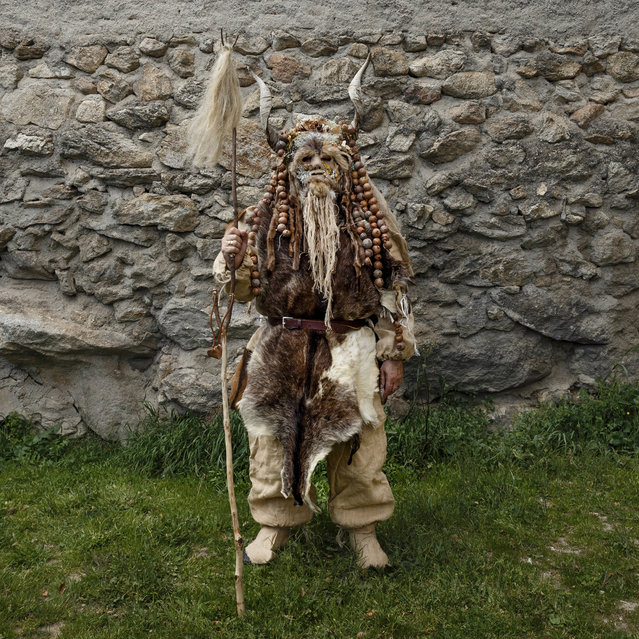
In this April 1, 2017 picture a man dressed as a “Harramacho” a traditional character from the Navalacruz carnival poses for a picture before a traditional Spanish mask gathering in the small village of Casavieja, Spain. (Photo by Daniel Ochoa de Olza/AP Photo)

In this April 1, 2017 picture a man dressed as a “Harramacho” a traditional character from the Navalacruz carnival poses for a picture before a traditional Spanish mask gathering in the small village of Casavieja, Spain. Every spring they come from towns across central and northwestern Spain, clad in elaborate costumes – some as trees, others as bears, still others as monsters who could have emerged from some sort of fever dream. (Photo by Daniel Ochoa de Olza/AP Photo)
Details
10 Apr 2017 08:50:00
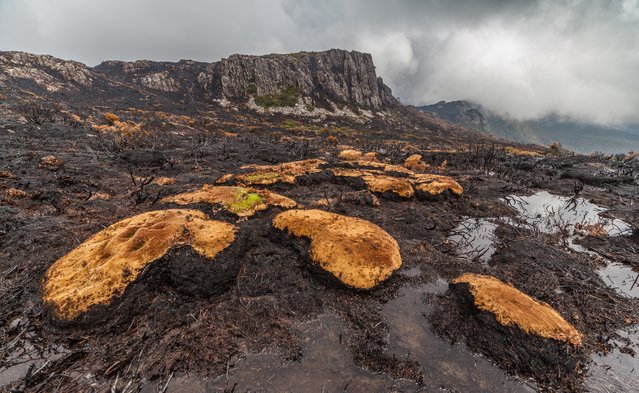
Pictures from Tasmania’s central plateau, shot by wilderness photographer Dan Broun, show the extraordinary damage wrought by more than a week of bushfires following lightning strikes in Australia’s southernmost state on January 13. 2016. The world heritage area was home to a range of unique alpine flora including pencil pines, king billy pines and cushion plants, some more than 1,000 years old. (Photo by Dan Broun)

Pictures from Tasmania’s central plateau, shot by wilderness photographer Dan Broun, show the extraordinary damage wrought by more than a week of bushfires following lightning strikes in Australia’s southernmost state on January 13. 2016. The world heritage area was home to a range of unique alpine flora including pencil pines, king billy pines and cushion plants, some more than 1,000 years old. Now more than 10,000ha of land has been incinerated, and ecologist say that, unlike eucalyptus trees, the ancient flora will not recover. (Photo by Dan Broun)
Details
02 Feb 2016 13:56:00
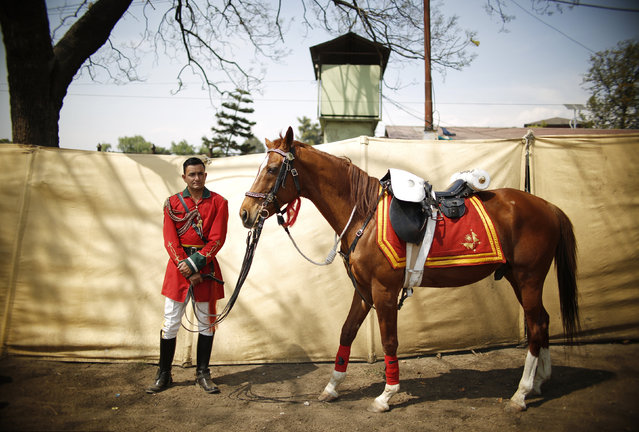
A Nepalese army solder stand next to a horse during the “Ghodejatra” Horse Race festival, which is organised by the Nepal Army, in Kathmandu, Nepal, April 7, 2016. Ghode Jatra, the horse racing festival of Nepal, celebrated on the New Moon day of mid March or early April is among the important celebrations of the Kathmandu Valley. exists a tree in the South-East part of the Tundikhel where Gurumapa supposed to be resides. (Photo by Navesh Chitrakar/Reuters)

A Nepalese army solder stand next to a horse during the “Ghodejatra” Horse Race festival, which is organised by the Nepal Army, in Kathmandu, Nepal, April 7, 2016. Ghode Jatra, the horse racing festival of Nepal, celebrated on the New Moon day of mid March or early April is among the important celebrations of the Kathmandu Valley. Grand horse parade including various acrobatic style of shows are performed by Nepal military at Tundikhel-a fenced parade ground located in the heart of Kathmandu city. (Photo by Navesh Chitrakar/Reuters)
Details
08 Apr 2016 14:33:00
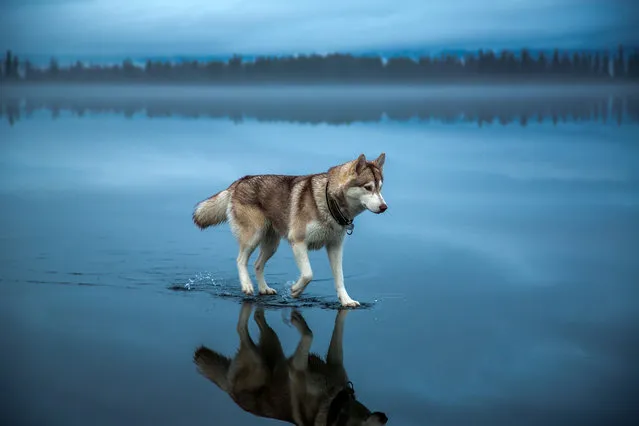
This graceful husky appears to be smarter than your average dog having apparently mastered the art of walking on water. The soft-footed canine was photographed while making its way across a lake in northern Russia. Photographer Fox Grom captured a remarkable set of images after heavy rain fell on a frozen lake to create the amazing illusion. Here: Husky dog Alaska walks on water in Northern Russia, January 2015. (Photo by Fox Grom/Visual Press Agency)

This graceful husky appears to be smarter than your average dog having apparently mastered the art of walking on water. The soft-footed canine was photographed while making its way across a lake in northern Russia. Photographer Fox Grom captured a remarkable set of images after heavy rain fell on a frozen lake to create the amazing illusion. The 40-year-old, who works as an all-terrain vehicle driver, regularly walks his pet dogs, Alaska and Blizzard, near the natural beauty spot. “I always take pictures of my dogs whilst walking them but on this occasion there was an extraordinary phenomenon“, he said. “The ice was already very thick when it rained heavily making for a spectacular scene”. Here: Husky dog Alaska walks on water in Northern Russia, January 2015. (Photo by Fox Grom/Visual Press Agency)
Details
20 Mar 2015 11:46:00
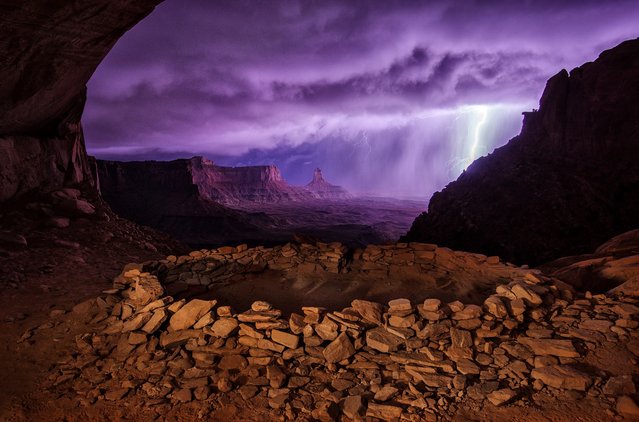
Second Place Winner: “Thunderstorm at False Kiva”. I hiked out to these ruins at night hoping to photograph them with the Milky Way, but instead a thunderstorm rolled through, creating this dramatic image. – Max Seigal. (Photo and caption by Max Seigal/National Geographic Traveler Photo Contest)

Second Place Winner: “Thunderstorm at False Kiva”. I hiked out to these ruins at night hoping to photograph them with the Milky Way, but instead a thunderstorm rolled through, creating this dramatic image. – Max Seigal. National Geographic Traveler Director of Photography Dan Westergren, one of this year's judges, shares his thoughts on the second place winner: “This photo combines two different scenes into one: the small kiva in a cliff dwelling and the grand vista of Canyonlands National Park across the valley. I really like the two different color palettes – warm inside and purple outside. This two-for-one scene was caused by the lightning storm outside the dwelling, which lit up the landscape like it was a huge electronic flash. Looking at this picture I can imagine what a wonderful sight it must have been for the ancient people who lived here. It doesn't seem too amazing now in our modern world, but might have been mind-blowing for the prehistoric residents”. Location: Utah. (Photo and caption by Max Seigal/National Geographic Traveler Photo Contest)
Details
02 Aug 2013 06:16:00
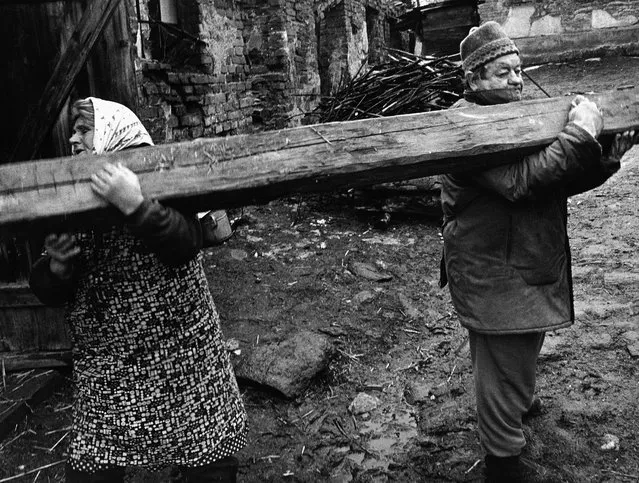
A love story with two log choppers. “In 1993, I was working on a project about life in the Olomouc region of Czechoslovakia. One day, I came to the village of Dlouhá Loučka-Křivá and went into a courtyard where I saw two old people, a husband and wife, sawing firewood for winter. They were working quietly, concentrating. I watched them fetch a beam from a wrecked barn, but they didn’t discuss how they planned to carry it to the saw. The woman faced one way, the man the other. When they realised, the woman eventually turned and followed her husband. The picture I took is the picture of many relationships – when each partner wants something different, but they have to come to an agreement, pull together eventually”. (Photo by Jindrich Streit)

A love story with two log choppers. “In 1993, I was working on a project about life in the Olomouc region of Czechoslovakia. One day, I came to the village of Dlouhá Loučka-Křivá and went into a courtyard where I saw two old people, a husband and wife, sawing firewood for winter. They were working quietly, concentrating. I watched them fetch a beam from a wrecked barn, but they didn’t discuss how they planned to carry it to the saw. The woman faced one way, the man the other. When they realised, the woman eventually turned and followed her husband. The picture I took is the picture of many relationships – when each partner wants something different, but they have to come to an agreement, pull together eventually”. (Photo by Jindrich Streit)
Details
04 Aug 2016 12:34:00
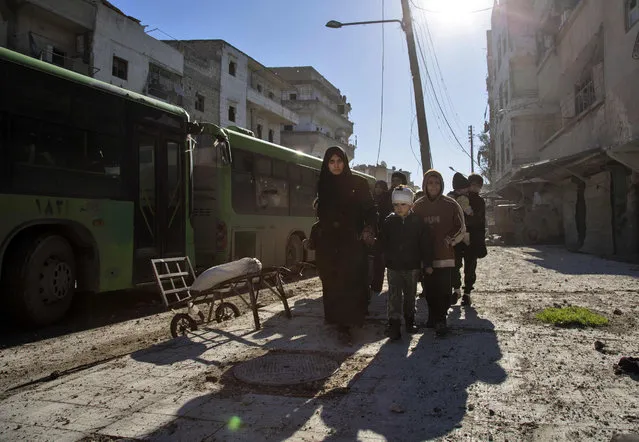
Syrians gather during an evacuation operation of rebel fighters and their families  from rebel-held neighbourhoods on December 15, 2016 in the embattled city of Aleppo. A convoy of ambulances and buses left rebel territory in Aleppo in the first evacuations under a deal for opposition fighters to leave the city after years of fighting. The rebel withdrawal will pave the way for President Bashar al-Assad's forces to reclaim complete control of Syria's second city, handing the regime its biggest victory in more than five years of civil war. (Photo by Karam Al-Masri/AFP Photo)

Syrians gather during an evacuation operation of rebel fighters and their families from rebel-held neighbourhoods on December 15, 2016 in the embattled city of Aleppo. A convoy of ambulances and buses left rebel territory in Aleppo in the first evacuations under a deal for opposition fighters to leave the city after years of fighting. The rebel withdrawal will pave the way for President Bashar al-Assad's forces to reclaim complete control of Syria's second city, handing the regime its biggest victory in more than five years of civil war. (Photo by Karam Al-Masri/AFP Photo)
Details
18 Dec 2016 08:18:00
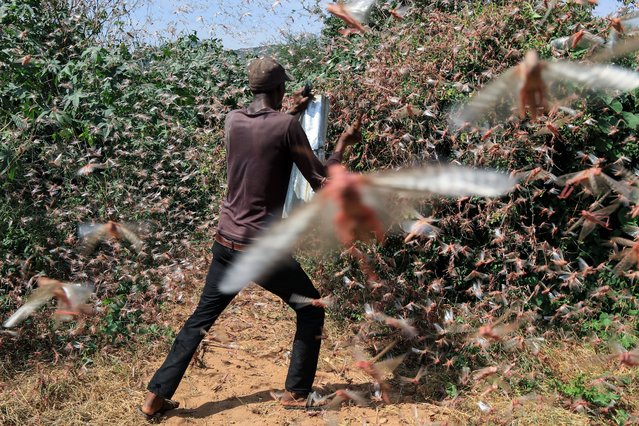
A man uses iron sheet to make noises, as a way of trying to disperse desert locusts that had invaded their farms during the second wave invasion in Kakongo village, in Nuu-Mwingi East, in Kitui, Kenya, 06 February 2021. The second wave invasion of the desert locusts in the country comes at a time where most famers are expecting to harvest their farm produce in the country. According to the United Nations Food and Agriculture Organization (FAO), on 04 February, warned numerous immature desert locust swarms persist in southern Ethiopia and Kenya. Some of the swarms are in community areas and therefore cannot be treated. In Kenya, immature swarms continue to spread westwards across northern and central counties where there are currently about 20 small swarms present, mostly about 50 hectares in size, it said. (Photo by Daniel Irungu/EPA/EFE)

A man uses iron sheet to make noises, as a way of trying to disperse desert locusts that had invaded their farms during the second wave invasion in Kakongo village, in Nuu-Mwingi East, in Kitui, Kenya, 06 February 2021. The second wave invasion of the desert locusts in the country comes at a time where most famers are expecting to harvest their farm produce in the country. (Photo by Daniel Irungu/EPA/EFE)
Details
25 Feb 2021 08:17:00