Loading...
Done
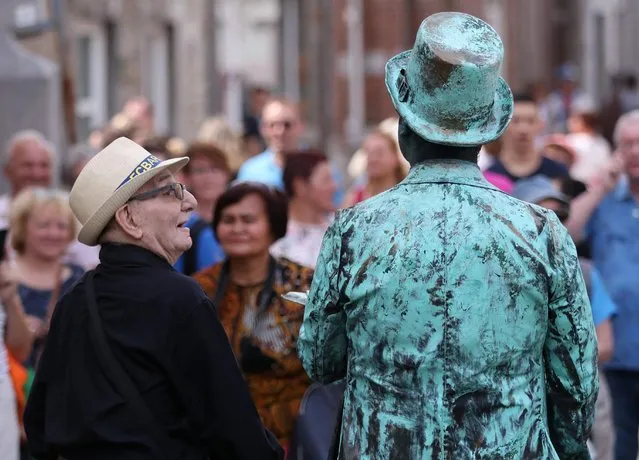
An artist takes part in the festival “Statues en Marche” in Marche-en-Famenne, Belgium, July 20, 2019. (Photo by Yves Herman/Reuters)

An artist takes part in the festival “Statues en Marche” in Marche-en-Famenne, Belgium, July 20, 2019. Living statues are a common sight in many city centers, but it is rare to see such a diverse range of this peculiar form of street art for which performers must keep still for painfully long periods of time to create the desired illusion. (Photo by Yves Herman/Reuters)
Details
24 Jul 2019 00:01:00
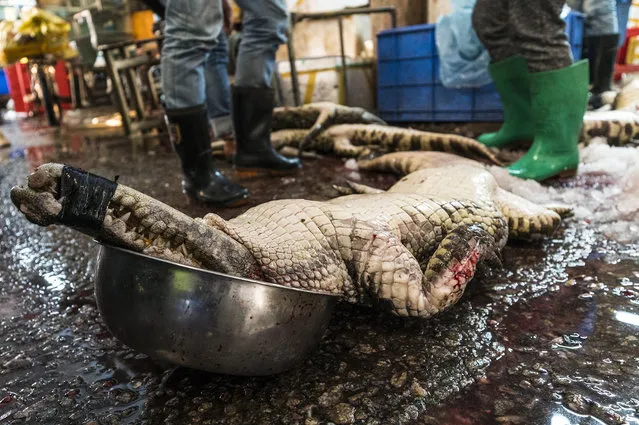
A dead crocodile is seen on Huangsha Seafood Market in Guangzhou, Guandong Province, China, 22 January 2018. Tsukiji Market of China or Huangsha Seafood Market is biggest one in Southern China and one of the biggest in China, as there are literally hundreds of different varieties of fish and seafood scattered throughout the market. Since the proximity of the fish market is so close to the Zhujiang River, it's quite easy for the large fishing vessels and fishermen to unload their fresh catch right at the market, which ensures that the fish and seafood remain fresh. Fish and other seafood are coming there from all around the globe. Seafood Market is full of different kinds of live fish, live shellfish, and live seafood on display in crystal clear tanks and it's common to see 5-star chefs, retailers and expats to source for fresh and high-quality seafood supplies for reasonable prices. While it is a wholesale fish market, since many Guangzhou restaurants and businesses come to purchase their seafood here, the public is welcome to come and even purchase. Many local Chinese have the vendors slice up fresh salmon fillets to take home or carry seafood into one of the nearby specialty restaurants, where they will cook if for them and serve it with vegetables and other side dishes of their choice. One of the biggest attractions for both, tourists and buyers, on market are crocodiles, which are brought there alive in wooden cases with taped jaws so they can?t accidentally bite. They are from crocodile farms from Guangdong, China and from Vietnam. Crocodile meat is popular in most Asian countries and it is consider as delicate one. Crocodiles weight from 10 to 25 kg and bigger ones are about 2 years old. They cost about 70 RMB (8.90 EURO) when bout as whole, or if you buy as parts most expensive and appreciated parts are paws 120 RMB (15.26 EURO) per kg, and tail 100 RMB (12.72 EURO) per kg. (Photo by Aleksandar Plavevski/EPA/EFE)

A dead crocodile is seen on Huangsha Seafood Market in Guangzhou, Guandong Province, China, 22 January 2018. Tsukiji Market of China or Huangsha Seafood Market is biggest one in Southern China and one of the biggest in China, as there are literally hundreds of different varieties of fish and seafood scattered throughout the market. (Photo by Aleksandar Plavevski/EPA/EFE)
Details
17 Apr 2020 00:05:00


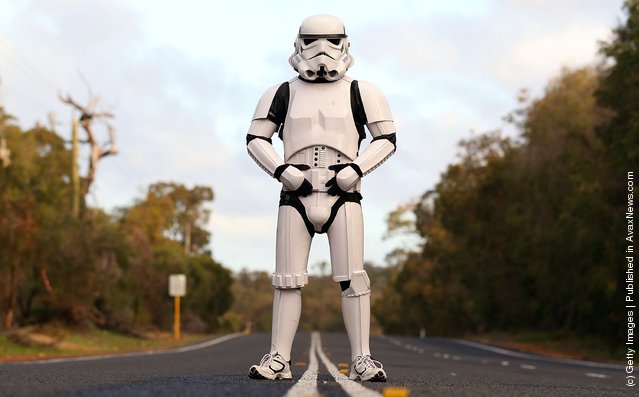
Stormtrooper Jacob French is pictured on day 5 of his over 4,000 kilometre journey from Perth to Sydney approximately 25 kilometres from Mandurah on July 15, 2011 in Perth, Australia. French aims to walk 35-40 kilometres a day, 5 days a week, in full Stormtrooper costume until he reaches Sydney. French is walking to raise money for the Starlight Foundation - an organisation that aims to brighten the lives of ill and hostpitalised children in Australia. (Photo by Paul Kane/Getty Images)
Details
16 Jul 2011 12:42:00


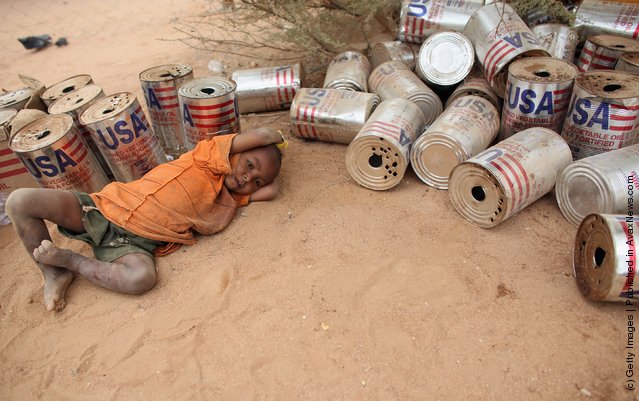
A young boy rests by empty USAID vegetable oil tins in the Dagahaley refugee camp which makes up part of the giant Dadaab refugee settlement on July 19, 2011 in Dadaab, Kenya. The refugee camp at Dadaab, located close to the Kenyan border with Somalia, was originally designed in the early 1990s to accommodate 90,000 people but the UN estimates over 4 times as many reside there. The ongoing civil war in Somalia and the worst drought to affect the Horn of Africa in six decades has resulted in an estimated 12 million people whose lives are threatened. (Photo by Oli Scarff/Getty Images)
Details
20 Jul 2011 12:08:00
Travel Images by Photographer Dougie Wallace

London-based, award winning, Scottish, documentary and street photographer Dougie Wallace, “Glasweegee” grew up in Glasgow. He has lived in east London for 15 years but spends a lot of time travelling abroad in search of subjects.

P.S. Unfortunately, the author doesn't make comments on the photos, therefore it's necessary to guess where there are events: in Thailand, India, Russia or France. On the other hand, photos are very fine in itself, therefore it's absolutely unimportant. Seriously – the magnificent photographer. Enjoy!
Details
19 May 2013 07:25:00
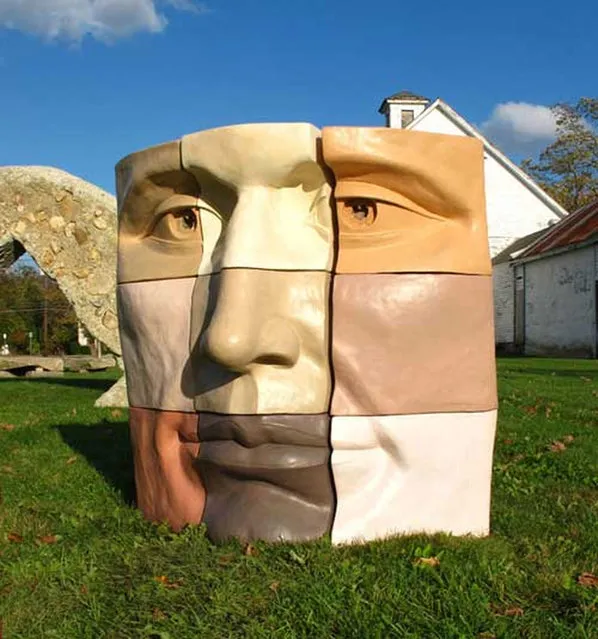
Surrealistic Sculptures By Michael Alfano

American sculptor Michael Alfano has been sculpting for over fifteen years. A native of New York, he now lives and works in Hopkinton, Massachusetts. His major influences are Salvador Dali, Jo Davidson, and Jean-Antoine Houdon, as well as Buddhist, Taoist, Sufi and other eastern philosophy and literature. He first studied at the Art Students League of New York, with an emphasis on life-size sculpture from the model. His formal education continued at Boston University and was augmented by internships with several prominent sculptors.
Details
21 Jul 2013 10:18:00
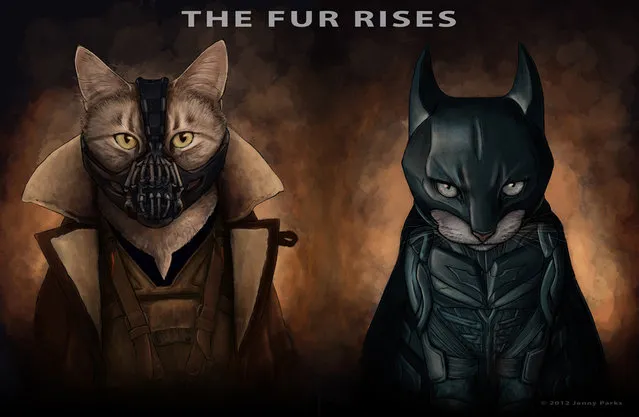
Super Cats By Jenny Parks

Jenny Parks is a scientific illustrator that also happens to be a shameless nerd, with a penchant for drawing animals, dinosaurs, imaginary creatures… and occasionally, people as cats. Somehow, she found herself with a bit of internet fame with the illustration ‘Doctor Mew’, and has been baffled ever since. With a BFA in illustration from the California College of the Arts, and a graduate degree in Science Illustration from UC Santa Cruz, she now resides in San Francisco as a freelance illustrator, fulfilling her destiny to make a living drawing cute, fuzzy things.
Details
25 Jul 2013 10:50:00
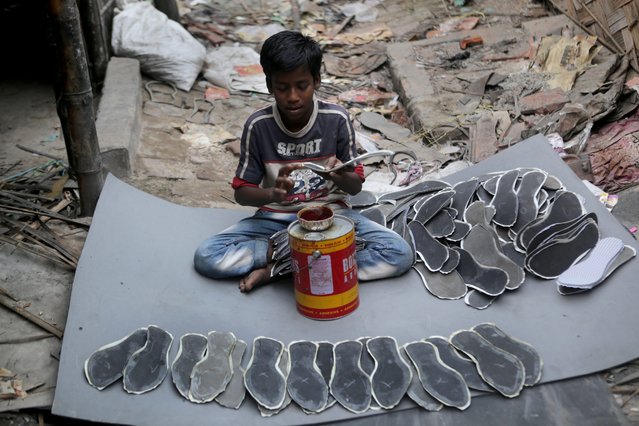
Indian boy Hassan Malik works in a leather shoe factory at Topsia in Calcutta, eastern India, 19 November 2013. (Photo by Piyal Adhikary/EPA)

Indian boy Hassan Malik works in a leather shoe factory at Topsia in Calcutta, eastern India, 19 November 2013. The leather industry occupies an important place in the Indian economy. It is an employment intensive sector with a vast potential for growth and exports but also a pollution intensive industry that relies on cheap labor. One of the major production centers for leather and leather products is located in Calcutta, West Bengal. Hundreds of tanneries are operated in the city’s Tiljala, Topsia and Tangra districts. They are mostly run by local families living and working under poor conditions. (Photo by Piyal Adhikary/EPA)
Details
20 Mar 2014 09:40:00