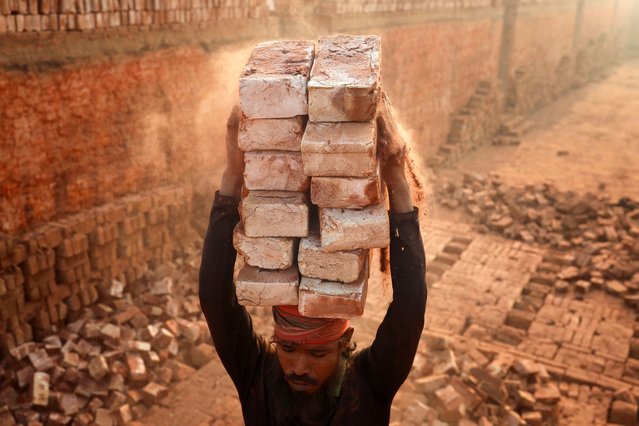
A man stacks more bricks on his head while working at in brickfields Narayanganj near Dhaka, Bangladesh on January 02, 2021. (Photo by Kazi Salahuddin Razu/NurPhoto via Getty Images)
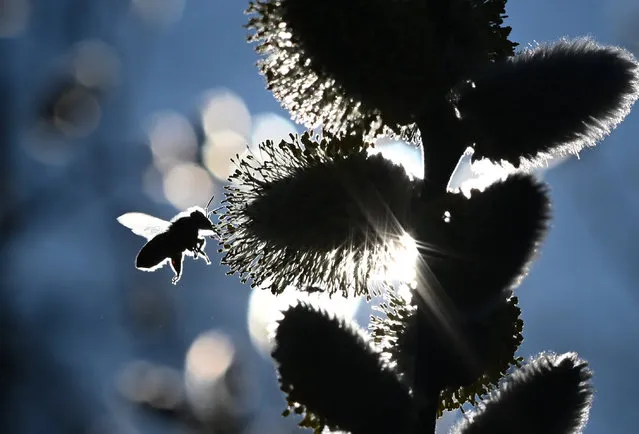
A bee approaching the flowers of a willow in Otzberg, Germany on February 28, 2021. Willow catkins are a protected species and one of the first sources of food for insects in early spring. (Photo by Arne Dedert/DPA)
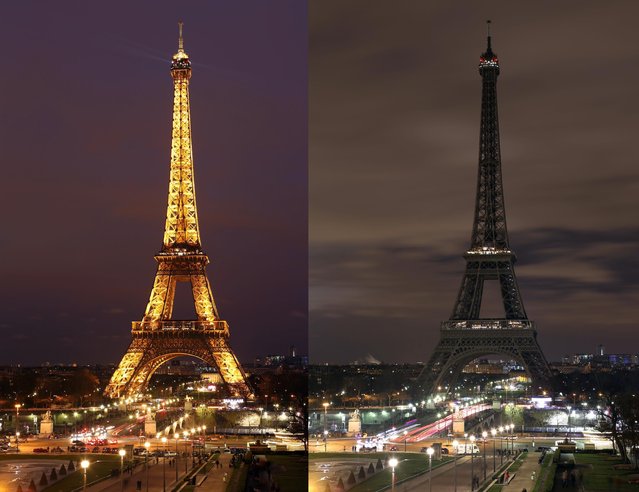
In this two photo combination picture, the Eiffel Tower with its usual lighting at left, and after the lighting was switched off at right, at the occasion of the Earth Hour, in Paris, France, Saturday March 28, 2015. This Saturday, 28 March 8:30 p.m. local time, individuals, businesses, cities and landmarks around the world are switching off their lights for one hour to focus attention on climate change. (Photo by Remy de la Mauviniere/AP Photo)
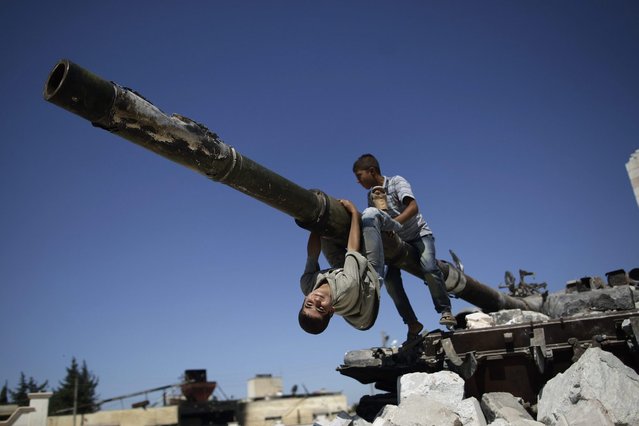
A boy looks back while he and another boy play on a Syrian military tank, destroyed during fighting with the Rebels, in the Syrian town of Azaz, on the outskirts of Aleppo, Sunday, September 2, 2012. (Photo by Muhammed Muheisen/AP Photo)
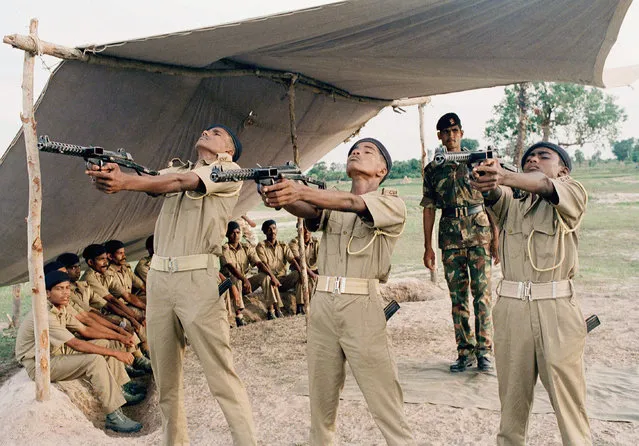
An Indian soldier from the international peace keeping force (IPKF) instructs young Sri Lankan recruits in shooting, part of the training given to the citizen's volunteer force in the North-Eastern Sri Lankan city of Batticaloa, September 28, 1989. (Photo by Barbara Walton/AP Photo)
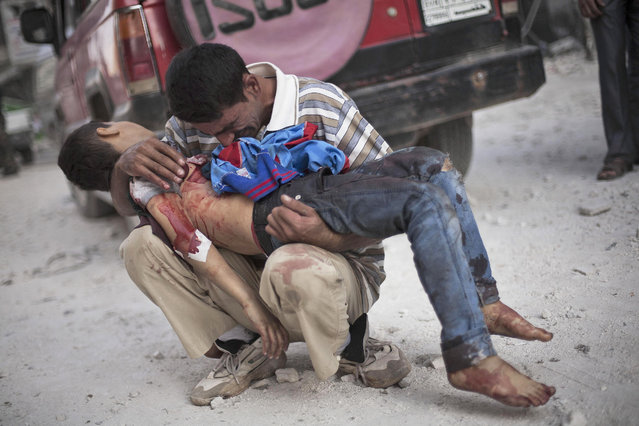
Manu Brabo was born in Spain in 1981. After studying Photography in The School of Arts and Crafts in Oviedo, he moved to Madrid where he started Journalism in Carlos III University while he was working as a photographer for several humble newspapers and agencies. In 2011, Manu was held captive and then released by by Libyan forces. Brabo, along with fellow AP photographers were awarded the 2013 Pulitzer Prize for Breaking News Photography. Here: a Syrian man cries while holding the body of his son, killed by the Syrian Army, near Dar El Shifa hospital in Aleppo, Syria, Wednesday, October 3, 2012. (Photo by Manu Brabo/AP Photo)
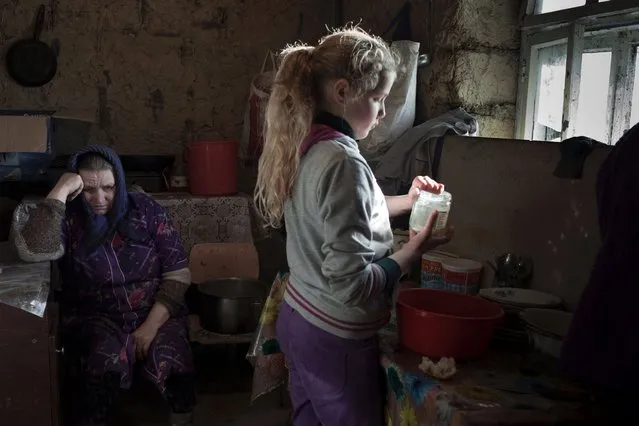
According to the U.S. government, Moldova, one of the poorest countries in Europe, depends on about $1.6 billion annually sent back from the roughly one million Moldovans who left for work in in Europe, Russia, and other former Soviet Bloc countries. Photographer Myriam Meloni went to Moldova to document what she refers to as “social orphans” – children whose parents have emigrated to another country in search of a job and a better future for their families. Here: Lulia is seen washing dishes in her grandmother's house, where she lives. (Photo by Myriam Meloni)