Loading...
Done
A boy bursts a soap-bubble at Gorky Park in Moscow on July 19, 2017. (Photo by Mladen Antonov/AFP Photo)

A boy bursts a soap-bubble at Gorky Park in Moscow on July 19, 2017. (Photo by Mladen Antonov/AFP Photo)
Details
13 Dec 2017 07:30:00
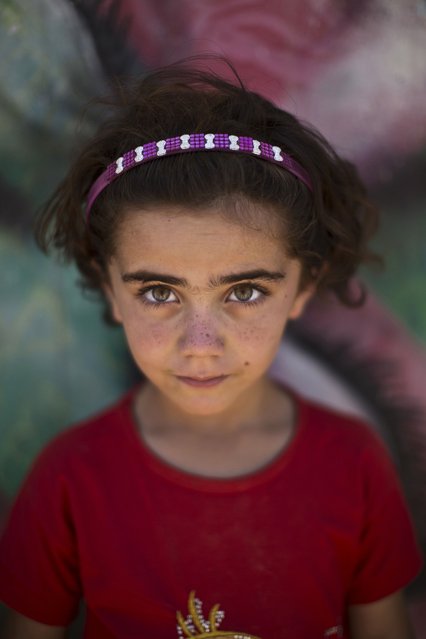
In this Tuesday, July 29, 2014, photo, Syrian refugee Samah, 5, poses for a picture at Zaatari refugee camp, near the Syrian border, in Mafraq, Jordan. More than 2.8 million Syrian children inside and outside the country – nearly half the school-aged population – cannot get an education because of the devastation from the civil war, according to the U.N. children's agency, UNICEF. (Photo by Muhammed Muheisen/AP Photo)

In this Tuesday, July 29, 2014, photo, Syrian refugee Samah, 5, poses for a picture at Zaatari refugee camp, near the Syrian border, in Mafraq, Jordan. More than 2.8 million Syrian children inside and outside the country – nearly half the school-aged population – cannot get an education because of the devastation from the civil war, according to the U.N. children's agency, UNICEF. That number is likely higher, as UNICEF can't count the children whose parents didn't register with the United Nations refugee agency. (Photo by Muhammed Muheisen/AP Photo)

Details
03 Aug 2014 07:46:00
Sunrise over St Mary's lighthouse north of Whitley Bay on the coast of north east England on Wednesday, May 19, 2021. (Photo by Owen Humphreys/PA Images via Getty Images)

Sunrise over St Mary's lighthouse north of Whitley Bay on the coast of north east England on Wednesday, May 19, 2021. (Photo by Owen Humphreys/PA Images via Getty Images)
Details
03 Jun 2021 10:31:00
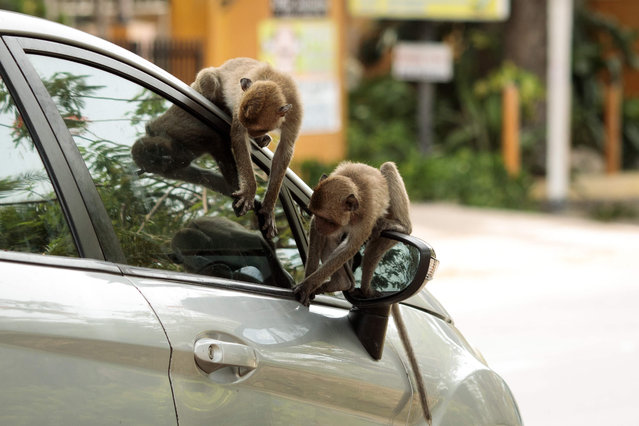
Macaque monkeys sit on a car in Hua Hin on May 29, 2020, as low tourist numbers due to the ongoing COVID-19 novel coronavirus situation have resulted in a decrease in the number of people feeding them. The monkeys in the town are going hungry as a consequence of the drop in tourism as a result of the COVID-19 coronavirus pandemic. (Photo by Jack Taylor/AFP Photo)

Macaque monkeys sit on a car in Hua Hin on May 29, 2020, as low tourist numbers due to the ongoing COVID-19 novel coronavirus situation have resulted in a decrease in the number of people feeding them. The monkeys in the town are going hungry as a consequence of the drop in tourism as a result of the COVID-19 coronavirus pandemic. (Photo by Jack Taylor/AFP Photo)
Details
22 Jun 2020 00:05:00
Giant bamboo cones, used to protect rice from overnight moisture during its drying process, in the Brahmanbaria district of Bangladesh in the second decade of April 2025. (Photo by Bipul Ahmed/Solent News & Photo Agency)

Giant bamboo cones, used to protect rice from overnight moisture during its drying process, in the Brahmanbaria district of Bangladesh in the second decade of April 2025. (Photo by Bipul Ahmed/Solent News & Photo Agency)
Details
09 Sep 2025 02:54:00
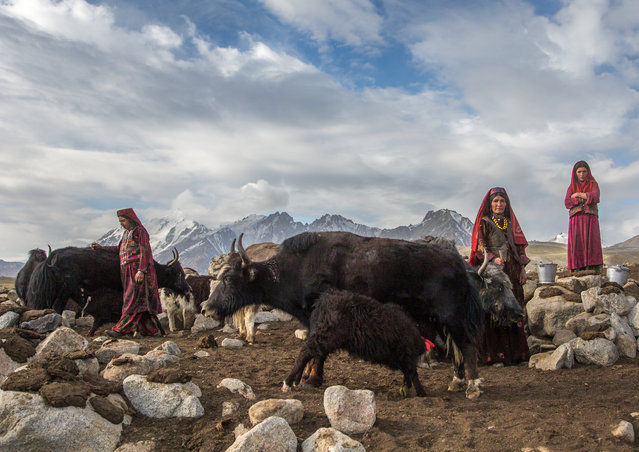
Wakhi nomad women milk yaks in Wakhan, Afghanistan. About 12,000 villagers live at an altitude of 4,500 metres in the harsh, desolate terrain. The Wakhi people live a simple, relaxed life with their livestock. (Photo by Eric Lafforgue/Barcroft Images)

Wakhi nomad women milk yaks in Wakhan, Afghanistan. About 12,000 villagers live at an altitude of 4,500 metres in the harsh, desolate terrain. The Wakhi people live a simple, relaxed life with their livestock. (Photo by Eric Lafforgue/Barcroft Images)
Details
12 Oct 2016 10:13:00
Muslims offer prayers during Jumat-ul-Vida or the last Friday of the holy fasting month of Ramadan in Allahabad, India, July 1, 2016. (Photo by Jitendra Prakash/Reuters)

Muslims offer prayers during Jumat-ul-Vida or the last Friday of the holy fasting month of Ramadan in Allahabad, India, July 1, 2016. Muslims throughout the world are marking the month of Ramadan, the holiest month on the Islamic calendar, by fasting from dawn till dusk. (Photo by Jitendra Prakash/Reuters)
Details
03 Jul 2016 10:29:00
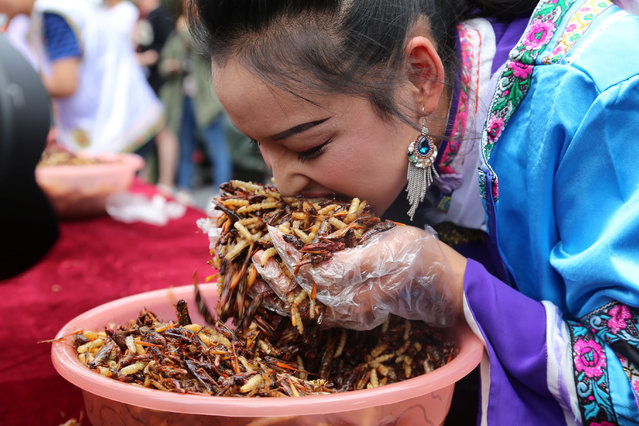
A woman participates in an insect-eating competition at a scenic spot in Lijiang, Yunnan province, China June 25, 2017. (Photo by Reuters/Stringer)

A woman participates in an insect-eating competition at a scenic spot in Lijiang, Yunnan province, China June 25, 2017. Insects have been a part of Yunnan cuisine for centuries, long before their potential as sustainable sources of protein caught the eye of the Western world. Bee larvae, grasshoppers and cicadas are just some items found on menus in the region. (Photo by Reuters/Stringer)
Details
13 Jul 2017 07:41:00