Soldiers march during a military parade commemorating the 37th anniversary of the founding of the Nicaragua's army, in Managua, Nicaragua September 3, 2016. (Photo by Oswaldo Rivas/Reuters)
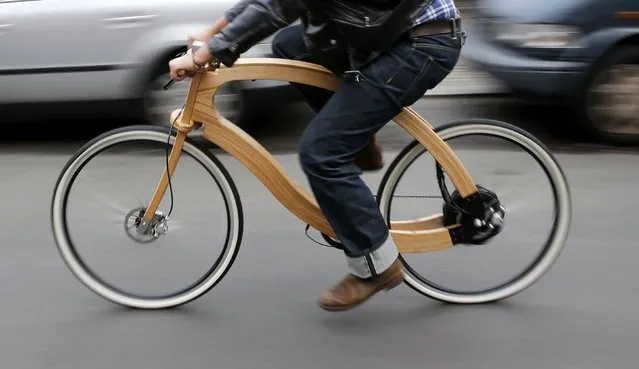
Matthias Broda, inventor and designer of the wooden e-bike, cycles a prototype along a street in Berlin, November 20, 2014. The wooden e-bike produced by German company Aceteam from ash wood, will be launched on the market by spring 2015 and will cost around 3,950 euro (4,950 dollars). The e-bike will be equipped with an 250W e-bike motor for a range of up to 100 kilometer (62 miles) with a rechargeable battery. (Photo by Fabrizio Bensch/Reuters)
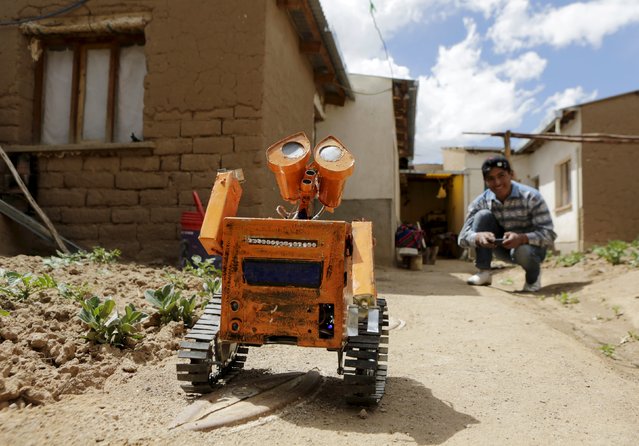
A replica of the Wall-E character is remotely controlled with a mobile phone by Bolivian student Esteban Quispe, 17, in Patacamaya, south of La Paz, December 10, 2015. Quispe built the Wall-E robot using materials he obtained from a rubbish dump in the town located in the Andean highland region. He hopes to mechanize agriculture in Patacamaya by making use of robots that operate on solar energy, Quispe told Reuters. (Photo by David Mercado/Reuters)
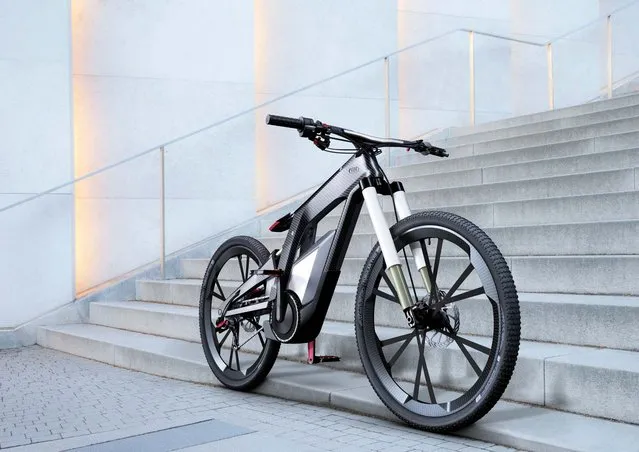
One of the highlights on the Audi stand is the bicycle technology concept known as the Audi e-bike Wörthersee – a sport bike that does not fit into any of the usual categories. It is neither a pedelec nor a conventional bike, but is best described as a high-end pedelec made by Audi for sport, fun and tricks. The Audi e-bike Wörthersee combines the Audi brand’s principal competences – design, ultra, connect and e-tron – and explores the limits of what is technically feasible in terms of design, lightweight construction, networking and electric mobility.
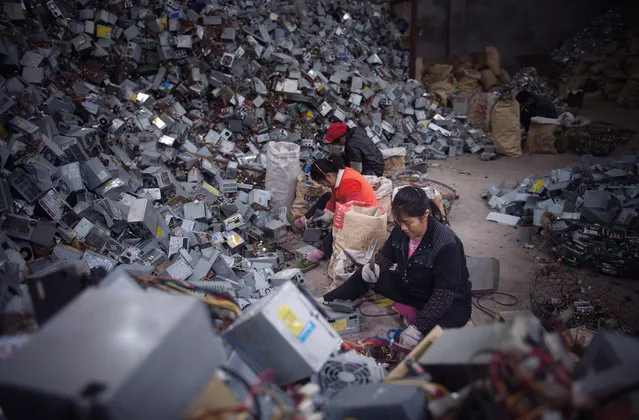
Sustainable development goal target 12.5 is to reduce waste. But with a planet increasingly dependent on technology, is that even possible? As of today, over 30m tonnes of electronic waste has been thrown out so far this year, according to the World Counts. Most e-waste is sent to landfills in Asia and Africa where it is recycled by hand, exposing the people who do it to environmental hazards. Kai Loeffelbein’s photographs of e-waste recycling in Guiyu, southern China show what happens to discarded computers. (Photo by Kai Loeffelbein/laif Agentur)
Architects Christophe Berdaguer and Marie Péjus get scary with this sculptural,bogey-inspired arts center in France. Situated behind the severe Synagogue de Delme, the center's design transforms an old house, which previously served as a prison, a school, and most recently a funeral home. The new intervention draws inspiration from the latter, cloaking the structure in a white veil of molded concrete that creates a "living body" which expands into the surrounding areas of the house.
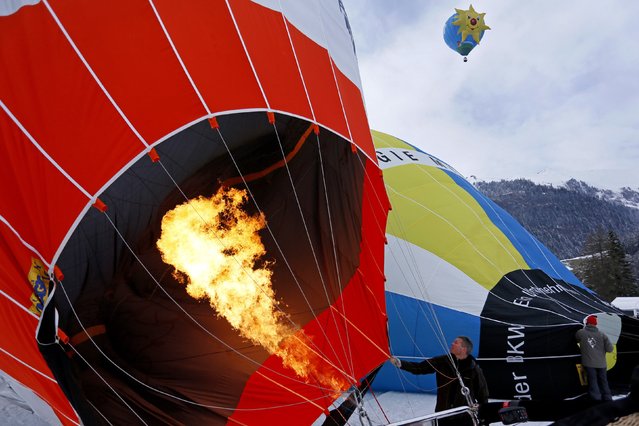
A pilot inflates his balloon before the 37th International Hot Air Balloon Week in Chateau-d'Oex, January 24, 2015. According to the organizers, over 80 balloons from 20 countries are participating in the ballooning event in the Swiss mountain resort. (Photo by Pierre Albouy/Reuters)
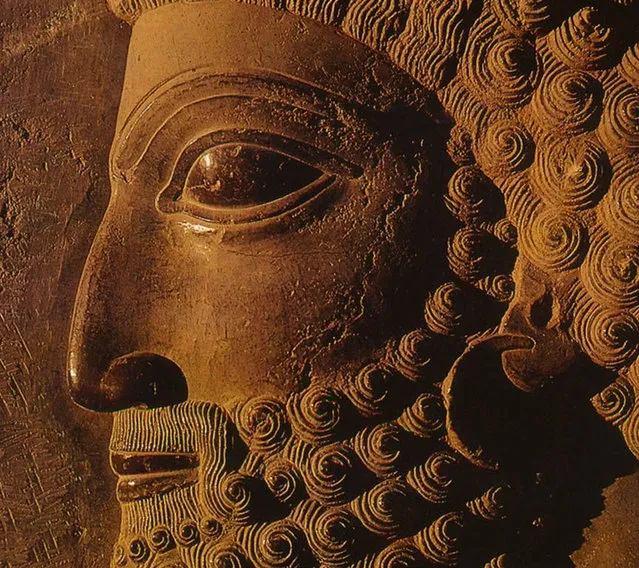
Few people haven’t heard about the ancient city of Persepolis, which lies at the foot of the Mountain of Mercy (Kuh-I-Rahmat). In ancient times, Persepolis was the capital of the Achaemenid Empire. Regretfully, it was burned by the Greeks in 330 BC after they looted the immense treasure of this city. It is said that Greeks needed 5,000 camels and 20,000 mules to carry all the treasures from Persepolis. The only thing of Persepolis that has survived the wear of time is the ginormous stone terrace 530 by 330 meters adorned by elaborate stone sculptures. It is amazing how intricately detailed some of the sculptures are, despite the fact that they were created many centuries ago.