Loading...
Done
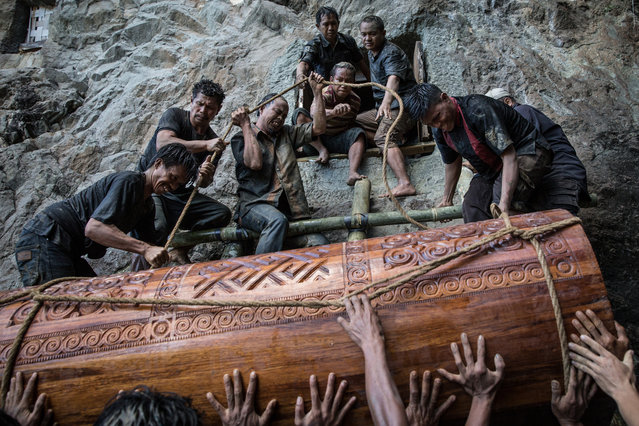
It is said that Torajans are people who “live to die”. For this Indonesian ethnic group, funerals are such extravagant events that they sometimes attract tourists. Families can postpone burials years (and the deceased are considered sick and hosted at home until the funeral) until the family can raise enough money and gather as many relatives as possible. And then it’s a jubilant multiday social event with a parade, dances and animal sacrifices. Agung Parameswara photographed these funerary practices when he traveled to South Sulawesi province, where the Torajans live. But often, their funeral isn’t the last time the dead are seen. In August, crypts are opened, coffins are slid back out and bodies delicately unsheathed. This tender ritual is known as Ma’Nene, which is customarily performed every few years. (Photo by Agung Parameswara/The Washington Post)

It is said that Torajans are people who “live to die”. For this Indonesian ethnic group, funerals are such extravagant events that they sometimes attract tourists. Families can postpone burials years (and the deceased are considered sick and hosted at home until the funeral) until the family can raise enough money and gather as many relatives as possible. And then it’s a jubilant multiday social event with a parade, dances and animal sacrifices. Agung Parameswara photographed these funerary practices when he traveled to South Sulawesi province, where the Torajans live. (Photo by Agung Parameswara/The Washington Post)
Details
06 Oct 2016 09:15:00
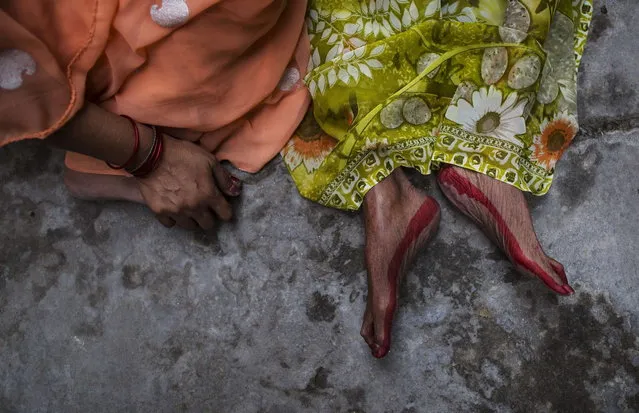
A relative (L) of Champa Devi, 88, sits next to her body, minutes after her death at Mukti Bhavan (Salvation House) at Varanasi, in the northern Indian state of Uttar Pradesh, June 21, 2014. (Photo by Danish Siddiqui/Reuters)

A relative (L) of Champa Devi, 88, sits next to her body, minutes after her death at Mukti Bhavan (Salvation House) at Varanasi, in the northern Indian state of Uttar Pradesh, June 21, 2014. The city of Varanasi, on the banks of the River Ganges, is widely considered Hinduism's holiest city and many Hindus believe that dying there and having their remains scattered in the Ganges allows their soul to escape a cycle of death and rebirth, attaining “moksha” or salvation. “Mukti Bhavan” or “Salvation House”, is a charity-run hostel that caters for people who wish to come to Varanasi to die. Guests can normally stay up to two weeks after which, if they haven't yet passed away, they are gently asked to leave. (Photo by Danish Siddiqui/Reuters)
Details
24 Jul 2014 12:32:00
Patsy Gibbons takes his two rescue foxes, Grainne and Minnie (unseen), for a walk in Kilkenny, Ireland April 25, 2016. (Photo by Clodagh Kilcoyne/Reuters)

Patsy Gibbons takes his two rescue foxes, Grainne and Minnie (unseen), for a walk in Kilkenny, Ireland April 25, 2016. Gibbons nursed the foxes back to health after they were found abandoned as injured cubs, and they have stayed with him since. (Photo by Clodagh Kilcoyne/Reuters)
Details
26 Apr 2016 12:18:00
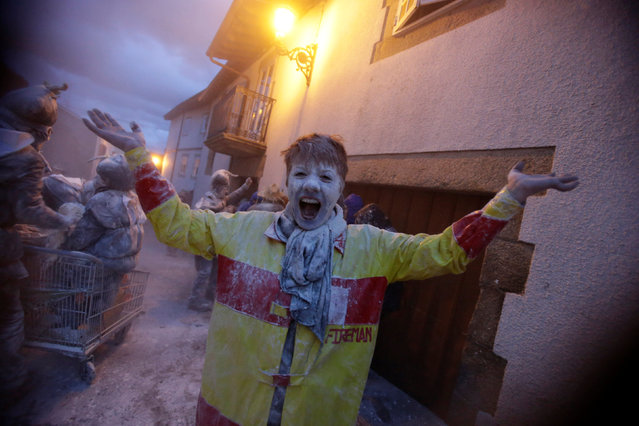
A reveller participates in a flour fight during the “O Entroido” festival in Laza village, Spain February 27, 2017. (Photo by Miguel Vidal/Reuters)

A reveller participates in a flour fight during the “O Entroido” festival in Laza village, Spain February 27, 2017. (Photo by Miguel Vidal/Reuters)
Details
01 Mar 2017 00:02:00
Kelley McMann, Gator Rebel, 2002. (Photo by Malcolm Lightner)

The Mile O' Mud is a 7/8-mile oval track with a 1/8-mile diagonal lane slashed through the center. The racing lanes are approximately 60 feet wide. On average, the muddy water is four to six feet deep, with three strategically placed holes. The largest hole, located in front of the grandstand, is the treacherous “Sippy Hole”, named for the legendary driver “Mississippi” Milton Morris, Swamp Buggy King 1955, who repeatedly got stuck in it. (Photo by Malcolm Lightner)
Details
19 May 2016 11:20:00
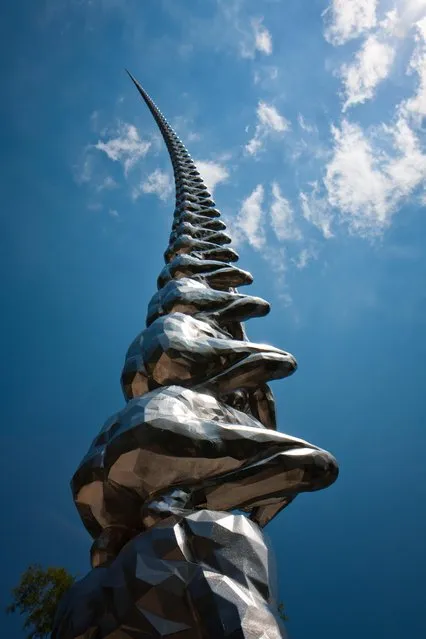
“Karma” by Do-Ho Suh. Sydney and Walda Besthoff Sculpture Garden, New Orleans Museum of Art, New Orleans, LA. (Photo by Alan Teo)

“Do-Ho Suh addresses issues of identity, memory, and relationships. Son of the famous Korean ink-painter Suh Se-Ok, Do-Ho Suh is a leading figure in the transnational avant-garde generation of Korean artists who came of age in the late 1990s, and his work eloquently represents a dual consciousness between East and West”.

Photo: “Karma” by Do-Ho Suh. Sydney and Walda Besthoff Sculpture Garden, New Orleans Museum of Art, New Orleans, LA. (Photo by Alan Teo)


Details
05 Mar 2013 09:37:00
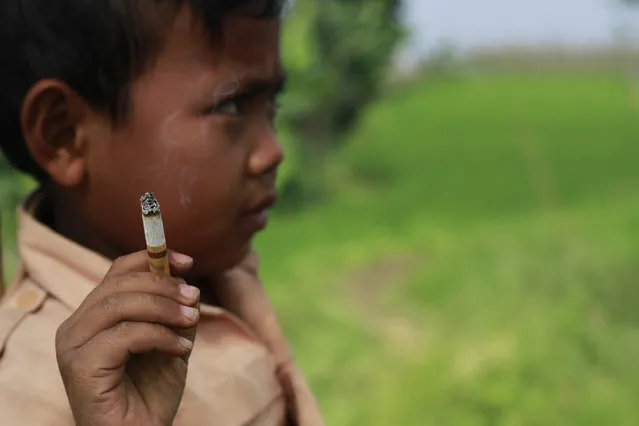
Seven-year-old Dihan Awallidan from Garut, West Java, is not like other boys his age. While most children crave chocolate and candy, Dihan is addicted to cigarettes. The second-grader picked up the habit at the age of 3 and now smokes up to three packs a day, using the pocket money he gets from his enabling parents to feed his addiction. (Photo by Rezza Estily/JG Photo)

Seven-year-old Dihan Awallidan from Garut, West Java, is not like other boys his age. While most children crave chocolate and candy, Dihan is addicted to cigarettes. The second-grader picked up the habit at the age of 3 and now smokes up to three packs a day, using the pocket money he gets from his enabling parents to feed his addiction. (Photo by Rezza Estily/JG Photo)
Details
19 Mar 2015 14:08:00
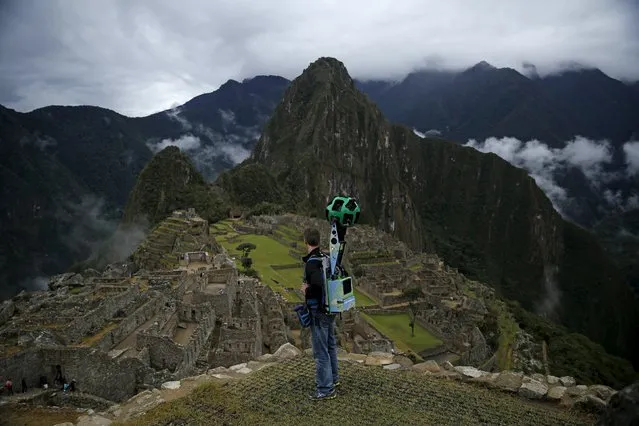
Daniel Filip, Tech Lead Manager for Google Maps, carries the Trekker, a 15-camera device, while mapping the Inca citadel of Machu Picchu for Google Street View in Cuzco, Peru, August 11, 2015. (Photo by Pilar Olivares/Reuters)

Daniel Filip, Tech Lead Manager for Google Maps, carries the Trekker, a 15-camera device, while mapping the Inca citadel of Machu Picchu for Google Street View in Cuzco, Peru, August 11, 2015. (Photo by Pilar Olivares/Reuters)
Details
07 Dec 2015 08:02:00