Ice covers oranges on a tree creating a protective shell in a commercial grove January 11, 2010 near Winter Garden, Florida. (Photo by Matt Stroshane/Getty Images)
A freighter trapped in ice is shown in this aerial photo near Whitefish Bay on Lake Superior northwest of Sault Ste. Marie, Ontario April 7, 2015. The biggest ice cover on the Great Lakes in decades is backing up shipments of everything from Canadian grain to U.S. iron and steel in one of North America's most important economic regions. (Photo by Kenneth Armstrong/Reuters)
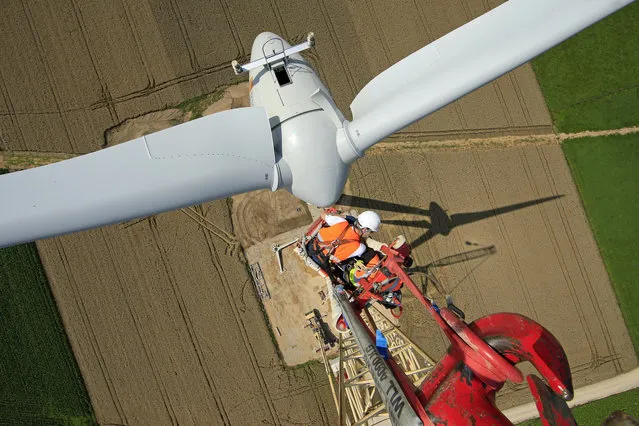
Employees work on a crane above an E-70 wind turbine manufactured by German company Enercon for La Compagnie du Vent during its installation at a wind farm in Meneslies, Picardie region, France July 31, 2014. (Photo by Benoit Tessier/Reuters)
A Kenyan Red Cross personnel and a volunteer console a relative of a victim, at the site of a building collapse in Nairobi, Kenya, Saturday, April 30, 2016. A six-story residential building in a low income area of the Kenyan capital collapsed Friday night under heavy rain and flooding, killing at least seven people and injuring over 100 others, Kenyan officials said. (Photo by Sayyid Abdul Azim/AP Photo)
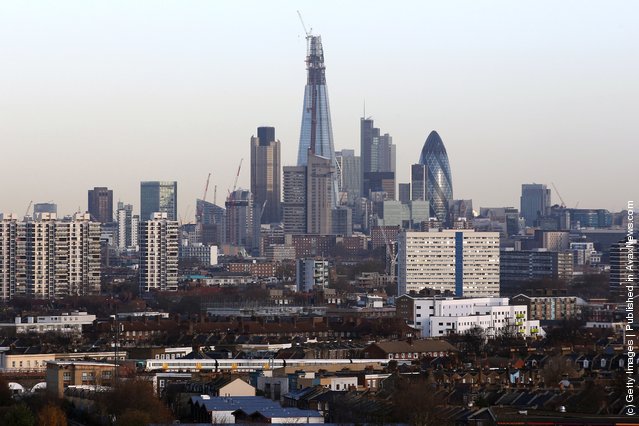
The under-construction Shard building on December 5, 2011 in London, England. The 80 storey skyscraper will be Europe's tallest mixed-use building when it is completed in May 2012; it will contain offices, restaurants, residential apartments as well as a five star hotel. (Photo by Dan Kitwood/Getty Images)
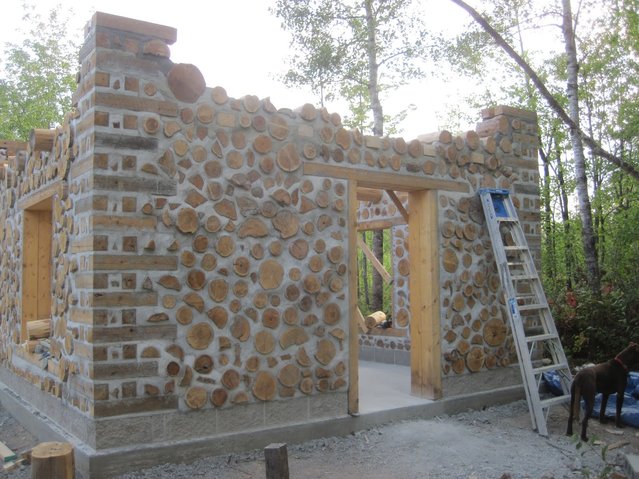
Cordwood construction is a method of natural building that originated roughly one thousand years ago in Greece and Siberia. This method involves using pieces of wood that slightly protrude from the mortar, giving the walls an attractive appearance. Usually, the walls are made 12 to 24 inches thick. However, in some parts of Canada, the walls can be as thick as 36 inches. This method appeals to many people due to its ease of construction economy of resources. Cordwood Construction can be separated into two main types: mortar-insulation-mortar (M-I-M) and Throughwall. M-I-M is a more preferable and widely used choice as it allows for better insulating properties.
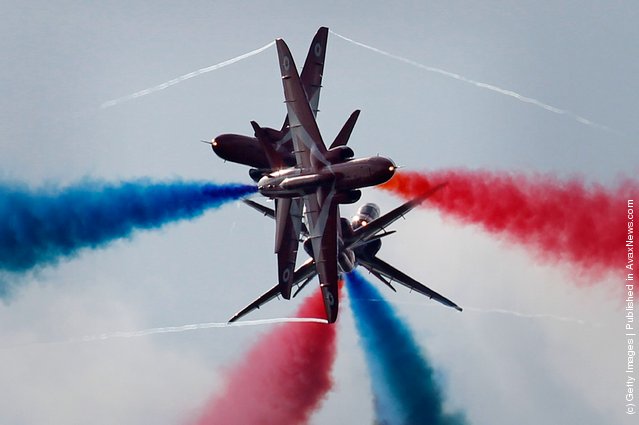
The Royal Air Force Red Arrows perform the “Gypo Split” during their first public aerobatic display since the tragic death of Flt Lt Jon Egging on September 2, 2011 in Chatsworth, England. (Photo by Christopher Furlong/Getty Images)
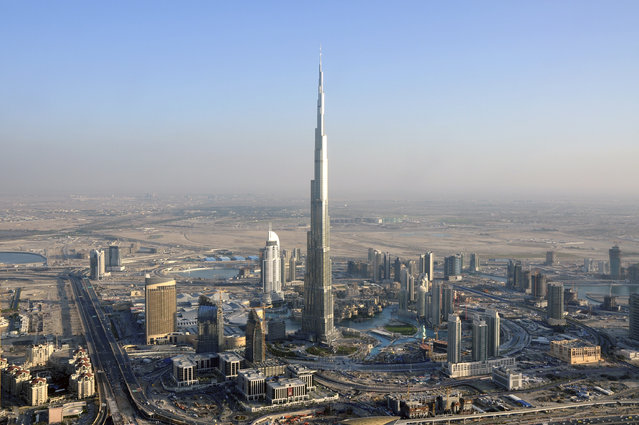
1: Dubai's Burj Khalifa is the tallest building in the world, but perhaps not for long. Saudi Arabia has announced plans to build a 1 kilometer (3,280 foot) tower into the sky, to be named the Jeddah Tower, scheduled for completion in 2020. The Burj Khallifa currently stands at 2,716 ft. (Photo by Matthias Seifert/Reuters)