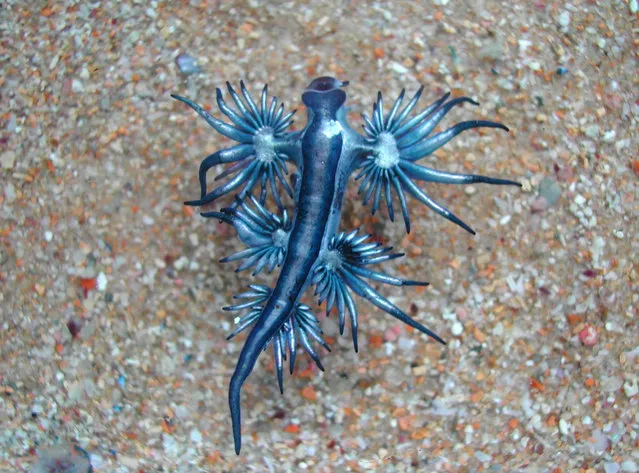
Glaucus atlanticus (common names sea swallow, blue glaucus, blue sea slug and blue ocean slug) is a species of small-sized blue sea slug, a pelagic aeolid nudibranch, a marine gastropod mollusk in the family Glaucidae. This is the only species in the genus Glaucus, but is closely related to Glaucilla marginata, which sometimes is included in Glaucus.
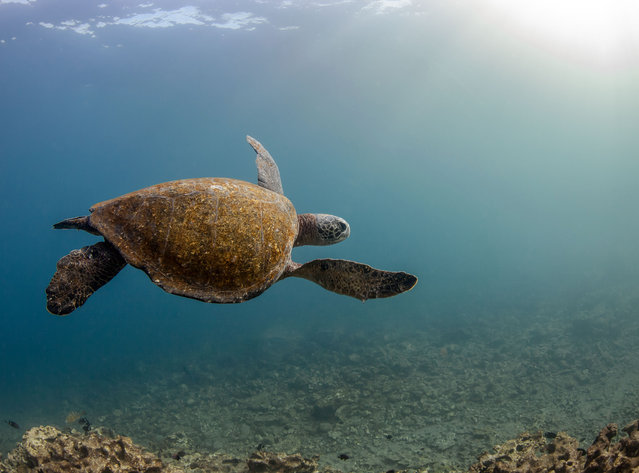
Teeming with images of spectacular underwater scenes from around the world, Call of the Blue is the culmination of a five-year project by the photographer and ocean conservationist Philip Hamilton. This groundbreaking book includes contributions from acclaimed scientists and ocean “guardians”, who reveal what drove them to answer the call of the blue. (Photo by Philip Hamilton/The Guardian)
A woman dressed for la “La Diablada” festival, walks down a road in Pillaro, Ecuador, Friday, January 6, 2017. Local legend holds that anyone who adopts a costume for the celebration and wears it at the event six years in a row will have good luck. (Photo by Dolores Ochoa/AP Photo)
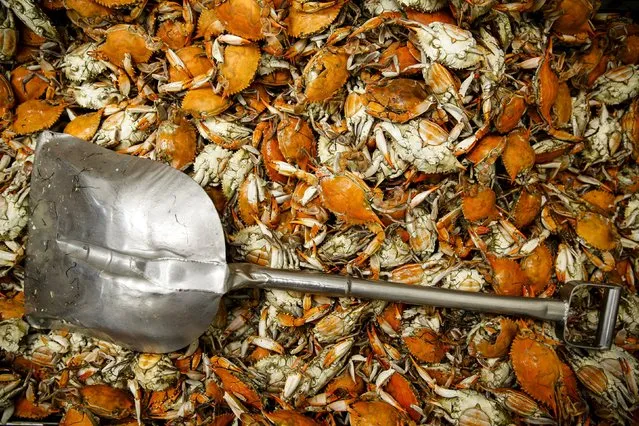
A large stainless steel shovel lies on top of steamed crabs at the A.E. Phillips & Son Inc. crab picking house on Hooper's Island in Fishing Creek, Maryland August 26, 2015. Workers speed through the lump and back fin meat inside the crabs while leaving the more tedious task of picking the claws to others. (Photo by Jonathan Ernst/Reuters)
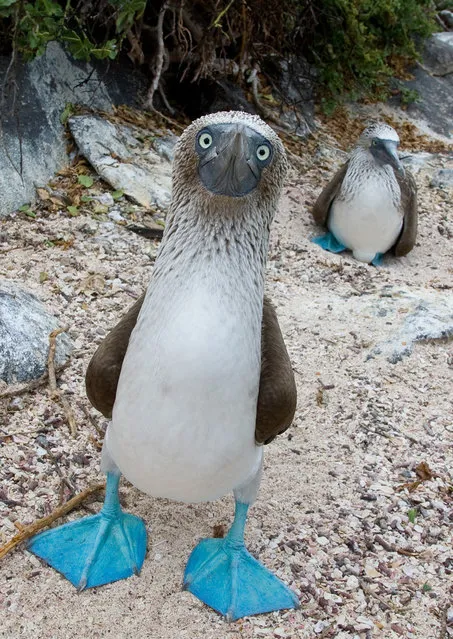
The blue-footed booby (Sula nebouxii) is a marine bird in the family Sulidae, which includes ten species of long-winged seabirds. Blue-footed boobies belong to the genus Sula, which comprises six species of boobies. It is easily recognizable by its distinctive bright blue feet, which is a sexually selected trait. Males display their feet in an elaborate mating ritual by lifting their feet up and down while strutting before the female.