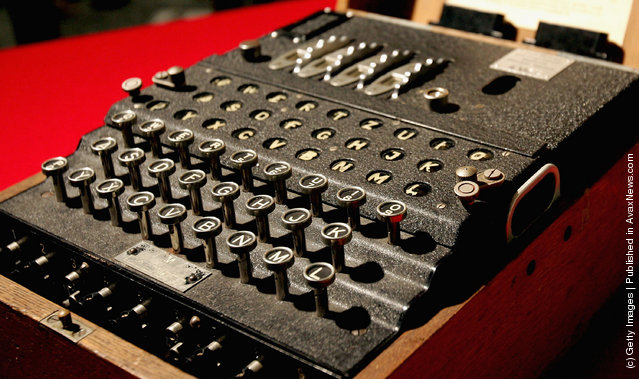
The Enigma coding machine used by the Germans in WWII on display at Bletchley Park National Code Centre, November 25, 2004 in Bletchley, England. (Photo by Ian Waldie/Getty Images)
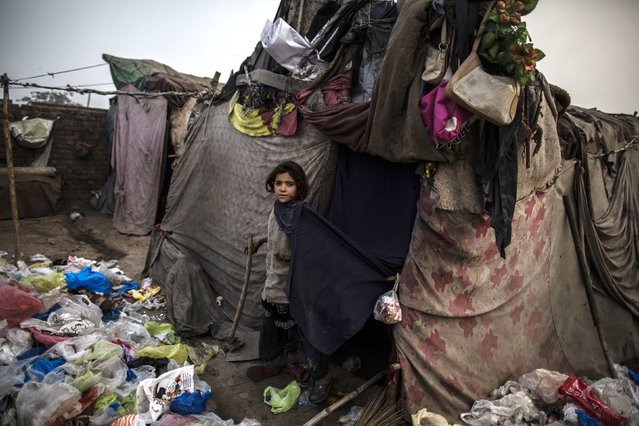
An Afghan refugee girl stands near her parents' makeshift shelter in a slum on the outskirts of Lahore January 12, 2015. (Photo by Zohra Bensemra/Reuters)
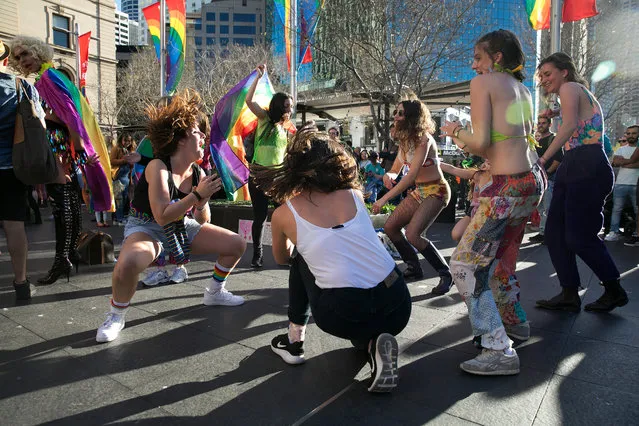
Thousands gather to rally for marriage equality ahead of a national postal survey on September 10, 2017 in Sydney, Australia. The High Court handed down its decision on Thursday to allow the government's proposed postal ballot survey to go ahead. Ballots with the question “Should the law be changed to allow same-sеx couples to marry?” will be sent to households across Australia on September 12. (Photo by Jonny Weeks/The Guardian)
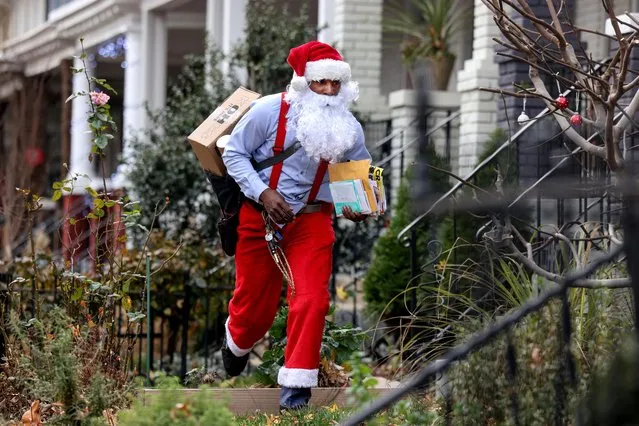
Postal worker Eddie Smith, dressed as Santa Claus, waves to a neighbor on his mail route in Washington, U.S., December 21, 2021. (Photo by Evelyn Hockstein/Reuters)
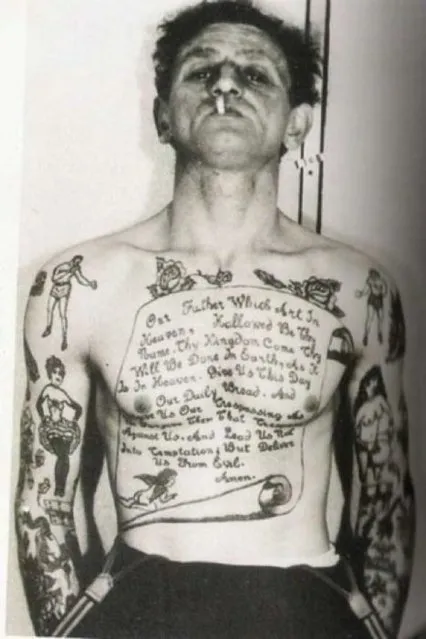
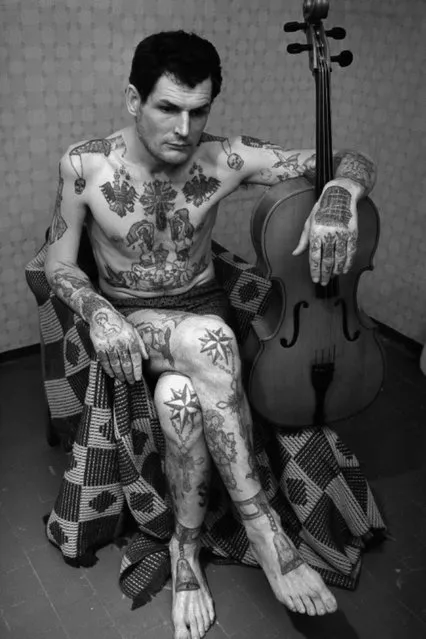
Tattoos are commonly used among criminals to show gang membership and record the wearer's personal history—such as his or her skills, specialties, accomplishments and convictions. They are also used as a means of personal expression. Certain designs have developed recognized coded meanings. The code systems can be quite complex and because of the nature of what they encode, the tattoo designs are not widely recognized.
Tattoos are commonly used among criminals to show gang membership and record the wearer's personal history—such as his or her skills, specialties, accomplishments and convictions. They are also used as a means of personal expression. Certain designs have developed recognized coded meanings. The code systems can be quite complex and because of the nature of what they encode, the tattoo designs are not widely recognized.
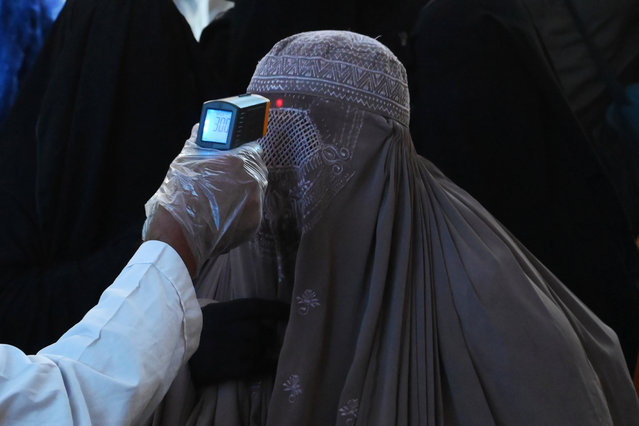
A health official checks the body temperature of a burqa-clad woman passenger amid concerns over the spread of the COVID-19 novel coronavirus at the Lahore Railway station in Lahore on March 19, 2020. (Photo by Arif Ali/AFP Photo)
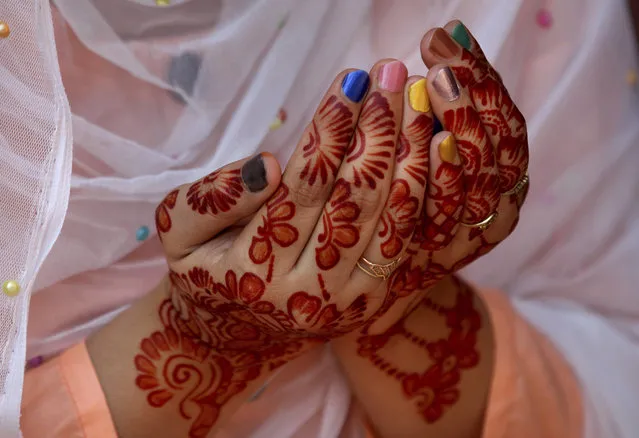
A woman, her hands decorated with traditional henna, prays during Eid al-Fitr prayer at historical Badshahi mosque in Lahore, Pakistan, Sunday, May 24, 2020. (Photo by K.M. Chaudary/AP Photo)