Loading...
Done
Chinese artist Zhou Jie takes a nap on an unfinished iron wire bed, one of her sculpture works, after lunch as a friend of hers looks on at Beijing Now Art Gallery, in Beijing August 11, 2014. (Photo by Jason Lee/Reuters)

Chinese artist Zhou Jie takes a nap on an unfinished iron wire bed, one of her sculpture works, after lunch as a friend of hers looks on at Beijing Now Art Gallery, in Beijing August 11, 2014. Zhou started her art project titled “36 Days” on August 9, in which she would live inside an exhibition hall with an unfinished iron wire bed, some iron wire sculptures in the shape of stuffed animal dolls, a certain amount of food and her mobile phone, for 36 days. The entire process is open to visitors and she may also interact with them, according to Zhou. (Photo by Jason Lee/Reuters)
Details
16 Aug 2014 10:37:00
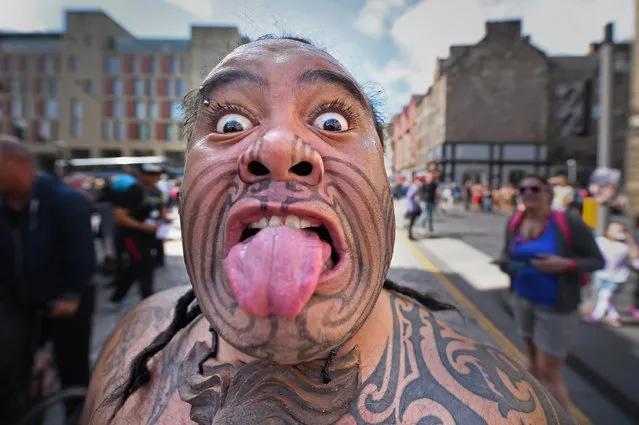
Te Matatini Kapa Haka Aotearoa perform the Haka at the Edinburgh Festival Fringe on the Royal Mile on August 14, 2014 in Edinburgh, Scotland. The largest performing arts festival in the world, this years festival hosts more than 3,000 shows in nearly 300 venues across the city. (Photo by Jeff J. Mitchell/Getty Images)

Te Matatini Kapa Haka Aotearoa perform the Haka at the Edinburgh Festival Fringe on the Royal Mile on August 14, 2014 in Edinburgh, Scotland. The largest performing arts festival in the world, this years festival hosts more than 3,000 shows in nearly 300 venues across the city. (Photo by Jeff J. Mitchell/Getty Images)
Details
16 Aug 2014 10:53:00
Beryl Lipton, left, douses Matt Lee during the ice bucket challenge at Boston's Copley Square, Thursday, August 7, 2014 to raise funds and awareness for ALS. The idea is: pay up for charity or get doused. The fund-raising phenomenon is catching on fast, propelled by popular videos of the dunkers and the dunked – including famous athletes and entertainers – posted on social media sites. (Photo by Elise Amendola/AP Photo)

Beryl Lipton, left, douses Matt Lee during the ice bucket challenge at Boston's Copley Square, Thursday, August 7, 2014 to raise funds and awareness for ALS. The idea is: pay up for charity or get doused. The fund-raising phenomenon is catching on fast, propelled by popular videos of the dunkers and the dunked – including famous athletes and entertainers – posted on social media sites. And the challenges are raising tens of thousands of dollars and immeasurable awareness for causes from ALS to breast cancer to a camp for kids who've lost a father to war. (Photo by Elise Amendola/AP Photo)
Details
16 Aug 2014 11:08:00
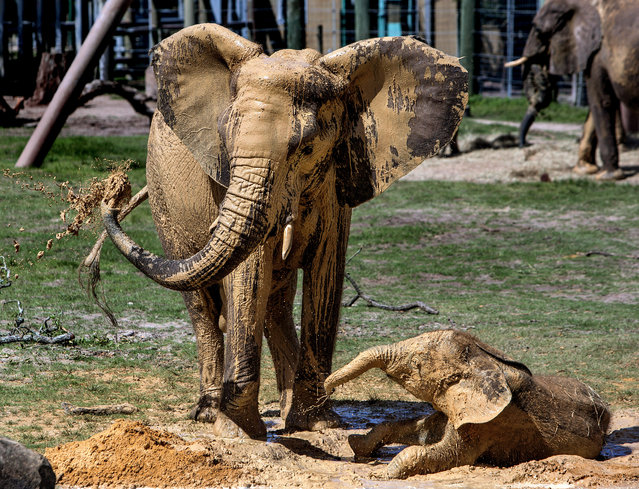
Lowry Park Zoo elephants Matjeka, 23, and her 1-year-old daughter, Mavi, apply a liberal coating of “sunscreen”  to themselves in a clay mud wallow at the park Tuesday, August 12, 2014, in Tampa, Fla., on the park's first observation of World Elephant Day to raise awareness of the wild African elephant crisis. (Photo by Cherie Diez/AP Photo/The Tampa Bay Times)

Lowry Park Zoo elephants Matjeka, 23, and her 1-year-old daughter, Mavi, apply a liberal coating of “sunscreen” to themselves in a clay mud wallow at the park Tuesday, August 12, 2014, in Tampa, Fla., on the park's first observation of World Elephant Day to raise awareness of the wild African elephant crisis. “Elephants are prone to being sunburned”, said associate curator Chris Massaro. “What they need is lot of mud or clay to roll around in and cover up their skin so it will protect it from the sun”. (Photo by Cherie Diez/AP Photo/The Tampa Bay Times)
Details
16 Aug 2014 11:38:00
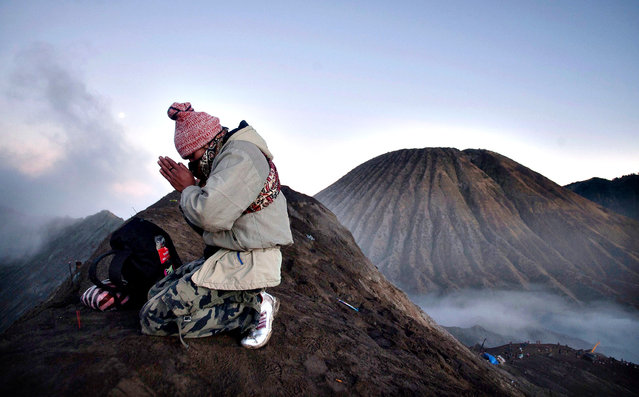
A Tengger tribesman prays at Mount Bromo during the annual Kasada ceremony in East Java on August 12, 2014. The Kasada ceremony is a festival held every 14th day of the Kasada month in the traditional Hindu lunar calender to honour Sang Hyang Widhi (God Almighty) and is based on the legend of Roro Anteng and Joko Seger from the Majapahit Kingdom, from which their Tengger tribe name originates. (Photo by Juni Kriswanto/AFP Photo)

A Tengger tribesman prays at Mount Bromo during the annual Kasada ceremony in East Java on August 12, 2014. The Kasada ceremony is a festival held every 14th day of the Kasada month in the traditional Hindu lunar calender to honour Sang Hyang Widhi (God Almighty) and is based on the legend of Roro Anteng and Joko Seger from the Majapahit Kingdom, from which their Tengger tribe name originates. Hundreds of worshippers from the Tengger tribe offer food and livestock as a symbolic sacrifice which they throw into the crater for the blessings of safety and prosperity to their familyies and community. (Photo by Juni Kriswanto/AFP Photo)
Details
16 Aug 2014 11:19:00
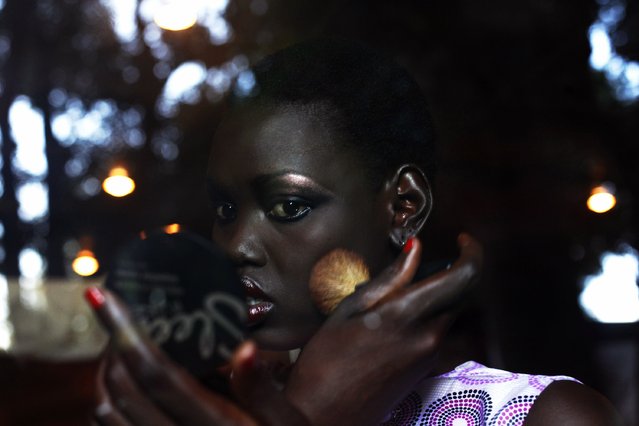
A South Sudanese model applies make-up during the Festival of Fashion and Arts for Peace in Juba August 9, 2014. (Photo by Andreea Campeanu/Reuters)

A South Sudanese model applies make-up during the Festival of Fashion and Arts for Peace in Juba August 9, 2014. (Photo by Andreea Campeanu/Reuters)
Details
16 Aug 2014 10:27:00
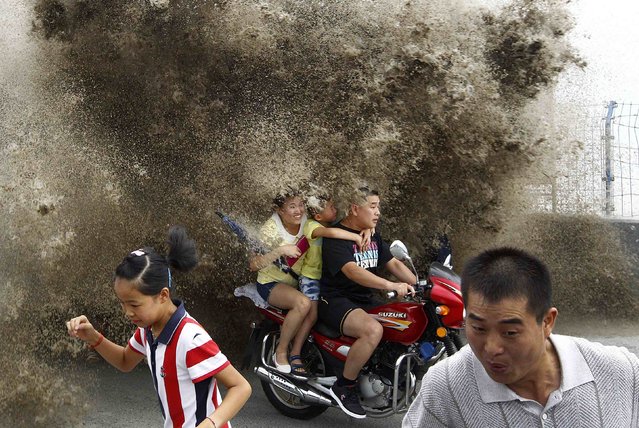
Visitors run away as waves caused by a tidal bore surge past a barrier on the banks of Qiantang River, in Hangzhou, Zhejiang province August 13, 2014. (Photo by Reuters/Stringer)

Visitors run away as waves caused by a tidal bore surge past a barrier on the banks of Qiantang River, in Hangzhou, Zhejiang province August 13, 2014. (Photo by Reuters/Stringer)
Details
16 Aug 2014 10:46:00
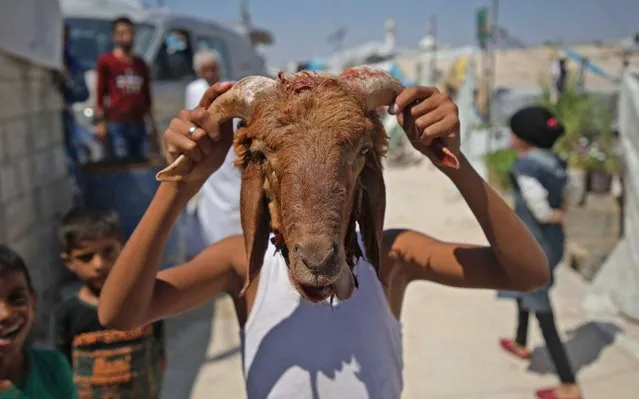
A Syrian boy plays with the head of a sacrificed sheep at a DIP camp for Interally Displaced Persons near the town of Aqrabat in Syria's northern Idlib province on August 12, 2019. Known as the “big” festival, Eid Al-Adha is celebrated each year by Muslims sacrificing various animals according to religious traditions, including cows, camels, goats and sheep. The festival marks the end of the Hajj pilgrimage to Mecca and commemorates Prophet Abraham's readiness to sacrifice his son to show obedience to God. (Photo by Aaref Watad/AFP Photo)

A Syrian boy plays with the head of a sacrificed sheep at a DIP camp for Interally Displaced Persons near the town of Aqrabat in Syria's northern Idlib province on August 12, 2019. Known as the “big” festival, Eid Al-Adha is celebrated each year by Muslims sacrificing various animals according to religious traditions, including cows, camels, goats and sheep. The festival marks the end of the Hajj pilgrimage to Mecca and commemorates Prophet Abraham's readiness to sacrifice his son to show obedience to God. (Photo by Aaref Watad/AFP Photo)
Details
15 Aug 2019 00:05:00