Loading...
Done
Village Gasadalur

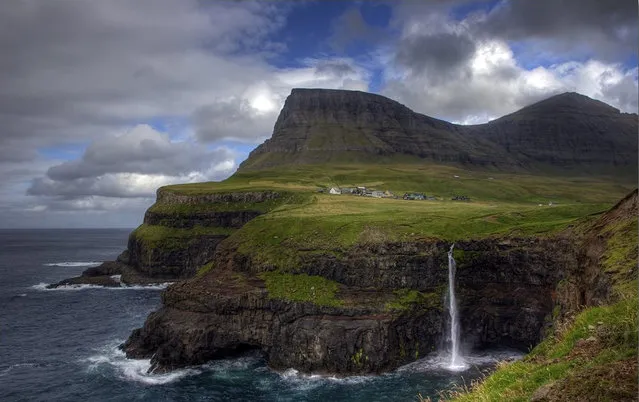
Gásadalur is located on the west-side of Vágar, Faroe Islands, and enjoys a panoramic view over the island of Mykines.
Details
27 Jun 2012 09:36:00
The Dragon’s Skull

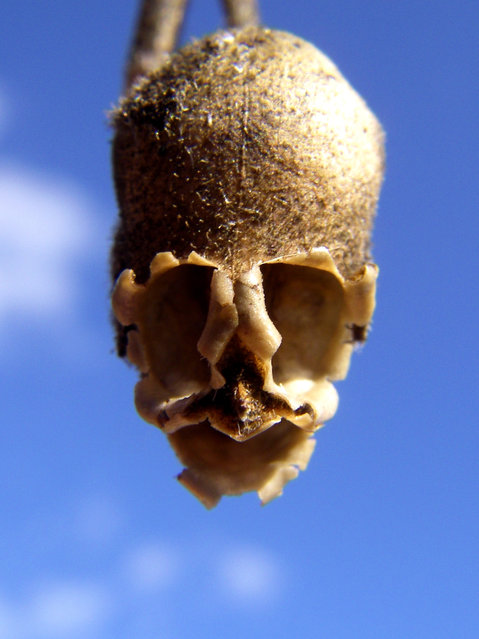
Yes this is not a real dragon’s skull but it is still pretty creepy. This weird little plant is called a Snapdragon or Dragon flower or, if you want to sound even smarter, The Antirrhinum. Once the flower has died, the seed pod begins to look like the skulls you see here. Apart from being creepy as hell and alleged protectors of the garden, if you wore this about your body you would appear to be more “fascinating and gracious”. Though I imagine if anyone actually did find this on you, fascinating and gracious are not the only things they will think about you.
Details
22 Oct 2013 08:31:00
Skulls By Jim Skull

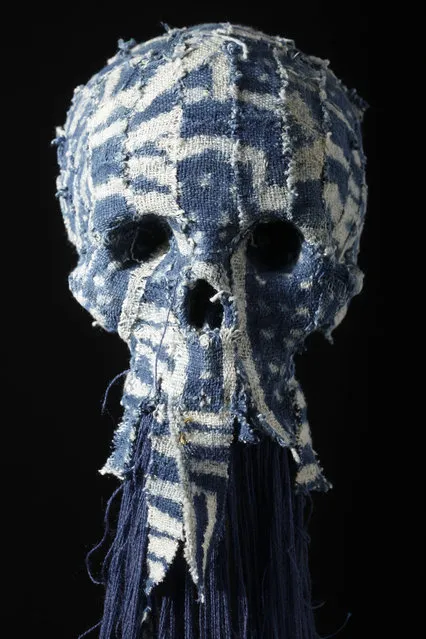
Inspired by personal experiences, a mix of cultures, rituals, and travelling the world, artist Jim Skull creates elaborate woven skull sculptures. He likes to be referred to as Jim Skull as a reflection of his interest in skulls; a symbol that he has been working with since the 1980s. He is currently living in France where he creates beautifully crafted sculptures out of rope, Papier-mâché, and other natural materials. He was born in New Caledonia and there’s no doubt that the influences of the tribal arts from Oceania, Africa, and North America are evident within his technique.
Details
11 Apr 2014 13:30:00
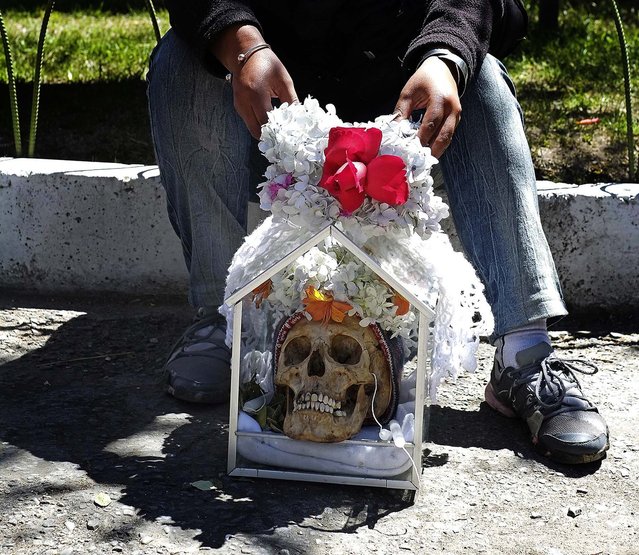
A woman holds a skull during a “Dia de los natitas” (Day of the Skull) ceremony at the Cementerio General of La Paz. (Photo by David Mercado/Reuters)

A woman holds a skull during a “Dia de los natitas” (Day of the Skull) ceremony at the Cementerio General of La Paz. (Photo by David Mercado/Reuters)
Details
10 Nov 2013 06:59:00
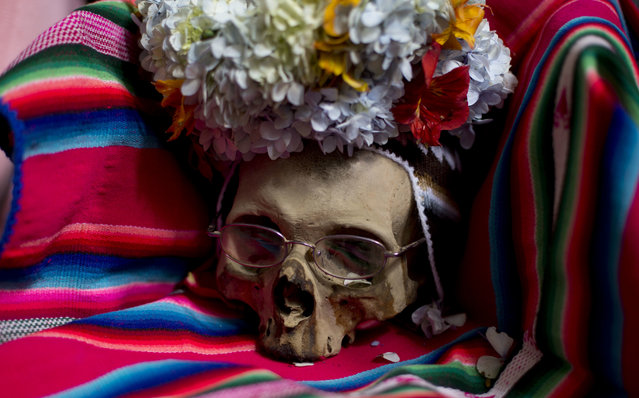
A  decorated human skull or “natitas”, sits on a blanket inside the Cementerio General chapel, during the Natitas Festival celebrations, in La Paz, Bolivia, Tuesday, November 8, 2016. (Photo by Juan Karita/AP Photo)

A decorated human skull or “natitas”, sits on a blanket inside the Cementerio General chapel, during the Natitas Festival celebrations, in La Paz, Bolivia, Tuesday, November 8, 2016. The “natitas” are cared for and decorated by faithful who use them as amulets believing they serve as protection, the tradition marks the end of the Catholic All Saints holiday, but is not recognized by the Catholic church. (Photo by Juan Karita/AP Photo)
Details
09 Nov 2016 06:25:00
Skull Art By Ali Gulec

Istanbul-based Ali Gulec is a graphic artist with a difference. His surreal illustrations are like identikit drawings aiming to prosecute the material arts. Working on the margins of what is possible with his medium, Gulec's forms, figures, and situations are remarkable for their clarity and strength of purpose, and maintain an iconographic intensity that would make any rock band bereft of an album cover salivate with admiration.
Details
17 Feb 2016 08:00:00
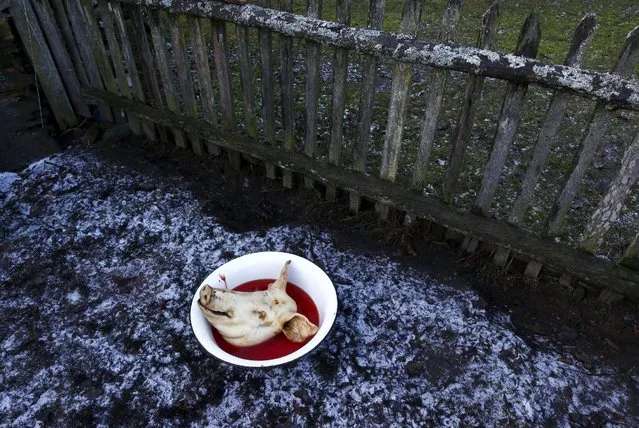
A pig's head is seen in a basin after it was slaughtered it in the village of Azerany, Belarus, December 12, 2015. (Photo by Vasily Fedosenko/Reuters)

A pig's head is seen in a basin after it was slaughtered it in the village of Azerany, Belarus, December 12, 2015. (Photo by Vasily Fedosenko/Reuters)
Details
14 Dec 2015 08:02:00
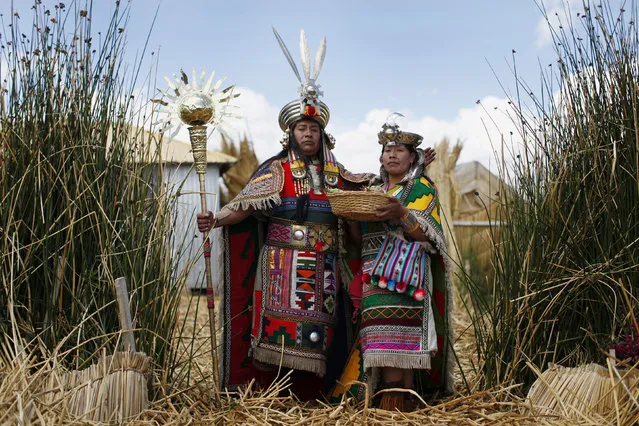
An Andean man and a woman, depicting Inca's legendary characters Manco Capac and Mama Ocllo, pose for a portrait in a Uros island at Lake Titicaca before a re-enactment in Puno November 5, 2014. The Uros islands are a group of 70 man-made totora reed islands floating on the lake, which according to Peru's tourism board iPeru is the world's highest navigable lake at over 4,000 meters above sea level. (Photo by Enrique Castro-Mendivil/Reuters)

An Andean man and a woman, depicting Inca's legendary characters Manco Capac and Mama Ocllo, pose for a portrait in a Uros island at Lake Titicaca before a re-enactment in Puno November 5, 2014. The Uros islands are a group of 70 man-made totora reed islands floating on the lake, which according to Peru's tourism board iPeru is the world's highest navigable lake at over 4,000 meters above sea level. The Uros people fish and hunt, but tourism is their main source of livelihood. (Photo by Enrique Castro-Mendivil/Reuters)
Details
07 Nov 2014 12:52:00