Loading...
Done
Tourists use a selfie stick on the Trocadero Square, with  the Eiffel Tower in background, in Paris, Tuesday, January 6, 2015. (Photo by Remy de la Mauviniere/AP Photo)

Tourists use a selfie stick on the Trocadero Square, with the Eiffel Tower in background, in Paris, Tuesday, January 6, 2015. Selfie sticks have become popular among tourists because you don't have to ask strangers to take your picture, and you can capture a wide view in a selfie without showing your arm. But some people find selfie sticks obnoxious, arguing that they detract from the travel experience. (Photo by Remy de la Mauviniere/AP Photo)
Details
09 Jan 2015 13:15:00
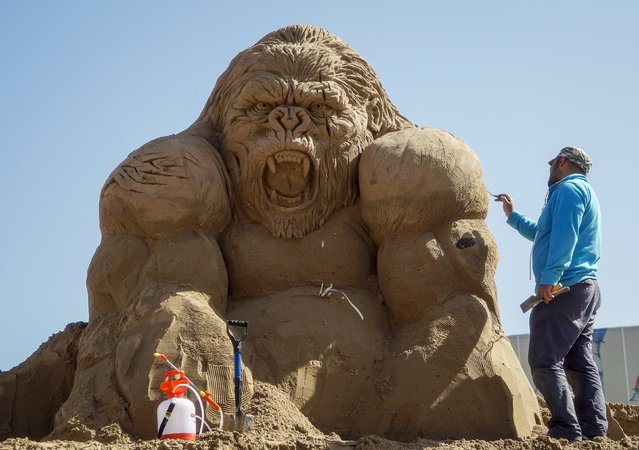
Ruslan Arslanbayev of Russia works on his creation during the Sand Sculpture Festival “Sand Fantasy” in Almaty, Kazakhstan, April 15, 2016. (Photo by Shamil Zhumatov/Reuters)

Ruslan Arslanbayev of Russia works on his creation during the Sand Sculpture Festival “Sand Fantasy” in Almaty, Kazakhstan, April 15, 2016. (Photo by Shamil Zhumatov/Reuters)
Details
16 Apr 2016 12:23:00
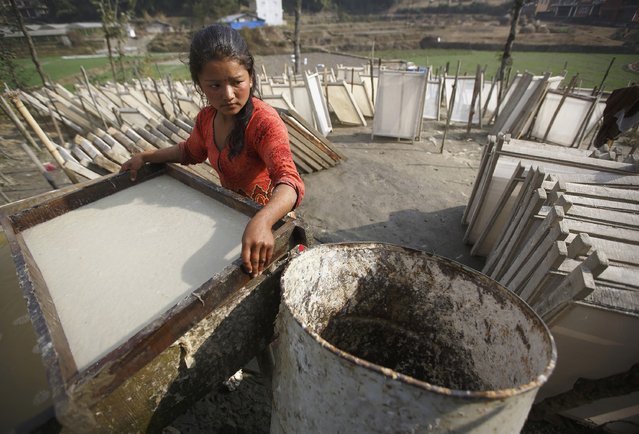
A woman works to create handmade Nepali Lokta paper in Kathmandu January 7, 2015. Lokta papers are made from the fibrous inner bark of Lokta bushes that are found over 5,000 metres above sea level. (Photo by Navesh Chitrakar/Reuters)

A woman works to create handmade Nepali Lokta paper in Kathmandu January 7, 2015. Lokta papers are made from the fibrous inner bark of Lokta bushes that are found over 5,000 metres above sea level. (Photo by Navesh Chitrakar/Reuters)
Details
15 Jan 2015 14:09:00
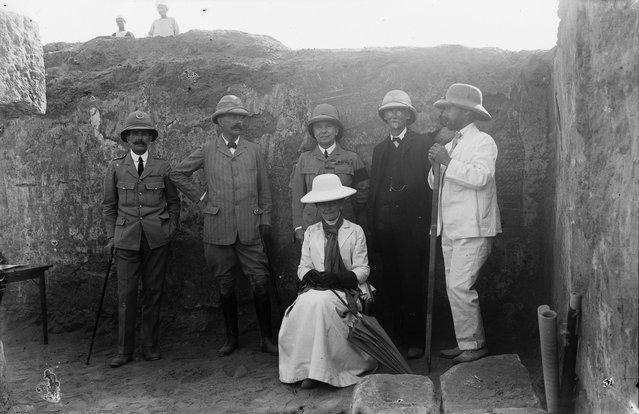
Remarkable discoveries were made, like the decapitated head of a bronze statue of Roman emperor Augustus, sacked from a raid on Roman garrisons further north in Egypt. Here: A group visiting the excavations at Meroë, including (from left) Midwinter Bey, director of Sudan Railways; Lord Kitchener; General Sir Francis Reginald Wingate, Sirdar of the Egyptian Army; Professor Archibald Sayce; John Garstang; and Lady Catherine Wingate, 1911. (Photo by Garstang Museum of Archaeology)

The city of Meroë laid undiscovered for two millennia before British archaeologist John Garstang excavated it in the early 20th century. Garstang took the radical decision to document his discoveries with photography – and immortalised an ancient world. “Meroë: Africa’s Forgotten Empire” is being shown until 14 September at Garstang Museum of Archaeology, Liverpool. Here: A group visiting the excavations at Meroë, including (from left) Midwinter Bey, director of Sudan Railways; Lord Kitchener; General Sir Francis Reginald Wingate, Sirdar of the Egyptian Army; Professor Archibald Sayce; John Garstang; and Lady Catherine Wingate, 1911. (Photo by Garstang Museum of Archaeology)
Details
15 Jun 2016 14:49:00
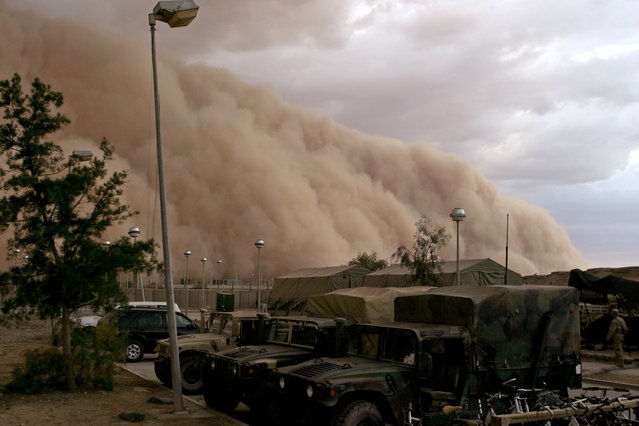
A massive sand storm cloud is close to enveloping a military camp as it rolls over Al Asad, Iraq, April 27, 2005. (Photo by Cpl. Alicia M. Garcia, U.S. Marine Corps/Reuters/U.S. Department of Defense)

A massive sand storm cloud is close to enveloping a military camp as it rolls over Al Asad, Iraq, April 27, 2005. (Photo by Cpl. Alicia M. Garcia, U.S. Marine Corps/Reuters/U.S. Department of Defense)
Details
03 Apr 2015 13:02:00
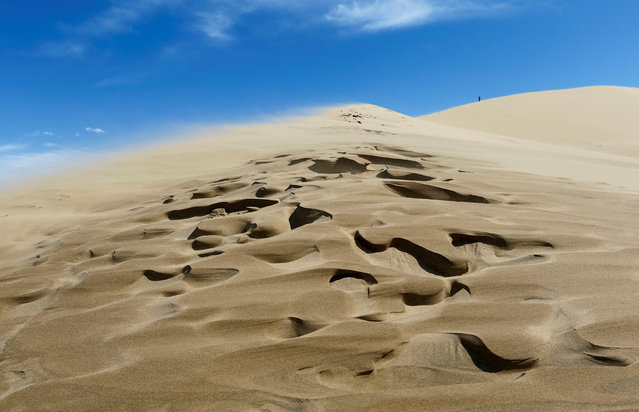
A tourist stands at an edge of the singing sand, the 150-metre-high by three-kilometre-long dune that generates a low-pitched, organ-like rumble in dry weather, in Altyn-Emel national park in Almaty region, Kazakhstan, May 12, 2016. (Photo by Shamil Zhumatov/Reuters)

A tourist stands at an edge of the singing sand, the 150-metre-high by three-kilometre-long dune that generates a low-pitched, organ-like rumble in dry weather, in Altyn-Emel national park in Almaty region, Kazakhstan, May 12, 2016. (Photo by Shamil Zhumatov/Reuters)
Details
18 Jun 2016 13:20:00
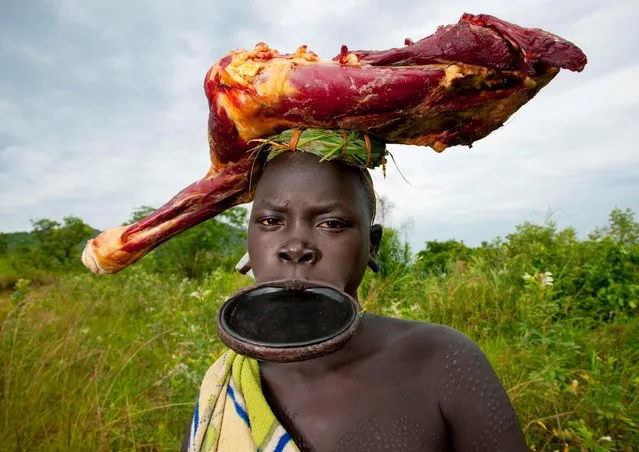
A tribeswoman sporting a huge lip plate and wearing a skinned animal carcass on her head. (Photo by Eric Lafforgue/Exclusivepix Media)

Warriors from the Suri tribe in Ethiopia still stage the savage “Donga” battles – even after many fighters have been died from their injuries. Donga stick fights take place after the harvests, the Surmas count days owing to knots on a long stem of grass or jags on the trunk of a tree dedicated to that specific use. Here: A tribeswoman sporting a huge lip plate and wearing a skinned animal carcass on her head. (Photo by Eric Lafforgue/Exclusivepix Media)
Details
22 Apr 2017 09:30:00
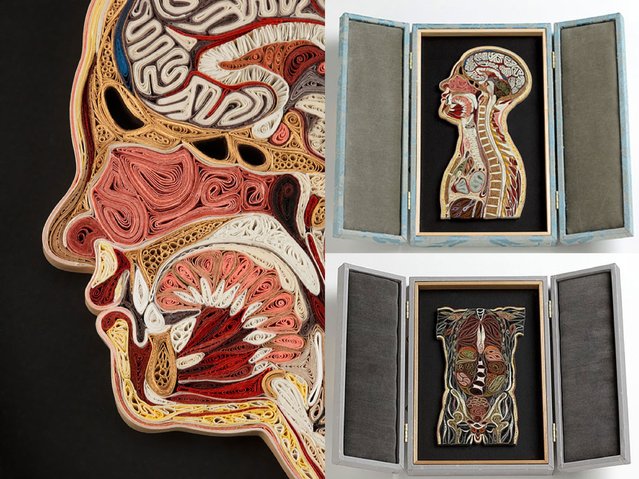
 Paper Anatomy By Lisa Nilsson

These pieces are made of Japanese mulberry paper and the gilded edges of old books. They are constructed by a technique of rolling and shaping narrow strips of paper called quilling or paper filigree. Quilling was first practiced by Renaissance nuns and monks who are said to have made artistic use of the gilded edges of worn out bibles, and later by 18th century ladies who made artistic use of lots of free time. I find quilling exquisitely satisfying for rendering the densely squished and lovely internal landscape of the human body in cross section.
Details
14 Apr 2013 11:07:00