Loading...
Done


Wise Guys & Die Klasse der Auszubildenden zum Forstwirt der Lehranstalt für Forstwirtschaft in Bad Segeberg – Sägewerk Bad Segeberg
Details
06 Dec 2019 00:01:00
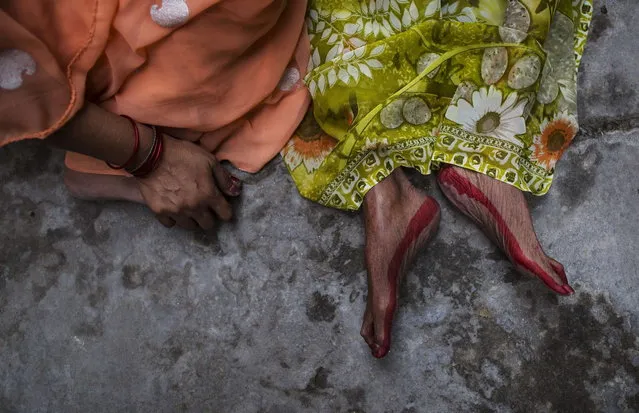
A relative (L) of Champa Devi, 88, sits next to her body, minutes after her death at Mukti Bhavan (Salvation House) at Varanasi, in the northern Indian state of Uttar Pradesh, June 21, 2014. (Photo by Danish Siddiqui/Reuters)

A relative (L) of Champa Devi, 88, sits next to her body, minutes after her death at Mukti Bhavan (Salvation House) at Varanasi, in the northern Indian state of Uttar Pradesh, June 21, 2014. The city of Varanasi, on the banks of the River Ganges, is widely considered Hinduism's holiest city and many Hindus believe that dying there and having their remains scattered in the Ganges allows their soul to escape a cycle of death and rebirth, attaining “moksha” or salvation. “Mukti Bhavan” or “Salvation House”, is a charity-run hostel that caters for people who wish to come to Varanasi to die. Guests can normally stay up to two weeks after which, if they haven't yet passed away, they are gently asked to leave. (Photo by Danish Siddiqui/Reuters)
Details
24 Jul 2014 12:32:00
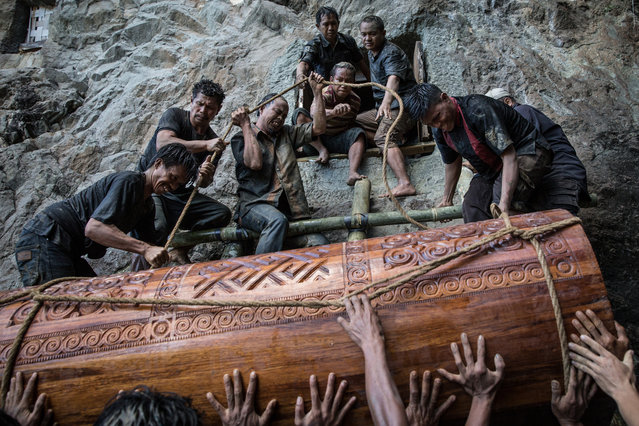
It is said that Torajans are people who “live to die”. For this Indonesian ethnic group, funerals are such extravagant events that they sometimes attract tourists. Families can postpone burials years (and the deceased are considered sick and hosted at home until the funeral) until the family can raise enough money and gather as many relatives as possible. And then it’s a jubilant multiday social event with a parade, dances and animal sacrifices. Agung Parameswara photographed these funerary practices when he traveled to South Sulawesi province, where the Torajans live. But often, their funeral isn’t the last time the dead are seen. In August, crypts are opened, coffins are slid back out and bodies delicately unsheathed. This tender ritual is known as Ma’Nene, which is customarily performed every few years. (Photo by Agung Parameswara/The Washington Post)

It is said that Torajans are people who “live to die”. For this Indonesian ethnic group, funerals are such extravagant events that they sometimes attract tourists. Families can postpone burials years (and the deceased are considered sick and hosted at home until the funeral) until the family can raise enough money and gather as many relatives as possible. And then it’s a jubilant multiday social event with a parade, dances and animal sacrifices. Agung Parameswara photographed these funerary practices when he traveled to South Sulawesi province, where the Torajans live. (Photo by Agung Parameswara/The Washington Post)
Details
06 Oct 2016 09:15:00
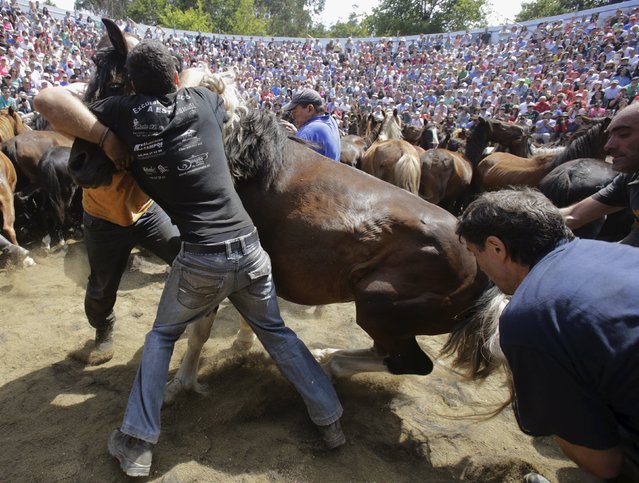
Revellers try to hold on to a wild horse during the “Rapa das Bestas” traditional event in the village of Sabucedo, northwestern Spain, July 5, 2015. (Photo by Miguel Vidal/Reuters)

Revellers try to hold on to a wild horse during the “Rapa das Bestas” traditional event in the village of Sabucedo, northwestern Spain, July 5, 2015. On the first weekend of the month of July, hundreds of wild horses are rounded up, trimmed and groomed in different villages in the Spanish northwestern region of Galicia. (Photo by Miguel Vidal/Reuters)
Details
06 Jul 2015 09:50:00
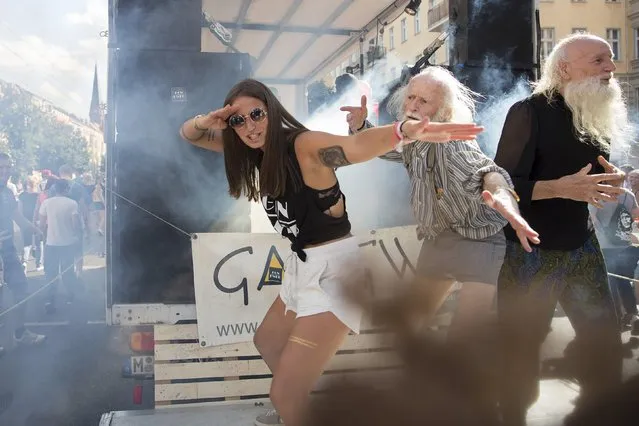
Participants of the techno-parade “Zug der Liebe” (Train of love) dance on a street in Berlin, Germany July 25, 2015. (Photo by Axel Schmidt/Reuters)

Participants of the techno-parade “Zug der Liebe” (Train of love) dance on a street in Berlin, Germany July 25, 2015. The “Zug der Liebe” is the successor to the “Loveparade”, which in its heyday attracted up to 100,000 participants and ended in disaster and tragedy in 2010 when 21 people died and over 500 were injured due to suffocation from overcrowding at the “Loveparade” in Duisburg. (Photo by Axel Schmidt/Reuters)
Details
26 Jul 2015 10:11:00
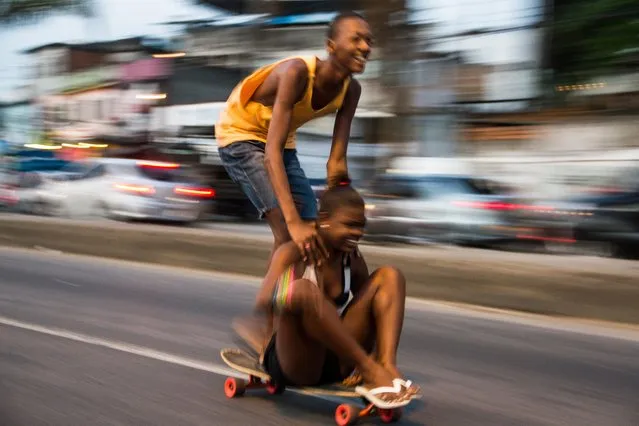
Leisure day on the Avenida Brasil. (Photo by Elisângela Leite/Horniman Museum)

An exhibition at London’s Horniman Museum by three photographers from Brazil’s largest favela, Maré, shows us their unique vision of Rio de Janeiro. Here: Leisure day on the Avenida Brasil. (Photo by Elisângela Leite/Horniman Museum)
Details
03 May 2016 13:13:00
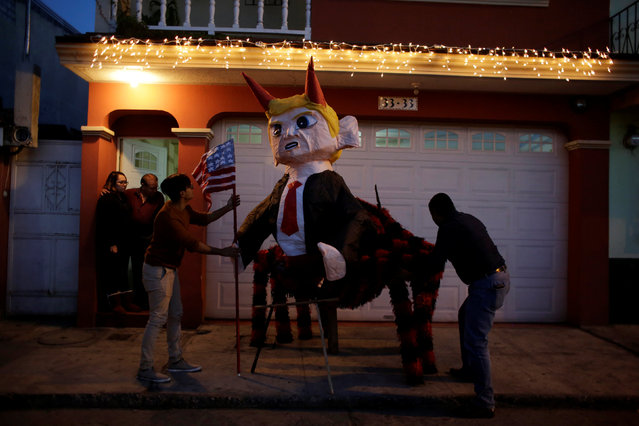
Men fix a pinata representing U.S. President-elect Donald Trump as a devil outside a house before it is set on fire at the traditional Burning of the Devil festival, ahead of Christmas in Guatemala City, Guatemala, December 7, 2016. (Photo by Luis Echeverria/Reuters)

Men fix a pinata representing U.S. President-elect Donald Trump as a devil outside a house before it is set on fire at the traditional Burning of the Devil festival, ahead of Christmas in Guatemala City, Guatemala, December 7, 2016. (Photo by Luis Echeverria/Reuters)
Details
09 Dec 2016 11:23:00
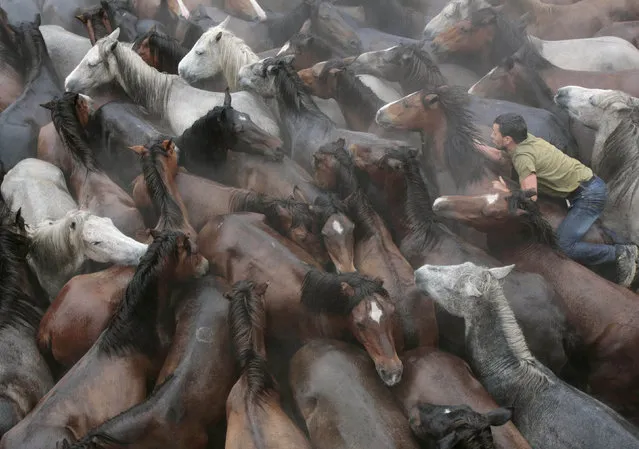
A reveller tries to hold on to a wild horse during the “Rapa Das Bestas” traditional event in the Spanish northwestern village of Sabucedo July 5, 2014. (Photo by Miguel Vidal/Reuters)

A reveller tries to hold on to a wild horse during the “Rapa Das Bestas” traditional event in the Spanish northwestern village of Sabucedo July 5, 2014. On the first weekend of the month of July, hundreds of wild horses are rounded up, trimmed and groomed in different villages in the Spanish northwestern region of Galicia. (Photo by Miguel Vidal/Reuters)
Details
07 Jul 2014 12:58:00