Loading...
Done
Crystal, 15, a part-time boutique sales assistant, poses on Nathan Road in Mongkok shopping district in Hong Kong October 7, 2014. Holding a walkie talkie for fast communication with other supporters, Crystal said, “I am not demanding Chief Executive Leung Chun-ying to quit, but (want) to protect protesters from being threatened badly by opponents and the police”. (Photo by Bobby Yip/Reuters)

Reuters photographers Carlos Barria and Bobby Yip photographed protestors and details of life on the barricades, asking demonstrators what their role was in the movement, and what they wanted to happen. Here: Crystal, 15, a part-time boutique sales assistant, poses on Nathan Road in Mongkok shopping district in Hong Kong October 7, 2014. Holding a walkie talkie for fast communication with other supporters, Crystal said, “I am not demanding Chief Executive Leung Chun-ying to quit, but (want) to protect protesters from being threatened badly by opponents and the police”. (Photo by Bobby Yip/Reuters)
Details
09 Oct 2014 12:53:00
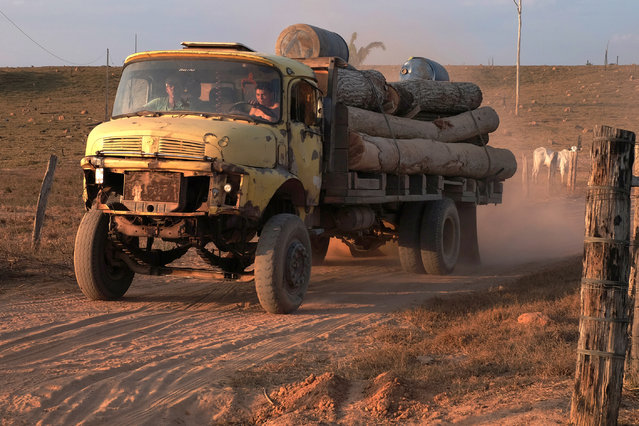
A truck laden with logs travels in Araribóia Indigenous Reserve, Maranhão, Brazil on August 7, 2015. Loggers have been stealing hardwood trees from indigenous lands in Brazil. The Guardians of the Forest are an armed militia formed by the Guajajara tribe to protect their reserve. (Photo by Bonnie Jo Mount/The Washington Post)

A truck laden with logs travels in Araribóia Indigenous Reserve, Maranhão, Brazil on August 7, 2015. Loggers have been stealing hardwood trees from indigenous lands in Brazil. The Guardians of the Forest are an armed militia formed by the Guajajara tribe to protect their reserve. (Photo by Bonnie Jo Mount/The Washington Post)
Details
09 Oct 2015 08:00:00
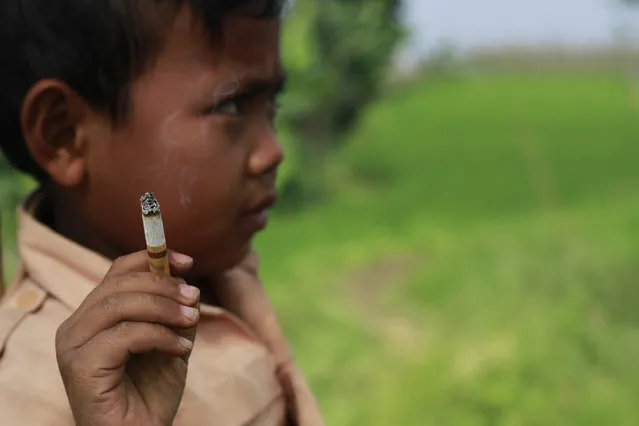
Seven-year-old Dihan Awallidan from Garut, West Java, is not like other boys his age. While most children crave chocolate and candy, Dihan is addicted to cigarettes. The second-grader picked up the habit at the age of 3 and now smokes up to three packs a day, using the pocket money he gets from his enabling parents to feed his addiction. (Photo by Rezza Estily/JG Photo)

Seven-year-old Dihan Awallidan from Garut, West Java, is not like other boys his age. While most children crave chocolate and candy, Dihan is addicted to cigarettes. The second-grader picked up the habit at the age of 3 and now smokes up to three packs a day, using the pocket money he gets from his enabling parents to feed his addiction. (Photo by Rezza Estily/JG Photo)
Details
19 Mar 2015 14:08:00
Money Suit

One day photographer Jimmy Hickey decided to do a photo project capturing “money problems personified”, so he withdraw everything from his bank account in one dollar bills and created a money suit. The resulting project is titled “What Have We Done?”.
Details
28 Jun 2012 07:33:00
Wedding in the UK. (Photo by Dan Bold/Caters News)

These stunning images got such a great reception they have been unveiled as the best wedding photos of 2016. The impressive photos include couples from around the world on their big day. One shot shows a bride and groom horse riding, while another captures the newlyweds jetting off for their honeymoon. The International Society of Professional Wedding Photographers (ISPWP) picked from over 23,000 submissions for the stunning collection. Here: Wedding in the UK. (Photo by Dan Bold/Caters News)
Details
20 Jan 2017 08:12:00
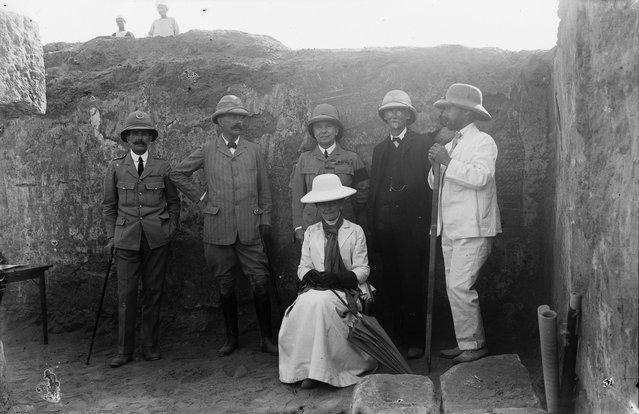
Remarkable discoveries were made, like the decapitated head of a bronze statue of Roman emperor Augustus, sacked from a raid on Roman garrisons further north in Egypt. Here: A group visiting the excavations at Meroë, including (from left) Midwinter Bey, director of Sudan Railways; Lord Kitchener; General Sir Francis Reginald Wingate, Sirdar of the Egyptian Army; Professor Archibald Sayce; John Garstang; and Lady Catherine Wingate, 1911. (Photo by Garstang Museum of Archaeology)

The city of Meroë laid undiscovered for two millennia before British archaeologist John Garstang excavated it in the early 20th century. Garstang took the radical decision to document his discoveries with photography – and immortalised an ancient world. “Meroë: Africa’s Forgotten Empire” is being shown until 14 September at Garstang Museum of Archaeology, Liverpool. Here: A group visiting the excavations at Meroë, including (from left) Midwinter Bey, director of Sudan Railways; Lord Kitchener; General Sir Francis Reginald Wingate, Sirdar of the Egyptian Army; Professor Archibald Sayce; John Garstang; and Lady Catherine Wingate, 1911. (Photo by Garstang Museum of Archaeology)
Details
15 Jun 2016 14:49:00
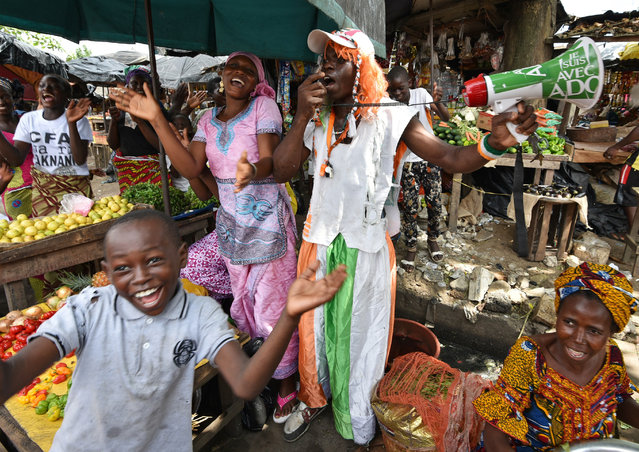
4: Abidjan, Ivory Coast. Latest ranking: 128; Ranking five years ago: 131; Five-year index movement: 3.8%. Here: A supporter of Ivory Coast president Alassane Ouattara campaigns in a market in the city’s Koumassi quarter. (Photo by Sia Kambou/AFP Photo)

A period of relative stability has put the Iranian capital No1 on the list of world cities that have achieved biggest improvements in liveability over the past five years, as calculated by the Economist Intelligence Unit. The “most improved” top 10 contains some unexpected names. So, eg, the fourth place: Abidjan, Ivory Coast. Latest ranking: 128; Ranking five years ago: 131; Five-year index movement: 3.8%. Here: A supporter of Ivory Coast president Alassane Ouattara campaigns in a market in the city’s Koumassi quarter. (Photo by Sia Kambou/AFP Photo)
Details
19 Aug 2016 11:55:00
Kawakanih Yawalapiti, 9, Upper Xingu region of Mato Grosso, Brazil, 2018: Kawakanih lives with her tribe, the Yawalapiti, in Xingu national park, a preserve in the Amazon basin of Brazil. The Yawalapiti collect seeds to preserve species unique to their ecosystem, which lies between the rain forest and savannah. Kawakanih’s diet is simple, consisting mainly of fish, cassava, porridge, fruit and nuts. “It takes five minutes to catch dinner”, says Kawakanih. “When you’re hungry, you just go to the river with your net”. (Photo by Gregg Segal/The Guardian)

Photographer Gregg Segal travelled the world to document children and the food they eat in a week. Partly inspired by the increasing problems of childhood obesity, he tracked traditional regional diets as yet unaffected by globalisation, and ironically, found that the healthiest diets were often eaten by the least well off. (Photo by Gregg Segal/The Guardian)
Details
03 Jul 2019 00:03:00