Loading...
Done
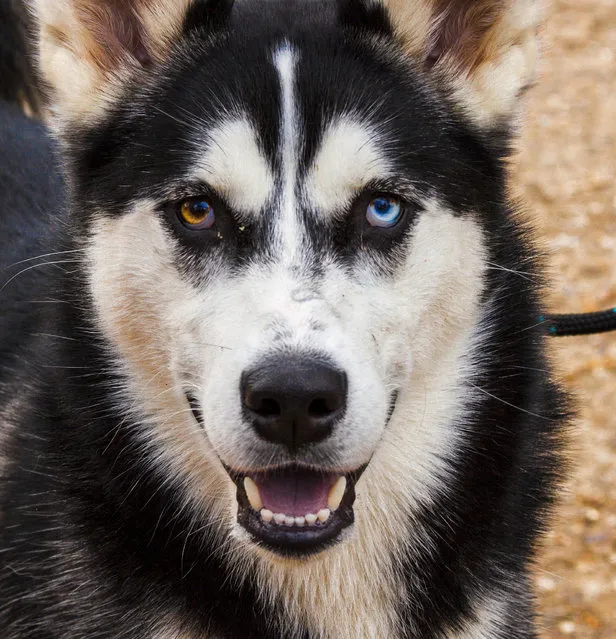
Heterochromia in Animals: Pets With Different Colored Eyes

“In anatomy, heterochromia refers to a difference in coloration, usually of the iris (but also of hair or skin). Although infrequently seen in humans, complete heterochromia is more frequently observed in other species, where it almost always involves one blue eye”. – Wikipedia (Photo by StooMathiesen)
Details
24 Jun 2012 12:47:00
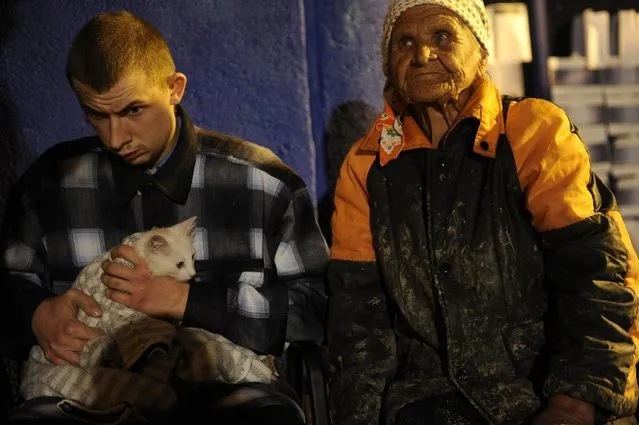
Post-apocalyptic Krymsk: Russia’s Southern City Destroyed by Flood

“Russia's emergencies minister accused local officials on Monday of not doing enough to prevent 171 deaths in weekend floods that raised new doubts about the country's readiness for natural disasters under President Vladimir Putin”. – Andrey Kuzmin via Reuters
Details
09 Jul 2012 11:08:00
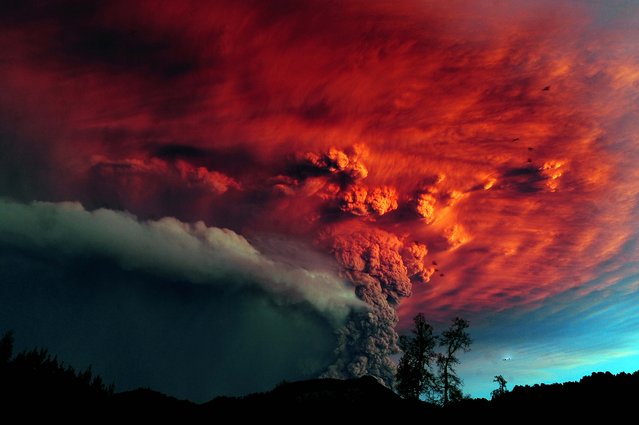
A cloud of ash pours from Puyehue volcano in southern Chile, at sunset on June 5, 2011

“A dirty thunderstorm (also, Volcanic lightning) is a weather phenomenon that occurs when lightning is produced in a volcanic plume. Dirty thunderstorms have been reported in Chile above the Chaiten Volcano, above Alaska's Mount Augustine volcano, and Iceland's Eyjafjallajökull volcano”.

Photo: A cloud of ash pours from Puyehue volcano in southern Chile, at sunset on June 5, 2011. (Claudio Santana/AFP)
Details
15 May 2012 11:31:00
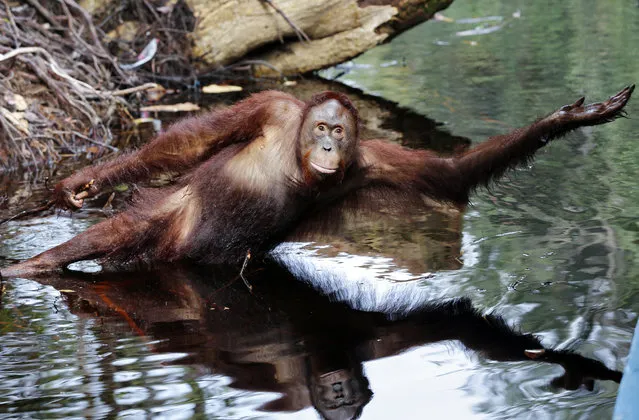
Male orangutan Percy is reflected in the Sekonyer River as he reaches over to try and touch a wooden klotok boat carrying crew and tourists, in Tanjung Puting National Park, in Kalimantan (Indonesian Borneo), Indonesia, September 4, 2013. Percy is a son, born and living in the wild, of a female orangutan named Princess, a freed former captive orangutan that anthropologist Dr Birute Galdikas rescued, rehabilitated and returned to the wild. (Photo by Barbara Walton/EPA)

Male orangutan Percy is reflected in the Sekonyer River as he reaches over to try and touch a wooden klotok boat carrying crew and tourists, in Tanjung Puting National Park, in Kalimantan (Indonesian Borneo), Indonesia, September 4, 2013. Percy is a son, born and living in the wild, of a female orangutan named Princess, a freed former captive orangutan that anthropologist Dr Birute Galdikas rescued, rehabilitated and returned to the wild. (Photo by Barbara Walton/EPA)
Details
03 Jul 2014 12:26:00
Portuguese runner Adriele Silva gestures during the Great Wall Marathon at the Huangyaguan section of the Great Wall of China, in Jixian of Tianjin, China May 19, 2018. (Photo by Jason Lee/Reuters)

Portuguese runner Adriele Silva gestures during the Great Wall Marathon at the Huangyaguan section of the Great Wall of China, in Jixian of Tianjin, China May 19, 2018. (Photo by Jason Lee/Reuters)
Details
26 May 2018 00:01:00
A picture taken on October 5, 2018, shows a general view of Migingo island which is densely populated by residents fishing mainly for Nile perch in Lake Victoria on the border of Uganda and Kenya. (Photo by Yasuyoshi Chiba/AFP Photo)

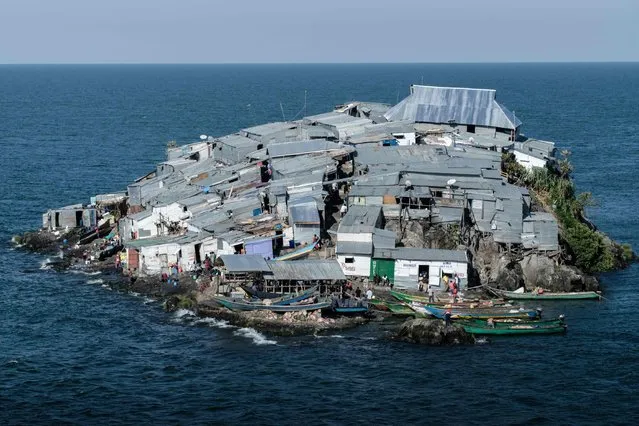
A picture taken on October 5, 2018, shows a general view of Migingo island which is densely populated by residents fishing mainly for Nile perch in Lake Victoria, the continent's largest lake, on the border of Uganda and Kenya. More than 500 people live on the island, which is barely 2,000-square-metres. (Photo by Yasuyoshi Chiba/AFP Photo)
Details
29 Oct 2018 00:03:00
Model presents a creation from the Amir Slama collection during Sao Paulo Fashion Week in Sao Paulo, Brazil August 30, 2017. (Photo by Paulo Whitaker/Reuters)

Model presents a creation from the Amir Slama collection during Sao Paulo Fashion Week in Sao Paulo, Brazil August 30, 2017. (Photo by Paulo Whitaker/Reuters)
Details
06 Sep 2017 09:13:00
Of all the species affected by river regulation in Australia, the ibis is one of the few that has changed its behaviour and moved to coastal cities. (Photo by Rick Stevens/The Guardian)

Tip turkey, dumpster chook, rubbish raptor – the Australian white ibis goes by many unflattering names. But it is a true urban success story, scavenging to survive in cities across Australia as wetlands have been lost. Wildlife photographer Rick Stevens captured them in Sydney. Here: Of all the species affected by river regulation in Australia, the ibis is one of the few that has changed its behaviour and moved to coastal cities. (Photo by Rick Stevens/The Guardian)
Details
11 Apr 2018 00:03:00