Loading...
Done
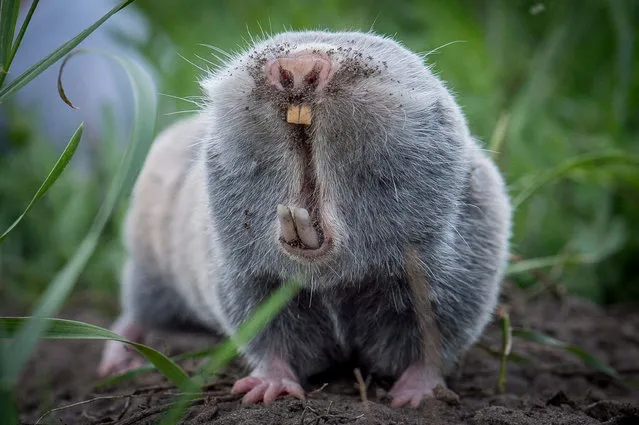
An adult specimen of Nannospalax (leucodon) montanosyrmiensis, a variant of the lesser mole-rat (Spalax leucodon) is pictured near Albertirsa, some 60 kilometers southeast of Budapest, Hungary, 12 May 2018. The critically endangered rodent lives in several isolated populations in the Carpathian Basin. (Photo by Sandor Ujvari/EPA/EFE)

An adult specimen of Nannospalax (leucodon) montanosyrmiensis, a variant of the lesser mole-rat (Spalax leucodon) is pictured near Albertirsa, some 60 kilometers southeast of Budapest, Hungary, 12 May 2018. The critically endangered rodent lives in several isolated populations in the Carpathian Basin. (Photo by Sandor Ujvari/EPA/EFE)
Details
20 May 2018 00:03:00
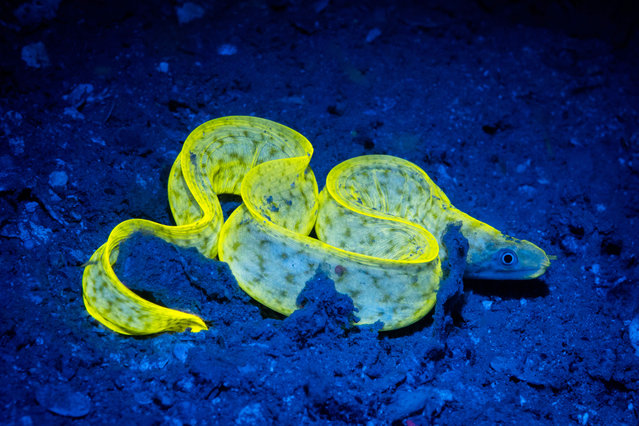
“In these photos, I was shining a blue light on the coral and various biofluorescent animals”. (Photo by Simon Pierce/Caters News Agency)

Neon sea creatures have been captured lighting up the ocean with their vibrant colors – in what looked like a scene from Avatar. Photographer Simon Pierce, 39, took the images over several months after visiting both Nosy Sakatia in Madagascar and Mafia Island in Tanzania recently. (Photo by Simon Pierce/Caters News Agency)
Details
12 Dec 2018 00:05:00
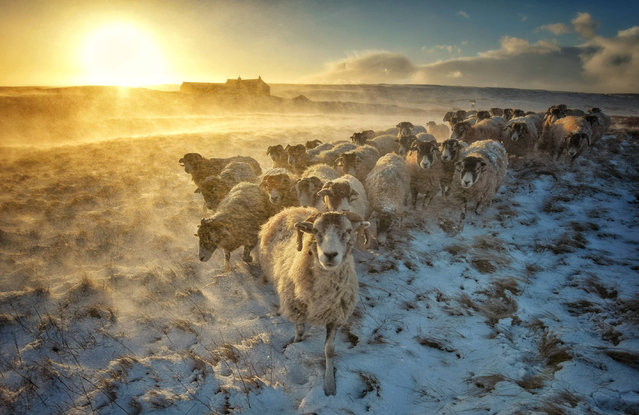
A flock of sheep huddles together while snow spindrift is whipped up by strong winds in Swaledale, North Yorkshire, UK on March 17, 2017. (Photo by Paul Kingston/NNP North News & Pictures Ltd)

A flock of sheep huddles together while snow spindrift is whipped up by strong winds in Swaledale, North Yorkshire, UK on March 17, 2017. (Photo by Paul Kingston/NNP North News & Pictures Ltd)
Details
08 Sep 2017 09:29:00
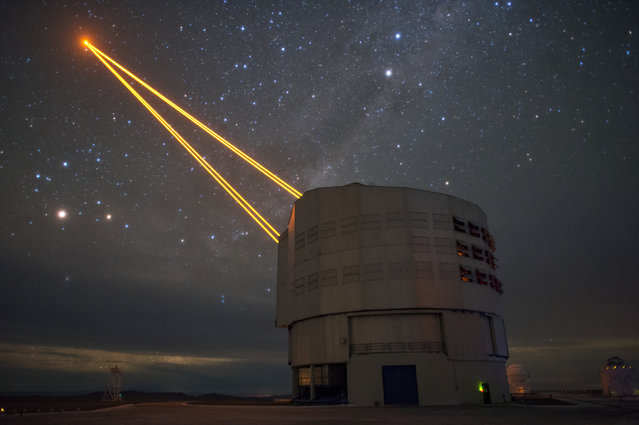
Four pillars of light from the 4 Laser Guide Star Facility on ESO's Very Large Telescope (VLT) are shown reaching into the Chilean night sky in this image from ESO Photo Ambassador Fred Kamphues, on September 2, 2016. The lasers are a key part of the adaptive optics system on the VLT. Adaptive optics allows astronomers to drastically reduce the atmospheric distortion present at even the best sites in the world for astronomy, including Paranal in Chile, the home of the VLT. (Photo by F. Kamphues/ESO)

Four pillars of light from the 4 Laser Guide Star Facility on ESO's Very Large Telescope (VLT) are shown reaching into the Chilean night sky in this image from ESO Photo Ambassador Fred Kamphues, on September 2, 2016. The lasers are a key part of the adaptive optics system on the VLT. Adaptive optics allows astronomers to drastically reduce the atmospheric distortion present at even the best sites in the world for astronomy, including Paranal in Chile, the home of the VLT. (Photo by F. Kamphues/ESO)
Details
23 Feb 2017 00:06:00
A tornado storm is rolling over the town of Stratford, Texas on May 17, 2016. (Photo by Maximilian Conrad/Caters News)

These stunning images capture some of America's most intense storms from an extraordinarily close perspective. Here: A tornado storm is rolling over the town of Stratford, Texas on May 17, 2016. (Photo by Maximilian Conrad/Caters News)
Details
29 Jun 2016 11:10:00
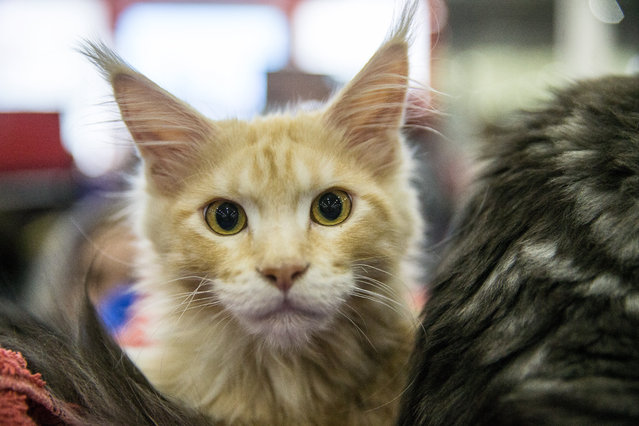
An alert-looking Maine Coon during the Grand Prix Royal Canin cat exhibition in Moscow, Russia on December 4, 2016. The breed’s origin is unknown, but one legend claims it is descended from cats brought to the US by an English seafarer called Captain Coon. (Photo by Dmitry Serebryakov/TASS)

An alert-looking Maine Coon during the Grand Prix Royal Canin cat exhibition in Moscow, Russia on December 4, 2016. The breed’s origin is unknown, but one legend claims it is descended from cats brought to the US by an English seafarer called Captain Coon. (Photo by Dmitry Serebryakov/TASS)
Details
06 Dec 2016 10:58:00
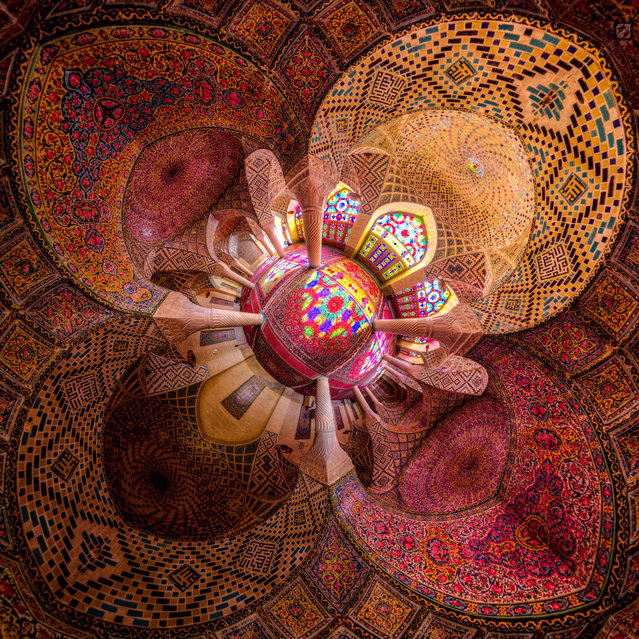
The Nasir al-mulk or “Pink” mosque in Shiraz, Iran. (Photo by Mohammad Reza Domiri Ganj)

Amateur Iranian photographer Mohammad Reza Domiri Ganji, 23 likes to learn as much as he can about a site before he photographs it. Then he utilizes a variety of wide-angle and fisheye lenses, as well as occasional panoramic techniques to create beautiful new, often mind-bending images. He usually shoots the architectural wonders of Iran, and hopes that the Iranian government will allow him to travel further from home in pursuit of other iconic architectural treasures. Photo: The Nasir al-mulk or “Pink” mosque in Shiraz, Iran. (Photo by Mohammad Reza Domiri Ganj)
Details
17 Aug 2014 08:58:00
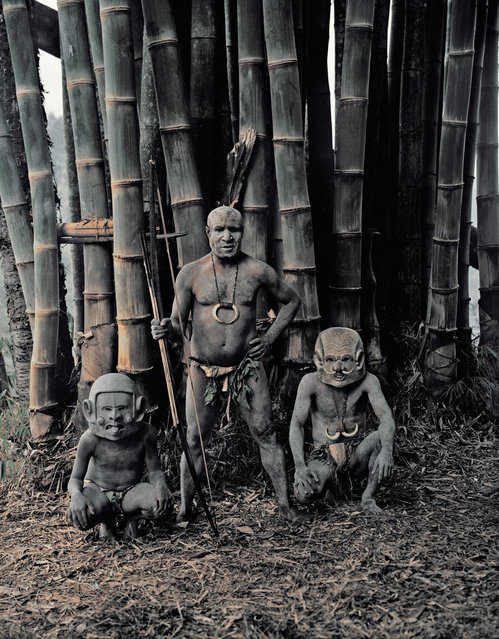
“Asaro from the Eastern Highlands”. The mudmen could not cover their faces with mud because the people of Papua New Guinea thought that the mud from the Asaro river was poisonous. So instead of covering their faces with this alleged poison, they made masks from pebbles that they heated and water from the waterfall, with unusual designs such as long or very short ears either going down to the chin or sticking up at the top, long joined eyebrows attached to the top of the ears, horns and sideways mouths. (Jimmy Nelson)

“Asaro from the Eastern Highlands”. The mudmen could not cover their faces with mud because the people of Papua New Guinea thought that the mud from the Asaro river was poisonous. So instead of covering their faces with this alleged poison, they made masks from pebbles that they heated and water from the waterfall, with unusual designs such as long or very short ears either going down to the chin or sticking up at the top, long joined eyebrows attached to the top of the ears, horns and sideways mouths. (Photo and caption by Jimmy Nelson)
Details
20 Oct 2013 08:54:00