Loading...
Done
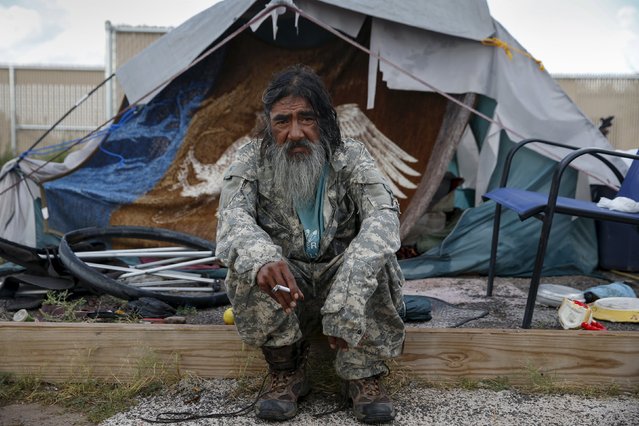
Daniel J. Wabsey, a 58-year-old war veteran, sits outside his tent at Camp Hope in Las Cruces, New Mexico October 6, 2015. “I've been traveling for 35 or 38 years. Getting inside would take a while to get used to. I just want to be able to eat, sleep and be safe. We all get along and understand in Camp Hope. We've all been there. With common sense you can survive out here”, Wabsey said. Camp Hope describe themselves as an “alternative transitional living project for the homeless”. Around 50 people live at the camp. (Photo by Shannon Stapleton/Reuters)

Daniel J. Wabsey, a 58-year-old war veteran, sits outside his tent at Camp Hope in Las Cruces, New Mexico October 6, 2015. “I've been traveling for 35 or 38 years. Getting inside would take a while to get used to. I just want to be able to eat, sleep and be safe. We all get along and understand in Camp Hope. We've all been there. With common sense you can survive out here”, Wabsey said. Camp Hope describe themselves as an “alternative transitional living project for the homeless”. Around 50 people live at the camp. (Photo by Shannon Stapleton/Reuters)
Details
19 Dec 2015 08:05:00
Ukrainian artist Dariya Marchenko works on a portrait of Russian President Vladimir Putin named “The Face of War” which is made out of 5,000 cartridges brought from the frontline in eastern Ukraine, in Kiev, July 23, 2015. The portrait will be presented along with a novel which will tell personal stories of six people involved in this project including Daria's own story and stories of people who helped her to collect shells from the frontline. (Photo by Gleb Garanich/Reuters)

Ukrainian artist Dariya Marchenko works on a portrait of Russian President Vladimir Putin named “The Face of War” which is made out of 5,000 cartridges brought from the frontline in eastern Ukraine, in Kiev, July 23, 2015. The portrait will be presented along with a novel which will tell personal stories of six people involved in this project including Daria's own story and stories of people who helped her to collect shells from the frontline. Daria Marchenko calls her art approach philosophic symbolism where every element has its hidden meaning. In her works cartridges mean human's life that was brutally ended. (Photo by Gleb Garanich/Reuters)
Details
28 Jul 2015 12:44:00
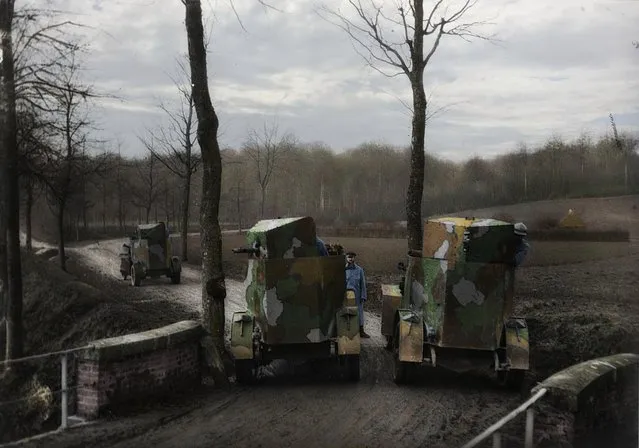
The expertly colourised shots were brought to life by French bank technician, Frédéric Duriez (51). The images were provided by the Valois collection which belongs to the BDIC. “By colourising these photos, I reduce the time that separates us today from this conflict”, said Frédéric. “A black and white photo does not attract the attention of young people, if you colour it, then people will look at it with curiosity. After this, we see the greater the misery and distress of these French fighters”. The total number of casualties in WW1 was more that 38 million. By the end of the war, over eight-million men had been called up to fight in the French army. France suffered 4.2 million casualties during the war with 1.3 million people dead. Here: Car cannon sections in firing position, Auxi-le-Château. (Photo by Frédéric Duriez/BDIC/Mediadrumworld.com)

The expertly colourised shots were brought to life by French bank technician, Frédéric Duriez (51). The images were provided by the Valois collection which belongs to the BDIC. “By colourising these photos, I reduce the time that separates us today from this conflict”, said Frédéric. Here: Car cannon sections in firing position, Auxi-le-Château. (Photo by Frédéric Duriez/BDIC/Mediadrumworld.com)
Details
03 May 2017 08:41:00
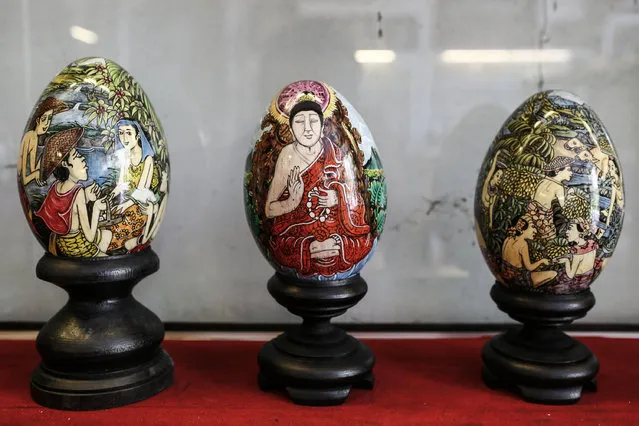
Painted eggshell displayed at Wayan Sadra's workshop on April 14, 2014 in Sukawati, Gianyar, Bali, Indonesia. (Photo by Putu Sayoga/Getty Images)

Painted eggshell displayed at Wayan Sadra's workshop on April 14, 2014 in Sukawati, Gianyar, Bali, Indonesia. 50-year-old Wayan Sadra got the idea to start his eggshell painting business, after his niece who worked in a five star hotel asked for his help to paint on an egg for an Easter egg competition. Now the business he started in 1997 attracts customers for his painted eggs from Germany, France, Italy, and the Netherlands. Sadra usually experiences a surge in sales ahead of Easter. (Photo by Putu Sayoga/Getty Images)
Details
15 Apr 2014 10:40:00
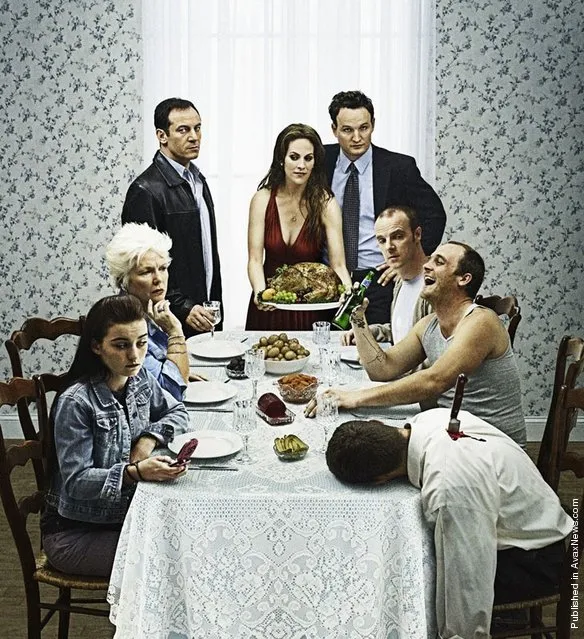
Photographers: Jim Fiscus

“Jim Fiscus is an American photographer specializing in editorial and advertising photography, including several highly regarded campaigns for the Showtime series Dexter, starring Michael C. Hall. Fiscus, who is based in Athens, Georgia, has won many awards for his work, including at the 2005 International Photo Awards for his portraits of hip-hop and R&B artists Jay-Z, Usher, and Outkast. Also in 2005, he was named International Photographer of the Year at the Lucies, and he is the winner of the 2008 International Aperture Award for his photograph of English chef and best-selling cookbook author Jamie Oliver, commissioned by Channel 4 in the U.K. In 2009, his photographic novella, “The Unfortunate Moment of Misunderstanding”, was displayed at Industrial Color’s M Project Gallery in New York in June 2009”. – Wikipedia
Details
03 Apr 2012 11:05:00
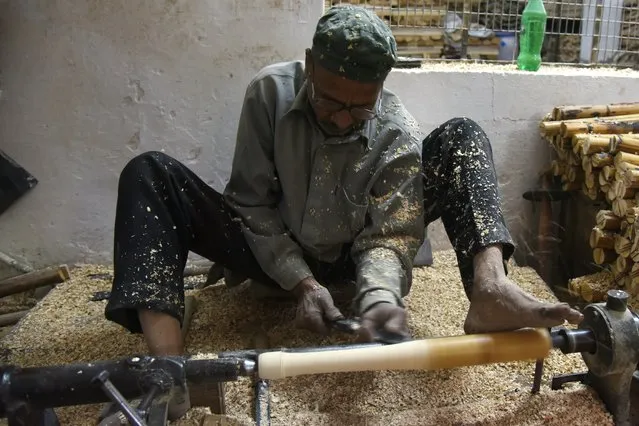
In this photograph taken on December 14, 2016, an Indian craftsman works on unfinished cricket bats in a factory in Meerut, some 70 kms north- east of New Delhi. As Indian factory worker Jitender Singh carves out another big- hitting slab of thick willow he insists MCC proposals to limit the size of cricket bats won' t tame Twenty20 marauders. “I don' t think the thickness matters. It' s more about the balance of the bat and the talent of the batsman”, says Singh, who has made bats for many stars, including South Africa's AB de Villiers. The World Cricket committee of the MCC, the guardians of the game, recommended in December 2016 that limitations be placed on the width and depth of bats because it had become too easy to smash fours and sixes. (Photo by Dominique Faget/AFP Photo)

In this photograph taken on December 14, 2016, an Indian craftsman works on unfinished cricket bats in a factory in Meerut, some 70 kms north- east of New Delhi. (Photo by Dominique Faget/AFP Photo)
Details
11 Jan 2017 14:32:00
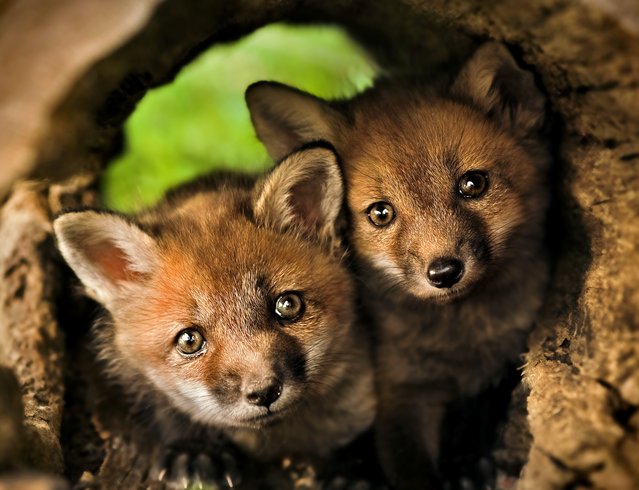
Red fox kits look out from a hollow log. (Photo by Kevin Fleming)

Wildlife photographer Kevin Fleming has covered the world as a photographer for National Geographic and has been recognized America’s Best Observer by Readers Digest. His assignments have taken him into war and famine in Somalia, to the Mediterranean for a re-creation of the voyage of Ulysses and put him on a dogsled crossing the Canadian arctic. Now Kevin is working on his 27th book. Here: Red fox kits look out from a hollow log. (Photo by Kevin Fleming)
Details
02 Oct 2014 10:28:00
Kliluk, the Spotted Lake, Canada

Originally known to the First Nations of the Okanagan Valley as Khiluk, which was- and remains today revered as a sacred site producing therapeutic waters. During World War I the minerals of Spotted Lake were used in manufacturing ammunition. Later the area came under the control of the Ernest Smith Family, for a term of about 40 years. In 1979 Smith attempted to create interest in a spa at the lake. The First Nations responded with an effort to buy the lake; in October 2001 they finally struck a deal. First Nations arranged the purchase of 22 hectares of land for a total of $720,000, and contributed about 20% of the cost. The Indian Affairs Department paid the remainder.
Details
06 Mar 2015 12:59:00