Loading...
Done
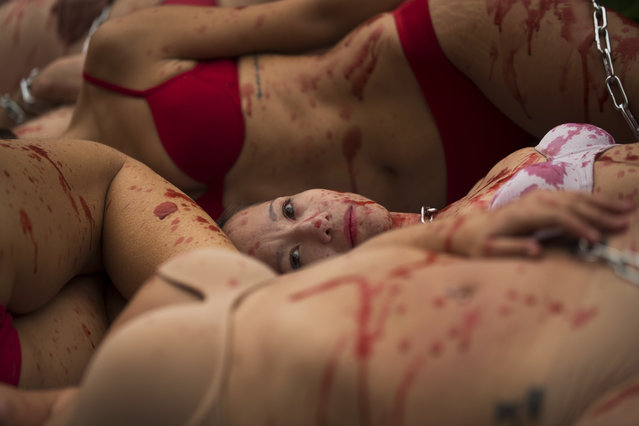
Animal rights activist, stained with fake blood, perform during a protest against the use of animal skins in the clothes and fashion industry, in Madrid, Sunday, December 10, 2017. (Photo by Francisco Seco/AP Photo)

Animal rights activist, stained with fake blood, perform during a protest against the use of animal skins in the clothes and fashion industry, in Madrid, Sunday, December 10, 2017. (Photo by Francisco Seco/AP Photo)
Details
11 Dec 2017 09:50:00
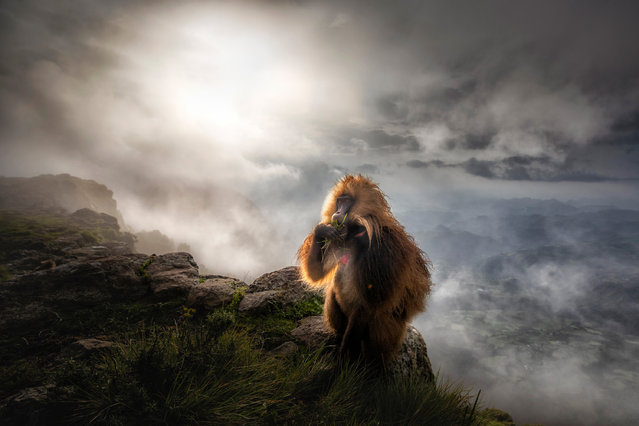
Highly commended, mammals: Gelada after the storm – Marco Gaiotti (Italy). “Gelada baboons are the only monkey species in the world that feed on grasses. They are native to the tableland of Ethiopia. Every morning large family groups wander from their sleeping places in the steep rock face, up to 1,000 metres high, to the feeding grounds at the tablelands. This image clearly depicts their feeding strategy: they pull out bunches of grass, sort the stalks and then lift them to their mouth. This shot was taken towards the end of the rainy season after a heavy storm”. (Photo by Marco Gaiotti/2019 GDT European Wildlife Photographer of the Year)

Highly commended, mammals: Gelada after the storm – Marco Gaiotti (Italy). “Gelada baboons are the only monkey species in the world that feed on grasses. They are native to the tableland of Ethiopia. Every morning large family groups wander from their sleeping places in the steep rock face, up to 1,000 metres high, to the feeding grounds at the tablelands. This image clearly depicts their feeding strategy: they pull out bunches of grass, sort the stalks and then lift them to their mouth. This shot was taken towards the end of the rainy season after a heavy storm”. (Photo by Marco Gaiotti/2019 GDT European Wildlife Photographer of the Year)
Details
31 Oct 2019 00:03:00
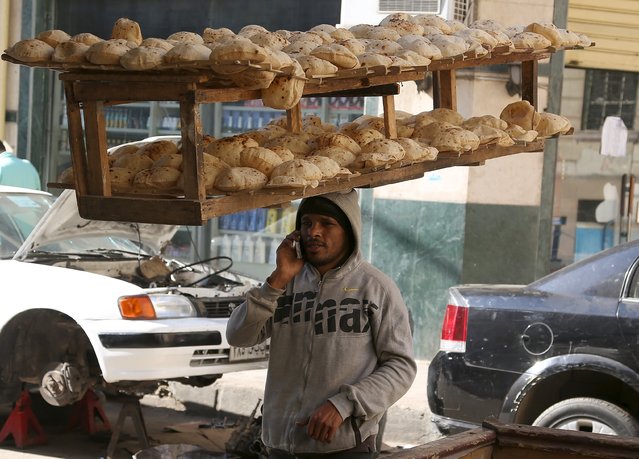
An employee of a bakery talks on his mobile while balancing on his head a tray of freshly baked bread from a local bakery in a street in Cairo, Egypt, January 12, 2016. (Photo by Asmaa Waguih/Reuters)

An employee of a bakery talks on his mobile while balancing on his head a tray of freshly baked bread from a local bakery in a street in Cairo, Egypt, January 12, 2016. (Photo by Asmaa Waguih/Reuters)
Details
13 Jan 2016 11:31:00
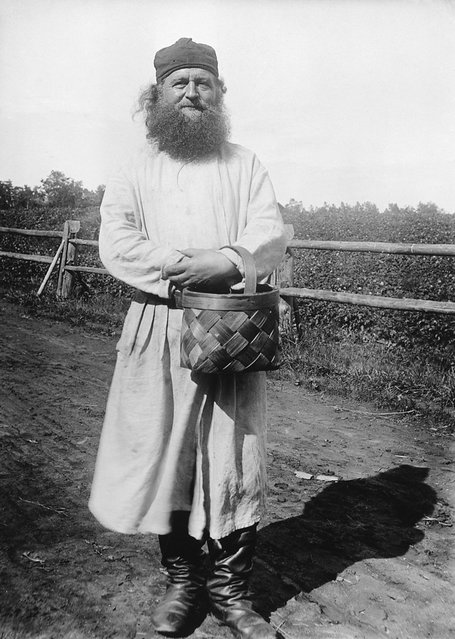
Priest, Valamo Monastery, Karelia, Russia (then Finland), 1930s. Father Venerius with a birchbark basket. (Photo by Einar Erici)

“Einar Erici (1885–1965) was a physician by profession, working at a tuberculosis hospital in Stockholm, even running a private medical practice. He was by then the most renowned Swedish expert of church organs and organ builders, and his archival collection is today held by the Swedish National Heritage Board. This archive includes mostly writings, such as letters and manuscripts for published articles and essays, but also more than 2 000 black and white photos – original prints, glass plates and film negatives”. – Swedish National Heritage Board

Photo: Priest, Valamo Monastery, Karelia, Russia (then Finland), 1930s. Father Venerius with a birchbark basket. (Photo by Einar Erici)
Details
09 Dec 2012 11:41:00
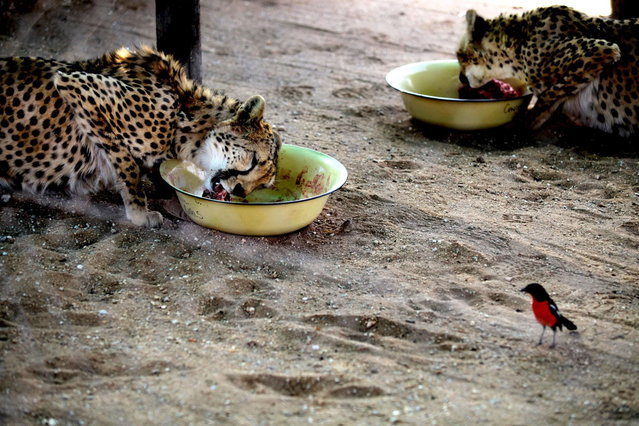
Young cheetahs eat meat at The Cheetah Conservation Fund (CCF) center in Otjiwarongo, Namibia, on August 13, 2013. The CCF started breeding Anatolian livestock dogs to promote cheetah-friendly farming after some 10,000 big cats – the current total worldwide population – were killed or moved off farms in the 1980s.  Up to 1,000 cheetahs were being killed a year, mostly by farmers who saw them as livestock killers. But the use of dogs has slashed losses for sheep and goat farmers and led to less retaliation against the vulnerable cheetah. (Photo by Jennifer Bruce/AFP Photo)

Young cheetahs eat meat at The Cheetah Conservation Fund (CCF) center in Otjiwarongo, Namibia, on August 13, 2013. The CCF started breeding Anatolian livestock dogs to promote cheetah-friendly farming after some 10,000 big cats – the current total worldwide population – were killed or moved off farms in the 1980s. Up to 1,000 cheetahs were being killed a year, mostly by farmers who saw them as livestock killers. But the use of dogs has slashed losses for sheep and goat farmers and led to less retaliation against the vulnerable cheetah. (Photo by Jennifer Bruce/AFP Photo)
Details
29 Aug 2013 10:56:00
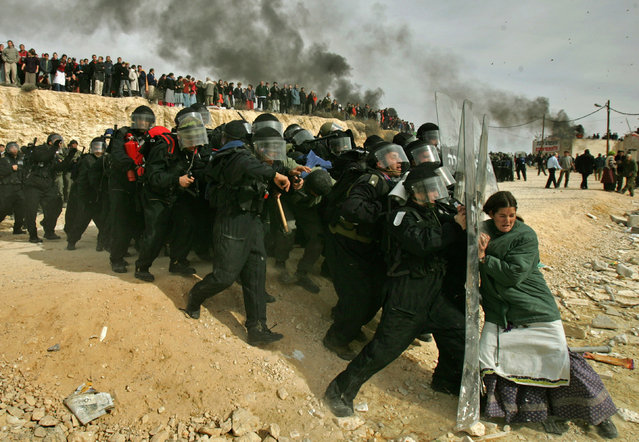
A Jewish settler struggles  with an Israeli security officer during clashes that erupted as authorities evacuated the West Bank settlement outpost of Amona, east of the Palestinian town of Ramallah, in this February 1, 2006, file photo. (Photo by Oded Balilty/AP Photo)

Oded Balilty is an Israeli documentary photographer. He is an Associated Press photographer and won the Pulitzer Prize for Breaking News Photography in 2007. Photo: A Jewish settler struggles with an Israeli security officer during clashes that erupted as authorities evacuated the West Bank settlement outpost of Amona, east of the Palestinian town of Ramallah, in this February 1, 2006, file photo. (Photo by Oded Balilty/AP Photo)
Details
17 Mar 2014 09:16:00
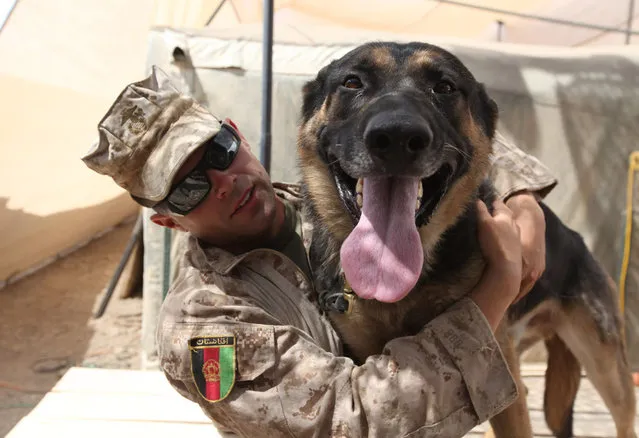
Afghanistan: Dogs of War Part 1

Throughout the course of the long war in Afghanistan, Coalition troops have relied on thousands of military working dogs to help keep them safe, and make their jobs easier. The dogs are trained to detect explosives, to find illegal drugs, to search for missing comrades, or target enemy combatants. Not only are they active on the front lines, but behind the lines they serve as therapy dogs, service dogs, and loyal companions. They also share the same risks as the ground troops, suffering injuries and sometimes death on the battlefields. Gathered here are images of these dogs and their handlers in Afghanistan and back home, from over the past several years, part of the ongoing series here on Afghanistan.
Details
03 Jun 2014 21:02:00
A rare 52.82-carat white diamond ring

A Sotheby's employee holds a rare 52.82-carat white diamond ring at Sotheby's auction house on April 12, 2010 in London, England. Price: 7 million USD. (Photo by Dan Kitwood/Getty Images)
Details
05 Oct 2011 13:21:00