Loading...
Done
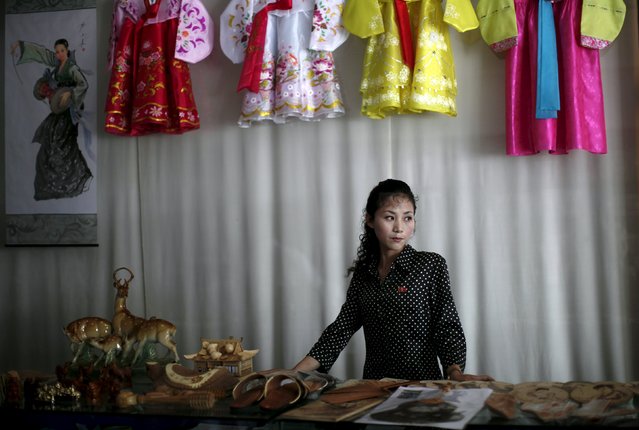
A woman stands in a gift shop in central Rason city, part of the special economic zone northeast of Pyongyang, in this August 30, 2011 file photo. North Korea is a militarized, male-dominated society, but it is women who are making the money as the insular nation allows an unofficial market-based economy to take shape. (Photo by Carlos Barria/Reuters)

A woman stands in a gift shop in central Rason city, part of the special economic zone northeast of Pyongyang, in this August 30, 2011 file photo. North Korea is a militarized, male-dominated society, but it is women who are making the money as the insular nation allows an unofficial market-based economy to take shape. (Photo by Carlos Barria/Reuters)
Details
27 May 2015 00:07:00
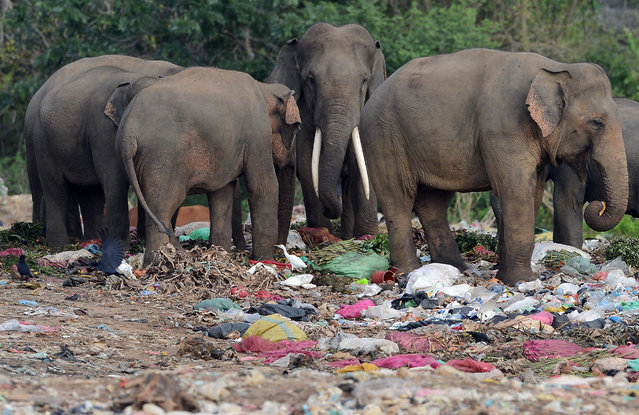
Wild elephants, including a tusker (C), rummage through garbage dumped at an open ground in the village of Digampathana in north- central Sri Lanka on August 19, 2017. Sri Lanka has banned the dumping of garbage at open fields and near wildlife reserves, but the practice continues. (Photo by Lakruwan Wanniarachchi/AFP Photo)

Wild elephants, including a tusker (C), rummage through garbage dumped at an open ground in the village of Digampathana in north- central Sri Lanka on August 19, 2017. Sri Lanka has banned the dumping of garbage at open fields and near wildlife reserves, but the practice continues. (Photo by Lakruwan Wanniarachchi/AFP Photo)
Details
09 Oct 2017 07:45:00
In this June 20, 2015 photo, Niberta Galvez uses the bottom half of his shirt to collect coca leaves in Samugari, Peru. Coca farmers were among the locals who, in 1984, formed citizen militias to help the military beat back Shining Path rebels, reducing them to a small group of fewer than 500 who now are deeply involved in drug trafficking. (Photo by Rodrigo Abd/AP Photo)

In this June 20, 2015 photo, Niberta Galvez uses the bottom half of his shirt to collect coca leaves in Samugari, Peru. Coca farmers were among the locals who, in 1984, formed citizen militias to help the military beat back Shining Path rebels, reducing them to a small group of fewer than 500 who now are deeply involved in drug trafficking. (Photo by Rodrigo Abd/AP Photo)
Details
01 Jul 2015 13:11:00
Mariana Sousa, student of the Ballet Paraisopolis, warms up during a rehearse in Paraisopolis favela, outskirts of Sao Paulo, Brazil on August 27, 2020, amid the new coronavirus COVID-19 pandemic. The 200 ballet students of Paraisopolis, the second largest favela in Sao Paulo, restarted rehearsals after five months with a coreography about a police operation that put their community in mourning last year. (Photo by Nelson Almeida/AFP Photo)

Mariana Sousa, student of the Ballet Paraisopolis, warms up during a rehearse in Paraisopolis favela, outskirts of Sao Paulo, Brazil on August 27, 2020, amid the new coronavirus COVID-19 pandemic. The 200 ballet students of Paraisopolis, the second largest favela in Sao Paulo, restarted rehearsals after five months with a coreography about a police operation that put their community in mourning last year. (Photo by Nelson Almeida/AFP Photo)
Details
11 Sep 2020 00:03:00
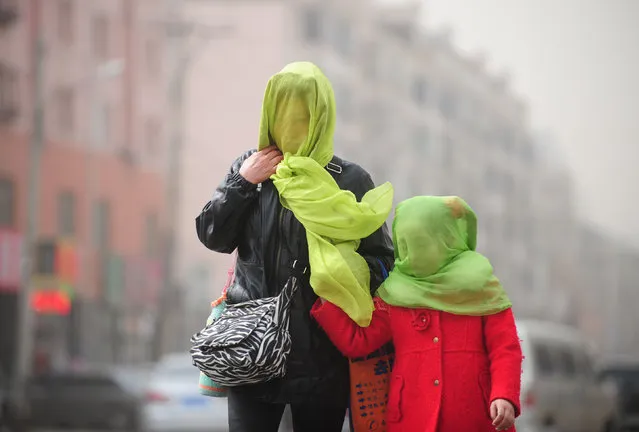
People walk during a polluted day in Shenyang, Liaoning province, March 31, 2016. (Photo by Reuters/Stringer)

People walk during a polluted day in Shenyang, Liaoning province, March 31, 2016. (Photo by Reuters/Stringer)
Details
18 Apr 2016 10:12:00
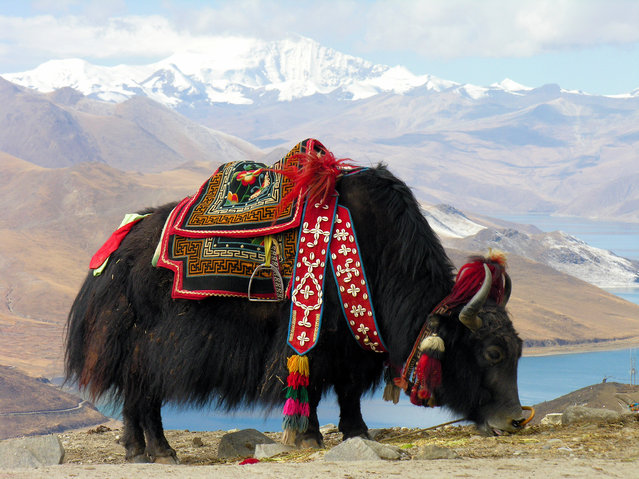
Yak near Yamdrok lake, Tibet. It is a long-haired bovinae found throughout the Himalayan region of south Central Asia, the Tibetan Plateau and as far north as Mongolia and Russia. The Tibetan economy is dominated by subsistence agriculture. Due to limited arable land, the primary occupation of the Tibetan Plateau is raising livestock, such as sheep, cattle, goats, camels, yaks, dzo, and horses. The Tibetan yak is an integral part of Tibetan life. (Photo by Dennis Jarvis)

Yak near Yamdrok lake, Tibet. It is a long-haired bovinae found throughout the Himalayan region of south Central Asia, the Tibetan Plateau and as far north as Mongolia and Russia. The Tibetan economy is dominated by subsistence agriculture. Due to limited arable land, the primary occupation of the Tibetan Plateau is raising livestock, such as sheep, cattle, goats, camels, yaks, dzo, and horses. The Tibetan yak is an integral part of Tibetan life. (Photo by Dennis Jarvis)
Details
10 Jun 2015 10:48:00
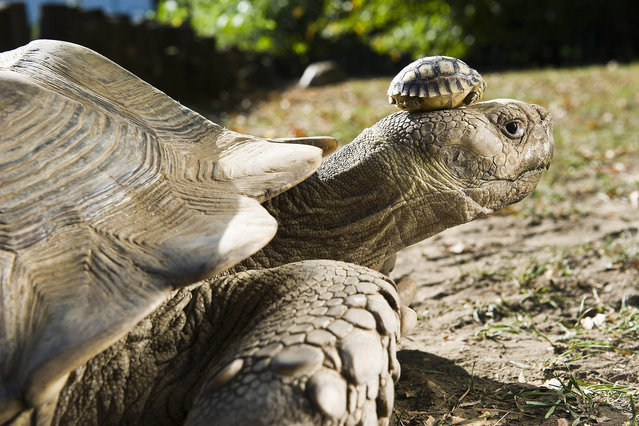
A four-day old African spurred tortoise, Geochelone sulcata, one of eight babies, was place on the head of its mother in their enclosure in Nyiregyhaza Animal Park in Nyiregyhaza, 226 km east of Budapest, Hungary, 27 September 2011. This was the first time that offspring of an African spurred tortoise were born in this zoo. The eight babies hatched after 115 days, they are 5.5 cms long and weigh 25 grams. Spurred tortoise is the largest species of land tortoises in Africa, the weight of an adult animal may reach 80 kgs. (Photo by Attila Balazs/EPA)

A four-day old African spurred tortoise, Geochelone sulcata, one of eight babies, was place on the head of its mother in their enclosure in Nyiregyhaza Animal Park in Nyiregyhaza, 226 km east of Budapest, Hungary, 27 September 2011. This was the first time that offspring of an African spurred tortoise were born in this zoo. The eight babies hatched after 115 days, they are 5.5 cms long and weigh 25 grams. Spurred tortoise is the largest species of land tortoises in Africa, the weight of an adult animal may reach 80 kgs. (Photo by Attila Balazs/EPA)
Details
07 May 2016 12:58:00
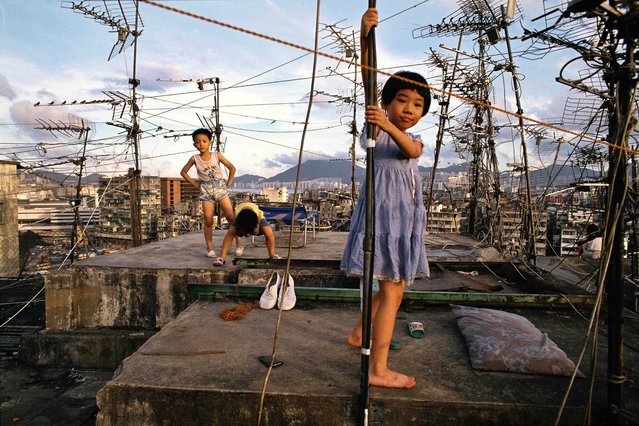
Children playing on Walled City rooftop in Hong Kong, 1989. The lack of formal governance in the Walled City led to challenges, but it also fostered a unique system of informal social order. (Photo by Greg Girard/The Guardian)

Children playing on Walled City rooftop in Hong Kong, 1989. The lack of formal governance in the Walled City led to challenges, but it also fostered a unique system of informal social order. (Photo by Greg Girard/The Guardian)
Details
04 Dec 2024 04:19:00