Loading...
Done
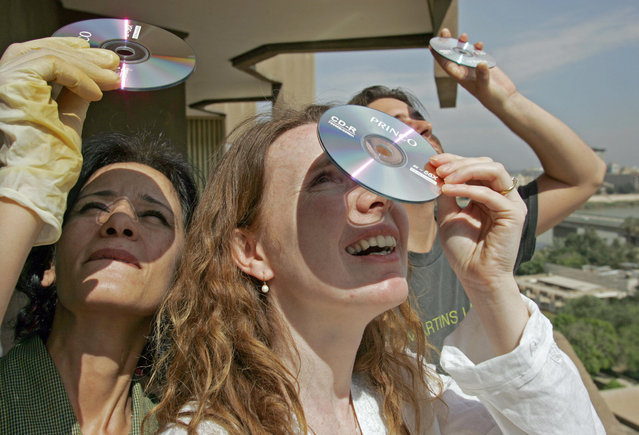
An Iraqi woman and foreigners use  pair of compact discs as a filter to watch the partial solar eclipse in war-torn Baghdad, 29 March 2006. Without access to proper equipment to protect their eyes from the sun's rays, eclipse watchers in Iraq used makeshift filters.  The moon blotted out the sun over northwest Africa early Wednesday, turning day into night in a total solar eclipse as it swept a shadowy path from the outer tip of Brazil to the steppes of Mongolia. (Photo by Hassan Ammar/AFP Photo)

An Iraqi woman and foreigners use pair of compact discs as a filter to watch the partial solar eclipse in war-torn Baghdad, 29 March 2006. Without access to proper equipment to protect their eyes from the sun's rays, eclipse watchers in Iraq used makeshift filters. The moon blotted out the sun over northwest Africa early Wednesday, turning day into night in a total solar eclipse as it swept a shadowy path from the outer tip of Brazil to the steppes of Mongolia. (Photo by Hassan Ammar/AFP Photo)
Details
25 Jul 2017 09:31:00
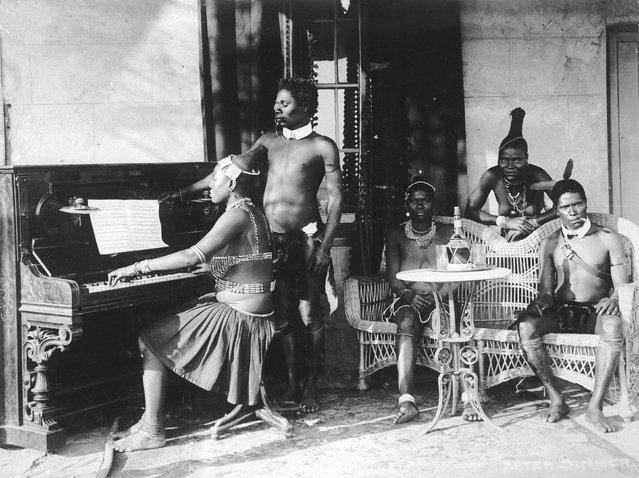
circa 1925:  A Zulu woman playing the piano while a group of others sit and listen.  (Photo by General Photographic Agency/Getty Images)

“The Zulu are the largest South African ethnic group, with an estimated 10–11 million people living mainly in the province of KwaZulu-Natal. Small numbers also live in Zimbabwe, Zambia, and Mozambique. Their language, Zulu, is a Bantu language; more specifically, part of the Nguni subgroup. The Zulu Kingdom played a major role in South African history during the 19th and 20th centuries. Under apartheid, Zulu people were classed as third-class citizens and suffered from state-sanctioned discrimination. They remain today the most numerous ethnic group in South Africa, and now have equal rights along with all other citizens”. – Wikipedia.

Photo: A Zulu woman playing the piano while a group of others sit and listen (to put it briefly, Englishmen scoff over Zulu). South Africa, circa 1925. (Photo by General Photographic Agency)

Details
03 Feb 2014 09:40:00
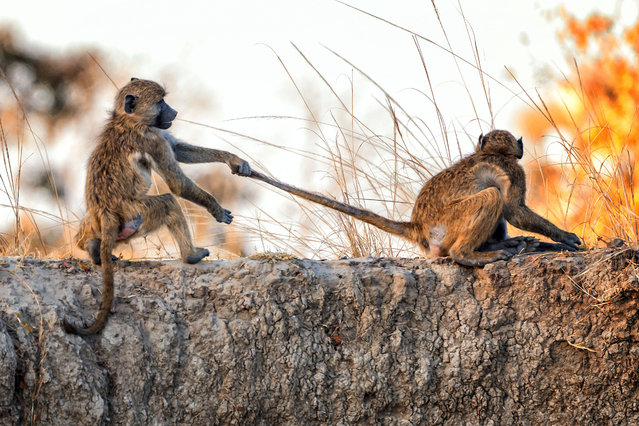
Going toe-to-toe, these fighting primates could give Floyd Mayweather a run for his money. The amazing images – captured by Australian tourist Julie Rathbone on the banks of the Zambezi river in Africa – show the pair engaging in a few fisticuffs. The Chacma baboons appeared to settle a disagreement by fighting - before a senior baboon plays referee and steps in to break it up. Nurse unit manager Julie Rathbone, 59, from New South Wales, was on a cruise down the river when she spotted the fracas unfolding. (Photo by Julie Rathbone/Caters News)

Going toe-to-toe, these fighting primates could give Floyd Mayweather a run for his money. The amazing images – captured by Australian tourist Julie Rathbone on the banks of the Zambezi river in Africa – show the pair engaging in a few fisticuffs. The Chacma baboons appeared to settle a disagreement by fighting – before a senior baboon plays referee and steps in to break it up. Nurse unit manager Julie Rathbone, 59, from New South Wales, was on a cruise down the river when she spotted the fracas unfolding. (Photo by Julie Rathbone/Caters News)
Details
28 Mar 2015 12:05:00
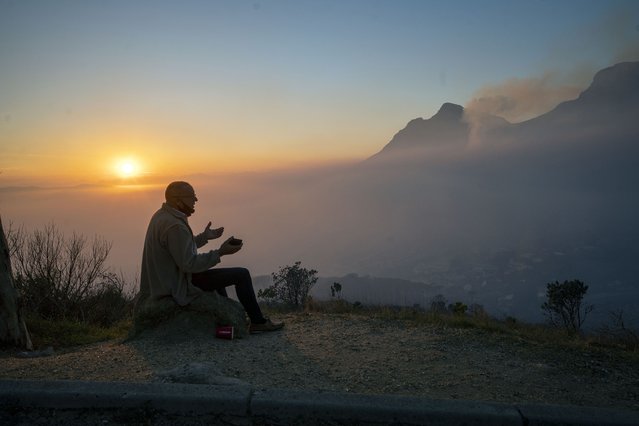
A Capetonian watches the sun rise from the top of Signal Hill as smoke engulfs the city of Cape Town, South Africa, Tuesday April 20, 2021. A massive fire spreading on the slopes of the city's famed Table Mountain, at right, is kept under control as firemen and helicopters take advantage of the low winds to contain the blaze. (Photo by Jerome Delay/AP Photo)

A Capetonian watches the sun rise from the top of Signal Hill as smoke engulfs the city of Cape Town, South Africa, Tuesday April 20, 2021. A massive fire spreading on the slopes of the city's famed Table Mountain, at right, is kept under control as firemen and helicopters take advantage of the low winds to contain the blaze. (Photo by Jerome Delay/AP Photo)
Details
21 Apr 2021 10:35:00
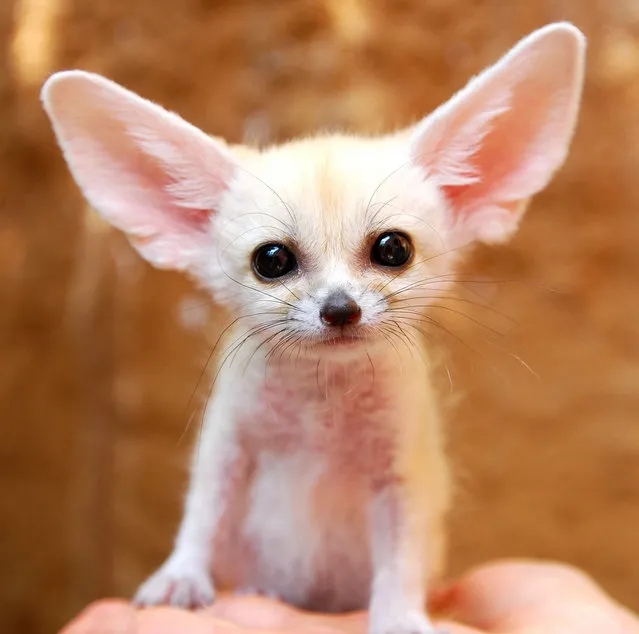
Baby Fennec Fox

“The fennec fox or fennec (Vulpes zerda) is a small nocturnal fox found in the Sahara of North Africa. Its most distinctive feature is its unusually large ears, which serve to dissipate heat”. – Wikipedia. (Photo by In Cherl Kim)
Details
14 Sep 2012 12:15:00
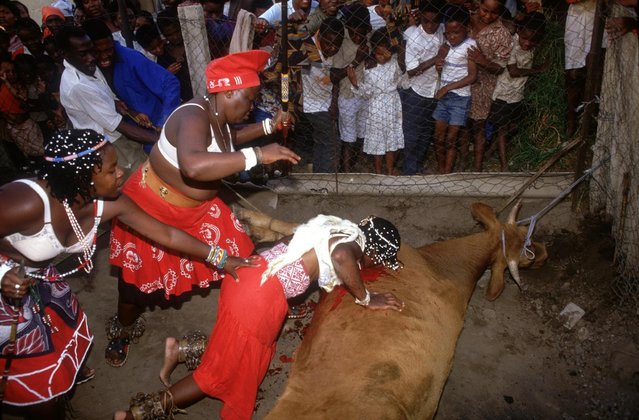
South African Sangomas are wizards and witches who are supposedly chosen by their ancestors to follow a traditional training and go through a rite of passage after which they become Sangomas and can cure and help people. They are so respected and trusted that western medical authorities have actually advised the government of South Africa to develop its cooperation with Sangomas in order to improve hygiene and health among the population. Today is graduation day for Trissa, 25, a Sangoma student in Tembisa, near Pretoria. Thanks to the help of the spirits of her ancestors, she has found a cow that had been hidden. The cow has then been killed by Sangoma Thelma and Trissa is now drinking its blood, thus becoming a Sangoma and changing her name to Nomadlozi. Location: Tembisa, near Pretoria, South Africa. (Photo by Patrick Durand/Sygma via Getty Images)

South African Sangomas are wizards and witches who are supposedly chosen by their ancestors to follow a traditional training and go through a rite of passage after which they become Sangomas and can cure and help people. They are so respected and trusted that western medical authorities have actually advised the government of South Africa to develop its cooperation with Sangomas in order to improve hygiene and health among the population. (Photo by Patrick Durand/Sygma via Getty Images)
Details
24 Feb 2017 00:05:00
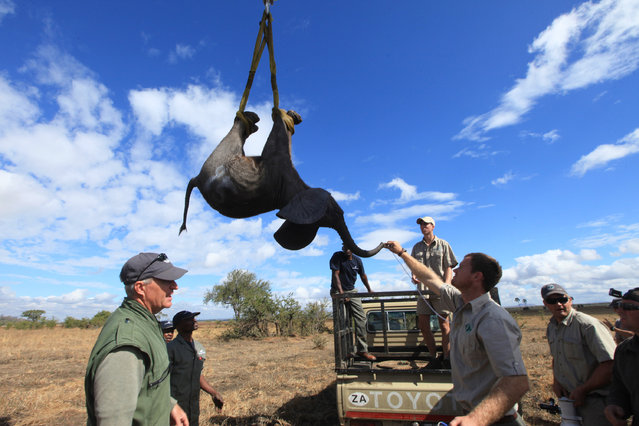
In this Tuesday July 12, 2016 photo, an elephant is lifted by a crane in an upside down position in Lilongwe, Malawi, in the first step of an assisted migration of 500 of the threatened species. African Parks, which manages three Malawian reserves is moving the 500 elephants from Liwonde National Park, this month and next, and again next year when vehicles can maneuver on the rugged terrain during Southern Africa's dry winter. (Photo by Tsvangirayi Mukwazhi/AP Photo)

In this Tuesday July 12, 2016 photo, an elephant is lifted by a crane in an upside down position in Lilongwe, Malawi, in the first step of an assisted migration of 500 of the threatened species. African Parks, which manages three Malawian reserves is moving the 500 elephants from Liwonde National Park, this month and next, and again next year when vehicles can maneuver on the rugged terrain during Southern Africa's dry winter. (Photo by Tsvangirayi Mukwazhi/AP Photo)
Details
20 Jul 2016 10:19:00
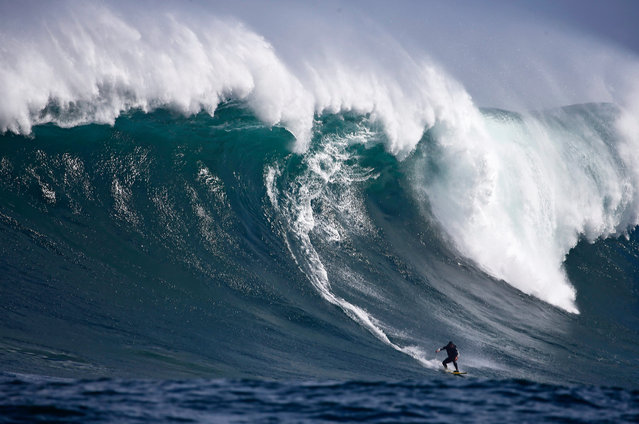
South African surfer Andy Marr rides a wave at Dungeons offshore reef in the Atlantic Ocean outside Cape Town, South Africa, 01 September 2016. The big wave surfing season is at its peak with winter swells driven by storms in the South Atlantic breaking on the Cape's outer reefs providing good conditions. Big wave surfers are competing in the 2016 Striped Horse Challenge and Rebel Sessions big wave competitons symultaneously throughout the season. (Photo by Nic Bothma/EPA)

South African surfer Andy Marr rides a wave at Dungeons offshore reef in the Atlantic Ocean outside Cape Town, South Africa, 01 September 2016. The big wave surfing season is at its peak with winter swells driven by storms in the South Atlantic breaking on the Cape's outer reefs providing good conditions. Big wave surfers are competing in the 2016 Striped Horse Challenge and Rebel Sessions big wave competitons symultaneously throughout the season. (Photo by Nic Bothma/EPA)
Details
02 Sep 2016 14:00:00