Loading...
Done
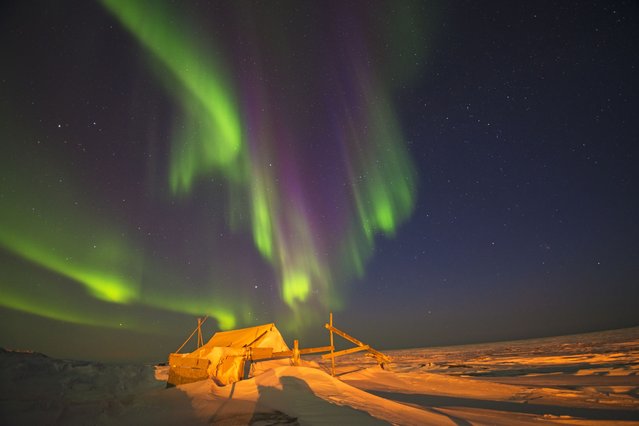
Northern lights (Aurora borealis) glow brightly over an Inupiaq fish camp along the arctic coast in North Slope, Alaska. (Photo by Steven Kazlowski/Barcroft Media)

Northern lights (Aurora borealis) glow brightly over an Inupiaq fish camp along the arctic coast in North Slope, Alaska. (Photo by Steven Kazlowski/Barcroft Media)
Details
28 Aug 2013 11:46:00
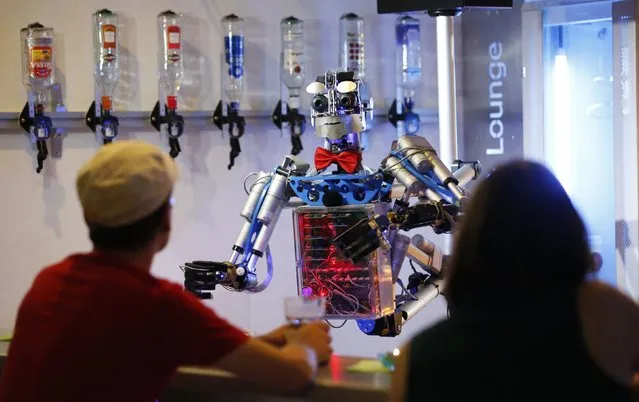
Humanoid robot bartender “Carl” interacts with guests at the Robots Bar and Lounge in the eastern German town of Ilmenau, July 26, 2013. “Carl”, developed and built by mechatronics engineer Ben Schaefer who runs a company for humanoid robots, prepares spirits for the mixing of cocktails and is able to interact with customers in small conversations. (Photo by Fabrizio Bensch/Reuters)

Humanoid robot bartender “Carl” interacts with guests at the Robots Bar and Lounge in the eastern German town of Ilmenau, July 26, 2013. “Carl”, developed and built by mechatronics engineer Ben Schaefer who runs a company for humanoid robots, prepares spirits for the mixing of cocktails and is able to interact with customers in small conversations. (Photo by Fabrizio Bensch/Reuters)
Details
22 Oct 2013 09:04:00
“Zeybeks”. That's Dance, Sunward and Zeybeks. (Photo by Hasan Baglar/2014 Sony World Photography Awards)

“Zeybeks”. That's Dance, Sunward and Zeybeks. (Photo by Hasan Baglar/2014 Sony World Photography Awards)
Details
07 Feb 2014 08:57:00
In this Tuesday, February 11, 2014, photo, a trained monkey, that makes a living for her Pakistani owner by performing to a crowd in public and private places, sits held by a leash, in Rawalpindi, Pakistan. For Pakistanis who raise and train the monkeys they are an important source of income in an impoverished country, and they form a strong bond with the animals. The monkeys are usually captured in the wild when they are babies and then trained. A trained monkey can fetch 20,000 to 30,000 rupees ($190 to $285). (Photo by Muhammed Muheisen/Associated Press)

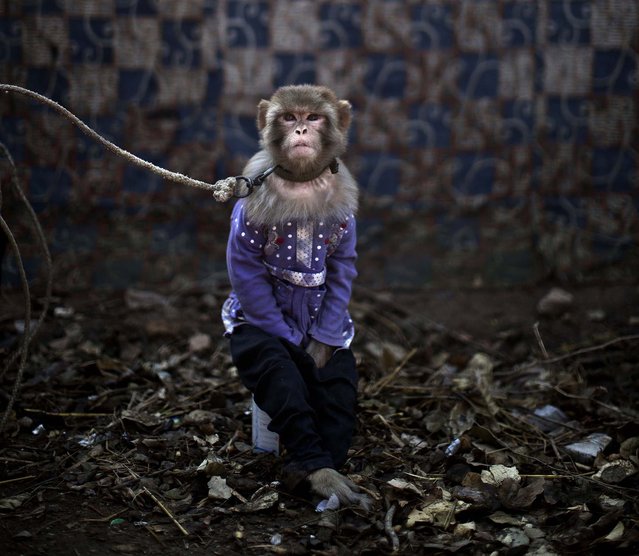
In this Tuesday, February 11, 2014, photo, a trained monkey, that makes a living for her Pakistani owner by performing to a crowd in public and private places, sits held by a leash, in Rawalpindi, Pakistan. For Pakistanis who raise and train the monkeys they are an important source of income in an impoverished country, and they form a strong bond with the animals. The monkeys are usually captured in the wild when they are babies and then trained. A trained monkey can fetch 20,000 to 30,000 rupees ($190 to $285). (Photo by Muhammed Muheisen/Associated Press)
Details
23 Feb 2014 09:50:00
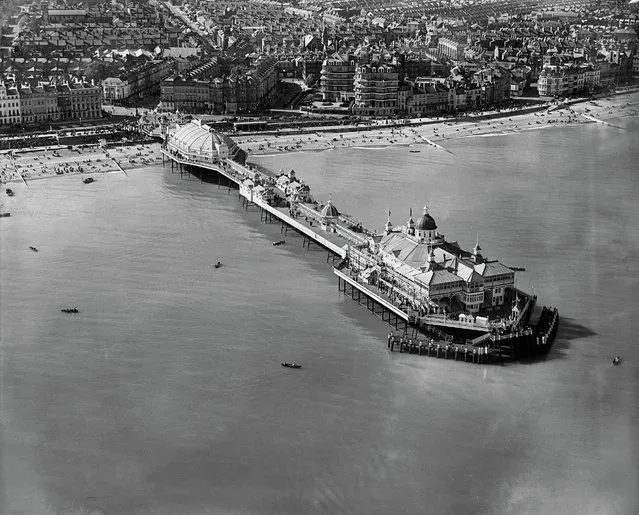
While the lido was described as bringing “modernism to the masses” on the British coast it was just the latest example of a trend that had been developing since Victorian times – transforming seaside towns into resorts for leisure and entertainment. In the latter half of the nineteenth century, the fashion was for local authorities to build great piers stretching from the promenade out into the sea

While the lido was described as bringing “modernism to the masses” on the British coast it was just the latest example of a trend that had been developing since Victorian times – transforming seaside towns into resorts for leisure and entertainment. In the latter half of the nineteenth century, the fashion was for local authorities to build great piers stretching from the promenade out into the sea. The Eastbourne Pier, pictured here in May 1931, was erected between 1866 and 1870 to an ingenious design by Eugenius Birch, which saw the structure sitting on special cups allowing the supporting struts to “move” in bad weather. Arranged on the pier's 1,000-foot length were kiosks, a theatre, a ballroom and a camera obscura. 1931. (Photo by Aerofilms Collection via “A History of Britain From Above”)
Details
25 Feb 2014 12:59:00
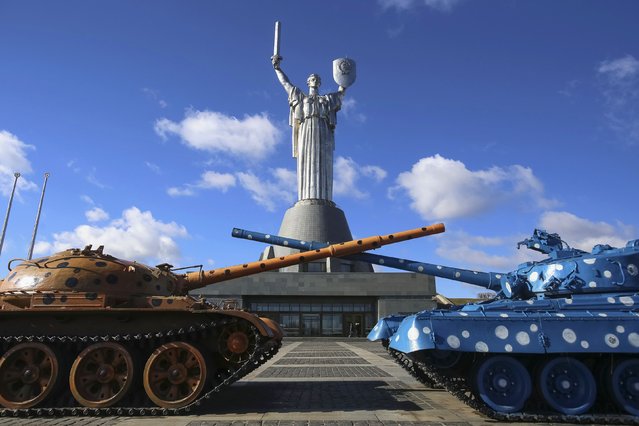
The 100-metre (300-foot), sword-wielding statue of “The Motherland” is seen in the National Museum of the History of the Great Patriotic War in Kiev March 17, 2014. On a blustery day on the banks of the Dnieper, the statue of “The Motherland”, a Soviet hammer and sickle on her shield, towered overhead, a reminder of the common cause Ukrainians and Russians died for side by side in their millions in World War Two and which Russian President Vladimir Putin thinks Ukraine has betrayed by turning to “fascism” and the West. (Photo by Konstantin Grishin/Reuters)

The 100-metre (300-foot), sword-wielding statue of “The Motherland” is seen in the National Museum of the History of the Great Patriotic War in Kiev March 17, 2014. On a blustery day on the banks of the Dnieper, the statue of “The Motherland”, a Soviet hammer and sickle on her shield, towered overhead, a reminder of the common cause Ukrainians and Russians died for side by side in their millions in World War Two and which Russian President Vladimir Putin thinks Ukraine has betrayed by turning to “fascism” and the West. (Photo by Konstantin Grishin/Reuters)
Details
22 Mar 2014 13:47:00
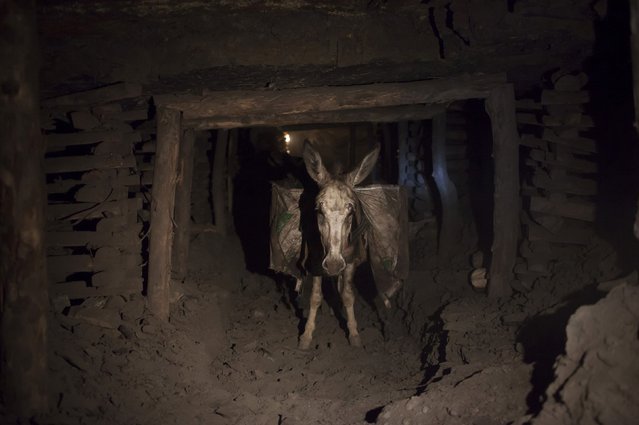
A donkey carrying sacks of coal walks through the narrow tunnels of a coal mine, in Choa Saidan Shah in Punjab province April 29, 2014. (Photo by Sara Farid/Reuters)

A donkey carrying sacks of coal walks through the narrow tunnels of a coal mine, in Choa Saidan Shah in Punjab province April 29, 2014. Coal miners in Chao Saidan Shah use donkeys to transport coal from the depths of the mines to the surface. (Photo by Sara Farid/Reuters)
Details
11 May 2014 12:03:00
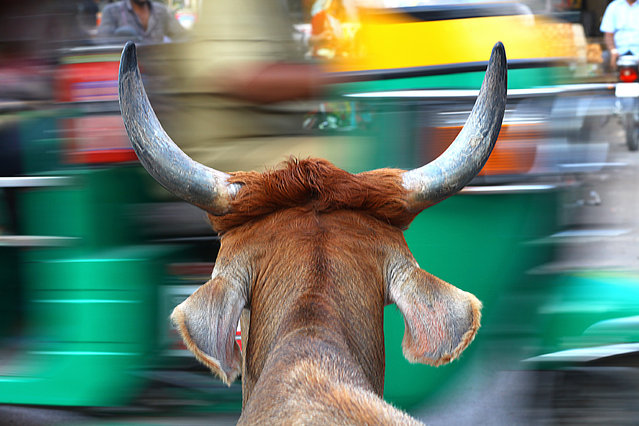
“Slow”. A calm cow in the messy streets of Jodhpur. Photo location: India. (Photo and caption by Matthias Troeger/National Geographic Photo Contest)

“Slow”. A calm cow in the messy streets of Jodhpur. Photo location: India. (Photo and caption by Matthias Troeger/National Geographic Photo Contest)
Details
20 May 2014 12:18:00