Loading...
Done
Models display a creation by K-Lynn Lingerie during a fashion show in the Lebanese capital Beirut on April 24, 2016. (Photo by Anwar Amro/AFP Photo)

Models display a creation by K-Lynn Lingerie during a fashion show in the Lebanese capital Beirut on April 24, 2016. (Photo by Anwar Amro/AFP Photo)
Details
27 Apr 2016 10:06:00
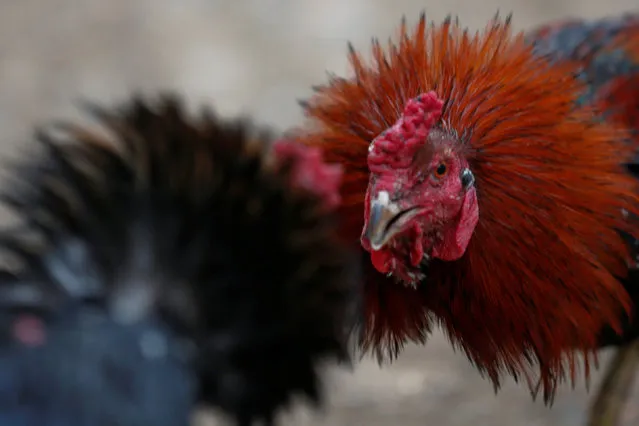
Two cocks are trained for a fight in a village in Nakhon Sawan province, Thailand January 10, 2017. (Photo by Chaiwat Subprasom/Reuters)

Two cocks are trained for a fight in a village in Nakhon Sawan province, Thailand January 10, 2017. (Photo by Chaiwat Subprasom/Reuters)
Details
11 Jan 2017 14:56:00
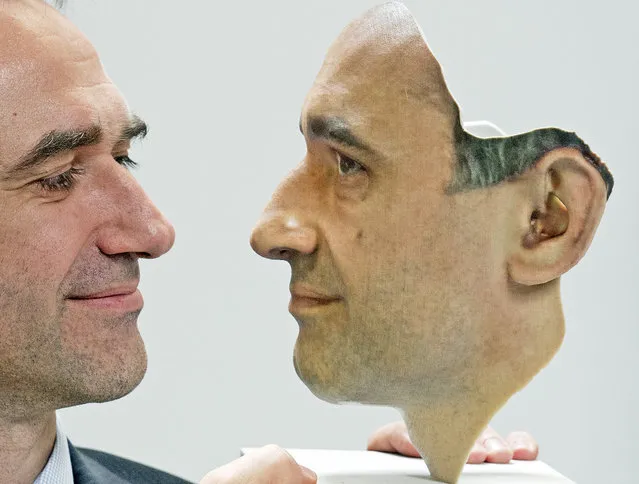
Mario Huettenhofer, chief of the German company 3D Fab, presents his own face as 3d print during the international fairs FabCon 3.D and Rapid.Tech in Erfurt, Germany, Thursday, May 15, 2014. 130 exhibitors from all over the world present the entire world of 3D printing. (Photo by Jens Meyer/AP Photo)

Mario Huettenhofer, chief of the German company 3D Fab, presents his own face as 3d print during the international fairs FabCon 3.D and Rapid.Tech in Erfurt, Germany, Thursday, May 15, 2014. 130 exhibitors from all over the world present the entire world of 3D printing. The trade fairs are accompanied by specialist programs featuring 80 scientists, practitioners and trend analysts from ten countries, who will explain the latest findings, trends and applications for additive processes in industry and for 3D printing in the private sector to newcomers, experts and consumers alike. (Photo by Jens Meyer/AP Photo)

Details
17 May 2014 13:06:00
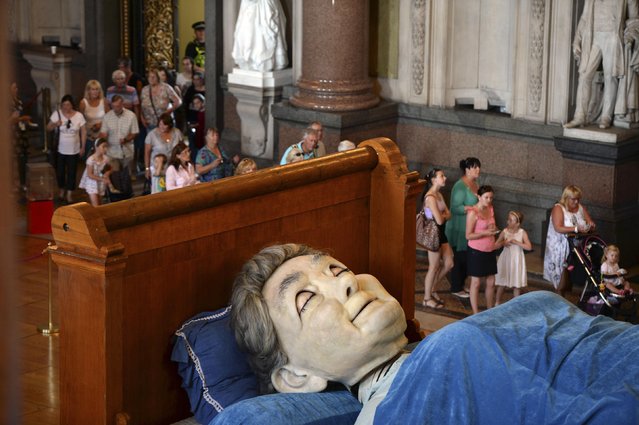
Visitors look at a giant puppet of a grandmother sleeping on a bed inside St George's Hall in Liverpool, northern England July 23, 2014. (Photo by Nigel Roddis/Reuters)

Visitors look at a giant puppet of a grandmother sleeping on a bed inside St George's Hall in Liverpool, northern England July 23, 2014. The grandmother is one of two giant models made for a World War I commemorative event. (Photo by Nigel Roddis/Reuters)
Details
26 Jul 2014 11:39:00
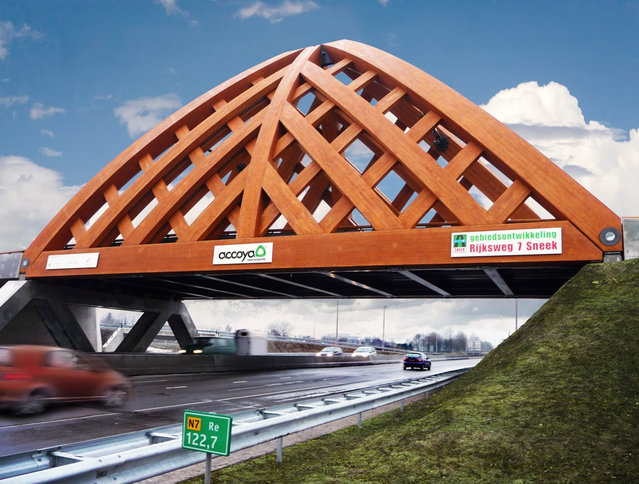
Wood Bridge In Netherlands

Commissioned by the Province of Friesland, Oak (Onix and Achterbosch Architecture) has developed a road bridge that connects 2 districts of Sneek on either side of the A7 motorway. The bridge was designed for a municipality that wished to establish a new city marker along the motorway. Framework The Department of Public Works, the user of the bridge, stated that it wished to use more wood in its constructions.
Details
08 May 2013 12:27:00
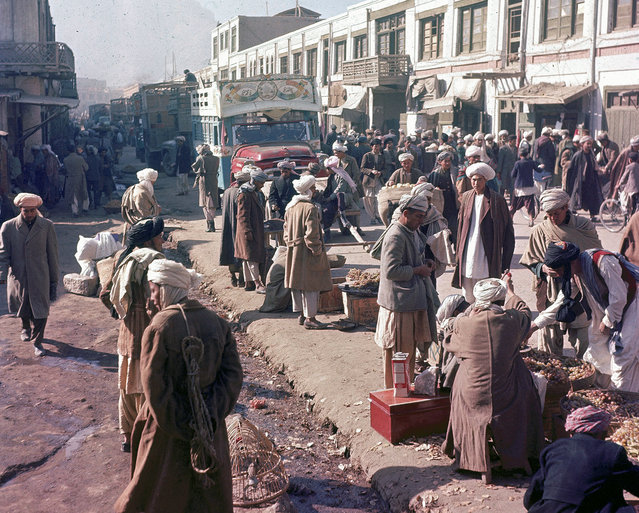
Men stroll past roadside vendors as a painted truck makes its way through the busy street in Kabul, Afghanistan, November, 1961. (Photo by Henry S. Bradsher/AP Photo via The Atlantic)

Men stroll past roadside vendors as a painted truck makes its way through the busy street in Kabul, Afghanistan, November, 1961. (Photo by Henry S. Bradsher/AP Photo via The Atlantic)
Details
03 Jul 2013 11:04:00
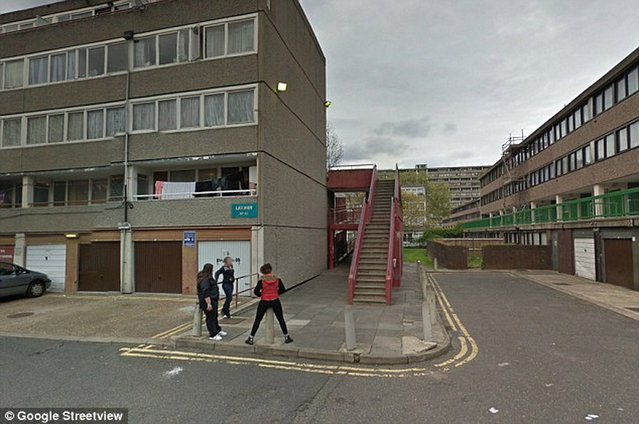
Bad Part of Town By Google Street View

Take a walk on the wild side around some of the most down right dangerous places in the world - and all without leaving your desk, courtesy of Google Street View. Since 2007, Google's amazing technology has given people the chance to visit the Eiffel Tower, peer out over San Francisco's Golden Gate Bridge or walk along a beach in the Bahamas. But as well as mapping the tourist-friendly hotspots, Google also ventured into places you really wouldn't want to find yourself. Here is a collection of some the most notorious areas captured by the infamous roaming camera cars from around the UK and the world.
Details
03 Oct 2013 11:05:00
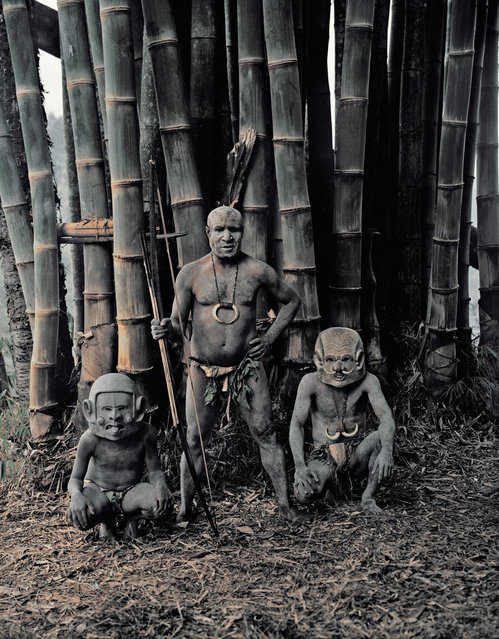
“Asaro from the Eastern Highlands”. The mudmen could not cover their faces with mud because the people of Papua New Guinea thought that the mud from the Asaro river was poisonous. So instead of covering their faces with this alleged poison, they made masks from pebbles that they heated and water from the waterfall, with unusual designs such as long or very short ears either going down to the chin or sticking up at the top, long joined eyebrows attached to the top of the ears, horns and sideways mouths. (Jimmy Nelson)

“Asaro from the Eastern Highlands”. The mudmen could not cover their faces with mud because the people of Papua New Guinea thought that the mud from the Asaro river was poisonous. So instead of covering their faces with this alleged poison, they made masks from pebbles that they heated and water from the waterfall, with unusual designs such as long or very short ears either going down to the chin or sticking up at the top, long joined eyebrows attached to the top of the ears, horns and sideways mouths. (Photo and caption by Jimmy Nelson)
Details
20 Oct 2013 08:54:00