Loading...
Done
A U.S. crewman runs from a crashed CH-21 Shawnee troop helicopter near the village of Ca Mau in the southern tip of South Vietnam, Dec. 11, 1962

“Horst Faas (28 April 1933 – 10 May 2012) was a German photo-journalist and two-time Pulitzer Prize winner. He is best-known for his images of the Vietnam War”. – Wikipedia

Photo: A U.S. crewman runs from a crashed CH-21 Shawnee troop helicopter near the village of Ca Mau in the southern tip of South Vietnam, December 11, 1962. Two helicopters crashed without serious injuries during a government raid on the Viet Cong-infiltrated area. Both helicopters were destroyed to keep them out of enemy hands. (Photo by AP Photo/Horst Faas)
Details
24 May 2012 09:43:00
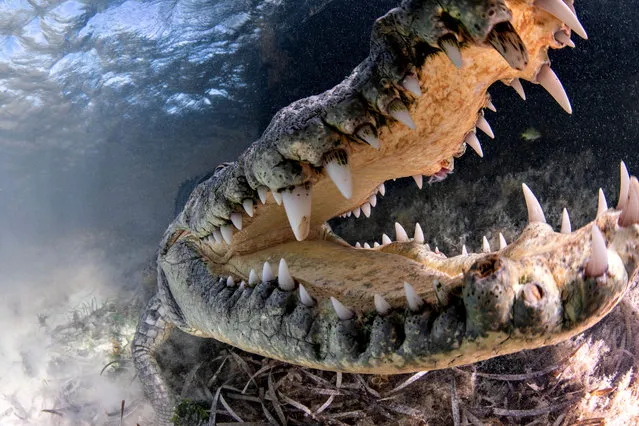
The trip to get to the reef takes eight hours by car and boat, and there is no luxury hotel at the other end. (Photo by Alex Suh/Caters News Agency)

A photographer with a passion for wild animals was able to get up close and personal with one of nature’s deadliest creatures. Alex Suh has traveled to Mexico’s Banco Chinchorro reef twice in the past three years to get into the waters and capture the crocodiles in their natural habitat after an invitation from Yucatan Dive Trek. (Photo by Alex Suh/Caters News Agency)
Details
24 Aug 2018 00:01:00


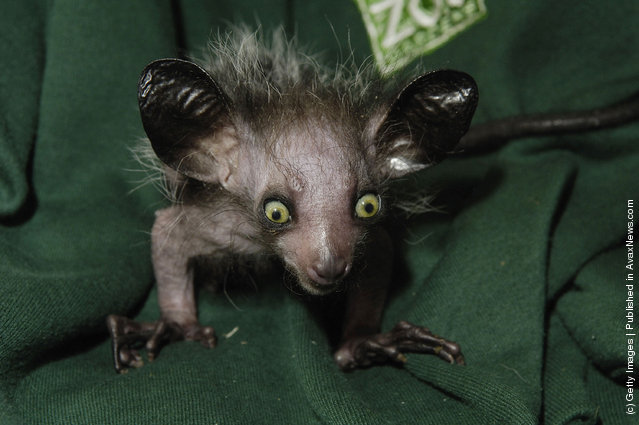
“The aye-aye (Daubentonia madagascariensis) is a lemur, a strepsirrhine primate native to Madagascar that combines rodent-like teeth and a special thin middle finger to fill the same ecological niche as a woodpecker. It is the world's largest nocturnal primate, and is characterized by its unusual method of finding food; it taps on trees to find grubs, then gnaws holes in the wood and inserts its narrow middle finger to pull the grubs out. The only other animal species known to find food in this way is the striped possum. From an ecological point of view the aye-aye fills the niche of a woodpecker as it is capable of penetrating wood to extract the invertebrates within”. – Wikipedia

Photo: In this handout image from Bristol Zoo is seen the first captive bred aye-aye in the UK named “Kintana” (meaning star in Malagasy) April 15, 2005 at Bristol Zoo Gardens, England. The zoo announced today only the second baby aye-aye to be hand-reared in the world (the first was in Jersey Zoo) and has now made his first public appearance since his birth on 11 February 2005. (Photo by Rob Cousins/Bristol Zoo via Getty Images)
Details
13 Apr 2011 13:33:00


“US Airways Flight 1549 was US Airways' scheduled domestic commercial passenger flight from LaGuardia Airport in New York City to Charlotte/Douglas International Airport, Charlotte, North Carolina. On January 15, 2009, the aircraft flying this route, an Airbus A320-214, was successfully ditched in the Hudson River adjacent to midtown Manhattan six minutes after takeoff from LaGuardia Airport after being disabled by striking a flock of Canada Geese during its initial climb out. The incident became known as the «Miracle On The Hudson»”. – Wikipedia

Photo: The Airbus jet that pilot Chesley “Sully” Sullenberger landed on the Hudson River is pulled along Yorkmont Road as it makes its way to the Carolinas Aviation Museum June 10, 2011 in Charlotte, North Carolina. An official unveiling of the plane, which will be on display at the Carolinas Avaiation Museum, will take place on Saturday, June 11. (Photo by Davis Turner/Getty Images)
Details
11 Jun 2011 12:38:00
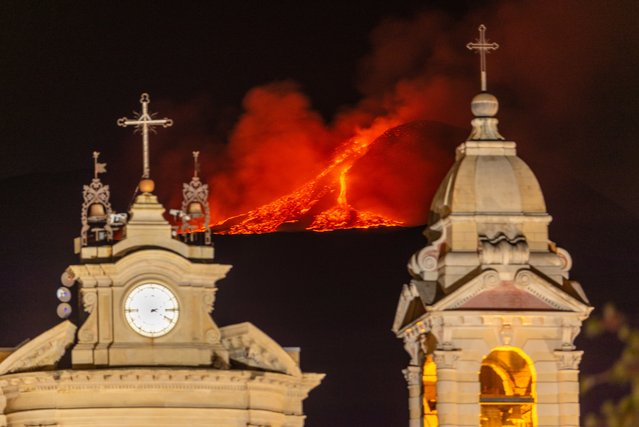
Lava erupts from a crater of Mt. Etna, Europe's largest active volcano, behind Santa Maria della Guardia church in Belpasso, near Catania, in southern Italian island of Sicily, early Friday, June 18, 2021. Since Feb. 16, 2021, Mt. Etna has begun a series of spectacular eruptive episodes. (Photo by Salvatore Allegra/AP Photo)

Lava erupts from a crater of Mt. Etna, Europe's largest active volcano, behind Santa Maria della Guardia church in Belpasso, near Catania, in southern Italian island of Sicily, early Friday, June 18, 2021. Since Feb. 16, 2021, Mt. Etna has begun a series of spectacular eruptive episodes. (Photo by Salvatore Allegra/AP Photo)
Details
07 Jul 2021 09:32:00
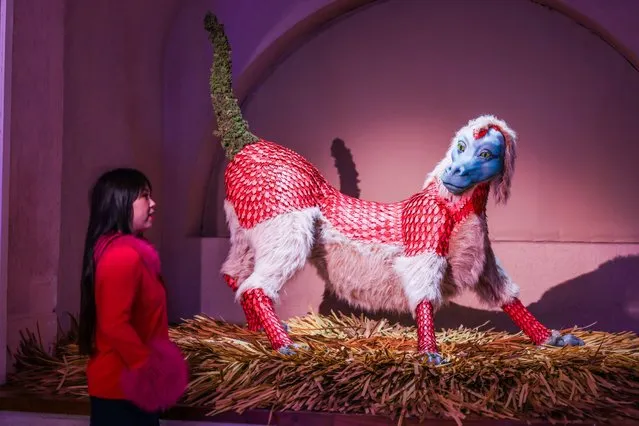
A major new exhibition exploring the irresistible force of cuteness in contemporary culture at Somerset House, London on January 24, 2024. From emojis to internet memes, video games to plushie toys, food to loveable robotic design, cuteness has taken over our world. (Photo by Paul Quezada-Neiman/Alamy Live News)

A major new exhibition exploring the irresistible force of cuteness in contemporary culture at Somerset House, London on January 24, 2024. From emojis to internet memes, video games to plushie toys, food to loveable robotic design, cuteness has taken over our world. (Photo by Paul Quezada-Neiman/Alamy Live News)
Details
28 Feb 2024 08:25:00
A female Syrian soldier from the Republican Guard commando battalion drives a tank during clashes with rebels in the restive Jobar area, in eastern Damascus, on March 25, 2015. The female battalion, which was created nearly a year ago, consists of 800 female soldiers who are positioned in the suburbs of the Syrian capital where they monitor and secure the frontlines with snipers, rockets and machine guns. (Photo by Joseph Eid/AFP Photo)

A female Syrian soldier from the Republican Guard commando battalion drives a tank during clashes with rebels in the restive Jobar area, in eastern Damascus, on March 25, 2015. The female battalion, which was created nearly a year ago, consists of 800 female soldiers who are positioned in the suburbs of the Syrian capital where they monitor and secure the frontlines with snipers, rockets and machine guns. (Photo by Joseph Eid/AFP Photo)
Details
26 Mar 2015 12:01:00
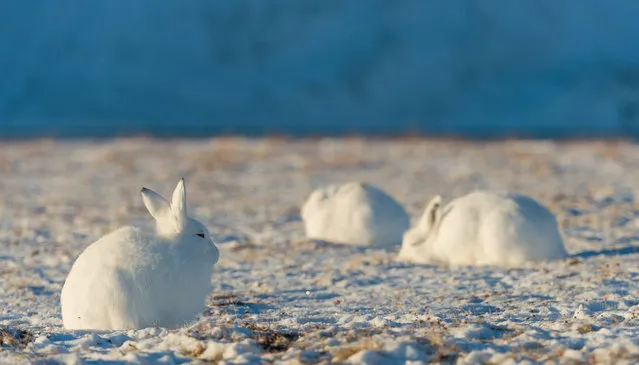
Arctic Hare

The arctic hare, or polar rabbit, is a species of hare which is adapted largely to polar and mountainous habitats. The arctic hare survives with a thick coat of fur and usually digs holes in the ground or under snow to keep warm and sleep. Arctic hares look like rabbits but have shorter ears, are taller when standing, and, unlike rabbits, can thrive in cold climates. They can travel together with many other hares, sometimes huddling with dozens or more, but are usually found alone, taking, in some cases, more than one partner. The arctic hare can run up to 60 kilometres per hour (40 mph). Its predators include the arctic wolf, arctic fox, and ermine.
Details
17 Mar 2014 13:56:00