Loading...
Done
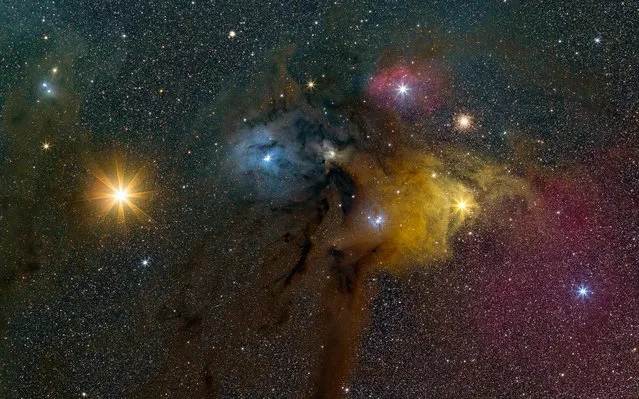
Mars and its Rival Antares and the Rho Ophiuchi cloud complex. (Photo by Phil Hart/CWAS/The Guardian)

These spectacular images of the universe are the finalists in the 2016 CWAS “David Malin” awards. The annual competition, which celebrates the best astronomy images taken by Australian photographers, is part of AstroFest 2016. The winners will be announced on 16 July. An associated exhibition opens the following day at the CSIRO Parkes Observatory visitors centre, and a second exhibition will also travel to selected venues around Australia. Here: Mars and its Rival Antares and the Rho Ophiuchi cloud complex. (Photo by Phil Hart/CWAS/The Guardian)
Details
12 Jul 2016 12:08:00
Chen interacts with his “smart” s*x doll as he lays in a bed in his home in Guangzhou, Guandong Province, China, 05 April 2018. (Photo by Aleksandar Plavevski/EPA/EFE)

Chen interacts with his “smart” sеx doll as he lays in a bed in his home in Guangzhou, Guandong Province, China, 05 April 2018. Chen, because of his busy pharmaceutical sales job and the travel it involves, has no time for a girlfriend. Chinese girls all want to talk about marriage after the second date and he is not interested in that for now, he said. (Photo by Aleksandar Plavevski/EPA/EFE)
Details
30 May 2018 00:05:00


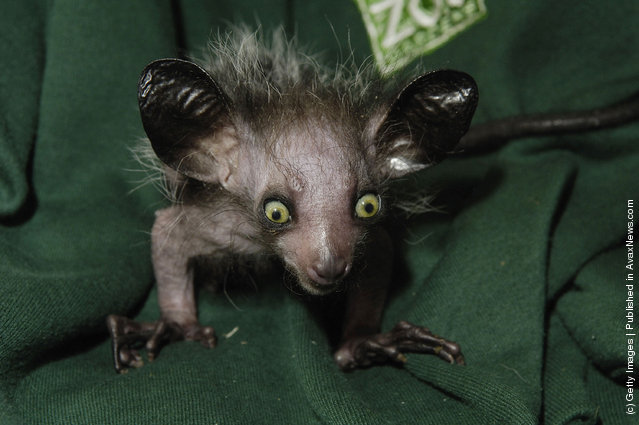
“The aye-aye (Daubentonia madagascariensis) is a lemur, a strepsirrhine primate native to Madagascar that combines rodent-like teeth and a special thin middle finger to fill the same ecological niche as a woodpecker. It is the world's largest nocturnal primate, and is characterized by its unusual method of finding food; it taps on trees to find grubs, then gnaws holes in the wood and inserts its narrow middle finger to pull the grubs out. The only other animal species known to find food in this way is the striped possum. From an ecological point of view the aye-aye fills the niche of a woodpecker as it is capable of penetrating wood to extract the invertebrates within”. – Wikipedia

Photo: In this handout image from Bristol Zoo is seen the first captive bred aye-aye in the UK named “Kintana” (meaning star in Malagasy) April 15, 2005 at Bristol Zoo Gardens, England. The zoo announced today only the second baby aye-aye to be hand-reared in the world (the first was in Jersey Zoo) and has now made his first public appearance since his birth on 11 February 2005. (Photo by Rob Cousins/Bristol Zoo via Getty Images)
Details
13 Apr 2011 13:33:00


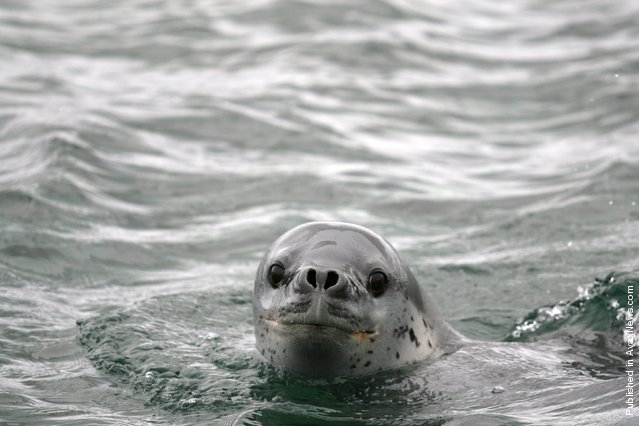
“The leopard seal (Hydrurga leptonyx), also referred to as the sea leopard, is the second largest species of seal in the Antarctic (after the southern elephant seal). It is most common in the southern hemisphere along the coast of Antarctica and on most sub-Antarctic islands, but can also be found on the coasts of southern Australia, Tasmania, South Africa, New Zealand, Lord Howe Island, Tierra del Fuego, the Cook Islands, and the Atlantic coast of South America. It can live twenty-six years, possibly more. Orcas and large sharks are the only natural predators of leopard seals”. – Wikipedia

Photo by: Gilad Rom; Source: Flickr
Details
13 Nov 2011 11:24:00
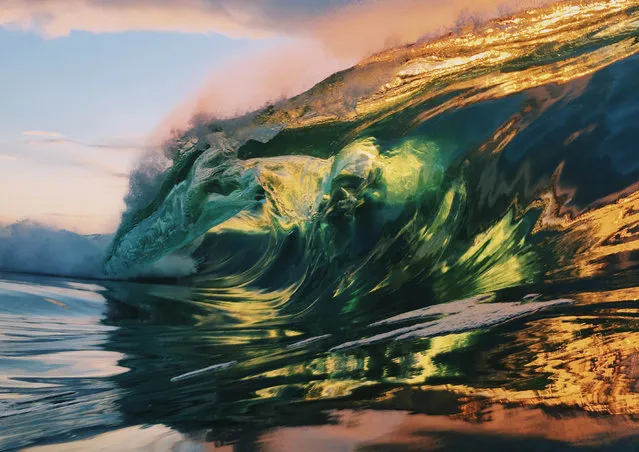
“Whether that means getting up way before the sun, like I do most days, going out somewhere that I’m not comfortable or just trying to get different angles or styles of photos, I am trying to display the crazy beauty of the ocean, and usually moments that literally last less than a split second”. (Photo by Ryan Pernoski/Caters News Agency)

These kaleidoscopic images are the work of one persistent photographer’s efforts to capture vibrant hues at the exact moment a wave breaks. Ryan Pernofski‘s stunning shots feature brilliant yellows, reds, blues and purples as an array of sunlight hits the water at the perfect time. What’s even more impressive: Ryan, a 27-year-old Australian, began shooting his popular masterpieces without using a professional camera, taking his iPhone out into the water instead. Ryan began experimenting with this method in 2012, using an underwater housing to protect his phone, as he could not afford a professional camera. (Photo by Ryan Pernoski/Caters News Agency)
Details
09 Jun 2018 00:05:00
A protester spits fire during a protest to mark the second anniversary of months of civil unrising against social inequality, in Santiago, on October 18, 2021. The social-justice protests that rocked Chile in October 2019 led ultimately to the decision to create a new constitutional convention to draft a constitution to replace the one written during the dictatorship of Augusto Pinochet (1973-1990). The new 155-member the new body is in charge of writing a new constitution meant to pry power from the hands of the elite and spread it more equitably in the South American nation. (Photo by Martin Bernetti/AFP Photo)

A protester spits fire during a protest to mark the second anniversary of months of civil unrising against social inequality, in Santiago, on October 18, 2021. The social-justice protests that rocked Chile in October 2019 led ultimately to the decision to create a new constitutional convention to draft a constitution to replace the one written during the dictatorship of Augusto Pinochet (1973-1990). The new 155-member the new body is in charge of writing a new constitution meant to pry power from the hands of the elite and spread it more equitably in the South American nation. (Photo by Martin Bernetti/AFP Photo)
Details
20 Oct 2021 09:01:00
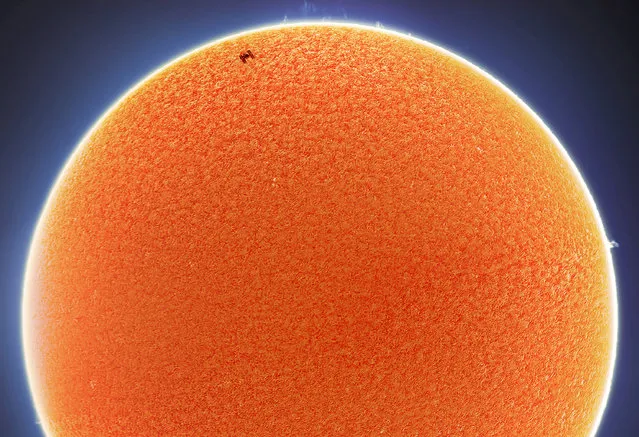
The International Space Station (ISS) moving in front of the sun in November 2020 by astrophotographer Andrew McCarthy. These incredible photos capture the clearest images ever taken of the International Space Station (ISS) moving in front of both the moon and the sun. The photos, taken within days of one another, were captured in the space of less than a second, as the space station could be clearly seen zooming across against the bright backdrops of both moon and sun. Photographer Andrew McCarthy, from California, USA, said the photo of the ISS in front of the sun, in broad daylight, was “one of my trickiest shots ever”. (Photo by Andrew McCarthy/South West News Service)

The International Space Station (ISS) moving in front of the sun in November 2020 by astrophotographer Andrew McCarthy. These incredible photos capture the clearest images ever taken of the International Space Station (ISS) moving in front of both the moon and the sun. The photos, taken within days of one another, were captured in the space of less than a second, as the space station could be clearly seen zooming across against the bright backdrops of both moon and sun. Photographer Andrew McCarthy, from California, USA, said the photo of the ISS in front of the sun, in broad daylight, was “one of my trickiest shots ever”. (Photo by Andrew McCarthy/South West News Service)
Details
28 Nov 2020 00:05:00
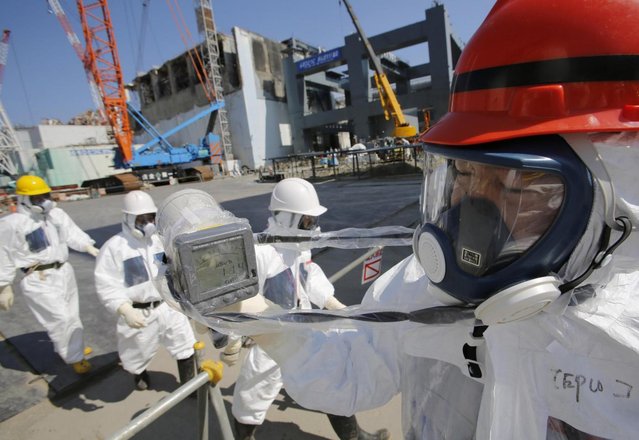
A radiation monitor indicates 114.00 microsieverts per hour near the building housing the plant's No. 4 reactor, center, and an under construction foundation, right, which will store the reactor's melted fuel rods at Tokyo Electric Power Co.'s tsunami-crippled Fukushima Dai-ichi nuclear power plant in Okuma, Fukushima prefecture, Wednesday, March 6, 2013, ahead of the second anniversary of the March 11, 2011 tsunami and earthquake. (Photo by Issei Kato/AP Photo/Pool)

A radiation monitor indicates 114.00 microsieverts per hour near the building housing the plant's No. 4 reactor, center, and an under construction foundation, right, which will store the reactor's melted fuel rods at Tokyo Electric Power Co.'s tsunami-crippled Fukushima Dai-ichi nuclear power plant in Okuma, Fukushima prefecture, Wednesday, March 6, 2013, ahead of the second anniversary of the March 11, 2011 tsunami and earthquake. Some 110,000 people living around the nuclear plant were evacuated after the massive March 11, 2011, earthquake and tsunami knocked out the plant's power and cooling systems, causing meltdowns in three reactors and spewing radiation into the surrounding air, soil and water. (Photo by Issei Kato/AP Photo/Pool)
Details
06 Mar 2013 13:19:00