Loading...
Done
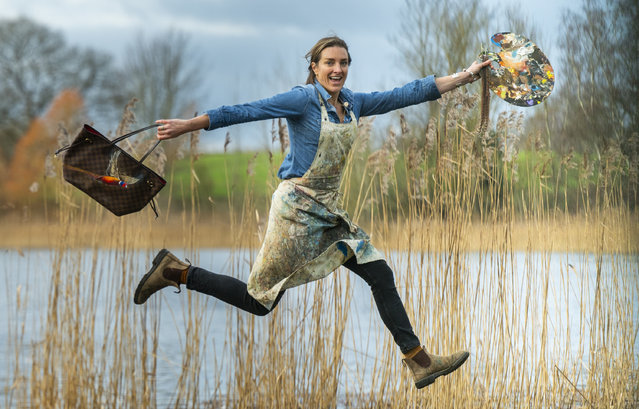
A woman joyfully leaps across a body of water, carrying a pheasant-decorated Louis Vuitton bag and a paint palette in the last decade of January 2025 in Coldstream, Scottish Borers. (Photo by Phil Wilkinson/The Times)

A woman joyfully leaps across a body of water, carrying a pheasant-decorated Louis Vuitton bag and a paint palette in the last decade of January 2025 in Coldstream, Scottish Borers. (Photo by Phil Wilkinson/The Times)
Details
26 Feb 2025 04:04:00
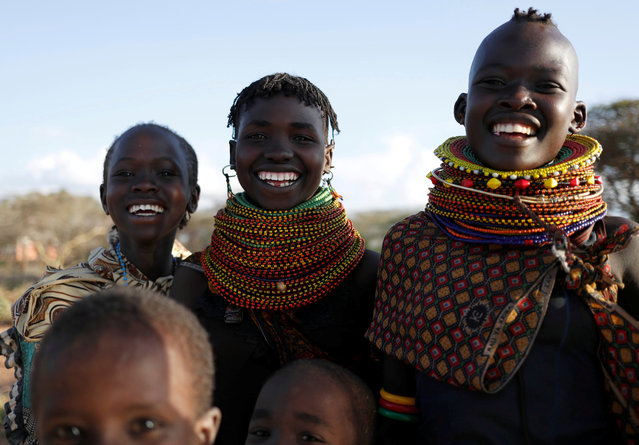
Young Turkana tribeswomen sing in a village near Baragoy, Kenya August 6, 2017. (Photo by Goran Tomasevic/Reuters)

Young Turkana tribeswomen sing in a village near Baragoy, Kenya August 6, 2017. Kenyans are due to go to the polls on Aug. 8. to vote in presidential elections after a tightly-fought race between President Uhuru Kenyatta and main opposition leader Raila Odinga. (Photo by Goran Tomasevic/Reuters)
Details
08 Aug 2017 07:05:00
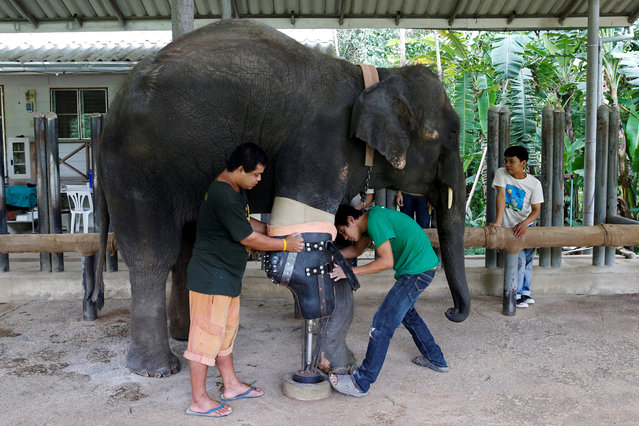
Mosha, the elephant that was injured by a landmine, has her prosthetic leg attached at the Friends of the Asian Elephant Foundation in Lampang, Thailand, June 29, 2016. Mosha was 7 months old when she stepped on a land mine near Thailand’s border with Myanmar and lost a front leg. That was a decade ago. Mosha is one of more than a dozen elephants who have been wounded by land mines in the border region, where rebels have been fighting the Myanmar government for decades. She was the first elephant to be fitted with a prosthetic limb at the hospital near Lampang. Mosha weighed about 1,300 pounds (590 kg) when she was wounded. (Photo by Athit Perawongmetha/Reuters)

Mosha, the elephant that was injured by a landmine, has her prosthetic leg attached at the Friends of the Asian Elephant Foundation in Lampang, Thailand, June 29, 2016. Mosha was 7 months old when she stepped on a land mine near Thailand’s border with Myanmar and lost a front leg. That was a decade ago... (Photo by Athit Perawongmetha/Reuters)
Details
24 Aug 2016 11:19:00
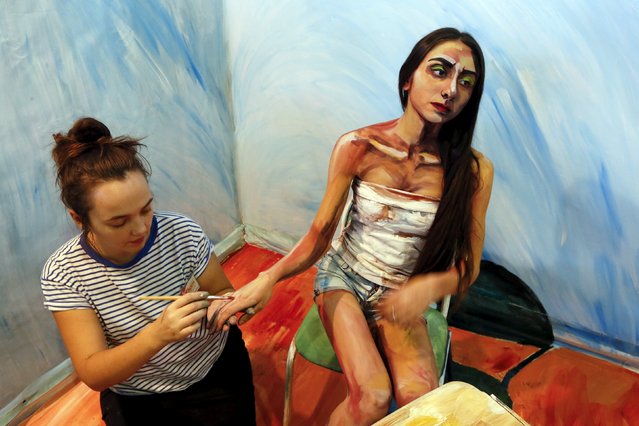
Russian artist Maria Gazanova (L) works on her "The Alive Painting" art work during the Art Krasnoyarsk annual festival in Siberian city of Krasnoyarsk, Russia November 4, 2015. (Photo by Ilya Naymushin/Reuters)

Russian artist Maria Gazanova (L) works on her "The Alive Painting" art work during the Art Krasnoyarsk annual festival in Siberian city of Krasnoyarsk, Russia November 4, 2015. (Photo by Ilya Naymushin/Reuters)
Details
06 Nov 2015 15:07:00
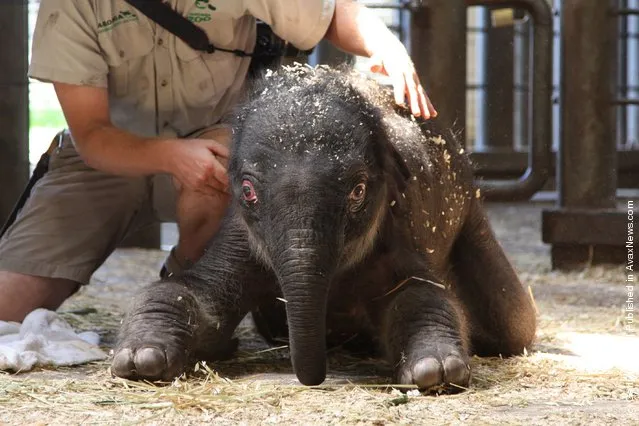
Baby Elephant

Taronga Zoo's elephant baby, as yet unnamed, is seen at Taronga Zoo on March 12, 2010 in Sydney, Australia. The Asian Elephant calf has continued to make progress following a protracted labour that spanned six days. The calf was originally believed to have died in the womb during labour but surprised veterinarians and zoo staff with an unexpected delivery early Wednesday morning. (Photo by Bobby-Jo Vial/Taronga Zoo via Getty Images)
Details
13 Sep 2011 13:22:00
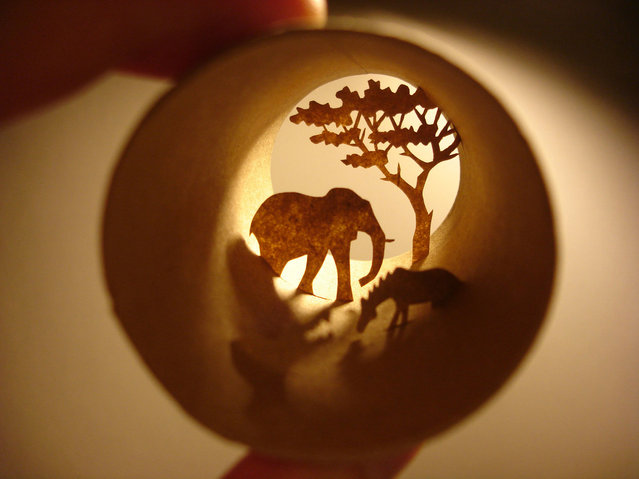
Toilet paper roll art of African wildlife. (Photo by Anastassia Elias/Caters News)

Anastassia Elias spends hours painstakingly cutting out tiny shapes to make detailed models – and then fits them inside used toilet rolls. Elias, 37, uses paper the same color as the cardboard tubes to build up the intricate scenes from wildlife to construction sites. Photo: Toilet paper roll art of African wildlife. (Photo by Anastassia Elias/Caters News)
Details
18 Jul 2013 08:08:00
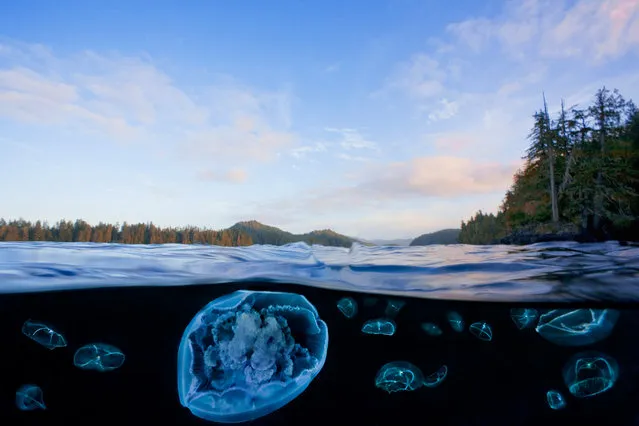
Moon jellyfish and cross jellies. (Photo by David Hall)

David Hall’s photographs of scenery and creatures off the coast of Canada in the Pacific Northwest portray serenity under the water, which belie the extreme challenges he faces to get his images. For each shoot, Hall wears a dry suit, a neoprene body suit that covers all of his body but his head and traps air inside to keep him warm. Water temperature in Canada’s British Columbia typically ranges between 45 and 50 degrees Fahrenheit. Photo: Moon jellyfish and cross jellies. (Photo by David Hall)
Details
16 Sep 2014 12:57:00
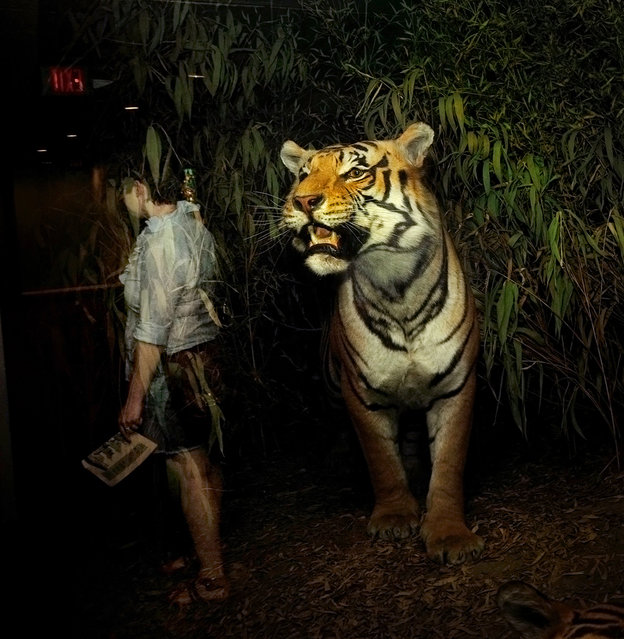
“Natural History”: Tiger. (Photo by Traer Scott)

“Natural History” is a series of completely candid single exposure images that merge the living and the dead to create allegorical narratives of our troubled co-existence with nature. Ghost-like reflections of modern visitors viewing wildlife dioramas are juxtaposed against the antique taxidermied subjects housed behind thick glass, their faces molded into permanent expressions of fear, aggression or fleeting passivity. After decades of over-hunting, climate change, poaching and destruction of habitat, many of these long dead diorama specimens now represent endangered or completely extinct species”. – Traer Scott. (Photo by Traer Scott)
Details
27 Oct 2014 11:39:00