Loading...
Done
Professional conceptual category winner. Greetings from Mars, by Julien Mauve, France. Mauve says: “I have always wondered what it would be like to discover a totally different world ... and to photograph it for the first time as if I was Ansel Adams. So I came up with this project, which is about space exploration and discovery. But it’s also about our behavior in front of landscapes and how we create pictures that will share our personal story with the world”. (Photo by Julien Mauve)

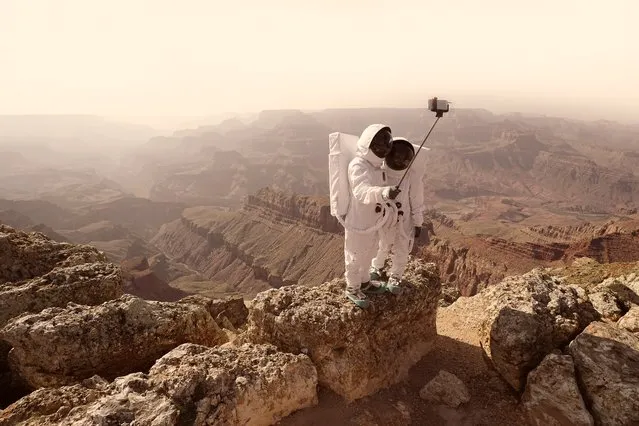
Professional conceptual category winner. Greetings from Mars, by Julien Mauve, France. Mauve says: “I have always wondered what it would be like to discover a totally different world ... and to photograph it for the first time as if I was Ansel Adams. So I came up with this project, which is about space exploration and discovery. But it’s also about our behavior in front of landscapes and how we create pictures that will share our personal story with the world”. (Photo by Julien Mauve)
Details
23 Apr 2016 13:57:00
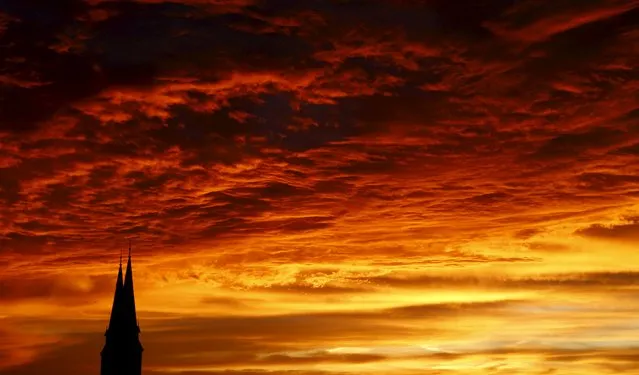
The rising sun illuminates the sky above the spires of a church in Vienna, Austria, November 17, 2015. (Photo by Heinz-Peter Bader/Reuters)

The rising sun illuminates the sky above the spires of a church in Vienna, Austria, November 17, 2015. (Photo by Heinz-Peter Bader/Reuters)
Details
19 Nov 2015 08:05:00
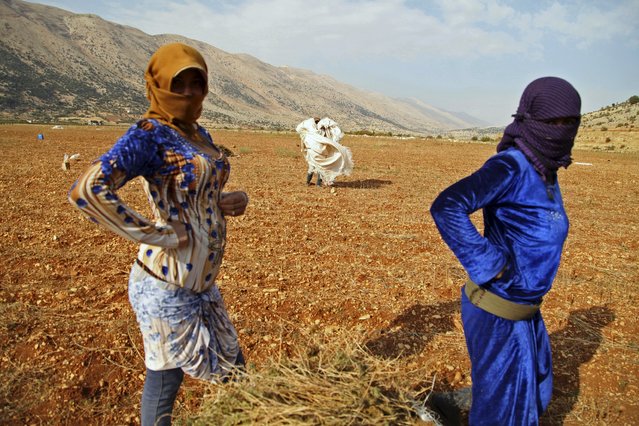
Aisha, 15, (L) (who asked to withhold her last name), a Syrian refugee from Raqqa, waits with a fellow refugee while harvesting cannabis in the Bekaa valley, Lebanon October 19, 2015. Syrian refugees work to harvest and process spiky-leafed cannabis plants in neighbouring Lebanon’s Bekaa Valley. (Photo by Alia Haju/Reuters)

Aisha, 15, (L) (who asked to withhold her last name), a Syrian refugee from Raqqa, waits with a fellow refugee while harvesting cannabis in the Bekaa valley, Lebanon October 19, 2015. Syrian refugees work to harvest and process spiky-leafed cannabis plants in neighbouring Lebanon’s Bekaa Valley. Often farmers of cotton and wheat back home in Raqqa province – now the de facto capital of Islamic State – the conflict in Syria drove them to seek safety in a region where Syrian migrant workers used to spend a few months a year before returning home. (Photo by Alia Haju/Reuters)
Details
24 Dec 2015 08:03:00
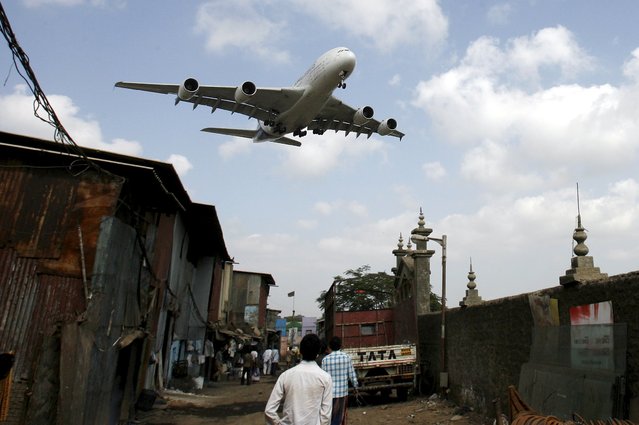
An Airbus A380 aircraft prepares to land at Mumbai airport in this May 8, 2007 file photo. Sentiment at some of Asia's biggest firms deteriorated again in the fourth quarter, falling to a four-year low under the weight of concerns about slowing growth in China, the region's biggest economy, a Thomson Reuters/INSEAD survey showed. (Photo by Arko Datta/Reuters)

An Airbus A380 aircraft prepares to land at Mumbai airport in this May 8, 2007 file photo. Sentiment at some of Asia's biggest firms deteriorated again in the fourth quarter, falling to a four-year low under the weight of concerns about slowing growth in China, the region's biggest economy, a Thomson Reuters/INSEAD survey showed. (Photo by Arko Datta/Reuters)
Details
27 Dec 2015 08:03:00
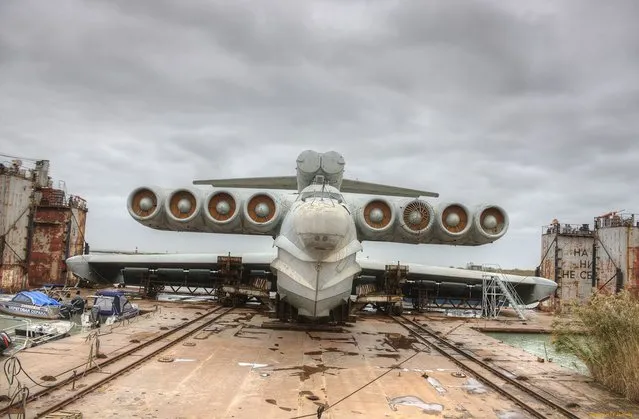
The Lun-class Ekranoplane was used by the Soviet Navy starting in 1987, and wasn't retired until the late 1990s, after the Soviet Union's fall. (Igor113)

“The Lun-class ekranoplan (NATO reporting name Duck) was a ground effect vehicle (GEV) designed by Rostislav Evgenievich Alexeev and used by the Soviet and Russian navies from 1987 until sometime in the late 1990s. It “flew” using the lift generated by the ground effect of its large wings when close to the surface of the water – about four metres or less. Although they might look similar and/or have related technical characteristics, ekranoplans like the Lun are not aircraft, seaplanes, hovercraft, or hydrofoils – ground effect is a separate technology altogether. The International Maritime Organization classifies these vehicles as maritime ships. The name Lun comes from the Russian for harrier”. – Wikipedia (Photo by Igor113)
Details
08 Aug 2014 10:51:00
A recent undated handout picture released by the Guinness World Records on September 9, 2014, shows 49-year-old trick golf artist Karsten Maas, from Denmark, who secured his place in the 2015 Guinness World Records book for creating the world’s longest usable golf club. It measures 4.37, (14ft 5in) in length and has been used to drive a ball a distance of 165.46m (542ft 10.16in). (Photo by Ranald Mackechnie/AFP Photo/Guinness World Records)

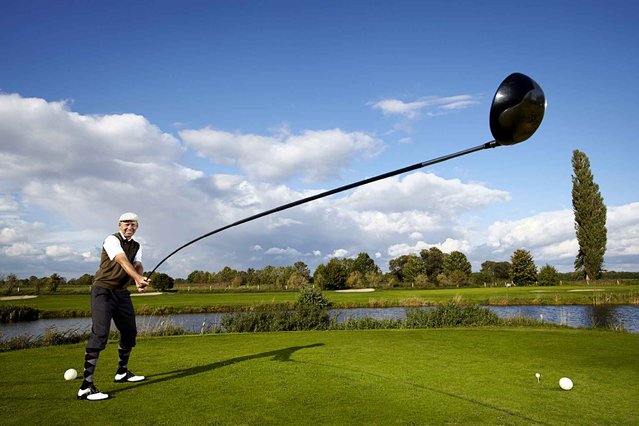
A recent undated handout picture released by the Guinness World Records on September 9, 2014, shows 49-year-old trick golf artist Karsten Maas, from Denmark, who secured his place in the 2015 Guinness World Records book for creating the world’s longest usable golf club. It measures 4.37, (14ft 5in) in length and has been used to drive a ball a distance of 165.46m (542ft 10.16in). The 60th anniversary edition of the Guinness World Records book will reflect on six decades of record-breaking, whilst also featuring the latest additions to the oddball hall of fame. (Photo by Ranald Mackechnie/AFP Photo/Guinness World Records)
Details
14 Sep 2014 10:21:00
President Woodrow Wilson speaks on telephone. Woodrow Wilson was the 28th U.S. President serving from 1913 – 1921. (Photo by Corbis)

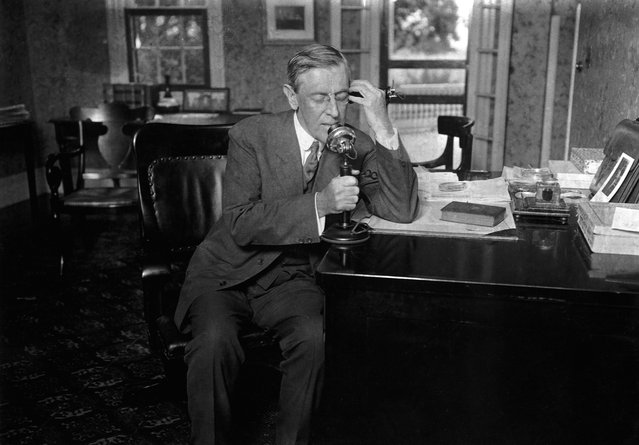
President Woodrow Wilson speaks on telephone. Woodrow Wilson was the 28th U.S. President serving from 1913 – 1921. (Photo by Corbis)
Details
18 Mar 2014 09:54:00
Ngorongoro Crater (Tanzania). At 610m deep and 260 sq km, this is the largest unflooded caldera in the world. A blue-green vision from above it's a haven for engangered wildlife and Maasai livestock. The crater was formed three million years ago when a giant volcano, which could have been as high as Kilimanjaro, exploded and collapsed. The caldera formed the concentric fractures in the crust cracked down to a magma reservoir deep underground. (Photo by John Bryant/Getty Images)

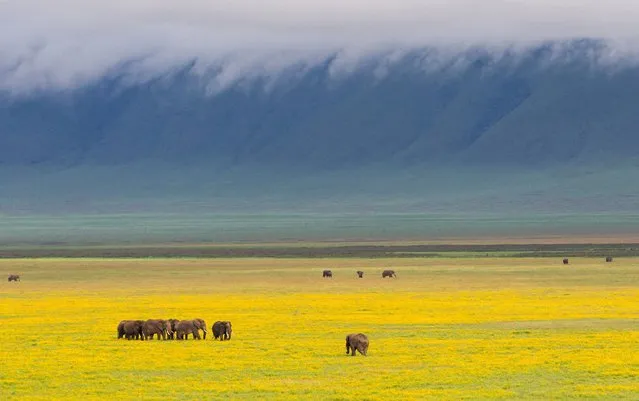
Ngorongoro Crater (Tanzania). At 610m deep and 260 sq km, this is the largest unflooded caldera in the world. A blue-green vision from above it's a haven for engangered wildlife and Maasai livestock. The crater was formed three million years ago when a giant volcano, which could have been as high as Kilimanjaro, exploded and collapsed. The caldera formed the concentric fractures in the crust cracked down to a magma reservoir deep underground. (Photo by John Bryant/Getty Images)
Details
28 Mar 2014 08:08:00